AWS Expands Amazon EBS Capabilities with Cross-Account Volume Clones and Re-Encryption Support
SEATTLE — Amazon Web Services (AWS), a subsidiary of Amazon.com, has announced a significant expansion to its storage infrastructure portfolio by introducing cross-account copy capabilities for Amazon Elastic Block Store (Amazon EBS) Volume Clones. Building upon the localized instant-copy functionality introduced last year, this new feature allows cloud architects, developers, and systems administrators to securely replicate production-grade EBS volume snapshots across distinct AWS accounts. By marrying instant provisioning with robust cross-account sharing and customized encryption controls via AWS Key Management Service (AWS KMS), AWS aims to streamline enterprise test-and-development workflows while strictly adhering to multi-account governance and security best practices.
Main Facts: What is Cross-Account Amazon EBS Volume Cloning?
The newly released capability fundamentally transforms how organizations manage, distribute, and isolate enterprise data across complex, multi-account cloud environments.
- Cross-Account Replication: Users can now generate point-in-time copies of their EBS volumes and transfer or mirror those copies directly into secondary, tertiary, or isolated AWS accounts.
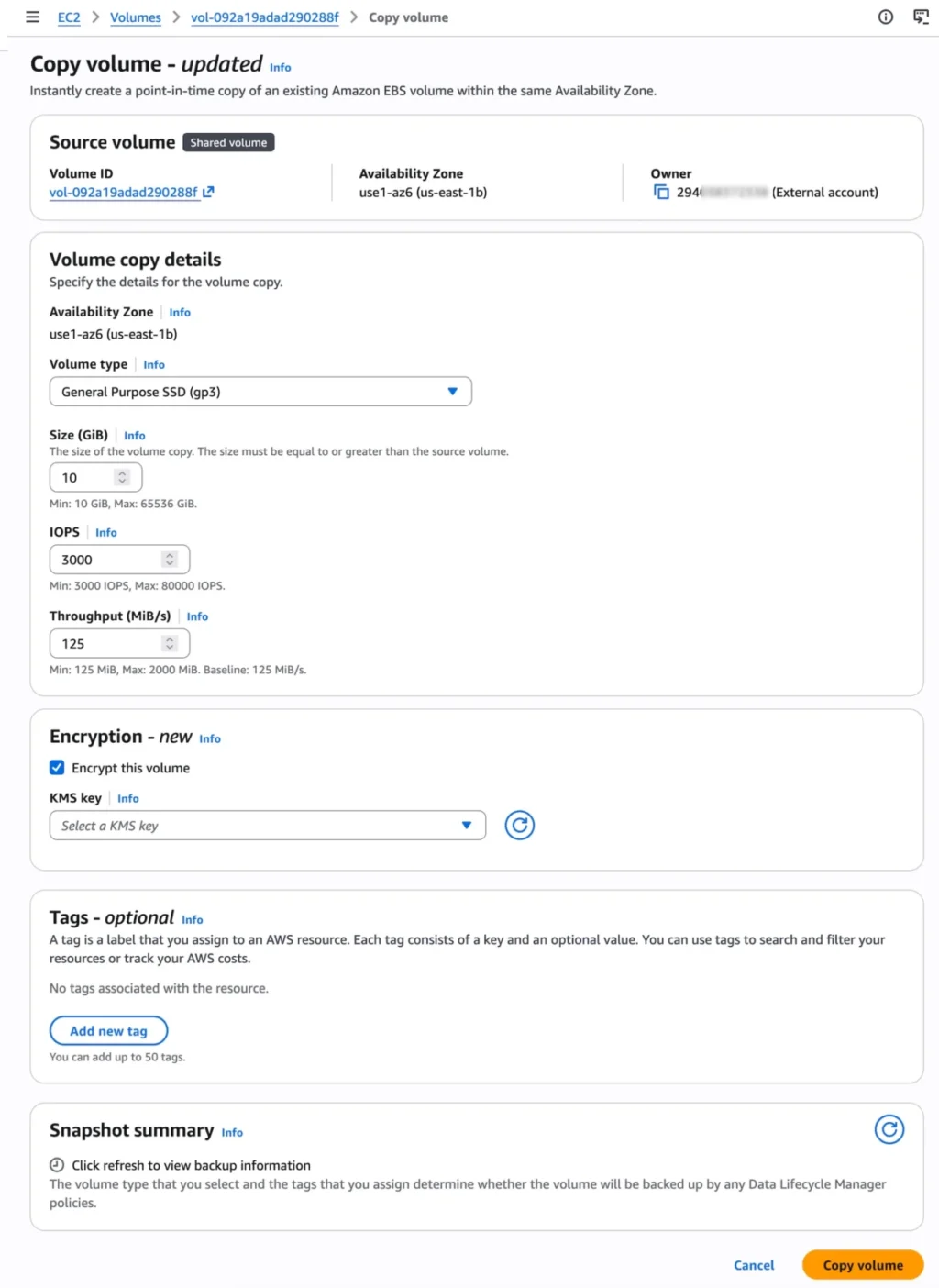
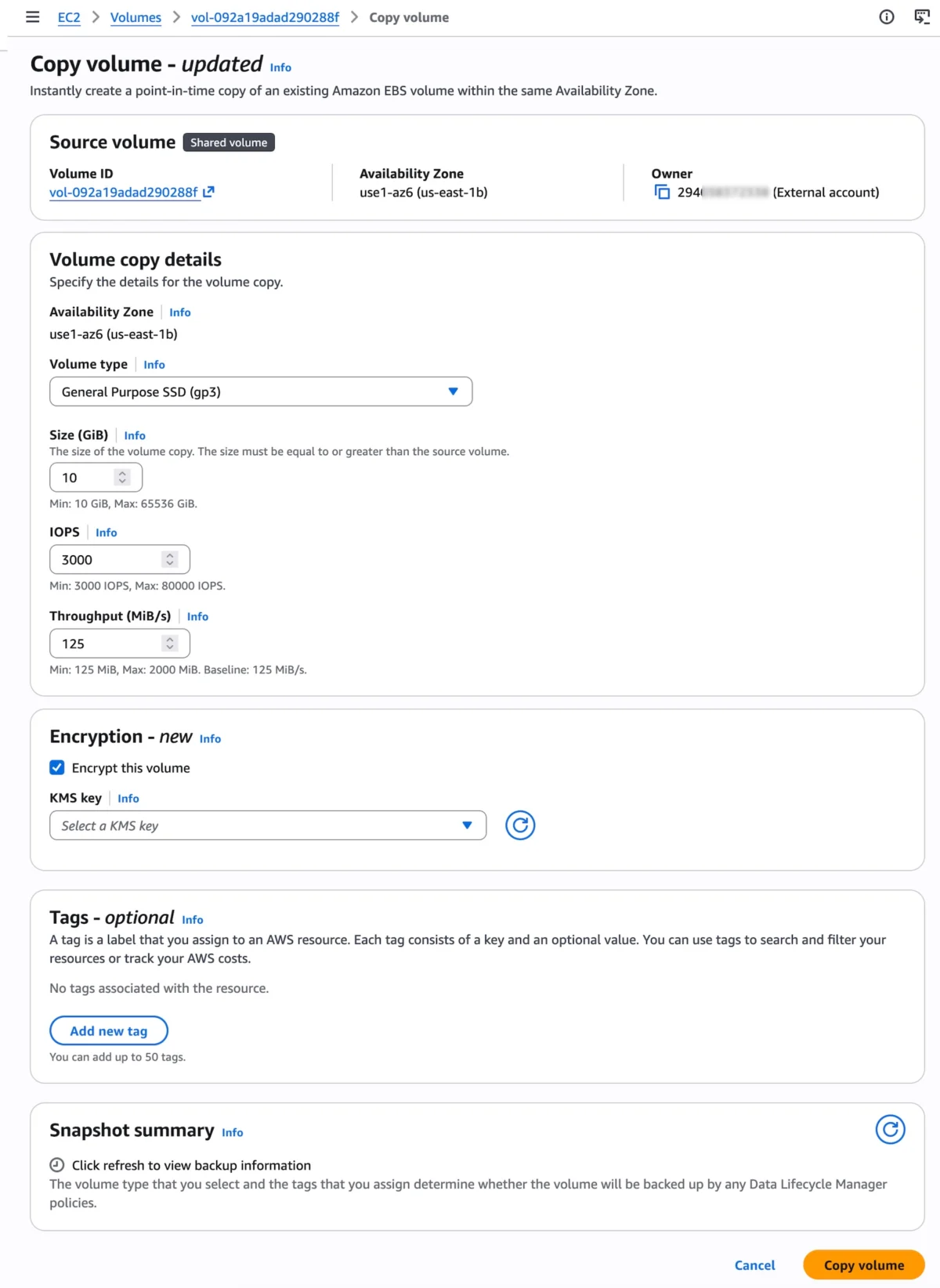
- Target-Account Re-Encryption: When executing a cross-account copy, administrators have the option to re-encrypt the newly minted volume using a unique, dedicated AWS KMS key housed within the target account, satisfying stringent internal compliance and regulatory requirements.
- AWS RAM Integration: The underlying architecture leverages AWS Resource Access Manager (RAM)—a service built specifically to safely share AWS resources across individual accounts or within an entire AWS Organization—to govern access permissions seamlessly.
- API and AI-Driven Automation Support: Beyond standard console workflows, teams can execute these operations programmatically via standard APIs, or leverage modern AI coding frameworks and developer tooling like the AWS MCP Server and dedicated plugins.
Chronology: The Evolution of EBS Storage Management
To fully understand the weight of this release, it is helpful to trace the continuous evolution of Amazon EBS features aimed at solving data mobility and backup challenges.
The Traditional Era of Snapshots
Historically, backing up and migrating Amazon EBS block storage required creating point-in-time snapshots. While reliable, these snapshots were stored in Amazon S3, meaning that provisioning a functional, performance-ready block storage volume from a snapshot required a data hydration process. For massive multi-terabyte production databases, spinning up parallel testing environments from snapshots introduced noticeable latency and administrative overhead.
The Advent of Localized Volume Clones
Recognizing the demand for near-instantaneous storage provisioning, AWS introduced Amazon EBS Volume Clones last year. This feature allowed engineering teams to create immediate, metadata-driven point-in-time copies of EBS volumes within the exact same Availability Zone (AZ). These clones eliminated hydration delays, offering instant performance and enabling rapid experimentation without impacting live production workloads.
The Cross-Account Milestone
Despite the utility of local volume clones, modern enterprise architectures rarely run entirely within a single AWS account. Enterprises routinely segregate workloads into distinct accounts for billing, security, and auditing purposes—such as separating Production, Staging, Development, and Sandbox environments. The latest release bridges this architectural gap, taking the velocity of instant volume cloning and extending it securely across organizational boundaries.

Supporting Data and Architectural Mechanics: How It Works in Practice
Implementing cross-account EBS volume cloning relies on a clear, systematic workflow managed primarily through the Amazon EBS and AWS RAM consoles.
1. Initiating the Share (Source Account)
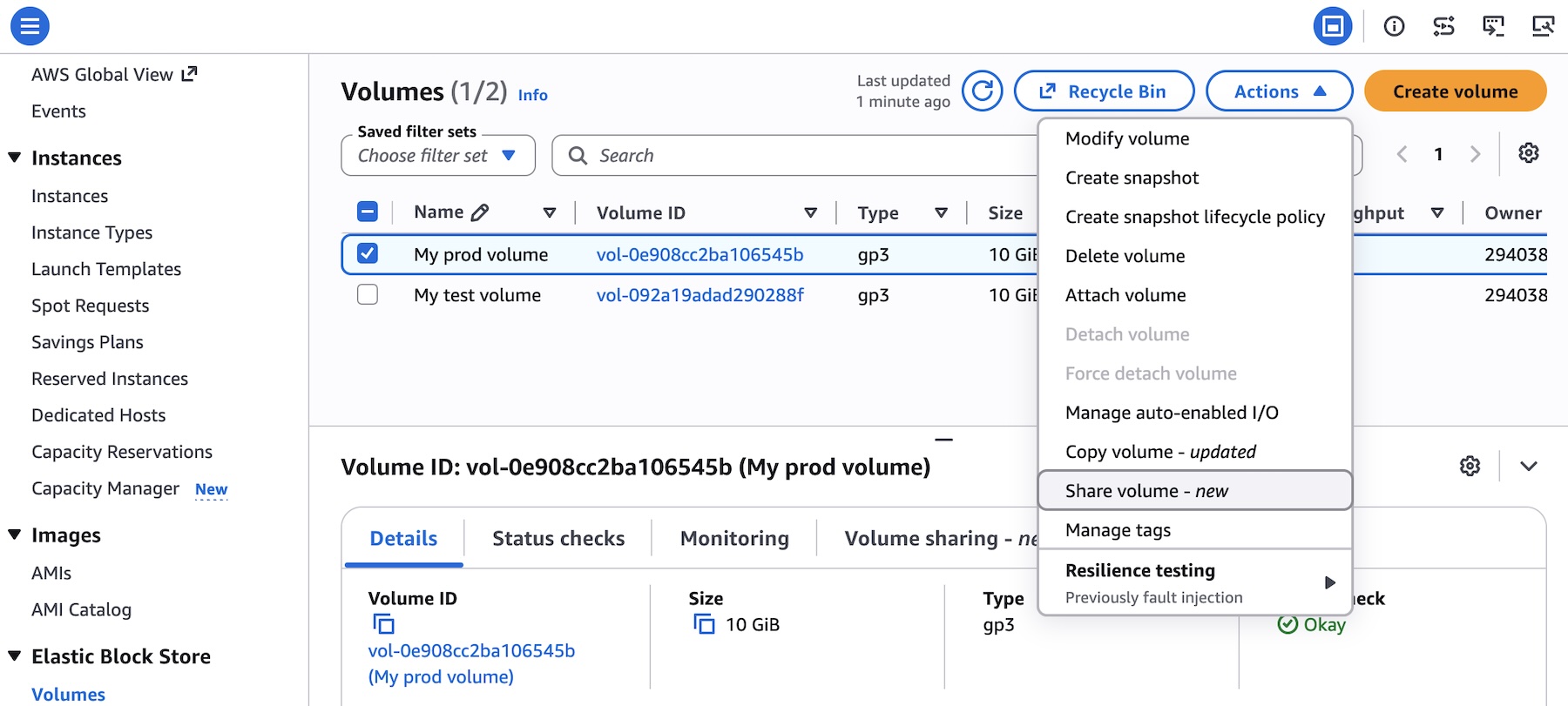
The process begins in the source account—typically a production or pre-production environment containing fresh, highly valuable application data. The volume owner navigates to the Amazon EBS console, locates the desired volume, and selects the Share volume option.
[Source Account: Amazon EBS Console]
       │
       ├──> Select Target Volume
       ├──> Click "Share Volume"
       └──> Add to Existing or New Resource Share (via AWS RAM)
2. Managing Permissions via AWS RAM
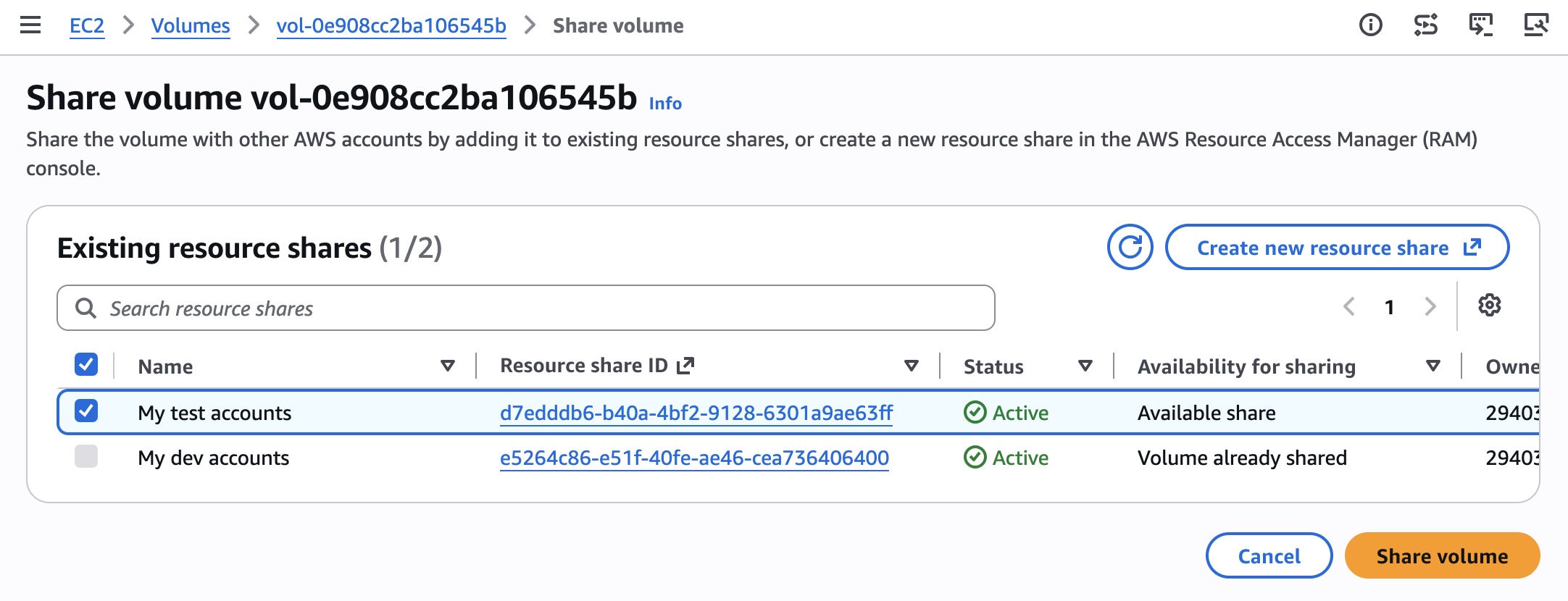
Through integration with AWS Resource Access Manager, the volume is assigned to a resource share. Administrators can target specific AWS accounts or encapsulate the sharing logic within an entire AWS Organization framework. Once configured, a confirmation badge displays in the Volume sharing tab of the source volume’s detail page, providing complete visibility into where the data is exposed.
3. Accepting and Copying (Target Account)
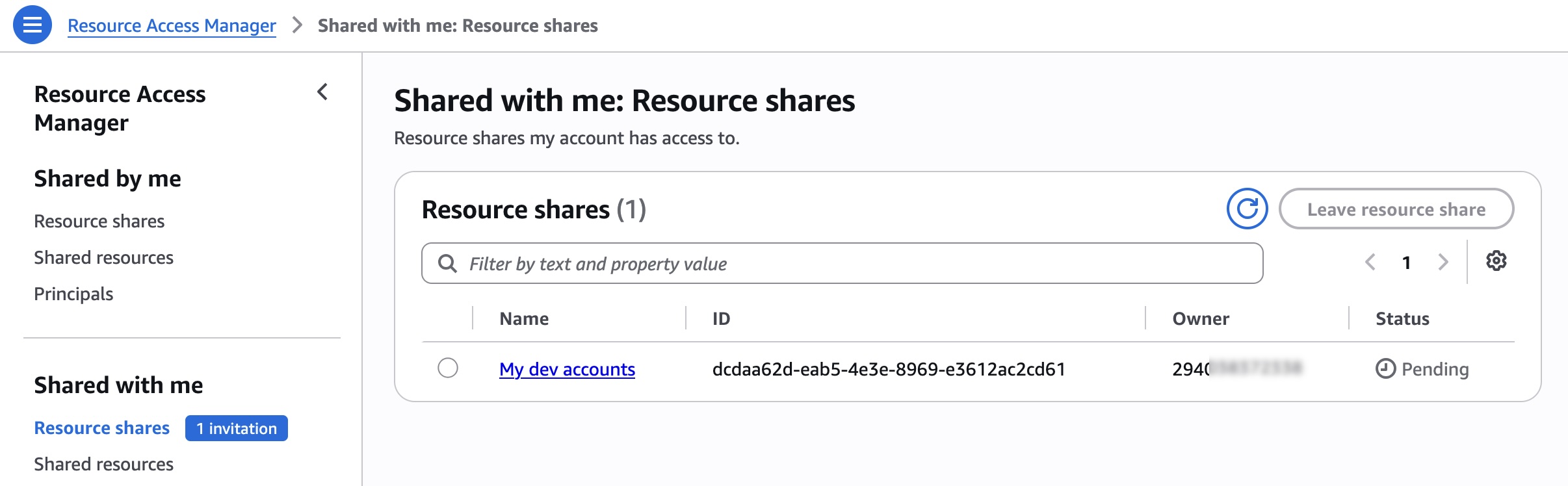
For security and isolation, sharing a resource does not automatically deposit it into a secondary environment. The target account administrator must first log into their AWS RAM console and formally accept the incoming resource share.
Once accepted, the shared volume appears directly within the Amazon EBS volume inventory of the target account. The user simply selects Copy volume, at which point they can assign a new encryption profile utilizing local AWS KMS keys.
[Target Account: AWS RAM & EBS Consoles]
       │
       ├──> Accept Incoming Resource Share
       ├──> View Shared Volumes in EBS Dashboard
       └──> Execute "Copy Volume" + Apply Target KMS Re-Encryption
Programmatic and AI-Assisted Operations
For DevOps teams running infrastructure-as-code (IaC) or automated CI/CD pipelines, these actions can be scripted. Furthermore, AWS has integrated support for the AWS MCP Server and associated plugins, allowing developers utilizing AI-assisted coding environments to query documentation, search APIs, and automate cross-account cloning workflows via natural language prompts.
Official Responses and Strategic Implications
Industry analysts and internal AWS stakeholders view this release as a vital component in modern cloud-native operational strategies, striking a delicate balance between engineering agility and rigorous security hygiene.
Unlocking Staging and Development Velocities
In modern software engineering, the fidelity of testing environments directly correlates with production stability. Developers often struggle with "stale data syndrome," where test environments rely on outdated database dumps that fail to catch modern edge cases or schema migrations.
By enabling teams to siphon fresh, masked, or anonymized production-grade data snapshots across accounts instantly, organizations can drastically improve their test coverage. Engineers can spin up ephemeral, fully populated testing environments in seconds, run complex integration test suites, and tear them down without ever jeopardizing the underlying production storage cluster.

Fortifying Security and Access Isolation
Security architects have long warned against the dangers of overly permissive cross-account IAM roles and shared credentials. By relying on AWS RAM and AWS KMS re-encryption, the new EBS volume cloning mechanism adheres strictly to the principle of least privilege.
- Account Isolation: Production data is never directly exposed to foreign environments in an uncontrolled manner.
- Granular Encryption Control: Even if a volume is shared from Account A to Account B, the target account maintains absolute sovereignty over its encryption keys via AWS KMS. If Account B requires a different regulatory compliance posture (e.g., specific FIPS-validated keys or rotating master keys), the re-encryption step ensures that data governance remains locally enforced.
Regional Availability and Future Outlook
At launch, cross-account Amazon EBS volume clones are rolling out across all global AWS Regions that currently support standard Amazon EBS Volume Clones. Organizations looking to map out multi-region deployment strategies or track impending feature roadmaps are encouraged to monitor the official AWS Capabilities by Region portal.
Summary and Next Steps
The introduction of cross-account copy capabilities for Amazon EBS Volume Clones represents a major win for both cloud developers and enterprise security officers. By bridging the gap between instantaneous storage provisioning and multi-account cloud governance, AWS continues to remove the friction traditionally associated with enterprise data management.
Teams looking to optimize their development cycles can immediately test the feature within the Amazon EC2 console. Feedback, feature requests, and operational queries can be channeled directly to the engineering teams via AWS re:Post for Amazon EBS or through standard enterprise AWS Support channels.