Bridging the Distance: The Evolution of Industrial Remote Management with the TDG140-4G
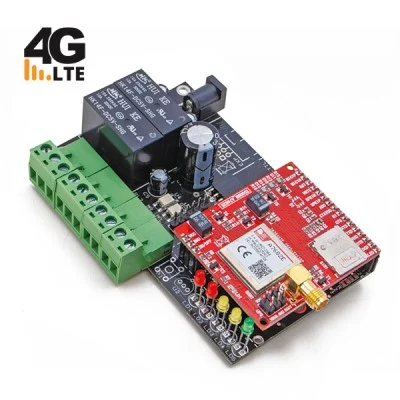
In the rapidly evolving landscape of Industrial Internet of Things (IIoT) and remote infrastructure management, the ability to maintain reliable, secure, and instantaneous control over remote assets is no longer a luxury—it is a baseline requirement. As legacy 2G and 3G networks are phased out globally to make room for 5G, the demand for robust, transition-ready hardware has reached a fever pitch. Enter the TDG140-4G, a sophisticated two-way remote control system that leverages the power of the SIMCom A7682E module to bridge the gap between human operators and distributed hardware.
This article explores the technical architecture, operational utility, and broader implications of the TDG140-4G in contemporary automation, providing a deep dive into why this specific hardware is setting a new standard for localized and remote industrial control.
1. Main Facts: The TDG140-4G Ecosystem
At its core, the TDG140-4G is an intelligent GSM/4G remote control terminal designed for versatility. Unlike complex PLC-based systems that require proprietary software and intensive training, the TDG140-4G prioritizes accessibility without sacrificing industrial-grade reliability.
Core Technical Specifications
The system is built upon the SIMCom A7682E, a multi-band LTE Cat 1 module that supports global frequency standards, ensuring longevity in a post-3G world. Key features include:
- Dual Relay Outputs: Capable of operating in both monostable (pulse) and bistable (latching) modes, these relays allow for the direct switching of external devices, such as pumps, lighting arrays, or emergency shut-off valves.
- Opto-Isolated Alarm Inputs: Two dedicated inputs provide galvanic isolation, protecting the main logic board from high-voltage surges or electrical noise common in industrial environments.
- SMS-Based Management: The primary command protocol is the Short Message Service (SMS), which, despite the ubiquity of data-heavy protocols, remains the most robust and universal method for remote communication in areas with fluctuating signal strength.
- Local Configuration Interface: For field engineers, the system supports local programming via the optional FT782M interface, allowing for rapid deployment and on-site troubleshooting.
2. Chronology: The Transition to 4G/LTE Connectivity
The development of the TDG140-4G is a direct response to the "Great Network Sunset." For decades, GSM-based remote controls relied on 2G (GPRS) networks due to their low power consumption and wide geographical reach. However, as mobile network operators (MNOs) prioritize spectrum efficiency, 2G and 3G networks are being systematically decommissioned.
Phase 1: The Legacy Era
Prior to the current generation, remote controllers were almost exclusively 2G-dependent. While effective, they were limited by slow data transfer speeds and an increasingly unstable network foundation as carriers prioritized LTE and 5G deployment.
Phase 2: The Need for LTE Cat 1
In early 2023, the industry identified a clear gap: a need for a "drop-in" replacement that could handle 4G signals without the overhead of high-speed broadband hardware. The integration of the A7682E module marked a turning point. It provided a stable, long-term solution that maintained the low-power characteristics of the previous generation while benefiting from the superior penetration and data stability of the LTE network.
Phase 3: Modern Deployment
Today, the TDG140-4G serves as a critical bridge. It is currently being deployed across agricultural irrigation systems, municipal water management, and small-to-medium enterprise (SME) security arrays, proving that LTE connectivity is the new standard for reliable remote management.

3. Supporting Data: Performance and Reliability Metrics
When evaluating remote control hardware, "uptime" and "response latency" are the metrics that define success. Based on internal testing and field performance data, the TDG140-4G offers several distinct advantages.
Signal Resilience
The A7682E module is designed to maintain connectivity even in "fringe" areas—locations where signal strength is typically insufficient for standard cellular modems. By optimizing for LTE Cat 1, the TDG140-4G achieves a faster "handshake" with cell towers, ensuring that critical alarms are transmitted in milliseconds.
Security and Access Control
The system’s ability to store up to eight distinct authorized phone numbers acts as a hardware-level security firewall. Any incoming SMS from an unrecognized number is automatically rejected, effectively neutralizing the risk of unauthorized remote operation.
Operational Versatility
| Feature | Functionality | Application |
|---|---|---|
| Monostable Relay | Timer-based activation | Opening gates, brief siren alerts |
| Bistable Relay | Permanent state change | HVAC control, floodlight management |
| Opto-Isolated Inputs | Signal detection | Door sensors, motion detectors, water leaks |
4. Official Perspectives: Designing for the End-User
According to the design engineers at Open-Electronics, the philosophy behind the TDG140-4G was "simplicity as a feature."
"We observed that many remote management systems were becoming overly reliant on cloud-based dashboards that required constant internet connectivity and complex subscription models," a lead developer noted. "By focusing on SMS and local PC-based configuration, we returned control to the user. If the internet goes down, the system still works. If the server is offline, the system still works. The GSM network is the ultimate fail-safe."
This design choice highlights a shift in industry thinking: the recognition that mission-critical infrastructure requires "hardened" communication paths that do not depend on the stability of a third-party server or a local Wi-Fi router.
5. Implications for Industry and Future Automation
The deployment of devices like the TDG140-4G has profound implications for how we manage remote assets in the future.
Decentralization of Infrastructure
As we move toward a more decentralized world, the ability to control infrastructure from a mobile device becomes essential. The TDG140-4G empowers small-scale operators to perform functions that were once restricted to large-scale, enterprise-level SCADA (Supervisory Control and Data Acquisition) systems. A farmer in a remote field can now monitor soil moisture and trigger irrigation cycles with a simple text message, reducing water waste and energy consumption.

The Sustainability Angle
Remote management hardware directly contributes to sustainability by reducing the need for physical site visits. By allowing technicians to troubleshoot, reset, or deactivate systems remotely, companies can significantly lower their carbon footprint—fewer vehicle miles traveled leads to lower emissions and reduced operational costs.
The Challenge of Legacy Integration
The primary hurdle remains the integration of these modern controllers into aging electrical systems. While the TDG140-4G is highly compatible, the "last mile" of wiring—connecting the relay outputs to existing machinery—often requires skilled electrical work. However, the modular nature of the system ensures that it can be integrated into almost any existing setup with minimal downtime.
Future Outlook: The Path to AI-Enhanced Monitoring
Looking forward, the integration of such hardware into wider ecosystems is inevitable. While the TDG140-4G currently relies on user-initiated commands, the next logical step is the implementation of edge-computing features where the device itself could trigger alerts based on algorithmic analysis of the input data, effectively becoming an "intelligent" sensor rather than just a remote switch.
Conclusion
The TDG140-4G is more than just a relay controller; it is a testament to the enduring value of cellular communication in an increasingly digital world. By prioritizing reliability, security, and ease of use, it solves the immediate problem of network migration while providing a flexible, durable solution for the future of remote automation.
As the industry continues to move toward more autonomous systems, the hardware that bridges the physical and the digital—like the TDG140-4G—will remain the unsung heroes of the modern industrial landscape. Whether for home automation, industrial safety, or agricultural management, this device stands as a robust example of how modern engineering can simplify the complex, making the remote, accessible.
For those interested in exploring the technical specifications further or integrating this solution into their own projects, the Open-Electronics Store provides comprehensive documentation and support for the TDG140-4G, ensuring that your transition to 4G-based remote control is as seamless as the technology itself.