Bridging the TinyML Gap: Introducing Wake Vision, the Massive Dataset Set to Revolutionize Edge AI
In the rapidly evolving landscape of artificial intelligence, a quiet revolution is taking place at the "edge." TinyML—the practice of deploying machine learning models on microcontrollers and ultra-low-power devices—has long promised a future of ubiquitous, intelligent sensing. From smart home devices that detect presence to medical wearables monitoring patient vitals, the potential is vast. However, this growth has hit a persistent roadblock: the scarcity of high-quality, large-scale datasets tailored to the unique, resource-constrained nature of edge hardware.
Today, a team of researchers from Harvard University, led by Colby Banbury, Emil Njor, Andrea Mattia Garavagno, and Vijay Janapa Reddi, is poised to dismantle this barrier with the introduction of Wake Vision. This new, large-scale dataset represents a fundamental shift in how developers approach computer vision for TinyML, offering a path toward more accurate, robust, and reliable AI at the very edge of the network.
The State of the Field: Why TinyML Demands More
For years, the machine learning community has relied on massive, general-purpose datasets like ImageNet to train state-of-the-art models. While these datasets are architectural marvels, they are ill-suited for the world of TinyML. Modern edge devices are often restricted to just a few hundred kilobytes of memory and operate on minimal power budgets, making the heavy, complex models trained on traditional datasets impossible to deploy.

The industry has previously relied on datasets like "Visual Wake Words" (VWW) to benchmark person detection. While VWW served as a vital foundational stone for early experimentation, it suffers from significant limitations: it is relatively small, lacks the diversity required for modern global applications, and often fails to capture the nuance required for production-grade, reliable performance. As the demand for sophisticated, privacy-preserving, and locally-processed vision grows, the research community has found itself starved of the high-fidelity data necessary to push the boundaries of what these tiny chips can actually "see."
Chronology of a Breakthrough
The development of Wake Vision was not a sudden event, but rather the result of a deliberate, multi-year effort to address the "quality vs. quantity" paradox in machine learning.
- Phase I: Identification of the Bottleneck: The researchers began by auditing existing TinyML benchmarks. They discovered that while researchers were iterating on model architectures, the performance ceiling was often determined by the limitations of the training data rather than the model itself.
- Phase II: Massive Data Aggregation: The team embarked on the Herculean task of curating a massive repository. The result is a dataset comprising approximately 6 million images—a staggering 100-fold increase over the previous standard, VWW.
- Phase III: Refinement and Filtering: Recognizing that "more data" does not always mean "better data," the team implemented rigorous filtering and labeling protocols. This ensured that the dataset was not only vast but also precise, effectively balancing the need for scale with the necessity of high-quality labels.
- Phase IV: Public Launch and Benchmark Integration: By releasing the dataset under a permissive Creative Commons (CC-BY 4.0) license, the team ensured that both academic researchers and industrial practitioners could immediately integrate Wake Vision into their pipelines.
Supporting Data: The Quality Conundrum
One of the most compelling aspects of the Wake Vision project is its challenge to conventional wisdom. In the realm of large, overparameterized models—the kind used in massive data centers—it is widely accepted that volume beats quality; given enough data, the model will simply "learn around" noise and errors.

However, the Harvard research team’s analysis of under-parameterized TinyML models proves that the rules change when hardware is constrained. Their findings demonstrate that for small models, high-quality labels are significantly more impactful than raw data volume. When a model lacks the capacity to memorize a massive, noisy dataset, it instead relies on the clarity of the labels to define its decision boundaries.
The Wake Vision team provides two distinct versions of their training set to accommodate this finding:
- The High-Quality Set: Optimized for precision, allowing developers to train highly accurate models even with limited capacity.
- The Large-Scale Set: Optimized for breadth, providing a massive training ground for more complex architectures or for use in pre-training.
By providing both, the researchers allow the community to experiment with different training strategies, such as using the large dataset for pre-training and the quality-focused dataset for fine-tuning—a hybrid approach that the study identifies as the most effective path for state-of-the-art performance.

Official Perspectives and Technical Implications
The implications of Wake Vision extend far beyond a mere increase in image counts. The dataset introduces fine-grained, real-world benchmarks that move beyond simple "person vs. background" classification.
According to the team, the dataset is specifically engineered to test for:
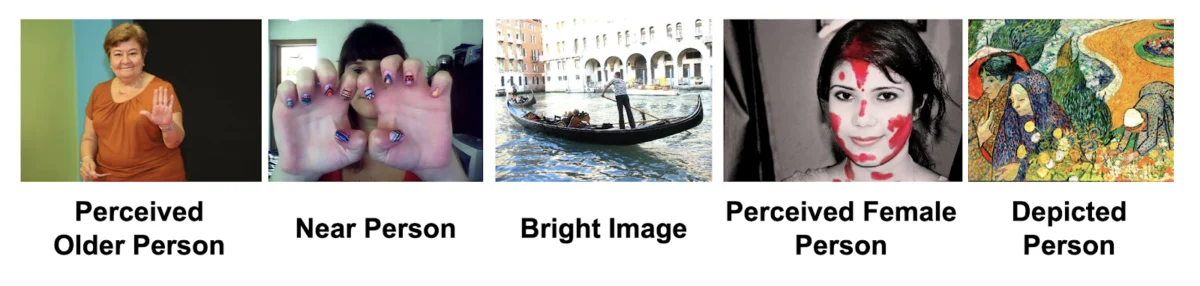
- Contextual Diversity: Testing how models perform with varying lighting conditions, distances, and environments.
- Demographic and Subject Nuance: Evaluating performance across diverse subjects, including different ages and gender presentations, which is essential for ethical and equitable AI deployment.
- Robustness Benchmarking: Challenging models to maintain accuracy in suboptimal conditions, such as blurred images or partially obstructed subjects.
"By providing these benchmarks," the researchers note, "we enable a nuanced understanding of model performance in specific, real-world contexts, helping to identify potential biases and limitations early in the design phase." This proactive approach to debugging is a significant step forward for developers who previously had to discover these failure modes only after deploying their devices to customers.

The Path Forward: Leaderboards and Accessibility
To maintain momentum, the team has established an official Wake Vision Leaderboard. This platform acts as a competitive arena where researchers can submit their models to be evaluated against standardized metrics. It provides a transparent view of which architectures are truly scaling effectively and which techniques offer the best trade-offs between model size and classification accuracy.
Accessibility has been a core pillar of the project. Wake Vision is not hidden behind paywalls or complex proprietary protocols; it is available via major dataset services, ensuring that whether a developer is working in a university laboratory or a startup garage, they have the tools to contribute to the field.
Conclusion: A New Era for Edge Intelligence
The release of Wake Vision marks a coming-of-age for the TinyML community. By acknowledging the unique limitations of microcontrollers and providing the high-fidelity data required to overcome them, the Harvard team has effectively raised the floor for what is possible in edge computing.

As we move toward an increasingly connected world, the ability to process visual data locally—without relying on cloud connectivity, preserving user privacy, and operating on battery power for months at a time—is no longer a futuristic dream. It is a technical reality. With 6 million images, a commitment to data quality, and a robust framework for real-world benchmarking, Wake Vision provides the roadmap for the next generation of intelligent devices.
For researchers and engineers ready to test their mettle, the challenge is clear: download the dataset, refine your models, and see if you can claim a spot on the leaderboard. The future of the edge is not just about being small; it is about being smarter than ever before.