Engineering Efficiency: Unveiling the MINI ESP32 Low Power Module
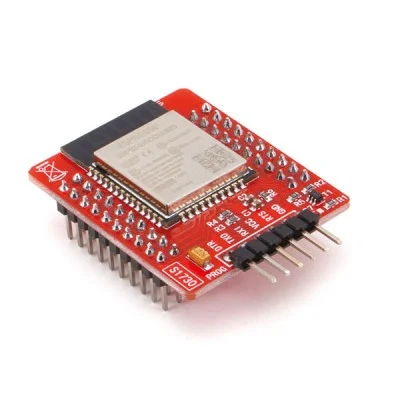
In the rapidly evolving landscape of the Internet of Things (IoT), the quest for the "perfect" hardware profile is a constant struggle between computational power and energy autonomy. Espressif Systems has long been the industry standard-bearer for versatile, accessible wireless microcontrollers. Today, the ecosystem expands with the introduction of the MINI ESP32 Low Power Module (MINIESP32LP), a specialized iteration of the ubiquitous ESP32 architecture designed specifically for engineers who prioritize long-term battery operation over legacy convenience features.
Main Facts: Stripping Back for Power Efficiency
The MINI ESP32 Low Power Module is not merely a miniaturized version of its predecessors; it is a strategic optimization. While it maintains full software compatibility with the standard MINI ESP32, it represents a significant departure in hardware philosophy.
The primary defining characteristic of this module is the removal of the integrated USB-to-Serial interface. In standard development boards, the USB interface is a convenience that allows for "plug-and-play" programming and serial debugging. However, this convenience comes at a cost: quiescent current consumption. By eliminating this circuitry, the MINIESP32LP removes a persistent power drain, allowing the module to achieve deeper sleep states and higher efficiency in battery-dependent applications.
Core Technical Specifications:
- SoC Architecture: Based on the robust Espressif ESP32 series.
- Wireless Connectivity: Integrated WiFi 802.11 b/g/n transceiver.
- Bluetooth Capabilities: Dual-mode support, encompassing both classic Bluetooth and Bluetooth Low Energy (BLE).
- Software Ecosystem: Full compatibility with the Arduino IDE and Espressif’s native ESP-IDF framework.
- Physical Footprint: Optimized for space-constrained industrial and wearable designs.
By trimming the fat, the module provides a "bare metal" experience that empowers developers to build leaner, more durable remote sensors, smart home nodes, and portable telemetry devices.
Chronology: The Evolution of the ESP32 Paradigm
To understand the significance of the MINIESP32LP, one must look at the progression of the ESP32 series.
- 2016 – The Dawn of the ESP32: Espressif launched the ESP32, which immediately disrupted the market by offering a high-performance dual-core processor with integrated WiFi and Bluetooth at a price point that decimated the competition.
- 2018-2020 – The Proliferation of Modules: As the ESP32 gained traction, the "MINI" series emerged to address the need for smaller form factors. These modules were designed for rapid prototyping, featuring onboard USB controllers to lower the barrier to entry for hobbyists and educators.
- 2022-2023 – The Low-Power Pivot: As the industry shifted toward "Forever Battery" applications—where devices must operate for years on a single coin cell—engineers began to critique the power-hungry peripherals of standard dev-boards.
- 2024 – The MINIESP32LP Launch: The release of the MINIESP32LP marks the convergence of high-performance wireless connectivity and ultra-low-power design principles, formalizing the need for a module stripped of non-essential power-consuming hardware.
Supporting Data: Why "Low Power" Matters
In the world of remote IoT deployment, the "Mean Time Between Maintenance" (MTBM) is the most critical metric. For a device deployed in an agricultural setting to monitor soil moisture or a structural sensor in a remote bridge, replacing a battery every three months is economically and logistically unfeasible.
The USB Penalty
On a standard development board, the USB-to-UART bridge chip (such as the CP2102 or CH340) remains energized as long as the board is powered. Even when the ESP32 enters a deep-sleep mode—consuming mere micro-amps—the USB chip continues to draw current, effectively nullifying the energy-saving efforts of the main processor.

By removing this chip, the MINIESP32LP allows the developer to exert granular control over power consumption. When combined with the ESP32’s native ability to power down its radio, CPU cores, and peripherals, the total current draw in deep sleep is reduced to a level suitable for operation on a small LiPo battery or even a high-capacity supercapacitor.
Wireless Versatility
Despite the focus on low power, the module does not compromise on connectivity. The inclusion of WiFi 802.11 b/g/n ensures compatibility with existing local area networks, while the dual-mode Bluetooth (Classic + BLE) provides a bridge for mobile device interaction. This allows for a "sleepy" device that only wakes up to transmit data, with the option for maintenance engineers to connect via BLE for local diagnostics without needing a physical data cable.
Official Responses and Industry Context
Industry experts from Open-Electronics and the wider embedded community have noted that the MINIESP32LP fills a "Goldilocks" gap in the market.
"The transition from a prototype to a finished product often requires a change in hardware strategy," says a lead engineer at an IoT development firm. "Many developers start with a fully-featured development board, only to realize that the features they relied on for debugging—like the USB port—are the very things preventing their product from achieving a one-year battery life. The MINIESP32LP is designed to be the production-ready heart of these devices."
Furthermore, the support for the Arduino IDE ensures that the development process remains accessible. Even though the hardware is stripped back, the software barrier to entry remains low. This is a deliberate design choice by the manufacturers: they aim to provide the professional-grade efficiency of a custom PCB design with the ease of use of a maker-community standard.
Implications for Future IoT Design
The release of this module signals a broader trend in electronics: the "De-featuring" movement. As IoT becomes more mature, the emphasis is shifting from "what can this device do?" to "how long can this device survive?"
1. Scaling Industrial Deployments
For companies looking to deploy thousands of sensors, the cost-per-unit is secondary to the cost-per-maintenance. By utilizing a module that is pre-optimized for low power, companies can reduce the engineering hours spent on power-optimization circuitry, allowing them to bring more reliable products to market faster.

2. The Rise of Edge Intelligence
With the ESP32’s processing capability, the MINIESP32LP is not just a data transmitter; it is an edge-processing node. Because it can survive on minimal power, it can afford to wake up more frequently to perform on-device analytics—processing sensor data locally and only transmitting the relevant insights via WiFi or Bluetooth. This reduces cloud storage costs and improves data privacy.
3. Sustainability in Electronics
Electronic waste is a growing concern. Devices that require frequent battery changes contribute to environmental degradation. By enabling designs that last for years rather than months, modules like the MINIESP32LP contribute to a more sustainable hardware ecosystem, reducing the volume of spent batteries entering the waste stream.
Conclusion: A Tool for the Serious Engineer
The MINI ESP32 Low Power Module is a testament to the idea that sometimes, less is more. By removing the convenience of a USB interface, Espressif and its partners have provided the foundation for a new generation of high-efficiency, long-range, and highly reliable IoT devices.
For developers currently wrestling with power budgets or struggling to squeeze every milliamp out of their battery-powered designs, the MINIESP32LP is not just another module; it is a vital component in the toolkit of modern embedded engineering. Whether for smart agriculture, environmental monitoring, or industrial automation, this module provides the necessary balance of power, connectivity, and, above all, efficiency.
As we move toward a future where billions of devices are connected, the winners will be those that can stay awake, stay connected, and, most importantly, stay powered on for as long as possible. With the introduction of the MINIESP32LP, that goal is now significantly more attainable for engineers across the globe.