High-Definition Vision in Miniature: The Evolution of the 700 TVL SONY CCD Camera Module
Introduction: The Critical Role of Precision Imaging
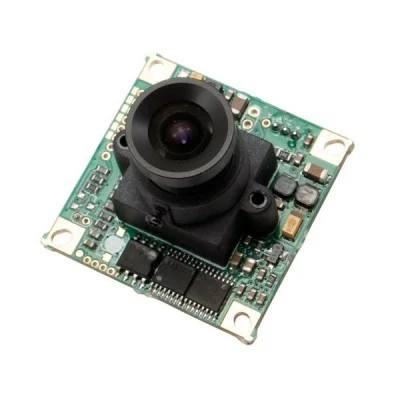
In the rapidly expanding landscape of robotics, surveillance, and First-Person View (FPV) technology, the demand for compact yet high-performance optical sensors has never been greater. Whether integrated into an autonomous drone navigating complex environments or utilized in specialized security configurations, the camera module serves as the "eyes" of the machine. The recently highlighted SONY-powered 700 TV-line (TVL) color camera module represents a significant milestone in this sector, bridging the gap between bulky, industrial-grade optics and the lightweight requirements of modern hobbyist and professional electronics. By leveraging the time-tested reliability of Charge-Coupled Device (CCD) technology combined with advanced Digital Signal Processing (DSP), this module offers a robust solution for those requiring crisp, low-latency visual data.
Main Facts: Technical Specifications and Hardware Capabilities
The core of this camera module is built around a 1/3-inch CCD sensor, a component that has long been the gold standard for high-fidelity image capture. Unlike CMOS sensors, which often struggle with high-contrast environments and rolling shutter artifacts, the CCD architecture provides superior global shutter performance and high-dynamic-range imaging.
Key Performance Metrics:
- Sensor Type: 1/3-inch CCD.
- Resolution: 700 TV lines, offering significant detail for analog-based video transmission.
- Optical Specs: Equipped with an f3.6 mm lens, providing a balanced field of view suitable for both close-range observation and wide-angle navigation.
- Low-Light Sensitivity: Rated at 0.1 Lux, enabling consistent performance in dim environments where standard consumer-grade sensors typically fail.
- Processing Engine: Integrated SONY DSP, which performs real-time image enhancement, color correction, and noise reduction.
The synergy between the 1/3-inch CCD and the SONY DSP ensures that the signal remains stable and clear, even when subjected to the vibration and rapid movement inherent in drone flight or high-speed mechanical monitoring.
Chronology: The Trajectory of CCD Technology in Miniaturization
To understand the importance of this specific module, one must examine the progression of camera technology over the last two decades.
The Era of Bulk
In the early 2000s, high-resolution imaging was synonymous with heavy, power-hungry CCD arrays. Surveillance cameras were typically encased in large, protective housing, and the prospect of fitting a high-resolution sensor onto a drone or a pocket-sized device was non-existent.
The Shift to Miniature
Between 2010 and 2015, the "FPV Revolution" began. Enthusiasts started experimenting with board-level cameras. However, the initial iterations suffered from poor resolution (often 300-400 TVL) and inconsistent color reproduction. It was during this period that manufacturers like SONY began shrinking their DSP architectures, allowing for the integration of "Big Camera" features into the "Small Camera" form factor.
Modern Integration
The current iteration of the 700 TVL CCD module represents the mature phase of this evolution. By optimizing the board layout and heat dissipation, engineers have managed to condense 700 lines of horizontal resolution—once a benchmark for professional broadcast equipment—into a module that weighs only a few grams. This allows modern developers to achieve professional-grade imagery without sacrificing the payload capacity of their projects.

Supporting Data: Why CCD Still Matters in a CMOS World
While the industry has pivoted largely toward CMOS sensors for high-resolution digital photography, the CCD remains the king of specialized, real-time analog video.
Global Shutter vs. Rolling Shutter
One of the most significant advantages of this 700 TVL module is its resistance to the "jello effect." CMOS sensors often record images line-by-line, which, when paired with the vibrations of a drone motor, results in distorted, wavy footage. The CCD sensor captures the entire image frame simultaneously, providing a stable, accurate representation of the environment.
Latency Considerations
In FPV flight, milliseconds are the difference between a successful maneuver and a collision. Because this module outputs a raw analog signal processed by the onboard DSP rather than an encoded digital stream, the latency is effectively near-zero. This makes it an ideal candidate for low-latency transmission systems, where immediate visual feedback is essential for the operator.
Signal-to-Noise Ratio (SNR)
The SONY DSP integration is not merely a marketing claim; it is a critical functional requirement. At 0.1 Lux, the signal-to-noise ratio of a standard sensor would plummet, resulting in a "grainy" image. The SONY DSP applies adaptive gain and noise-reduction algorithms to maintain image integrity, ensuring that details are identifiable even when the lighting is suboptimal.
Official Perspectives: The Utility of High-Resolution Analog
Industry experts and developers at Open-Electronics have consistently emphasized that "resolution is not just about the number of pixels." In the context of 700 TVL, the focus is on perceivable clarity.
"When operating in the field, whether for search-and-rescue or competitive racing, the operator needs to discern texture and depth," explains one technical consultant. "A 700 TVL image, when processed correctly by a high-quality DSP, provides enough edge detail for the human eye to distinguish between a rock, a wire, or a landing pad. The CCD sensor provides the raw data, and the SONY DSP ensures that the data is translated into a usable, high-contrast video signal."
The move to keep this technology accessible via the Open-Electronics store reflects a broader movement within the maker community: the democratization of high-end surveillance and imaging tools. By making these components available at a board level, individual engineers can prototype solutions that previously would have required a six-figure R&D budget.

Implications: The Future of Robotics and Embedded Vision
The implications of utilizing such a sophisticated module extend far beyond simple hobbyist photography.
1. Autonomous Navigation and Computer Vision
While many modern AI vision systems rely on high-resolution digital inputs, there is a burgeoning interest in using "lightweight" analog sensors for pre-processing. By using a 700 TVL CCD module, robots can feed a low-latency, steady stream to an onboard computer, allowing for faster reaction times in obstacle avoidance algorithms.
2. Industrial Inspection
In manufacturing, tight spaces are often inaccessible to human inspectors. A compact camera module with a 3.6mm lens provides a sufficiently wide field of view to inspect pipe interiors, electrical conduits, or engine components. The high resolution ensures that hairline fractures or structural flaws are not missed due to image blur.
3. The Resilience of Analog Systems
As digital infrastructure becomes increasingly complex, the simplicity of the analog chain remains a strategic asset. Analog signals are less susceptible to the software-based "crashes" or frame-drops that can occur with high-bandwidth digital cameras. In high-stakes environments, having a visual feed that operates on a direct hardware path is a significant safety advantage.
Conclusion: A Testament to Enduring Engineering
The SONY 700 TVL CCD camera module serves as a reminder that technological advancement does not always require the latest digital gimmick. Sometimes, it requires the refinement of proven architectures. By combining the natural light-gathering strengths of a 1/3-inch CCD with the intelligent processing capabilities of SONY’s proprietary DSP, this module provides an exceptional balance of price, performance, and durability.
For the engineer, the student, or the professional drone pilot, this camera is more than just a component; it is a reliable tool for high-fidelity observation. As the industry continues to push the boundaries of what is possible in miniaturized robotics, the 700 TVL CCD camera remains a foundational building block—a clear, sharp, and consistent pair of eyes for the next generation of electronic innovation.
For those looking to integrate this technology into their own projects, the resources provided by platforms like Open-Electronics offer not only the hardware but the necessary support to ensure that these modules are deployed to their full potential. The future of vision is compact, and with sensors like these, it is clearer than ever.