Perseverance Goes the Distance: NASA’s Rover Completes a Martian Marathon
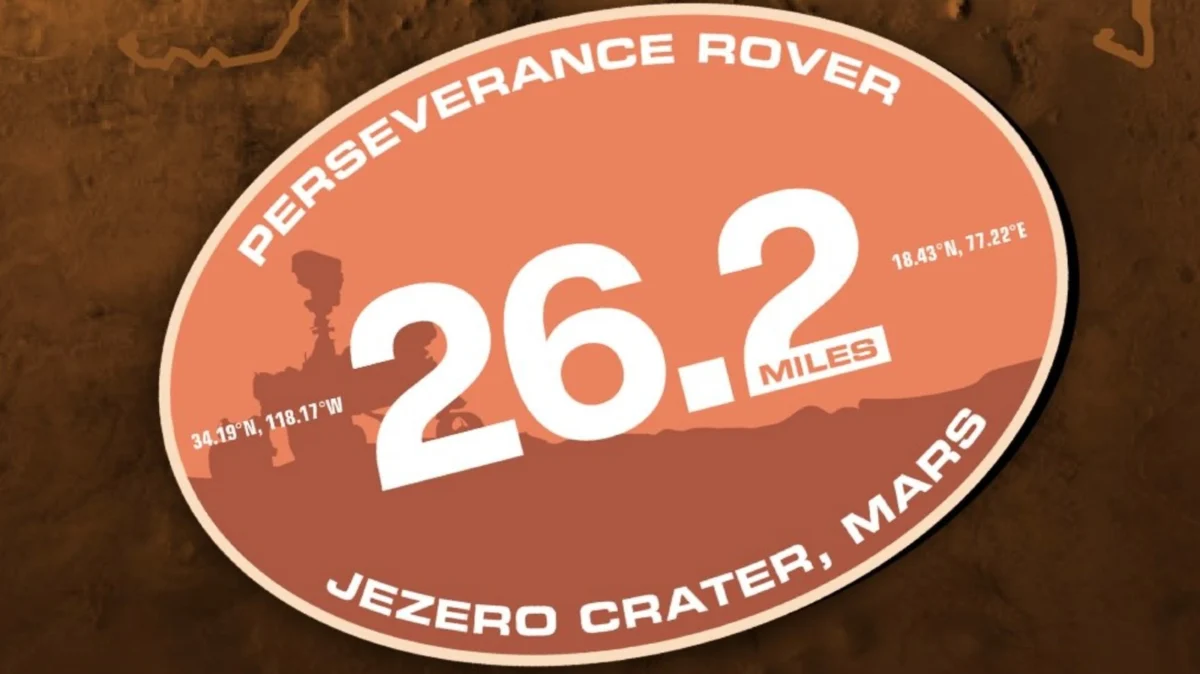
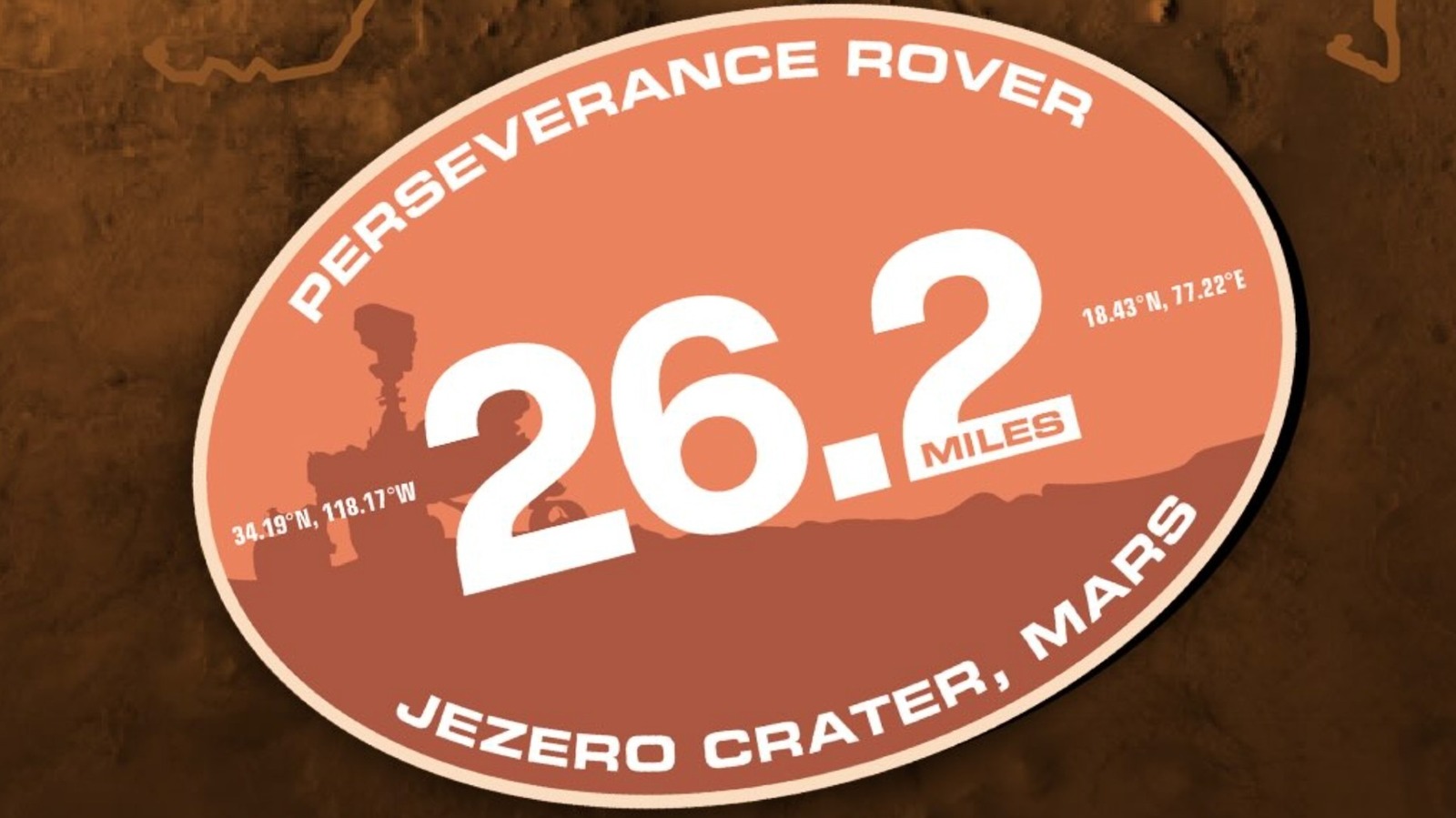
In an extraordinary feat of engineering and endurance, NASA’s Perseverance rover has officially joined an elite club of extraterrestrial explorers. On June 14, the robotic geologist surpassed the 26.2-mile mark, effectively completing a full marathon across the rugged, unforgiving terrain of the Red Planet. This milestone, reached just five years after its initial descent into the Jezero Crater, underscores the remarkable capabilities of modern autonomous exploration and highlights the relentless pace at which NASA is uncovering the secrets of our solar system.
While the marathon distance is a standard benchmark for human endurance on Earth, for a machine traversing a landscape of jagged rocks, steep inclines, and shifting sands, it represents a monumental triumph of software, hardware, and navigation.
Main Facts: A New Record for Autonomous Exploration
Perseverance, affectionately known as "Percy," has spent the last five years acting as a high-tech eyes-and-ears proxy for humanity on Mars. Landing in February 2021, the rover was tasked with seeking signs of ancient microbial life and collecting samples for eventual return to Earth.
The achievement of 26.2 miles is particularly impressive when considering the rover’s operating parameters. Perseverance is not designed for speed; its top velocity is a modest 0.1 miles per hour—roughly the speed of a slow-moving garden snail. Navigating this distance required thousands of hours of painstaking autonomous pathfinding, ground-based mission control commands, and the constant threat of mechanical wear and tear.
"Perseverance is only the second explorer to travel the distance of a marathon on another world," NASA stated in an official announcement via social media. The rover follows in the tire tracks of the venerable Opportunity rover, which set the original gold standard for Martian long-distance travel.
Chronology: From Landing to the 26.2-Mile Mark
The journey to the marathon milestone began on February 18, 2021, when the Perseverance rover performed its "seven minutes of terror" landing sequence, touching down safely in the Jezero Crater.
- Early Operations (2021): The initial months were dedicated to commissioning instruments, deploying the Ingenuity Mars Helicopter, and conducting preliminary geological surveys.
- The Hunt for Life (2022-2023): As the rover transitioned into its primary science phase, it began a systematic exploration of the ancient lake bed that once filled the Jezero Crater. Its mobility became critical as it sought out distinct sedimentary layers that could hold biosignatures.
- Accelerating Progress (2024): With refined autonomous navigation software, the mission team was able to push the rover further and faster. The rover moved away from the crater floor toward the delta and the western rim, traversing more challenging terrain than ever before.
- The Milestone (June 2024): On June 14, telemetry confirmed that the rover’s odometry had eclipsed the 26.2-mile threshold, marking the completion of its Martian marathon in just five years—a pace that significantly outstripped previous missions.
Supporting Data: Comparing the Martian Marathoners
To understand the scale of Perseverance’s achievement, it is necessary to look at the history of long-distance robotic exploration on Mars.
The Opportunity Benchmark
The Opportunity rover, which landed in 2004, held the record for years. It took Opportunity over 11 years and two months to cross the 26.2-mile threshold. Opportunity was a testament to longevity, surviving far beyond its original 90-day mission expectancy. The fact that Perseverance has covered that same distance in less than half the time speaks volumes about advancements in rover autonomy and the efficiency of the mission team at the Jet Propulsion Laboratory (JPL).
The Curiosity Context
Curiosity, which arrived on Mars in 2012, remains an active and vital part of NASA’s Mars exploration program. Having covered just over 23 miles, Curiosity has focused heavily on the slopes of Mount Sharp within the Gale Crater. While it hasn’t reached the "marathon" milestone, its contribution to our understanding of Martian chemistry and climate remains peerless.
The Speed Factor
Perseverance’s ability to cover ground is hampered by the "AutoNav" system, which requires the rover to stop, process imagery, calculate a safe path, and move forward. Even at a top speed of 0.1 mph, the cumulative distance proves that consistency is the primary driver of success in planetary science.
Official Responses and Engineering Triumphs
NASA’s Jet Propulsion Laboratory (JPL) in Southern California, which manages the mission, has lauded the achievement as a collective success for the entire team. Engineers emphasize that the milestone is not just about the odometer reading; it is about the quality of the terrain traversed.
"Every meter of that 26.2 miles was hard-won," said one mission engineer. "We aren’t driving on a flat road. We are navigating craters, climbing over boulders the size of the rover’s wheels, and managing temperature fluctuations that would destroy conventional electronics."
The agency also highlighted the recent "western excursion," where Perseverance explored terrain that had previously been unreachable. The imagery returned from these areas—including a high-resolution selfie of the rover—provides a visual narrative of the mission’s evolution. These images show the rover standing amidst a stark, alien landscape, its dust-coated chassis a symbol of the immense distances it has covered to bring humanity closer to understanding Mars.
Implications for Future Exploration
The completion of this marathon has profound implications for the future of robotic and human exploration.
1. The Power of Autonomy
The speed with which Perseverance reached this milestone is largely due to advancements in AI-driven pathfinding. Future rovers will likely be even more autonomous, capable of identifying scientifically valuable targets and navigating around hazards without waiting for a light-speed delay from Earth. This "hands-off" driving is essential for deeper exploration where communication windows are limited.
2. Geological Insights
By traversing such a vast distance, Perseverance has sampled a wider array of geological history. The remnants of the ancient lake, combined with the new findings from the western rim, provide a more cohesive map of the planet’s watery past. This breadth of data is exactly what scientists need to determine if Mars was ever truly habitable.
3. Paving the Way for Humans
The data collected during these 26.2 miles—information on soil composition, terrain stability, and radiation exposure—is vital for future human-led missions. NASA’s Artemis program and subsequent Mars-bound initiatives will rely on the "trailblazing" work done by Perseverance. Understanding how a rover navigates the Martian surface is the first step toward ensuring human explorers can do the same safely.
4. Sustaining Scientific Momentum
The success of Perseverance encourages continued investment in space exploration. When the public sees a machine "finishing a marathon" on a world millions of miles away, it reignites interest in STEM fields and the broader goal of becoming a multi-planetary species.
Conclusion
As Perseverance continues its trek across the Martian surface, the marathon milestone serves as a fitting midpoint to celebrate its contributions. It is no longer just a rover; it is an explorer that has traveled further, faster, and more autonomously than any of its predecessors.
The red planet remains a harsh, alien environment, but with every mile added to its odometer, Perseverance turns that alien landscape into a familiar field of inquiry. Whether it finds the definitive evidence of past life or simply continues to map the unknown, the rover’s journey reminds us that the spirit of exploration—the human drive to push further, climb higher, and go the distance—is alive and well, even when it’s manifested in silicon, titanium, and solar-powered wheels.
As the mission progresses toward its next objectives, the world watches with bated breath, waiting to see what the next 26 miles of the Martian odyssey will reveal. For now, we celebrate a marathon well run, and a legacy on Mars that continues to grow with every rotation of the rover’s wheels.