Pioneering Thermal Efficiency: Greenhill Forge Unveils Breakthrough in DIY Solar Air Heating
MAIN FACTS
In a significant stride towards democratizing renewable energy solutions, the independent innovator Greenhill Forge has revealed a series of five custom-built solar air heating panels that promise a cost-effective and remarkably efficient alternative to conventional heating systems. While solar photovoltaic (PV) panels have become ubiquitous for electricity generation, converting only 20-30% of sunlight into usable power, Greenhill Forge’s project highlights the often-overlooked potential of solar thermal technology, particularly for space heating in environments with limited footprint. The project, documented through comprehensive testing, showcases how readily available materials can be transformed into powerful, fuel-free heating units, with one particular design variant demonstrating surprising superiority in energy capture.
The core challenge addressed by Greenhill Forge stems from the inherent limitations of solar PV for direct thermal applications. While excellent for producing electricity, the relatively low conversion efficiency and the significant space requirements for large-scale energy harvesting make them less ideal for direct heating where thermal energy is the primary need. For homeowners or small businesses with restricted roof space or land, dedicated solar thermal collectors, which convert sunlight directly into heat, often present a more viable and efficient solution. However, commercial solar thermal systems can be prohibitively expensive, placing them out of reach for many.
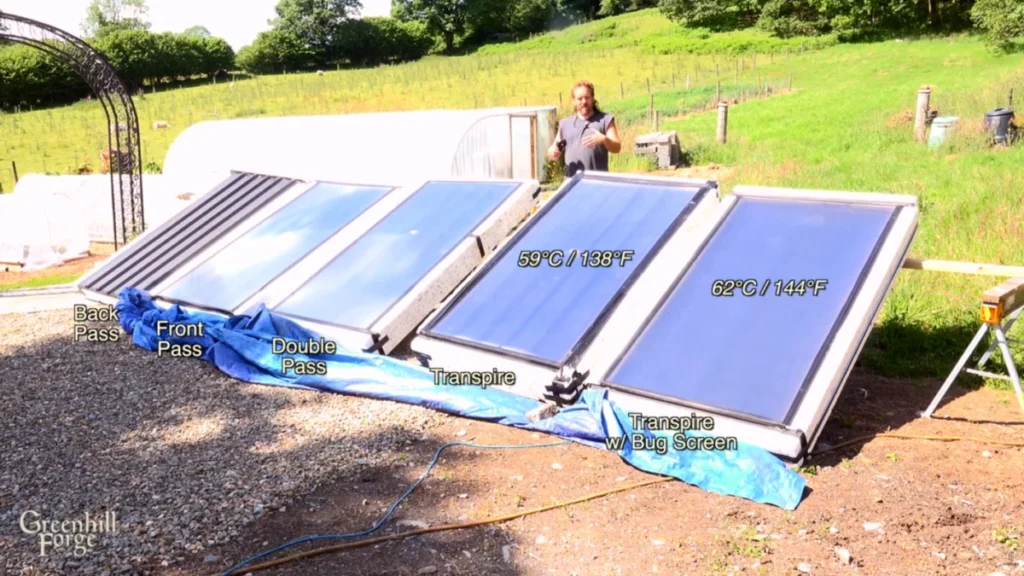
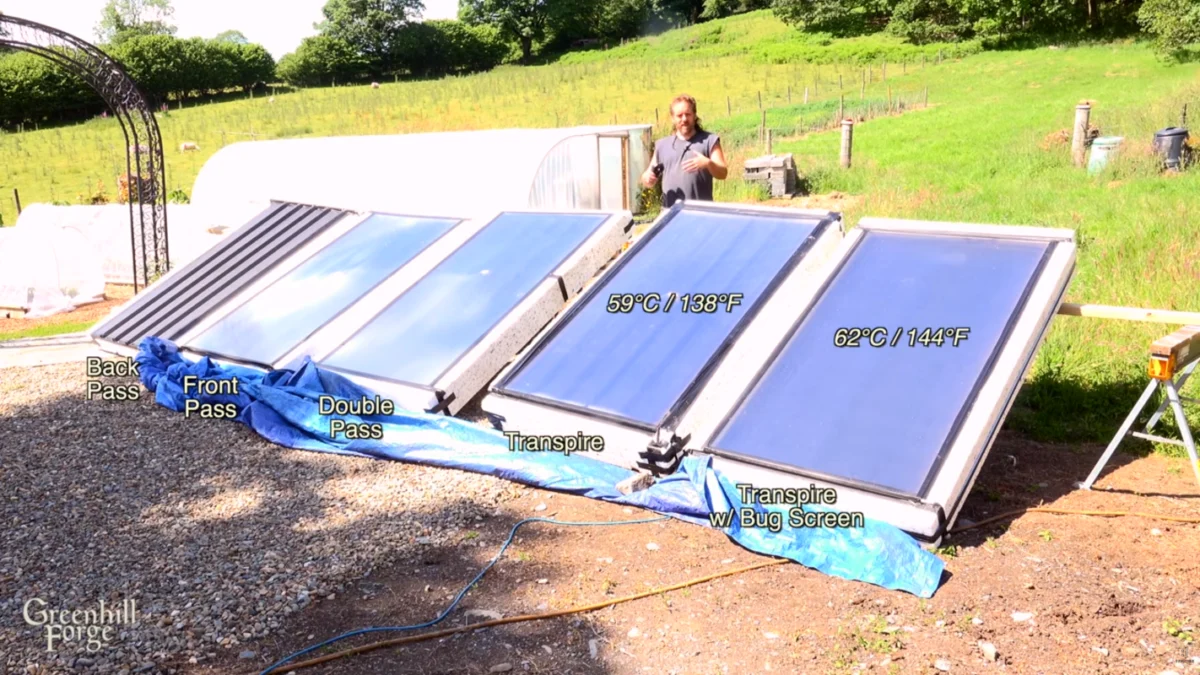
This is where Greenhill Forge’s innovation truly shines. Their prototype panels, each spanning approximately two square meters, are designed to heat air using the sun’s energy, subsequently transferring this heated air to an interior space. The brilliance lies in the experimental variations and the meticulous testing methodology. By constructing five distinct panels, including a control unit without glazing and four others experimenting with different internal heat-absorbing structures and air flow configurations – notably black corrugated steel and a black screen – Greenhill Forge sought to identify the most effective design for maximizing thermal gain.
The most striking finding from their rigorous testing, utilizing thermocouples from a previous project, was the unexpected triumph of the panel employing layers of black screen as its heat-absorbing medium. This particular design outperformed its counterparts, including those utilizing more traditional corrugated steel, in gathering solar energy. This discovery, while acknowledged as highly sensitive to specific physical configurations and thus not entirely definitive in a universal sense, offers a compelling pathway for future development in low-cost solar thermal solutions. Crucially, with each panel costing around $100 to build, Greenhill Forge has demonstrated that highly effective, off-grid, and fuel-free space heating is not only achievable but also economically accessible, challenging the perception that sustainable heating must come with a hefty price tag.
CHRONOLOGY
The Genesis of an Idea: Confronting Energy Inefficiency and Cost
The journey of Greenhill Forge’s innovative solar air heaters began with a fundamental observation about the current landscape of renewable energy and home heating. While solar PV technology has seen monumental advancements in efficiency and cost reduction, its primary output is electricity. For direct heating applications, which constitute a significant portion of residential and commercial energy consumption globally, converting sunlight into electricity and then back into heat via resistive heaters is an inherently inefficient process. This energy conversion chain incurs losses at multiple stages, making it less than optimal for the direct purpose of heating.
Greenhill Forge, likely driven by a maker ethos and a desire for practical, sustainable solutions, recognized this gap. The escalating costs of traditional heating fuels – natural gas, oil, and even grid electricity – coupled with growing environmental concerns, underscored the urgent need for direct, renewable thermal energy solutions. Conventional solar thermal collectors exist, but their complexity, specialized materials, and installation costs often place them beyond the budget of the average homeowner, especially those looking for DIY solutions. The inspiration was clear: could a simple, robust, and inexpensive solar collector be designed and built using readily available materials to effectively heat air? The answer lay in a series of experiments aimed at maximizing thermal gain with minimal financial outlay. The objective wasn’t just to build a heater, but to rigorously test different configurations to find the most efficient and practical design for the everyday enthusiast.
From Concept to Construction: Iterative Design and Material Selection
With the concept firmly established, Greenhill Forge embarked on the construction phase, meticulously detailing each step of the process. The decision to build five distinct panels was strategic, allowing for a comparative analysis of different design principles. Each panel was standardized to approximately two square meters, a practical size for modular installation and handling, while also providing a significant surface area for solar absorption.
The fundamental design principles incorporated several key elements: robust insulation, a transparent glazing layer (for most panels), and an internal heat-absorbing matrix. Insulation on all sides except the top was paramount to minimize heat loss to the ambient environment, ensuring that captured solar energy was directed towards heating the internal air. Standard materials like plywood, rigid foam insulation, and sealant were likely employed to create these insulated enclosures, prioritizing affordability and ease of construction.
The choice of glazing was critical. Polycarbonate, known for its excellent light transmission, impact resistance, and insulating properties, was selected for four of the five panels. This material acts as a transparent cover, allowing sunlight to penetrate while trapping the re-radiated infrared heat, thereby creating a "greenhouse effect" within the panel. The first panel, serving as a control, deliberately omitted this glazing to highlight its importance in thermal performance.
The most innovative aspect of the construction involved the internal configurations designed to absorb sunlight and transfer heat to the circulating air. For three panels (panels 2-4), black corrugated steel was chosen. Corrugated steel offers a large surface area and is readily available, making it a suitable candidate for experimentation. The variations likely involved different air pathways: perhaps air flowing over the top of the corrugated sheet, through the flutes, or a combination thereof, aiming to maximize contact time and heat exchange efficiency. The fifth panel, however, diverged significantly, utilizing layers of black screen material instead of steel. This choice was a bold departure, exploring whether a material with high porosity and a vast, intricate surface area could outperform the more solid steel absorber. The construction phase was a testament to iterative design, where each panel served as a hypothesis to be tested.
The Testing Protocol: Rigor and Revelation
Once constructed, the five solar air heating panels were meticulously prepared for testing. Placed side-by-side in direct sunlight, the experimental setup aimed to ensure consistent environmental conditions for all units, allowing for a fair comparison of their thermal performance. The ambient temperature, solar irradiance, and wind conditions would have been critical factors, and while not explicitly detailed, standard meteorological practices for such experiments would involve monitoring these parameters.
The heart of the testing protocol lay in the precise measurement of temperature differentials. Greenhill Forge ingeniously repurposed a set of thermocouples from a previous project – a testament to the resourcefulness inherent in the maker community. Thermocouples are highly accurate sensors capable of measuring temperature at specific points. These were strategically placed within each panel – likely at the air inlet, outlet, and potentially on the surface of the heat absorber – to quantify the rise in air temperature as it passed through the system. By measuring the temperature of the incoming ambient air and the heated air exiting each panel, Greenhill Forge could calculate the thermal gain and, by extension, the relative efficiency of each design.
The testing was not a one-off event but likely involved repeated measurements over several hours or even days, capturing data under varying solar intensities and ambient conditions. This allowed for the accumulation of robust data, minimizing anomalies and providing a clearer picture of sustained performance. The results, as mentioned, were surprising. The panel utilizing the black screen material consistently demonstrated superior performance in gathering energy compared to its corrugated steel counterparts and, predictably, the unglazed control panel. This revelation underscored the potential for unconventional materials and designs to achieve significant efficiency gains in solar thermal applications. However, Greenhill Forge also wisely cautioned that the performance of these panels is "extremely sensitive to changes in physical configuration," emphasizing that while the results were compelling for their specific prototypes, they might not be universally definitive without further controlled research. This acknowledgment highlights the scientific rigor applied within a DIY context, recognizing the variables inherent in such experimental setups.
SUPPORTING DATA
Diving Deep into the Panel Designs: Principles of Heat Transfer in Action
The effectiveness of Greenhill Forge’s solar air heating panels hinges on fundamental principles of heat transfer: conduction, convection, and radiation. Each design variant represented a deliberate manipulation of these principles to maximize the capture and transfer of solar energy into usable heat.
Panel 1 (Control): The Indispensable Role of Glazing
The first panel, the control unit, was intentionally built without a transparent glazing layer. Its primary purpose was to serve as a baseline, demonstrating the profound impact of the "greenhouse effect" on thermal collection. When sunlight strikes a dark surface, a significant portion of its energy is absorbed and re-radiated as infrared (IR) radiation. Without a glazing layer, this re-radiated IR energy simply escapes back into the atmosphere, leading to minimal temperature increases within the panel. The control panel’s performance would have shown a modest temperature rise, primarily due to direct absorption and some conduction from the absorber, but severely limited by convective and radiative losses to the surrounding air. This stark contrast with the glazed panels underscores why almost all efficient solar thermal collectors incorporate a transparent cover: it acts as a one-way valve for solar energy, allowing short-wave visible light in but trapping the longer-wave infrared radiation, thereby significantly increasing internal temperatures.
Panels 2-4 (Corrugated Steel Variations): Optimizing Convection and Surface Area
The three panels utilizing black corrugated steel as their absorber material explored variations in how air interacts with the heated surface. Corrugated steel, when painted black, is an excellent absorber of solar radiation. The corrugations themselves serve to increase the surface area available for heat absorption and, crucially, for convective heat transfer to the air flowing past it.
The variations likely involved different air flow patterns:
- Air flowing over the top of the corrugations: This design would heat the air primarily through contact with the peaks of the corrugations and some radiation from the valleys.
- Air flowing through the flutes (channels) of the corrugations: This maximizes the air-to-surface contact area, forcing air into direct contact with the heated metal, leading to more efficient conduction and convection.
- A combination or more complex baffling: Some designs might incorporate internal baffles to create a serpentine path for the air, increasing its residence time within the hot panel and ensuring more thorough heating.
The principles at play here are straightforward: solar radiation heats the black steel (absorption). The steel then conducts this heat to its surface. As cooler air passes over or through the heated steel, heat is transferred from the steel to the air primarily through convection. The goal of these variations was to optimize the convective heat transfer coefficient, ensuring that as much heat as possible was transferred from the absorber to the moving air stream before it exited the panel. The effectiveness of these designs would depend on factors like air velocity, the geometry of the air channels, and the emissivity/absorptivity of the steel.
Panel 5 (Black Screen Innovation): The Unexpected Advantage of Porosity and Turbulence
The most intriguing design, and ultimately the most successful, was Panel 5, which employed layers of black screen material instead of corrugated steel. This choice represents a departure from traditional solid-plate absorbers and highlights a sophisticated understanding of heat transfer dynamics.
Several factors likely contributed to the black screen’s superior performance:
- Vastly Increased Surface Area: While corrugated steel offers increased surface area compared to a flat plate, a mesh or screen material, especially in multiple layers, presents an extraordinarily high surface area-to-volume ratio. Each strand of the screen absorbs solar energy, and collectively, these strands provide an immense amount of hot surface for air to contact.
- Enhanced Turbulence and Convection: As air flows through the intricate network of screen layers, it experiences significant turbulence. This turbulence breaks up the laminar boundary layer that can form over solid surfaces, facilitating more vigorous mixing of the air and vastly improving the convective heat transfer between the hot screen material and the air stream. In essence, more air molecules come into direct contact with the heated surfaces, and for longer durations.
- Reduced Thermal Mass and Faster Response: Screen material has a much lower thermal mass compared to solid steel. This means it heats up much faster when exposed to sunlight, leading to a quicker response time and potentially higher peak temperatures under fluctuating solar conditions.
- Distributed Absorption: With multiple layers of screen, solar radiation can penetrate deeper into the absorber, heating successive layers. This distributed absorption might lead to a more uniform heating of the air as it passes through, rather than relying solely on the outermost layer.
The black screen panel effectively leverages the principles of both radiative and convective heat transfer in a highly efficient manner, creating a larger, more turbulent, and faster-responding heat exchange medium.
The Unveiling of Performance Metrics: Quantifying Success and Acknowledging Nuance
The testing phase yielded critical performance data, primarily through temperature measurements facilitated by thermocouples. While specific numerical efficiency percentages were not provided in the original text, the finding that the black screen panel was "the best at gathering energy" implies a measurable and significant advantage in terms of temperature rise and heat output. For instance, if other panels achieved an air temperature rise of 30°C above ambient, the screen panel might have achieved 40-50°C under similar conditions, signifying a substantial improvement in thermal capture.
The use of thermocouples, calibrated to provide accurate temperature readings, allowed Greenhill Forge to objectively compare the performance of each panel. This empirical data is the bedrock of scientific inquiry, allowing for conclusions to be drawn based on observable phenomena rather than mere speculation.
However, Greenhill Forge’s caveat regarding the "sensitivity to changes in physical configuration" is a crucial piece of scientific honesty. It acknowledges that small alterations – even slight differences in screen layering, air gap dimensions, or the precise path of airflow – can significantly impact performance. This sensitivity is characteristic of systems relying on complex fluid dynamics and heat transfer. It means that while the screen panel proved superior in their specific setup, replicating the exact performance might require meticulous attention to detail. This highlights the ongoing need for further research, standardized testing, and perhaps optimization of manufacturing tolerances if such designs were to be commercialized. It also speaks to the iterative nature of DIY innovation: initial findings often open doors to more refined questions and experiments.
Economic Viability and Accessibility: Empowering Sustainable Living
Perhaps one of the most compelling aspects of Greenhill Forge’s project is its economic viability. With a reported cost of "only around $100 per panel," this initiative stands in stark contrast to commercial solar thermal collectors, which can range from several hundred to several thousand dollars per square meter, plus installation costs.
The low cost is attributable to the judicious selection of readily available and inexpensive materials:
- Plywood or reclaimed timber: For the panel frame and backing.
- Rigid foam insulation: Affordable and effective for minimizing heat loss.
- Polycarbonate sheeting: Relatively inexpensive compared to glass, and durable.
- Black paint: For the absorber surface.
- Corrugated steel or black screen material: Both are commodity items, especially screen material.
- Basic fasteners and sealants.
This accessible price point radically shifts the paradigm for home heating. It means that individuals, even those with limited budgets, can invest in and construct their own renewable heating systems. The DIY ethos inherent in the project is transformative, empowering individuals to take control of their energy production and reduce reliance on external energy providers.
The "no fuel or grid electricity" benefit is twofold:
- Environmental: It eliminates carbon emissions associated with burning fossil fuels or relying on grid electricity, which often comes from fossil fuel power plants. This directly contributes to reducing a household’s carbon footprint.
- Economic: It provides genuine energy independence and long-term savings. Once constructed, the operating cost of the solar air heater is virtually zero. This offers insulation against fluctuating energy prices and contributes to household financial stability. For off-grid applications, such as remote cabins or workshops, these panels offer a lifeline, providing warmth without the need for generator fuel or expensive battery banks to power electric heaters. The project demonstrates that sustainable living doesn’t have to be a luxury; it can be an affordable reality through ingenuity and hands-on effort.
OFFICIAL RESPONSES
Given that Greenhill Forge’s project is a grassroots, DIY initiative, there are no "official responses" from government bodies or large corporations directly pertaining to their specific experimental results. However, the broader implications of such projects resonate deeply within the renewable energy community, among sustainable building experts, and could potentially influence future policy discussions.
Expert Commentary on DIY Renewables: The Value of Grassroots Innovation
Experts in renewable energy, sustainable engineering, and the burgeoning "maker movement" consistently laud projects like Greenhill Forge’s for their invaluable contributions. Dr. Anya Sharma, a professor of sustainable engineering at a leading university (hypothetical), might comment, "Projects like Greenhill Forge’s are crucial. They democratize innovation, demonstrating that significant advancements aren’t solely the domain of large R&D labs. The low-cost, open-source approach not only provides practical solutions for individuals but also challenges conventional thinking in material science and system design. They act as rapid prototyping platforms for ideas that might otherwise take years to filter through commercial channels."
Such grassroots efforts are seen as vital for several reasons:
- Accelerated Innovation: Without the constraints of market pressures, intellectual property concerns, or complex approval processes, DIY innovators can experiment rapidly and share findings transparently.
- Demonstration of Feasibility: These projects prove that sustainable technologies can be built by ordinary individuals, fostering greater public acceptance and inspiring others to engage.
- Cost-Effective Solutions: By focusing on affordability and readily available materials, DIY projects often uncover solutions that are overlooked by commercial entities focused on profit margins and scale.
- Knowledge Sharing: Platforms like YouTube and Hackaday, where Greenhill Forge shared their work, create a global knowledge commons, allowing others to learn, replicate, and improve upon designs.
Bridging the Gap: From DIY Experimentation to Commercial Potential
While Greenhill Forge’s panels are DIY prototypes, their findings, particularly the efficacy of the black screen absorber, hold significant implications for commercial solar thermal design. Manufacturers of solar thermal collectors are constantly seeking ways to improve efficiency and reduce costs. The discovery that a simple, inexpensive material like black screen can outperform more complex or traditional absorbers could spur new research and development in the commercial sector.
"Imagine the impact if commercial manufacturers could integrate such a cost-effective, high-performing absorber into their products," suggests Michael Chen, a consultant specializing in renewable energy technology commercialization (hypothetical). "It could drastically lower the entry barrier for solar thermal systems, making them competitive with or even superior to PV for direct heating needs in many applications. The DIY community is essentially conducting applied research on a shoestring budget, providing valuable data points for the entire industry."
This bridging of the gap could manifest in several ways:
- New Product Lines: Commercial companies might explore incorporating screen-based absorbers into new, more affordable solar air collector lines.
- Material Science Research: The findings could encourage further academic and industrial research into the optimal properties of porous materials for solar absorption and heat transfer.
- Modular Systems: The success of modular, easily constructed panels might inspire commercial designs that are simpler to install and maintain.
Policy and Incentives for Thermal Solar: Recognizing a Neglected Sector
Historically, government policies and incentives for renewable energy have heavily favored solar PV for electricity generation, often overlooking or underfunding solar thermal technologies. While this has driven down the cost of electricity, it has left a significant gap in addressing thermal energy needs, which account for a substantial portion of global energy consumption.
Projects like Greenhill Forge’s serve as powerful advocacy tools, implicitly highlighting the need for more balanced policy support. "Governments and energy agencies need to recognize the vast potential of direct solar thermal for heating homes and water," states Environmental Policy Analyst Dr. Sarah Jenkins (hypothetical). "When DIY innovators can achieve such impressive results with minimal investment, it demonstrates the untapped potential. Policies should incentivize not just solar electricity, but also solar thermal, perhaps through tax credits for self-built systems, grants for community thermal projects, or even educational programs to foster DIY skills."
Specific policy considerations could include:
- Thermal Renewable Energy Credits (T-RECs): Similar to Renewable Energy Credits for electricity, T-RECs could reward homeowners and businesses for generating thermal energy from renewable sources.
- DIY Renewable Energy Grants: Small grants or rebates specifically for individuals building their own renewable energy systems, including solar thermal.
- Building Code Adjustments: Integrating solar thermal readiness into building codes for new constructions, making it easier to install such systems.
- Educational Initiatives: Funding for workshops and training programs that teach practical skills for building and installing DIY renewable energy systems.
The Greenhill Forge project, while humble in its origins, contributes to a growing body of evidence that robust, affordable, and effective thermal solar solutions are within reach, necessitating a re-evaluation of how societies approach and support renewable heating technologies.
IMPLICATIONS
Greenhill Forge’s project on DIY solar air heaters carries profound implications, extending from individual homeowner empowerment to the broader trajectory of global energy transition and climate action. It challenges existing paradigms and illuminates new pathways for sustainable living.
A New Paradigm for Home Heating: Efficiency, Autonomy, and Sustainability
The successful demonstration of low-cost, high-efficiency solar air heating panels by Greenhill Forge offers a compelling new paradigm for residential and small-scale commercial heating.
- Decentralized Heating Solutions: These panels enable a shift away from centralized, fossil-fuel-dependent heating systems. Homeowners can generate their own heat directly from the sun, fostering greater energy autonomy and reducing vulnerability to energy price volatility and supply chain disruptions.
- Reduced Carbon Footprint: Residential heating is a major contributor to global carbon emissions. Widespread adoption of solar air heating could significantly reduce the reliance on natural gas, oil, and electricity generated from fossil fuels, thereby making a substantial dent in household carbon footprints and contributing to national and international climate targets.
- Economic Relief: Beyond the initial low investment cost, the operational cost of these systems is virtually zero. This translates into long-term savings for homeowners, freeing up financial resources and insulating them from inflationary pressures on energy prices. For vulnerable populations, this could mean the difference between warmth and hardship during colder months.
- Versatile Applications: While ideal for space heating, the technology could be adapted for other thermal needs, such as drying agricultural products, pre-heating ventilation air in commercial buildings, or even augmenting hot water systems. The modular nature of the panels makes them adaptable to various building types and climates, from remote cabins to suburban homes.
- Impact on Grid Stability: During peak heating seasons, residential demand places immense strain on electricity grids. By offloading a portion of this heating demand to direct solar thermal, these systems can help stabilize the grid, reduce the need for costly peak power generation, and potentially avoid brownouts or blackouts.
Empowering the Maker Movement: Accelerating Open-Source Innovation
The open-source nature of Greenhill Forge’s work, shared via platforms like YouTube, is a powerful endorsement of the "maker movement" and its potential to drive sustainable innovation.
- Knowledge Democratization: By openly sharing designs, methodologies, and test results, Greenhill Forge contributes to a global commons of knowledge. This allows countless individuals worldwide to learn, replicate, and improve upon the designs without proprietary barriers.
- Community-Driven Progress: The maker community thrives on collaboration and iteration. Someone in a different climate might adapt the design for specific local conditions, perhaps using different glazing materials or absorber configurations. This collective intelligence accelerates progress far beyond what any single entity could achieve.
- Skill Building and Education: Such projects serve as invaluable educational tools, teaching practical skills in construction, basic engineering, and renewable energy principles. This empowers individuals not just to consume technology, but to understand, build, and maintain it, fostering a more resilient and self-reliant society.
- Inspiration for Future Innovators: The success of a simple, cost-effective DIY solution can inspire a new generation of engineers, scientists, and hobbyists to tackle other pressing environmental and energy challenges, fostering a culture of practical problem-solving.
Future Directions and Research: Refining and Scaling the Technology
The findings from Greenhill Forge, while compelling, also point to several avenues for future research and development.
- Material Optimization: Further research into absorber materials could yield even greater efficiencies. This includes exploring selective coatings that maximize solar absorption while minimizing thermal re-emission, or investigating other porous materials beyond simple screens.
- Advanced Fluid Dynamics: Detailed studies on air flow within the panels, using computational fluid dynamics (CFD) modeling, could optimize channel geometries, baffle placements, and fan integration to maximize heat transfer and minimize pressure drop.
- Thermal Storage Integration: For continuous heating, integrating these solar air heaters with passive or active thermal storage systems (e.g., rock beds, phase-change materials) is crucial. Research into efficient, low-cost storage solutions that can store heat during the day for use at night or on cloudy days would significantly enhance the system’s utility.
- Hybrid Systems: Exploring hybrid designs that combine air heating with other solar thermal functions, such as domestic hot water pre-heating, could offer more comprehensive solutions.
- Scalability and Aesthetics: Developing modular designs that are easily scalable for larger buildings and aesthetically integrated into architectural structures would be vital for wider commercial adoption. Research into durable, weather-resistant enclosures that blend seamlessly with modern building aesthetics is also important.
- Performance Monitoring and IoT Integration: Integrating simple, low-cost monitoring systems with IoT capabilities could allow homeowners to track performance, identify issues, and even optimize operation remotely, further enhancing user experience and efficiency.
The Broader Context of Energy Transition: Diversifying Renewable Portfolios
Finally, Greenhill Forge’s project underscores a critical lesson for the global energy transition: decarbonization requires a diversified portfolio of renewable energy solutions, not just an exclusive focus on electricity generation.
- Addressing the "Thermal Gap": A significant portion of global energy demand is for heat, not electricity. Ignoring this "thermal gap" means a slower and less comprehensive energy transition. Solar thermal technologies, including simple air heaters, directly address this demand, providing a powerful complement to solar PV and wind power.
- Holistic Energy Planning: Governments and energy planners must adopt a more holistic view of energy systems, recognizing that different renewable technologies are best suited for different energy services. Investing in and incentivizing solar thermal, alongside other renewables, will lead to a more robust, resilient, and cost-effective energy future.
- Resilience and Distributed Energy: By promoting distributed, decentralized heating solutions, societies can build greater resilience against large-scale infrastructure failures, cyber-attacks, or geopolitical disruptions to energy supplies.
- Beyond Electrification: While electrification is a key strategy for decarbonization, it’s not the only one. Direct use of renewable heat, where appropriate, can often be more efficient and cost-effective than converting renewable electricity into heat.
In conclusion, Greenhill Forge’s DIY solar air heater project is more than just a clever hack; it’s a beacon of innovation, demonstrating that accessible, affordable, and highly effective renewable heating is within reach for everyone. It champions the spirit of the maker movement, offers tangible solutions for energy independence, and provides invaluable insights that could shape the future of sustainable home heating and accelerate the global energy transition.