Reviving a Digital Icon: The SRAM Adapter Breathing New Life into Commodore 64s
Main Facts
The venerable Commodore 64, a computing behemoth of the 1980s, faces an existential threat in the 21st century: the inevitable decay of its foundational dynamic random-access memory (DRAM) chips. These critical components, once a cost-saving marvel, are now scarce, unreliable, and virtually impossible to source new. This looming crisis for retrocomputer enthusiasts has prompted ingenious solutions from the community itself. At the forefront of these preservation efforts is Fabio Battaglia, known as [hkzlab], whose innovative SRAM adapter board offers a robust and readily available alternative to the failing original DRAM, promising to extend the life of countless C64 machines for decades to come.
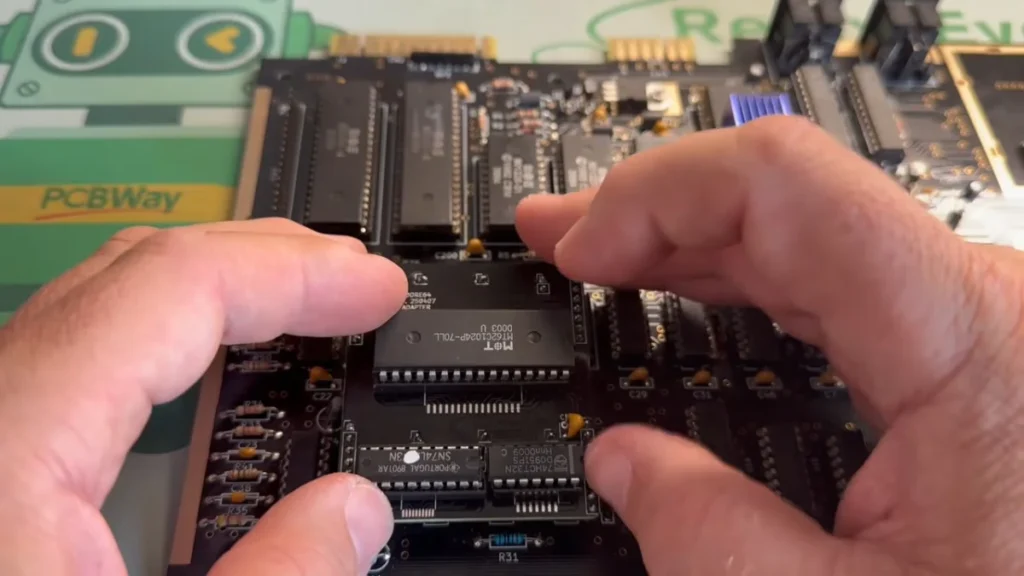
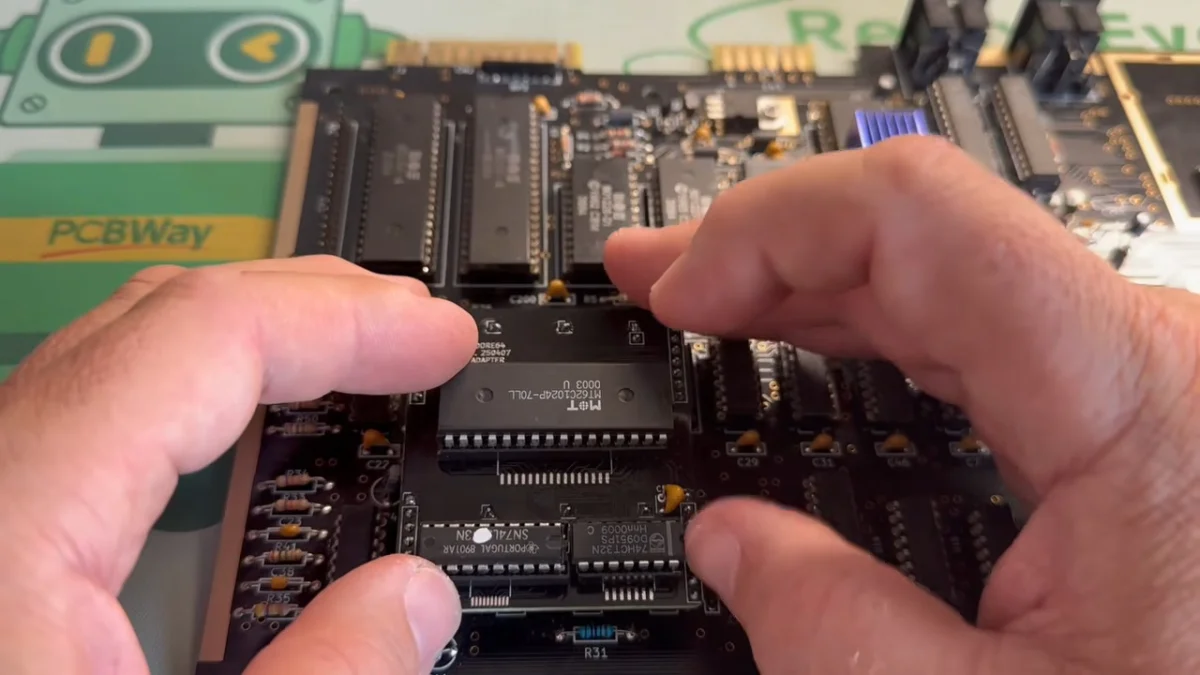
The adapter board facilitates the integration of modern, easily-available static RAM (SRAM) chips into vintage C64 motherboards, specifically targeting the widely used 250407 revision. This clever engineering bypasses the limitations of the original DRAM architecture, providing a stable and reliable memory solution. The initiative not only addresses a critical hardware vulnerability but also champions the spirit of open-source development, making the design freely accessible for modification and adaptation across the broader retrocomputing landscape. The C64, renowned for its enduring legacy and impact on personal computing, can now look forward to a renewed lease on life, thanks to the dedication of its passionate community.
Chronology: A Journey Through Memory – From 1981 Cost-Cutting to 21st Century Preservation
The story of the Commodore 64’s memory challenges is deeply rooted in its very inception, a tale of visionary leadership, aggressive market positioning, and the relentless pursuit of affordability that defined the early personal computer era.
The Dawn of the C64: Jack Tramiel’s Vision and the DRAM Imperative (Early 1980s)
In the nascent stages of personal computing, memory was arguably the most expensive component in any system. The early 1980s semiconductor market was characterized by rapidly evolving technology and prohibitive costs for advanced integrated circuits. Jack Tramiel, the fiercely competitive founder of Commodore International, harbored a singular vision: to bring a powerful 64-kilobyte computer to the masses at an unprecedented price point. This ambition was encapsulated in his famous dictum, "We need to build computers for the masses, not the classes."
Achieving 64K of RAM in 1981 was a significant technical and financial hurdle. At the time, two primary types of RAM dominated the landscape: Static RAM (SRAM) and Dynamic RAM (DRAM). SRAM, while faster and simpler to interface due to its ability to hold data as long as power was supplied without needing constant refreshing, was significantly more expensive per bit. Its internal structure, typically using six transistors per bit, made it dense but costly for large capacities.
DRAM, on the other hand, was a more complex beast. It stored data in capacitors that required periodic "refreshing" to prevent the charge from dissipating, a process managed by dedicated refresh circuitry. This complexity added to the system design, but the trade-off was immense: DRAM was far cheaper and offered higher density per chip, typically using just one transistor and a capacitor per bit. For a machine designed to hit an aggressive price point, the choice was clear and strategically vital. Commodore opted for DRAM, specifically the then-common 4164 chips, to achieve the ambitious 64K memory target without ballooning the final retail price. This decision was instrumental in the C64’s ultimate success, allowing it to retail for a groundbreaking $595, making it accessible to millions and propelling it to become the best-selling single computer model of all time. The very name, "Commodore 64," became synonymous with its then-impressive memory capacity.
The Inevitable March of Time: Retrocomputing’s Memory Crisis (21st Century)
Fast forward several decades, and the very component that enabled the C64’s affordability and ubiquity has become its Achilles’ heel. The 4164 DRAM chips, like all electronic components of their era, were not designed for indefinite operation. Over forty years of thermal cycling, voltage fluctuations, and the inherent degradation of materials have taken their toll. The tiny capacitors within the DRAM chips are prone to failure, losing their ability to hold a charge effectively, leading to memory errors, system crashes, and ultimately, a dead computer.
The rise of retrocomputing as a vibrant hobby and a critical preservation movement has brought this issue into sharp focus. Enthusiasts worldwide dedicate themselves to restoring, maintaining, and even enhancing vintage computer systems. However, the scarcity of original, functional 4164 DRAM chips has become a major impediment. The supply of new-old-stock (NOS) chips has dwindled to near zero, and those few available on the secondary market are often unverified, expensive, and just as susceptible to age-related failure. This created a significant bottleneck for C64 restoration projects, threatening to render many machines inoperable.
The Community Rises: Fabio Battaglia’s SRAM Adapter (Contemporary Solution)
In response to this growing crisis, the retrocomputing community, characterized by its ingenuity and collaborative spirit, began to seek modern alternatives. Fabio Battaglia, under his online moniker [hkzlab], emerged with a compelling and practical solution. Leveraging modern semiconductor manufacturing, which has made SRAM chips incredibly affordable and widely available in various capacities, Battaglia designed an adapter board to bridge the technological gap between the C64’s vintage DRAM interface and contemporary SRAM chips.
His development was not merely about replacing a failing part; it was about designing a robust, long-term solution. The adapter board intelligently translates the signals and pinouts required by the C64’s memory controller to interface seamlessly with modern SRAM chips, which do not require the complex refresh cycles of their DRAM predecessors. This eliminates a significant point of failure and simplifies the memory subsystem. The initial design specifically targets the 250407 motherboard, a common revision found in many C64s, making it immediately applicable to a large segment of the existing machine base. By releasing the design as open-source, Battaglia ensured that the solution could be freely replicated, modified, and improved by the community, fostering a collaborative approach to preservation. This pivotal development marks a new chapter in the C64’s life, moving from an era of vulnerability to one of sustainable longevity.
Supporting Data: The Technical Nuances of Memory and Preservation
To fully appreciate the significance of the SRAM adapter, it’s essential to delve into the technical underpinnings of DRAM versus SRAM, the reasons for DRAM failure, and the ingenious engineering behind Battaglia’s solution.
DRAM vs. SRAM: A Technical Deep Dive
The fundamental difference between Dynamic RAM (DRAM) and Static RAM (SRAM) lies in how they store data.
-
DRAM (Dynamic RAM): Each bit of data in DRAM is stored as a charge in a tiny capacitor. Because capacitors naturally discharge over time, DRAM requires constant "refreshing"—periodically reading the data and writing it back—to maintain its contents. This refresh cycle is managed by a dedicated memory controller, adding complexity to the system design. While denser and cheaper to produce per bit, DRAM is slower than SRAM due to the refresh cycles and requires more power during active use (though modern DRAM can be very power-efficient in standby). The 4164 chips used in the C64 are examples of 64Kx1-bit DRAM, meaning each chip holds 65,536 bits and interfaces one bit at a time. The C64 uses eight such chips (plus one for the color RAM) to achieve its 64KB (64K x 8 bits) main memory.
-
SRAM (Static RAM): In contrast, each bit of data in SRAM is stored using a latch, typically a six-transistor circuit (though variations exist). This latch holds the data as long as power is supplied, without needing any refresh cycles. This makes SRAM faster, simpler to interface, and consumes less power when idle. However, due to its more complex internal structure (more transistors per bit), SRAM is historically less dense and more expensive per bit than DRAM, especially for large capacities. Modern manufacturing has drastically reduced the cost and increased the density of SRAM, making it a viable alternative for many applications.
Why Vintage DRAM Fails: The Silent Killer of Retro Hardware
The failure modes of vintage DRAM chips are multifaceted and primarily age-related:
- Capacitor Degradation: The microscopic capacitors within the DRAM cells are the most vulnerable. Over decades, the dielectric material in these capacitors can degrade, leading to leakage currents. This means they can no longer reliably hold a charge, resulting in data loss and memory errors.
- Electromigration: The continuous flow of electrons through the microscopic traces within the chip can, over time, displace metal atoms. This leads to opens or shorts in the circuitry, disrupting chip function.
- Bond Wire Issues: The tiny wires connecting the silicon die to the external pins of the chip can corrode or break due to thermal expansion/contraction cycles or impurities.
- Heat Damage: Prolonged operation, especially in systems with poor ventilation, can accelerate all these degradation processes.
- Manufacturing Defects: While rare, latent manufacturing defects can manifest after many years of use.
These failures often present as characteristic memory errors on the C64’s boot screen (random characters or colors) or system instability and crashes.
The HkZlab SRAM Adapter: An Engineering Marvel
Fabio Battaglia’s SRAM adapter board effectively solves these problems by replacing the problematic 4164 DRAM chips with modern, reliable SRAM. The adapter’s design addresses several key challenges:
- Pinout Conversion: The pin configuration of modern SRAM chips (e.g., 62256 or similar 32Kx8-bit SRAMs) is different from the original 4164 DRAM. The adapter acts as an intermediary, correctly routing the address, data, and control lines.
- Refresh Elimination: The adapter handles the fact that SRAM does not require refresh cycles. It presents a stable memory interface to the C64’s CPU and VIC-II (video interface chip) without the need for the original refresh logic.
- Capacity Mapping: The C64 uses eight 64Kx1-bit DRAM chips to create a 64KB (8-bit wide) memory bank. A single modern 32Kx8-bit SRAM chip might seem insufficient, but with clever addressing and potentially using two SRAM chips per adapter (or more complex arrangements depending on the specific SRAM chosen), the adapter can seamlessly provide the required 64KB. For instance, using a 128Kx8-bit SRAM and mapping the lower 64K for the C64 is a common approach.
- Motherboard Compatibility: The adapter is specifically designed for the C64’s 250407 motherboard, ensuring a direct fit and minimal modification for a vast number of machines. The open-source nature means that enthusiasts with different motherboard revisions can adapt the design to suit their needs.
Market Dynamics: The Cost-Effectiveness of Modern Solutions
The economic argument for the SRAM adapter is compelling. A single, verified working 4164 DRAM chip can command prices upwards of $10-20 on the secondary market, if available at all. Considering a C64 requires eight of these chips, the cost of replacing a full memory bank can easily exceed $80-160, with no guarantee of longevity. In contrast, modern SRAM chips are mass-produced and cost mere dollars apiece. The adapter board itself, being a simple PCB with a few passive components and a logic chip or two, can be manufactured at a very low cost, especially when produced in small batches by the community. This makes the SRAM adapter a far more affordable and sustainable solution for C64 owners.
Official Responses: The Voice of the Community
Given that Commodore International ceased operations decades ago, there is no "official" corporate response to the challenges of C64 hardware longevity. Instead, the "official" response emanates from the vibrant and highly engaged global retrocomputing community itself. This decentralized, collective intelligence is where solutions are born, validated, and disseminated.
Community Endorsement and Adoption
The immediate and enthusiastic reception of Fabio Battaglia’s SRAM adapter within the retrocomputing community serves as the strongest possible endorsement. When significant hardware solutions emerge, they are typically met with a wave of excitement across dedicated forums, social media groups, YouTube channels, and specialized websites.
- Influencer Validation: Content creators like "The Retro Shack," whose video "The C64’s Biggest Weakness Finally Fixed?" was highlighted by tipster Keith Olson, play a crucial role. These channels act as de facto reviewers and demonstrators, showcasing the functionality and benefits of such projects to a wide audience. Their positive reviews and practical demonstrations provide credibility and encourage adoption. The video, embedded in the original article, clearly illustrates the adapter in action, dispelling any doubts about its efficacy.
- Forum Discussions: Discussions on platforms like Lemon64, Retro Computing Forum, and Reddit’s r/c64 quickly pick up on such innovations. Users share their experiences, troubleshooting tips, and potential modifications, further refining the design and broadening its reach. The open-source nature of hkzlab’s project actively encourages this collaborative feedback loop.
- Open-Source Contributions: The fact that the design is open-source (available on GitHub) means that the community isn’t just consuming the solution but actively contributing to it. Developers can "fork" the repository, propose improvements, adapt the design for different C64 motherboard revisions, or even integrate it into other vintage computer projects. This collective ownership and continuous improvement embody the spirit of the retrocomputing movement.
The Role of Preservation Groups and Events
Dedicated preservation groups and events, such as those organized by regional retrocomputing clubs or larger gatherings like VCF (Vintage Computer Festival), also play a critical role in disseminating and validating these community-driven solutions. Workshops often feature demonstrations of such adapters, and experienced hobbyists share their knowledge, providing hands-on support for implementation. This collective effort ensures that valuable innovations like the SRAM adapter reach a wide audience and are integrated into standard repair and restoration practices.
In essence, the "official" response is a resounding vote of confidence from thousands of passionate individuals committed to keeping these digital relics alive. It’s a testament to the power of community-driven engineering in the absence of corporate support for legacy hardware.
Implications: A Resurgence for the Commodore 64 and Beyond
The development and adoption of the SRAM adapter by Fabio Battaglia carries profound implications, not just for individual Commodore 64 owners but for the broader retrocomputing movement and the philosophy of hardware preservation.
Extending the Lifespan of a Digital Icon
The most immediate and significant implication is the dramatic extension of the Commodore 64’s operational lifespan. With unreliable and irreplaceable DRAM chips being the primary point of failure for many machines, the SRAM adapter removes a critical bottleneck. Thousands, if not tens of thousands, of C64s worldwide that might otherwise have been relegated to non-functional display pieces or part donors can now be fully restored to working order. This means more users can experience the original hardware, run classic software, and delve into the machine’s unique programming environment for many years to come. It secures the C64’s place as a living piece of computing history rather than a museum exhibit.
Sustainability and Reduced Reliance on Scarcity
The adapter promotes a more sustainable model for retrocomputing. By shifting away from the dwindling and expensive supply of original vintage components, it champions the use of modern, mass-produced, and affordable parts. This reduces the pressure on the secondary market for NOS chips, which often leads to price gouging and the circulation of unverified, potentially faulty components. It fosters an ecosystem where hardware restoration is more accessible and less prone to speculative pricing, making the hobby more inclusive.
The Power of Open-Source Hardware in Niche Markets
Battaglia’s decision to make the SRAM adapter an open-source project is a powerful affirmation of the open-source hardware (OSHW) movement. In niche markets like retrocomputing, where commercial interest from large corporations is non-existent, the OSHW model thrives. It allows for:
- Rapid Iteration and Improvement: The community can contribute to design improvements, adapt the board for different motherboard revisions, or even integrate additional features.
- Decentralized Manufacturing: Individuals or small businesses can produce these boards, fostering local economies and ensuring availability regardless of geographical location.
- Knowledge Sharing: The documentation and schematics become a shared resource, educating enthusiasts on vintage hardware design and modern interfacing techniques. This collaborative spirit ensures that solutions are robust, widely available, and continuously refined.
Future Challenges and Opportunities in Retrocomputing
While the SRAM adapter solves a major problem, it also highlights the ongoing challenges in retrocomputing. The C64, like many vintage machines, relies on several custom integrated circuits (ASICs) that are equally susceptible to failure:
- VIC-II (Video Interface Chip): Responsible for graphics and sound.
- SID (Sound Interface Device): The legendary sound chip.
- PLA (Programmable Logic Array): A custom chip handling address decoding and control signals.
The success of the SRAM adapter could serve as a blueprint for addressing these future challenges. Similar community-driven, open-source projects might emerge to create modern, FPGA-based (Field-Programmable Gate Array) replacements for these custom ASICs, ensuring that even if original chips fail, the C64 can continue to function. This push towards "re-implementation" rather than just "replacement" could be the next frontier for retro-preservation.
Economic and Educational Impact
The reduced cost of C64 restoration, thanks to solutions like the SRAM adapter, can have a positive economic impact. It lowers the barrier to entry for new enthusiasts, potentially expanding the community. Furthermore, the process of understanding and implementing such an adapter offers significant educational value, teaching electronics, soldering, and retro-hardware architecture in a practical, hands-on manner. It connects current generations with the foundational technology that shaped the digital world they inhabit.
In conclusion, Fabio Battaglia’s SRAM adapter is more than just a replacement part; it is a symbol of resilience, innovation, and community spirit. It ensures that the Commodore 64, a machine that democratized computing, will continue to inspire, educate, and entertain for generations to come, securing its legacy as a true digital icon.