Revolutionizing On-Device AI: TensorFlow Lite and XNNPack’s Dynamic Range Quantization Breakthrough
In the rapidly evolving landscape of mobile artificial intelligence, the ability to run complex machine learning models directly on edge devices—without relying on cloud computing—is the "holy grail" of software engineering. Today, the TensorFlow team has taken a monumental step toward this goal. Alan Kelly, a lead software engineer at Google, has announced that XNNPack, the highly optimized CPU backend for TensorFlow Lite (TFLite), now supports dynamic range quantization for Fully Connected and Convolution 2D operators.
This update represents a major shift in how developers approach on-device inference. By enabling dynamic range quantization, TFLite has effectively quadrupled inference performance compared to standard single-precision (fp32) baselines. This optimization isn’t just a marginal gain; it is a fundamental shift that democratizes high-performance AI, allowing sophisticated features to run smoothly on older hardware and lower-tier mobile devices that were previously considered too underpowered for such workloads.
The Core Innovation: What is Dynamic Range Quantization?
To understand why this development is being hailed as a "game changer," one must first understand the trade-offs of traditional quantization. Historically, developers have had to choose between two primary paths: full integer quantization or high-precision floating-point inference.

The Quantization Dilemma
- Full Integer Quantization: This approach converts both weights and activations to 8-bit integers. While it significantly reduces model size and boosts speed, it is notoriously difficult to implement. It requires a "representative dataset" to calibrate the model, and any failure to capture the correct range of values during this process can lead to significant drops in accuracy. Furthermore, unsupported operators can often cause the entire conversion process to crash.
- Floating-Point Inference (fp32/fp16): This maintains high accuracy but demands substantial computational power and memory bandwidth, which can lead to increased power consumption and latency on mobile CPUs.
The Dynamic Range Advantage
Dynamic range quantization strikes a strategic middle ground. During model conversion, the weights for Fully Connected and Convolution operators are quantized to 8-bit integers, effectively shrinking the model size. However, the activation tensors remain in their native float32 format until the very moment of inference.
During the actual execution, the layer activations are dynamically converted to 8-bit integers. The system calculates the quantization parameters—the "scale" and "zero point"—in real-time based on the observed data. Because these parameters are calculated dynamically for each operation, the model retains significantly higher accuracy than a standard fully-quantized model. The output of these operators then returns to a 32-bit floating-point format, ensuring the precision necessary for complex downstream tasks.
A Chronology of TFLite Evolution
The journey to this announcement has been marked by a series of incremental, high-impact improvements to the TFLite ecosystem:

- The Rise of XNNPack: XNNPack emerged as the backbone of TFLite, providing highly optimized, per-architecture implementations of neural network operators. It brought accelerated inference to a wide array of platforms, including ARM, ARM64, x86 (SSE/AVX/AVX512), and WebAssembly.
- The Quest for Efficiency: Recognizing that CPUs are the default target for the vast majority of mobile ML applications, the engineering team prioritized CPU performance above all else.
- The Half-Precision (fp16) Milestone: In late 2023, the team introduced half-precision inference, demonstrating that by using 16-bit floats, they could effectively double inference speeds on hardware equipped with native fp16 support.
- The Current Breakthrough: By integrating dynamic range quantization into the XNNPack backend, the team has successfully bridged the gap between the speed of quantization and the ease of use of floating-point models. This update is slated to be the default behavior in prebuilt binaries starting with TensorFlow 2.17.
Performance Benchmarks: Data-Driven Results
The impact of this update is best illustrated through the performance benchmarks conducted by the TensorFlow engineering team. They evaluated four major public models, comparing the traditional TFLite kernels against the new, optimized XNNPack implementation.
Key Performance Metrics
- Stable Diffusion: Perhaps the most impressive result, the diffusion model saw a 6.2x speed-up compared to the original float32 model.
- Accessibility: Unlike full integer quantization, dynamic range quantization does not require a representative dataset, and the process is far more robust against unsupported operators.
- Efficiency vs. Intuition: While engineers often assume that full integer quantization (which uses purely integer math) should always outperform dynamic range quantization, the benchmarks revealed a surprising reality. In many cases, dynamic range quantization actually outperformed full integer models. This is largely because the "representative datasets" used for full quantization are rarely perfect, leading to sub-optimal scale ratios that hinder efficiency. Dynamic range quantization avoids these "quantization artifacts" by adapting to the specific data it encounters in real-time.
Implications for Developers and End Users
The implications of this update ripple across the entire mobile development industry.
For Developers: Lowering the Barrier to Entry
For years, the complexity of quantization has been a barrier for non-expert developers. Requiring a representative dataset and dealing with conversion errors meant that only the most sophisticated teams could reliably deploy optimized AI. With this update, enabling optimization is as simple as setting a single flag: converter.optimizations = [tf.lite.Optimize.DEFAULT]. This change effectively democratizes performance optimization, making it accessible to any developer building for Android, iOS, or web environments.

For Hardware Longevity
By significantly reducing the computational load of AI tasks, this update extends the life of older devices. Features that once caused a phone to overheat or stutter can now run with a fraction of the power, improving both the user experience and the device’s battery life.
The Mixed-Precision Future
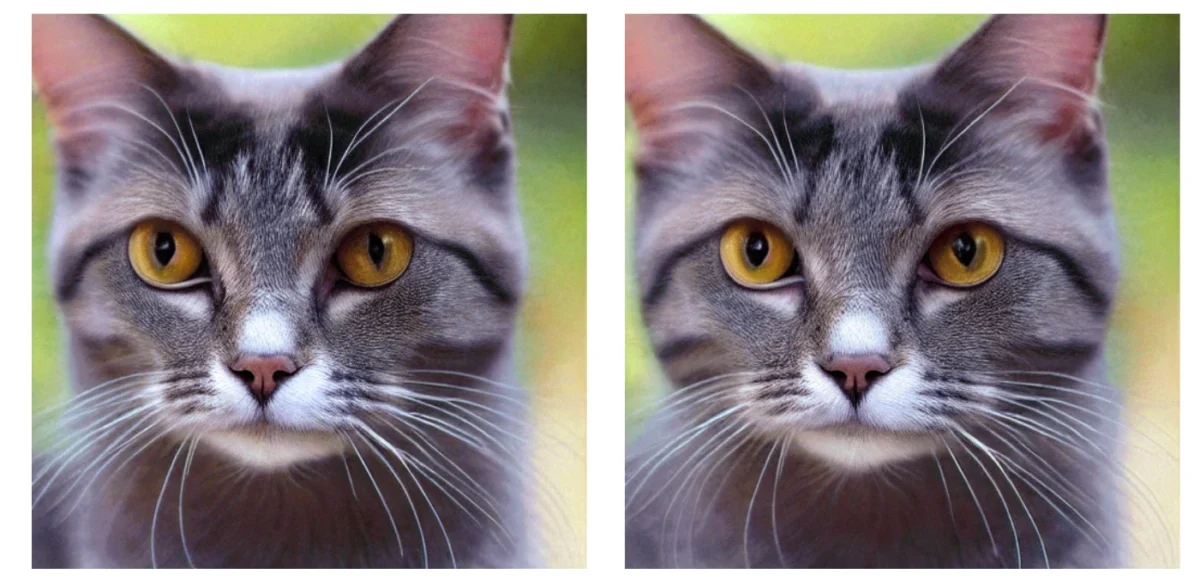
A particularly exciting implication is the ability to combine dynamic range quantization with fp16 inference. On modern processors—such as the Tensor G3 in the Pixel 8 or the Snapdragon 8 Gen 2 in the OnePlus 11—developers can leverage the best of both worlds. By using 8-bit integers for weights and fp16 for activations, the computational cost is slashed while maintaining enough precision to ensure that high-fidelity tasks, such as generative AI or image synthesis, remain visually indistinguishable from their float32 counterparts.
Official Perspective and Future Outlook
The release of this feature is not just an experimental project; it is a battle-tested solution. According to the TensorFlow team, this technology is already powering core features in industry-leading products, including Google’s Gemini, Google Meet’s background suppression, and real-time audio denoising in Chrome OS.

"Full integer quantization is hard," the team noted in their official release. "Converting models is difficult, error-prone, and accuracy is not guaranteed." By positioning dynamic range quantization as the new standard, the team is signaling a move toward a more pragmatic, performance-oriented approach to AI deployment.
Looking ahead, as mobile processors continue to integrate specialized hardware for AI acceleration, the marriage of XNNPack’s software-level optimizations and the hardware’s physical capabilities will only grow stronger. The engineering team expressed their gratitude to contributors Frank Barchard and Quentin Khan, whose work on the backend was instrumental in bringing this project to fruition.
For the open-source community, the message is clear: the tools to build next-generation, high-performance AI are now in your hands. Whether you are building a new application from scratch or looking to revitalize an existing model, the integration of XNNPack’s dynamic range quantization is the most significant step forward for on-device machine learning in recent years. By focusing on practical, accessible, and high-performance solutions, TensorFlow continues to define the standard for the future of mobile intelligence.