Scaling the Network: TensorFlow GNN 1.0 Arrives to Revolutionize Relational Data
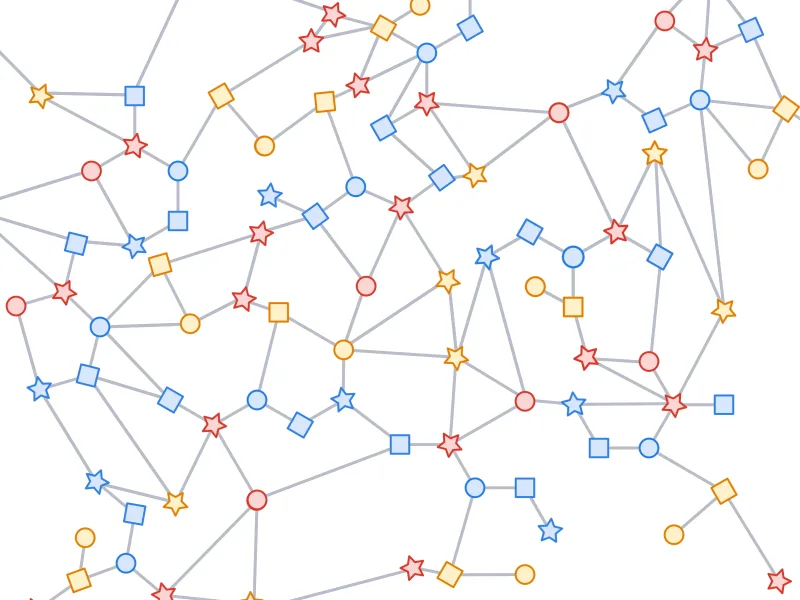
In the modern digital landscape, data is rarely an isolated point in a vacuum. From the intricate web of global supply chains and the complex architecture of neural networks to the vast interconnectedness of social media and knowledge graphs, our world is defined by relationships. While traditional machine learning (ML) has excelled at processing uniform grids—such as pixels in an image or linear sequences of text—it has often struggled to capture the irregular, non-Euclidean nature of graph data.
To bridge this gap, Google has officially announced the release of TensorFlow GNN 1.0 (TF-GNN), a robust, production-grade library designed to bring the power of Graph Neural Networks (GNNs) to the enterprise scale. Developed by a cross-functional team of engineers and researchers from Google Research, Core ML, and DeepMind, this release marks a significant milestone in how developers handle relational data within the TensorFlow ecosystem.
Main Facts: What is TF-GNN?
At its core, TF-GNN is a specialized library built to model and train neural networks on graphs. A graph, in computational terms, consists of nodes (objects) and edges (the relationships between them). Unlike standard ML models, which require input to be formatted in strict rows and columns, GNNs allow for the ingestion of irregular structures.
The library introduces tfgnn.GraphTensor, a powerful composite tensor type that acts as a first-class citizen within the TensorFlow framework. By integrating directly with tf.data.Dataset and tf.function, the library allows developers to treat graphs with the same architectural rigor as traditional tensor operations. The 1.0 release emphasizes:
- Heterogeneous Support: Real-world data is rarely uniform. TF-GNN is built from the ground up to handle heterogeneous graphs—those containing different types of nodes and edges—mirroring the complexity of real-world databases.
- Scalability: The library provides tools for dynamic and batch subgraph sampling, allowing models to process massive datasets (containing hundreds of millions of nodes and billions of edges) without crashing system memory.
- Production Readiness: With a focus on the Keras API, the library simplifies the transition from experimental research to production deployment.
Chronology: The Path to 1.0
The development of TF-GNN is the result of years of research into how deep learning can better account for structure.

- Early Foundations: The field was initially pioneered by algorithms like DeepWalk and Node2Vec, which demonstrated that capturing the connectivity of a graph could lead to powerful, predictive insights.
- Bridging the Gap: As the academic community refined Message Passing Neural Networks (MPNNs), the need for a unified, scalable software stack became clear. Researchers realized that GNNs could serve as a vital link, encoding discrete, relational information into a continuous format that traditional neural networks could digest.
- The Development Sprint: The 1.0 release is the culmination of a massive collaborative effort involving Google Research, Core ML, and DeepMind. By combining expertise in large-scale infrastructure and cutting-edge algorithmic research, the team moved through various beta iterations to refine the
GraphTensorabstraction and theRunnerorchestration tool. - The Official Launch: Following extensive internal testing and refinement, TF-GNN 1.0 was officially debuted in early 2024, providing the public with the same tools used to power Google’s own large-scale recommendation and knowledge systems.
Supporting Data: Why Graphs Matter
The importance of GNNs is not merely theoretical; it is driven by the sheer scale and ubiquity of relational data. Consider a citation database of computer science papers. Each paper is a node, and each citation is an edge. By analyzing these relationships, a GNN can predict the subject area of a paper with high accuracy, even if the text itself is ambiguous.
Subgraph Sampling: The Key to Scale
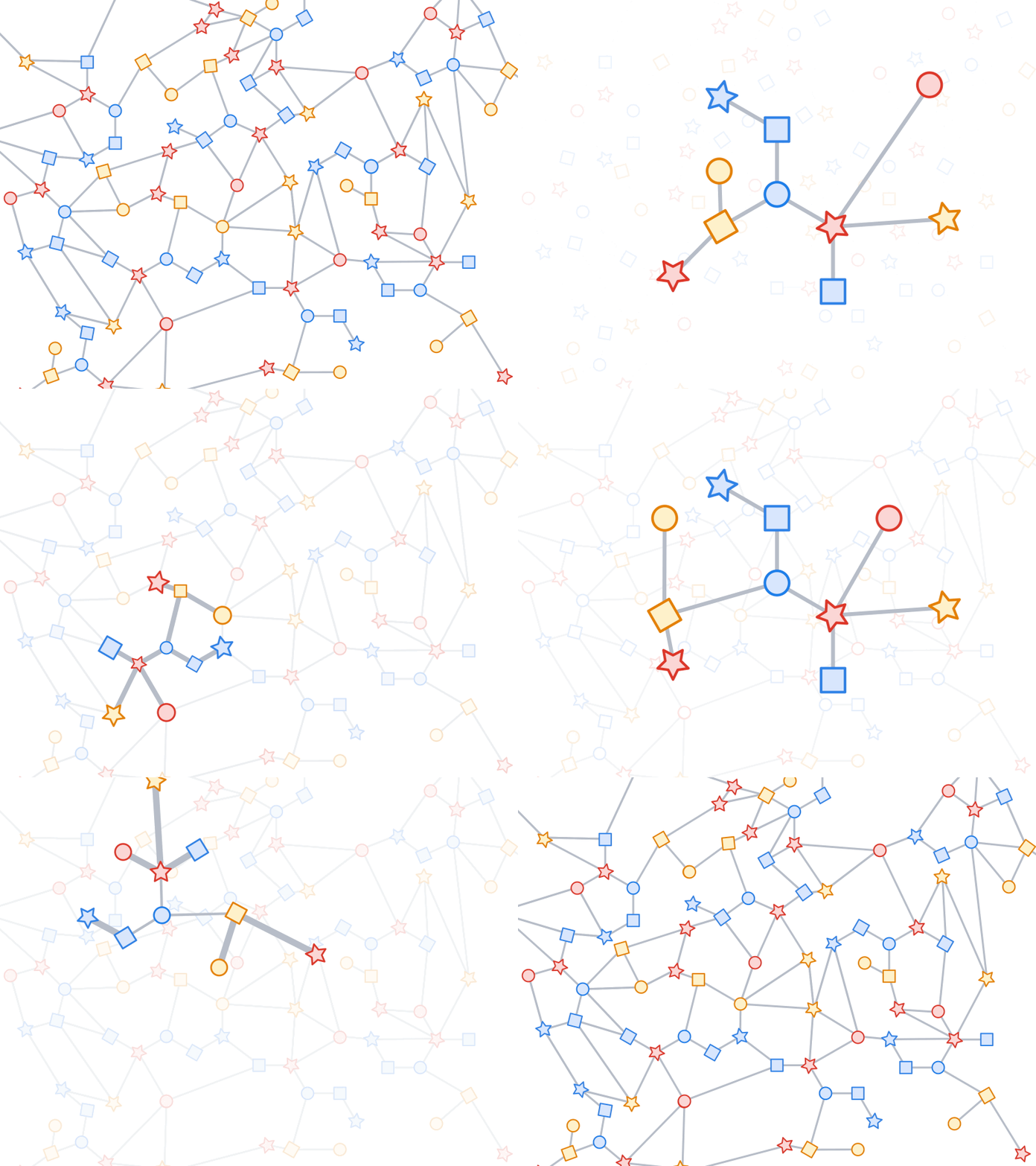
A primary technical hurdle in GNNs is the training process. While a dataset might contain millions of nodes, standard GPU memory cannot fit an entire global graph. TF-GNN solves this through subgraph sampling.
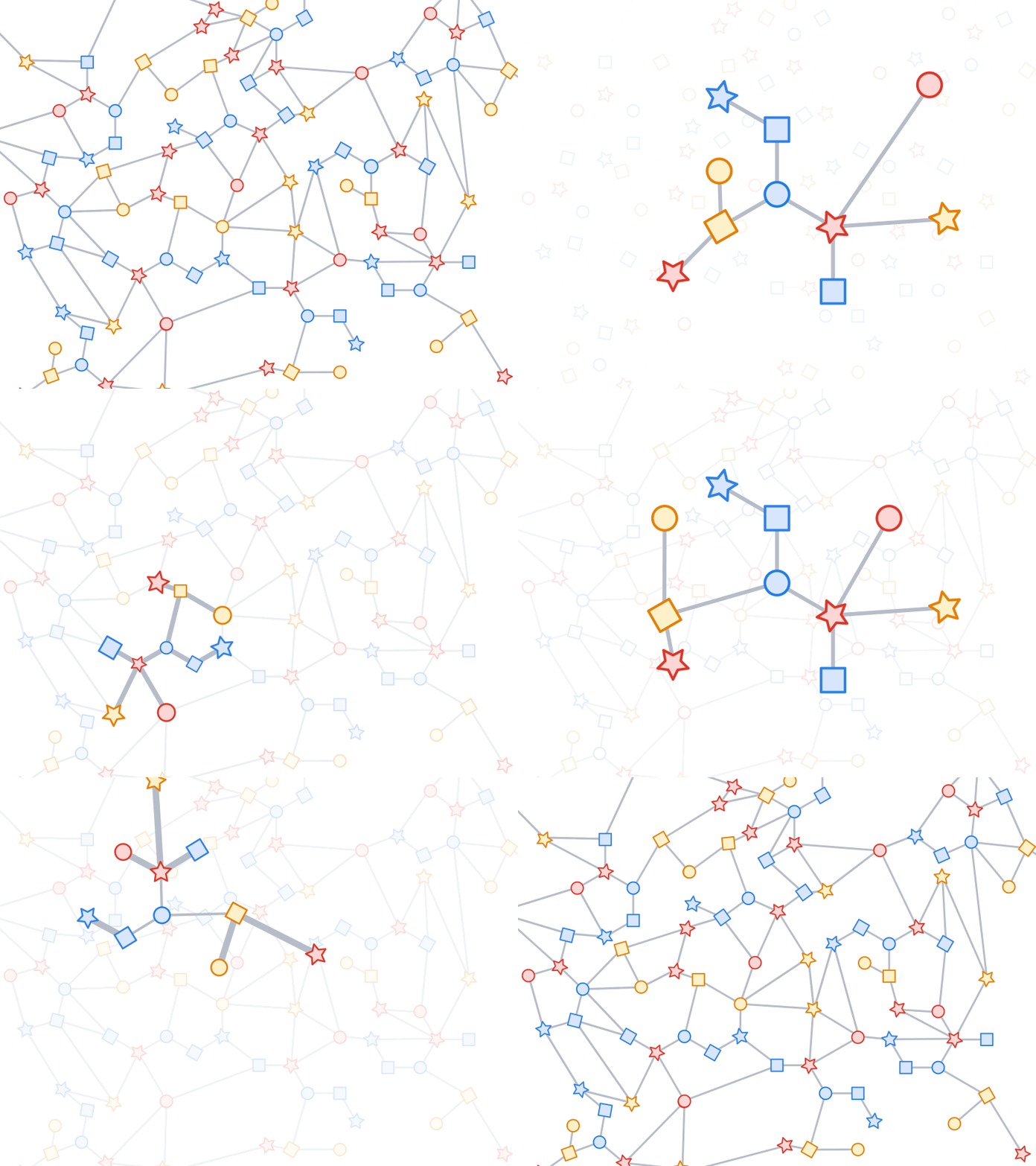
By training on a stream of small, tractable subgraphs—rather than the entire structure at once—the model learns to compute the hidden state of a "root node" by aggregating information from its immediate neighbors. This process is optimized through:
- In-Memory Sampling: Ideal for smaller datasets residing on a single host.
- Beam-Based Sampling: Utilizes Apache Beam to distribute the heavy lifting of sampling across large clusters, essential for datasets containing billions of edges.
Message Passing
The engine behind the predictions is the message-passing mechanism. In each round of training, nodes receive messages from neighbors. After n rounds, a node’s internal "state" represents a summary of its neighborhood up to n hops away. This allows the model to "see" context that is invisible to traditional, non-graph-based algorithms.
Official Responses and Perspectives
The release of TF-GNN 1.0 represents a shift in philosophy at Google regarding how ML frameworks should treat data architecture. In the official announcement, lead software engineers Dustin Zelle and Arno Eigenwillig noted that the goal was to "bridge the chasm" between research-grade graph algorithms and production-grade software engineering.
The collaborative nature of the project—spanning across Google’s most prestigious research and engineering arms—signals that GNNs are no longer a "niche" area of study. Instead, they are being positioned as a foundational pillar of the TensorFlow stack. By open-sourcing the library, Google is essentially inviting the global developer community to standardize their graph-based ML workflows, potentially accelerating the pace of innovation in fields like drug discovery, fraud detection, and recommendation systems.
Implications: The Future of Deep Learning
The release of TF-GNN 1.0 has several profound implications for the future of AI and machine learning:
1. Democratization of Complex Modeling
By providing high-level Keras APIs and a "Runner" that manages the orchestration of distributed training, TF-GNN lowers the barrier to entry. Developers no longer need to be PhD-level graph theorists to implement sophisticated models. They can utilize pre-built templates, initialize Keras layers, and rely on the library to handle the complexities of gradient backpropagation and data padding.
2. Improved Model Interpretability
One of the most exciting features in the 1.0 release is the built-in support for integrated gradients. This tool allows developers to visualize which edges and nodes contributed most to a model’s prediction. In sensitive fields like financial services or healthcare, this interpretability is not just a "nice to have"—it is a regulatory requirement. Being able to explain why a graph model reached a specific conclusion is a major step forward for AI transparency.
3. The Shift to Unsupervised Learning
TF-GNN does not limit itself to supervised classification tasks. By supporting unsupervised objectives, the library allows organizations to generate "embeddings"—continuous mathematical representations of their data. These embeddings can be exported and used in other downstream systems, allowing a company’s existing infrastructure to benefit from graph-derived intelligence without needing to overhaul their entire tech stack.
4. A New Standard for Relational Intelligence
As more industries move toward knowledge graphs to organize their internal data, the demand for tools that can natively process these graphs will skyrocket. TF-GNN is poised to become the industry standard for this task. Its ability to scale across Cloud TPUs and its integration with Apache Beam ensure that it can handle the most demanding enterprise workloads, from real-time fraud detection to complex supply chain optimization.
Conclusion
The arrival of TensorFlow GNN 1.0 is more than just a software update; it is an acknowledgment that the next frontier of artificial intelligence lies in the connections between data, not just the data itself. By providing the tools to map, sample, and learn from these relationships at an unprecedented scale, Google has provided the foundational infrastructure for the next generation of intelligent systems.
For researchers, developers, and data scientists looking to push the boundaries of what is possible, the path is clear. With comprehensive documentation, interactive Colab notebooks, and a flexible, scalable architecture, TF-GNN 1.0 invites the world to stop looking at data as flat, disconnected points and start seeing the underlying web that drives our world.
Whether you are predicting the chemical properties of a new molecule or optimizing a global logistics network, the tools to build your first GNN are now ready for the real world.