The Art of Meaningless Data: Inside the Development of waxsql
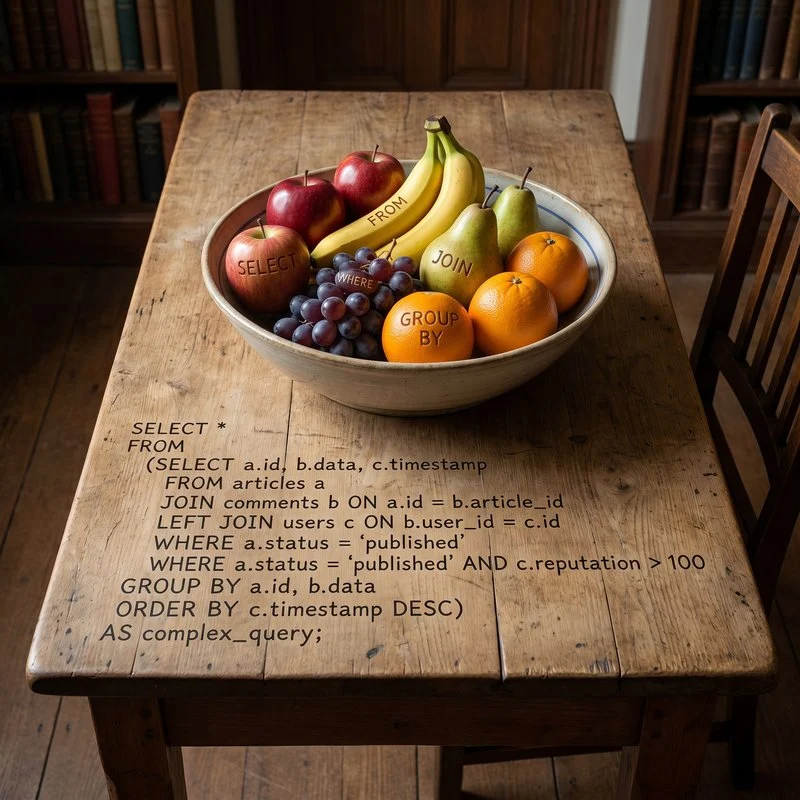
In the high-stakes world of database engineering, the ability to stress-test systems against realistic, high-volume workloads is a prerequisite for stability. Yet, generating valid, type-correct SQL that can push a query planner or a parser to its absolute limit is a notoriously difficult problem. Enter waxsql, a new open-source tool designed to generate syntactically perfect and type-correct PostgreSQL queries that are, by design, entirely devoid of business logic.
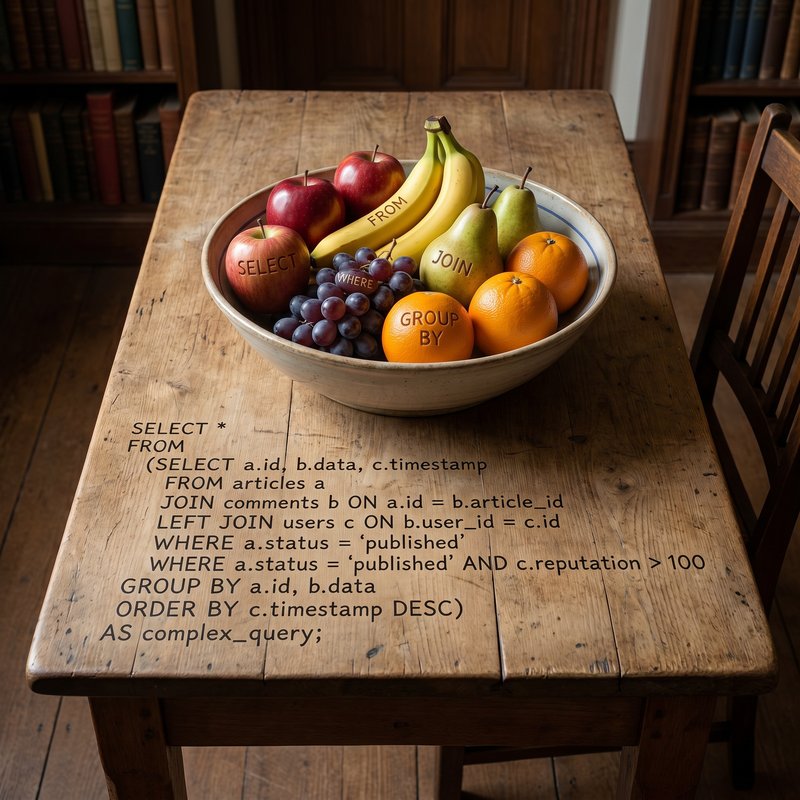
The tool’s creator describes waxsql as the digital equivalent of a bowl of wax fruit: it looks perfectly authentic, it occupies space with authority, and it will never spoil. While the data produced is computationally pointless, its structural integrity is absolute, making it an essential utility for developers tasked with fuzzing query rewriters, debugging parsers, or performing soak-testing on connection-pooling proxies.
Main Facts: The Anatomy of waxsql
At its core, waxsql is a specialized SQL generator that prioritizes type-correctness over mere grammatical validity. Unlike primitive fuzzers that randomly assemble SQL keywords, waxsql operates by understanding the underlying PostgreSQL schema. It asks the database catalog fundamental questions: "What operators produce this specific type?" and "What columns are valid in this context?"
By traversing these requirements, the tool ensures that it never produces a query that would be rejected by the PostgreSQL type resolver. It avoids common pitfalls—such as attempting to add an integer to a text field—by making such errors structurally impossible. The result is a tool that produces output capable of passing the most rigorous parse-analysis phases of the PostgreSQL engine.
Key Features:
- Type-Correctness: Every expression is generated with a target type, ensuring the query passes PostgreSQL’s semantic analysis.
- Deterministic Output: By leveraging seed-based random number generation, the tool ensures that a specific
(seed, complexity)pair will produce byte-identical SQL across different machines and Python versions. - Scalable Complexity: A single "complexity" dial (0–10) controls the depth of the SQL, ranging from simple
SELECTstatements to complexWITH RECURSIVECTEs,ROLLUP, andCUBEoperations. - Self-Validating: The package includes a multi-tier validator suite—SYNTAX, PARSE, and PLAN—to verify the integrity of every generated query.
Chronology: The Evolution of Query Generation
The lineage of waxsql sits firmly within the tradition of tools like SQLsmith, which revolutionized how developers stress-test database engines. While early SQL generation tools relied heavily on yacc grammars—often producing queries that were technically valid in syntax but nonsensical to a type-checker—the industry has moved toward smarter, model-aware generation.
Development of waxsql began with the realization that most available fuzzing tools were either too cumbersome to configure or too prone to producing errors that were caught too early in the pipeline. The goal was to create a "zero-dependency" Python library that could be dropped into any CI/CD pipeline.
By mid-2023, the focus shifted toward ensuring total determinism. The developer realized that for a fuzzer to be truly useful, a bug report must be reproducible. By pinning the generation process to a single seed, waxsql allows developers to file a simple integer as a bug report rather than a massive, opaque blob of SQL code. This breakthrough transformed waxsql from a curiosity into a practical instrument for production-grade database testing.
Supporting Data: Why "Valid" Isn’t Enough
The distinction between "grammar-correct" and "type-correct" is where waxsql distinguishes itself from its predecessors. In SQL, a query can adhere to the formal grammar of the language but still be fundamentally broken. For instance, a query might correctly place a WHERE clause after a FROM clause, but if the expression within the WHERE clause attempts to compare a timestamp to a string literal incorrectly, the PostgreSQL type resolver will immediately raise an error.
The following code block demonstrates the simplicity of the waxsql API:
from waxsql import generate_query, generate_schema, print_query

# Generate a schema with a set complexity
schema = generate_schema(seed=42, complexity=8)

# Generate a query based on that schema
query  = generate_query(seed=42, schema=schema, complexity=8)

# Output the DDL and the SQL
print(schema.emit_ddl())
print(print_query(query))
This API allows for a unique workflow: users can pin a schema seed and then sweep the query seed across thousands of values. This generates a stream of diverse, complex, and syntactically valid queries against a stable target, providing the perfect environment for "soak-testing" complex database middleware like connection poolers, proxies, or custom query-rewriting layers.
Official Responses and Validation Mechanisms
To maintain its promise of producing valid SQL, waxsql ships with three tiers of built-in validators:
- SYNTAX: Utilizing
pglast(which bundleslibpg_query), this check runs in microseconds and requires no active database connection. It ensures the query is well-formed. - PARSE: This stage executes a
PREPAREstatement against a live PostgreSQL cluster. This catches name-resolution and type-resolution errors that the syntax check cannot detect. - PLAN: This executes an
EXPLAINcommand, forcing the PostgreSQL planner to build an execution plan for the query. This is the ultimate test, as it exercises the most complex parts of the database engine.
The developer notes that the tool’s own test suite enforces these checks across thousands of seeds. The claim that waxsql produces "valid SQL" is not merely an assertion; it is a continuously verified property of the codebase.
Implications for the Database Industry
The introduction of waxsql into the open-source ecosystem has significant implications for developers working on the fringes of database technology.
Improving Parser and Optimizer Resilience
By generating queries that push the boundaries of PostgreSQL’s capabilities—such as deeply nested subqueries or complex GROUPING SETS—waxsql provides a stress-test that manual testing rarely achieves. Developers working on custom SQL transpilers or ORMs can use this tool to ensure their software doesn’t break when encountering edge-case SQL.
Streamlining CI/CD Testing
The lack of runtime dependencies and the requirement for only standard Python 3.10+ makes waxsql an ideal candidate for automated testing. Because it can be used via a CLI—piping its output directly into psql—it can be integrated into shell scripts without needing to modify the Python codebase.
A New Standard for Fuzzing
The industry has long struggled with the "reproducibility problem." When a fuzzer crashes a database or a proxy, the resulting state is often impossible to reconstruct. By prioritizing absolute determinism, waxsql elevates the standard of what is expected from a fuzzing tool. It forces the conversation to move away from "how do we catch errors" to "how do we guarantee the reproducibility of every single test case."
Conclusion: Meaningless, Yet Essential
While waxsql generates queries that hold no real-world meaning, the utility of the tool is profound. In an era where database complexity continues to grow, the ability to generate reliable, type-correct, and complex SQL at will is an invaluable asset.
By choosing to focus on the structural requirements of PostgreSQL rather than the semantics of human business logic, the creator of waxsql has built a tool that is perfectly suited for its intended purpose: to act as a robust, tireless, and predictable adversary for the most complex database systems in existence. Whether you are building a new query proxy or simply trying to break a parser for the sake of science, waxsql provides the perfect, high-fidelity synthetic workload.