The Autonomous DBA: Bridging AI Reasoning with Database Safety via the Model Context Protocol
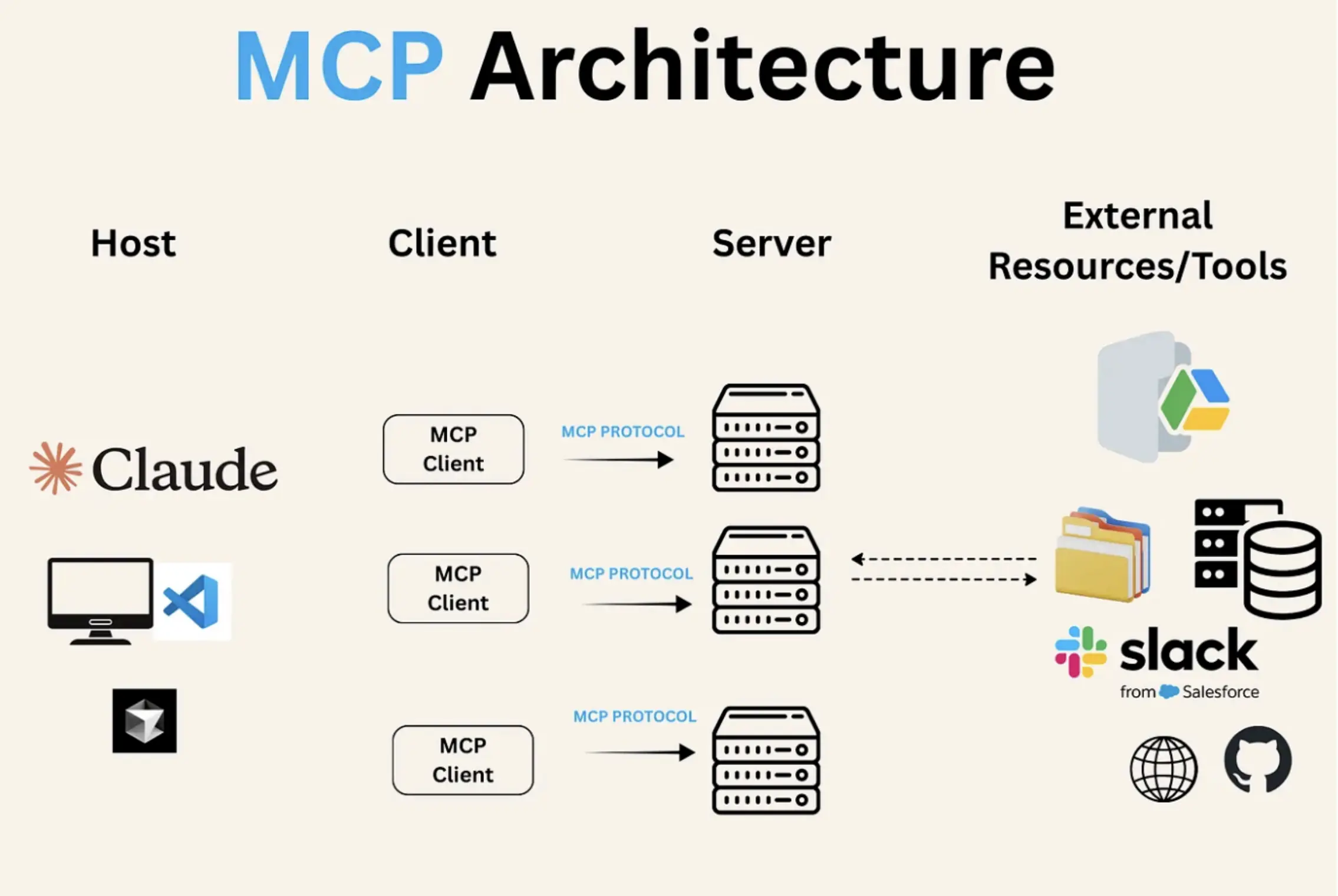
In the rapidly evolving landscape of DevOps and database administration, the integration of Large Language Models (LLMs) into production workflows has shifted from an experimental curiosity to a functional necessity. As AI agents become increasingly adept at tasks ranging from log summarization to complex anomaly detection, the pressure to apply these capabilities to database management—specifically PostgreSQL—has grown. However, this progress brings a critical tension: how can we empower AI to act as an effective, autonomous junior database administrator (DBA) without granting it the keys to destroy production data?
The answer, increasingly, lies in the Model Context Protocol (MCP). By moving away from the dangerous practice of granting LLMs raw, unrestricted database connection strings, the industry is pivoting toward a architecture that separates deterministic measurement from probabilistic reasoning.
The Operational Challenge: Safety vs. Utility
Production databases are the crown jewels of any enterprise. They are protected by rigid layers of access controls, immutable audit logs, and human-in-the-loop validation processes. When a database begins to lag or suffer from connection pressure, the recovery process is often a series of repeatable, highly predictable diagnostic steps.
For years, senior DBAs have followed a standard operating procedure: check the buffer cache hit ratio, identify idle transactions, look for bloated indexes, and verify vacuum status. Because these workflows are repeatable, they are prime candidates for automation. Yet, the traditional approach—writing a script—is brittle, while the modern approach—letting an AI "figure it out"—is hazardous. An AI agent with write access could, in a moment of hallucination, execute a DROP TABLE command or a destructive UPDATE without a WHERE clause.
The challenge is to provide enough "eyes" for the AI to analyze the system while shackling its "hands" so it cannot inadvertently disrupt service.
Chronology: The Evolution of AI-DBA Interactions
The journey toward safe AI database management has evolved through three distinct phases:
- The Scripted Era: Automation was achieved through static bash or Python scripts. These were safe and deterministic but lacked intelligence; they could dump metrics to a log file but could not interpret whether a 94% buffer cache hit ratio was an emergency or a routine fluctuation.
- The "Raw Agent" Experiment: Engineers began providing LLMs with direct database connection strings. While powerful, this led to "SQL-injection-by-AI," where models would generate destructive commands or attempt to "fix" issues by modifying schemas without oversight.
- The MCP Era: Introduced by Anthropic, the Model Context Protocol (MCP) provides a standardized communication layer. Instead of the LLM generating arbitrary SQL, it is given a toolkit of predefined, read-only diagnostic functions. The LLM acts as the brain that chooses which tool to run, while the tool itself serves as the hardened, immutable interface to the database.
Supporting Data: The Case for Deterministic Diagnostics
One of the most robust implementations of this philosophy is postgres-mcp. This project, an open-source initiative, demonstrates how to marry AI reasoning with hard-coded, reviewed safety logic.
The Mechanics of Safety
The core of postgres-mcp is a "restricted mode" that prevents the "multi-statement problem." In a standard interface, an AI might try to chain commands (e.g., ROLLBACK; DROP TABLE users;). postgres-mcp mitigates this through two defensive layers:
- Transaction Guardrails: All operations are wrapped in a
BEGIN TRANSACTION READ ONLY;block at the server level, ensuring that even if an AI attempts a write, the database rejects it. - Grammar-Level Validation: Before execution, the incoming SQL is parsed using
pglast, which validates the syntax against the actual PostgreSQL grammar. If the parser detects any node tags related to transaction control or schema modification, the request is blocked before it even reaches the database.
Quantifiable Operational Metrics
The project utilizes established diagnostics that have been used by DBAs for decades, effectively "digitizing" the experience of a senior engineer:
- Buffer Cache Hit Ratio: A vital indicator of latency. If this ratio drops below 90%, it serves as a high-fidelity signal that the database’s working set no longer fits in memory.
- Transaction ID (XID) Age: A critical health check to prevent "wraparound" failures, where a database stops accepting writes because it has exhausted its transaction identifier space.
- Replication Lag & Slot Usage: Monitoring these ensures that secondary instances remain in sync and that abandoned replication slots aren’t consuming excessive disk space.
Implications: The "Anytime Algorithm" and Performance Tuning
Beyond simple health monitoring, AI agents are now being tasked with the "index problem"—the complex task of determining which indexes will optimize a specific, high-frequency workload.
Rather than physically creating and dropping indexes (which is resource-intensive), the agent utilizes hypopg. This extension allows the database to "pretend" an index exists, enabling the query planner to estimate the performance impact without the I/O cost of an actual index build.
This process follows an "Anytime Algorithm" approach, where the agent greedily selects the most beneficial indexes one by one, stopping when the marginal gains fall below a threshold. This mirrors the human decision-making process: you don’t add every possible index; you add the ones that provide the highest ROI for your storage and write-overhead budget.
Official Perspectives and Industry Adoption
Industry experts note that this architecture—separating the model’s intent from the server’s execution—is the future of AI infrastructure.
"The goal is not to remove the engineer," says one project contributor. "The goal is to offload the cognitive load of routine troubleshooting." By delegating the gathering of facts to deterministic, proven code, the AI is freed to perform higher-level analysis, such as correlating a spike in idle_in_transaction sessions with a recent application deployment.
When asked about the role of human oversight, proponents emphasize that the AI is effectively a "highly caffeinated junior DBA." It is available 24/7, it knows every manual and error code, and it never gets tired. However, it is still prone to confident misinterpretations. Therefore, the architecture remains designed for a human to review the AI’s final assessment before any permanent, destructive action—such as adding a permanent index or modifying a configuration file—is taken.
Strategic Implications for the Future
The emergence of MCP-based database tools suggests a broader shift in how we handle AI-driven infrastructure.
- Standardization: Before MCP, every agent needed custom "glue code" to talk to Postgres. With a standard protocol, an MCP server built today works seamlessly with Claude, Cursor, Windsurf, or custom in-house agents. This ends the N x M integration headache.
- Privacy and Security: A common concern is that AI agents will leak data. However, the protocol is purely a conduit. If a company runs an MCP server on-premises, the data never leaves the corporate network, and the agent only sees what it is explicitly authorized to view through the database role assigned to it.
- The "Human-in-the-Loop" Mandate: By making the agent an "assistant" rather than an "operator," firms can maintain strict accountability. The agent provides the "why" and the "what," but the human provides the "go-ahead."
Conclusion
The integration of AI into database management has often been framed as a binary choice between risky automation and slow manual work. The Model Context Protocol, as demonstrated by projects like postgres-mcp, proves that this is a false dichotomy. By treating the LLM as a reasoning engine and the database interface as a hardened, deterministic server, we can build systems that are both fast and inherently safe.
As these tools mature, the role of the DBA will shift further toward architecture and strategic optimization, leaving the "checklist" diagnostics to the AI. This is not the end of the DBA profession; it is the beginning of a more efficient, high-leverage era where the most tedious parts of the job are handled by a machine that never sleeps, while the most critical decisions remain firmly in the hands of the human operator.