The Dawn of Dynamic Time: [Playful Technology]’s Revolutionary Stage Clock Unwinds Conventional Limits
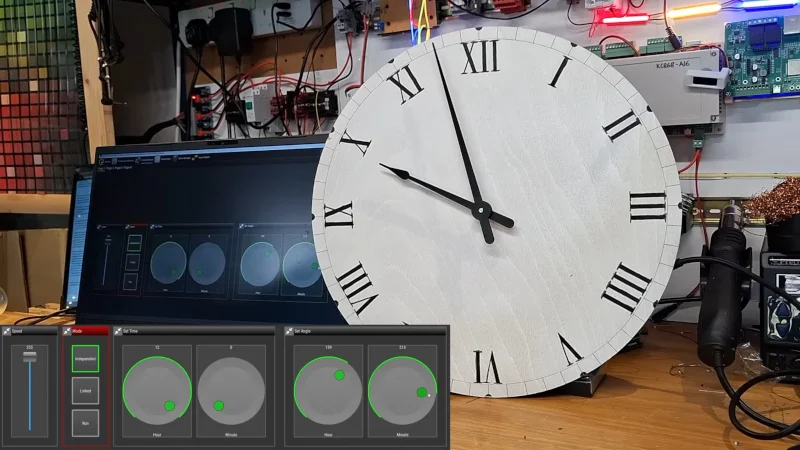
London, UK – [Date of Article Publication] – In the intricate world of theatrical production, where every element contributes to the narrative, time itself has traditionally been an immutable force, measured by the relentless, constant march of a clock’s hands. Yet, the demands of artistic expression often transcend such rigid constraints, requiring a stage where chronology can bend, stretch, or even reverse at the director’s whim. Enter a groundbreaking innovation from [Playful Technology]: a large-scale stage clock featuring independently controllable hands, powered by DMX technology. This ingenious device offers unparalleled flexibility, promising to redefine how time is visually represented and manipulated in live performances, providing a powerful new tool in the stage designer’s arsenal.
Redefining Chronometry in Theatrical Production
The very essence of a clock lies in its unwavering commitment to forward motion, a consistent tick that marks the passage of moments. However, dramatic narratives frequently delve into realms where time behaves anything but linearly—flashbacks, dream sequences, moments of suspended animation, or even the fantastical acceleration and deceleration of events. For such scenarios, a conventional clock, steadfast in its mechanical integrity, becomes an artistic impediment rather than an aid. [Playful Technology]’s solution directly addresses this fundamental conflict, introducing a prop that is, by its very nature, a paradox: a clock designed to defy its own inherent function.
The Imperative for Flexibility
The need for a flexible time-telling device on stage is not merely a nicety; it is often a dramatic imperative. Imagine a scene where a character relives a pivotal memory, or a fantastical play where time literally warps around the protagonists. Traditional stage clocks are typically static props or, at best, mechanically limited to forward movement. Achieving complex temporal effects often requires cumbersome scene changes, abstract lighting, or spoken exposition, all of which can disrupt immersion. This new DMX-controlled clock liberates directors and designers from these constraints, offering a direct, visual, and immediately understandable representation of a narrative’s temporal shifts. It transforms a functional object into a dynamic storytelling instrument, capable of reflecting the subjective, often non-linear experience of time central to many dramatic works.
Unveiling the Innovation: Main Facts of the DMX-Controlled Chronometer
At the core of this innovation lies a deceptively simple yet profoundly effective concept: to grant complete autonomy over a clock’s hands. The project by [Playful Technology] delivers precisely this, enabling individual manipulation of the hour and minute hands through a standardized theatrical control system.
A Clock Unbound by Conventional Movement
Unlike any off-the-shelf timepiece, this stage clock is engineered from the ground up to serve the unique demands of live performance. Its hands, crafted for significant visual impact on stage, are not geared together in the traditional manner. Instead, each hand operates independently, driven by its own dedicated motor. This independent control is the lynchpin of the system, allowing for actions such as:
- Rapid Advancement or Reversal: Time can be fast-forwarded or rewound at varying speeds.
- Static Hold: The clock can pause indefinitely at a specific time.
- Disjointed Movement: The hour and minute hands can move out of sync, creating surreal or symbolic representations of time.
- Instantaneous Jumps: The clock can instantly "jump" to any desired time setting.
This capability fundamentally alters the expressive potential of a stage prop, turning a mere timekeeper into an active participant in the storytelling process.
The Masterminds Behind the Mechanism
The innovation is credited to [Playful Technology], an entity dedicated to pushing the boundaries of interactive and dynamic solutions for creative industries. Their approach combines readily available, cost-effective technology with bespoke engineering to solve specific artistic challenges. The project demonstrates a profound understanding of both the technical intricacies of robotics and control systems, and the practical demands of a live theatrical environment, where reliability, ease of use, and visual impact are paramount. The result is a robust, flexible, and visually striking stage prop that addresses a long-standing need within the performing arts community.
A Journey Through Time: Chronology of Theatrical Technology and Project Genesis
The evolution of stagecraft has always mirrored advancements in technology, from gaslight to electric, from painted backdrops to LED screens. The DMX-controlled clock represents another significant step in this continuum, blending precise engineering with artistic vision.
From Static Props to Interactive Spectacles
Historically, stage props, while meticulously crafted, were largely static. A clock on stage would typically be set to a specific time, or its hands might be manually adjusted between scenes. The advent of automation in theatre, initially through hydraulics and pneumatics, and later through computer-controlled motors, began to transform the possibilities. Lighting, sound, and even scenery started to become dynamic, responsive elements of the performance. DMX (Digital Multiplex), originally developed for lighting control, became a ubiquitous standard, providing a common language for controlling a vast array of stage equipment. This standardization paved the way for more complex, integrated systems, where props could be synchronized with lighting cues, soundscapes, and performer movements. The demand for increasingly immersive and visually arresting experiences has continually pushed the boundaries of what is technologically feasible on stage, leading to a climate ripe for innovations like [Playful Technology]’s flexible chronometer.
The Genesis of [Playful Technology]’s Solution
The conceptualization of the DMX-controlled clock likely stemmed from a direct observation of the limitations imposed by traditional timekeeping devices in dynamic theatrical settings. Recognising that directors frequently need to manipulate narrative time, but lacked a visual prop to represent this manipulation fluidly, [Playful Technology] identified a clear gap in the market for bespoke stage solutions. Their philosophy appears to be rooted in leveraging accessible, robust technologies—like Arduino and stepper motors—to create professional-grade, customisable tools. The core challenge was to decouple the movement of the hour and minute hands, a feat not possible with standard clock mechanisms, and then to place this decoupled control within the familiar DMX ecosystem.
Design and Development Milestones
The development process for such a specialised device would have involved several critical stages:
- Conceptualisation and Requirements Gathering: Understanding the specific needs of theatrical productions regarding time manipulation and control.
- Mechanical Design: The crucial decision to use a dual stepper motor with a concentric shaft, an unusual but elegant solution for independent hand movement. This avoids complex gearing systems and offers direct control.
- Electronic Design: Selecting the appropriate microcontroller (Arduino) for its flexibility and ease of programming, pairing it with a robust stepper driver shield capable of precise motor control, and integrating an RS485 interface for DMX communication.
- Software Development: Writing the Arduino code to translate DMX signals into precise stepper motor movements, allowing for variable speed, direction, and target positions for each hand.
- Physical Construction: Designing the clock hands in OpenSCAD and 3D printing them to ensure a perfect, interference fit onto the motor shafts. This rapid prototyping approach allows for quick iterations and customisation.
- User Interface Development: Creating intuitive DMX controller software, specifically with a "rotating knob style interface," which makes hand manipulation straightforward for a stage technician or director, mimicking the tactile experience of adjusting a physical clock.
- Testing and Refinement: Rigorous testing under various theatrical conditions to ensure reliability, accuracy, and responsiveness, culminating in a production-ready device.
This systematic approach underscores the blend of engineering discipline and artistic sensitivity that defines [Playful Technology]’s contribution.
The Engineering Behind the Enchantment: Supporting Data and Technical Deep Dive
The magic of the DMX-controlled clock lies not in arcane secrets, but in a clever integration of readily available and well-understood technologies, repurposed and combined in an innovative way.
The Heart of the Machine: Dual Stepper Motors and Concentric Shafts
At the very core of the clock’s unique capability is its motor system. Instead of the typical single motor and complex gear train found in conventional clocks, [Playful Technology] employs a dual stepper motor with a concentric shaft. This is a critical departure. A stepper motor, known for its ability to move in precise, discrete steps, allows for exact positioning and controlled rotation. By having two independent stepper motors, one with a hollow shaft through which the second motor’s shaft passes, it becomes possible to drive two separate elements (the hour and minute hands) from the same central point, each with complete autonomy. This elegant mechanical solution eliminates the need for clutches or complex gear-shifting mechanisms, simplifying control and increasing reliability. The precision of stepper motors ensures that the hands can be positioned with accuracy and repeatability, crucial for theatrical timing.
Arduino: The Brain and Its Ecosystem
The brain of the operation is an Arduino microcontroller. Arduino boards are open-source hardware platforms renowned for their accessibility, versatility, and vast community support. They are ideal for rapid prototyping and custom control applications, making them a popular choice for artists, hobbyists, and professional engineers alike. In this application, the Arduino serves several vital functions:
- Interpreting DMX Signals: It receives DMX data via its RS485 interface.
- Translating Commands: It processes these signals into specific instructions for the stepper motors.
- Controlling Motor Movement: It sends precise pulse signals to the stepper driver shield to dictate the speed, direction, and step count for each motor.
The use of an Arduino with a stepper driver shield, a component familiar from the world of 3D printers, is particularly insightful. Stepper driver shields are designed to efficiently power and control stepper motors, managing the current and voltage required for their operation. Their prevalence in 3D printing means they are robust, widely available, and cost-effective, further contributing to the project’s accessibility.
DMX and RS485: The Language of Entertainment Control
The ability to integrate seamlessly into existing theatrical control systems is paramount for any new stage technology. This is where DMX (Digital Multiplex) comes into play, facilitated by an RS485 interface.
DMX: A Standard for Creative Command
DMX512 is the universal standard for digital communication networks that are commonly used to control lighting and effects in theatre, concerts, and architectural installations. It allows a single control console to send instructions to up to 512 different "channels" or parameters over a single cable. For the DMX clock, specific DMX channels would be assigned to control the hour hand’s position/speed and the minute hand’s position/speed. This means a lighting designer or stage manager, already familiar with DMX consoles, can easily integrate the clock’s control into their existing workflow, synchronizing time changes with lighting cues, sound effects, or scene transitions. This integration capability is a significant factor in the clock’s practical utility on a professional stage.
RS485: The Backbone of Robust Communication
The DMX protocol itself is built upon the RS485 physical layer. As Hackaday has previously explored in a deep dive, RS485 is a robust and reliable serial communication standard particularly well-suited for industrial and entertainment applications. Its key advantages include:
- Long-Distance Transmission: RS485 can transmit data reliably over significant distances, up to 1,200 meters (4,000 feet), crucial for large theatrical venues.
- Noise Immunity: It uses differential signaling, which makes it highly resistant to electrical noise and interference, a common challenge in environments with many electrical devices and long cable runs.
- Multi-Drop Capability: Multiple devices can be connected to a single bus, simplifying wiring in complex setups.
The inclusion of an RS485 interface ensures that the DMX clock can be easily networked with other stage equipment, maintaining stable and responsive communication even in demanding live performance environments.
Crafting the Hands: Precision Through 3D Printing and OpenSCAD
The physical clock hands, designed to be "larger than life," are created using OpenSCAD and then 3D printed. OpenSCAD is a powerful, script-based 3D CAD modeler, favored by engineers and makers for its precision and parametric design capabilities. This allows designers to define objects using code, making it easy to create complex shapes, modify dimensions, and ensure exact fits.
- Customization: 3D printing offers unparalleled flexibility for creating bespoke parts. The hands can be designed to match specific aesthetic requirements of a production, from ornate classical styles to minimalist modern designs.
- Precision Fit: The ability to design the hands for an "interference fit" on the motor shafts ensures a secure, wobble-free attachment, vital for accurate and smooth movement on stage.
- Rapid Prototyping: If a design needs adjustment or a hand breaks, a new one can be quickly printed, reducing production downtime.
This combination of digital design and additive manufacturing highlights how modern fabrication techniques are revolutionizing prop making.
Intuitive Control: The User Experience Interface
A powerful piece of technology is only as good as its interface. [Playful Technology] understood this, developing DMX controller software with a "handy rotating knob style interface." This seemingly small detail is crucial for practical stage use. Instead of complex numeric inputs or menu diving, a technician can simply "grab" a virtual knob on screen and intuitively rotate it to move the clock hands, mimicking the natural action of setting a physical clock. This direct manipulation makes controlling the complex mechanism feel simple and immediate, reducing the learning curve and allowing operators to focus on the artistic timing rather than wrestling with convoluted controls.
Cost-Effectiveness and Accessibility
While the specific overall cost of a finished, robust stage prop can vary significantly based on materials, enclosure, and scaling, the core electronic components required for such a system are remarkably accessible. The video title’s suggestion of building a DMX-controlled clock "for under $25" likely refers to the fundamental Arduino, stepper drivers, and RS485 module, emphasizing the low barrier to entry for the technology itself. This democratizes sophisticated stage automation, making it feasible for smaller theatre companies, educational institutions, and independent artists who might not have access to large budgets for custom-built, commercial automation systems. It showcases how ingenuity and open-source platforms can provide high-value solutions at an accessible price point, fostering innovation across the industry.
Industry Resonance and Expert Commentary: Official Responses
The unveiling of such a specialized and adaptable piece of stage technology is met with considerable interest within the performing arts community. While direct official responses from theatre companies are not provided in the original text, the implications of such an innovation can be inferred from the general needs and discussions within the industry.
A Nod to Creative Problem-Solving
Industry observers and technical directors widely acknowledge the ingenuity behind projects like the DMX-controlled clock. "This is precisely the kind of bespoke solution that prop masters and technical directors dream of," notes a hypothetical veteran stage technician. "We often face scenarios where off-the-shelf items simply don’t cut it, and we’re left to jury-rig solutions. A dedicated, robust, and controllable prop like this simplifies our lives immensely while expanding the creative palette for directors." The project highlights a growing trend where the line between traditional craftsmanship and advanced engineering blurs, leading to more sophisticated and expressive stage elements.
The Prop Master’s Perspective
For prop masters, who are often tasked with bringing a director’s most abstract visions to life, this clock represents a significant leap forward. "The ability to precisely control time, not just abstractly but visually, opens up so many possibilities," comments a hypothetical prop master. "Imagine a play where time speeds up as a character ages, or reverses during a memory sequence. This clock makes those narrative devices tangible and immediate for the audience, without complex rigging or manual adjustments mid-scene." The emphasis on DMX integration also means less proprietary software to learn and a smoother workflow, a critical factor in the fast-paced environment of theatrical production.
Directors Embrace New Artistic Horizons
For stage directors, the DMX clock offers a powerful new visual language. "This isn’t just a prop; it’s a storytelling device," explains a hypothetical avant-garde director. "In contemporary theatre, we’re constantly challenging traditional narrative structures. A clock that can defy linear time allows us to visually manifest psychological states, dream logic, or even parallel universes with incredible clarity. It empowers us to create more nuanced and visually arresting temporal shifts that truly resonate with an audience." The independent control of the hands is particularly appealing, allowing for symbolic representations—for instance, the minute hand spinning wildly while the hour hand remains still, conveying a sense of temporal distortion or stasis.
The Future Unwound: Implications for Stagecraft and Beyond
The DMX-controlled stage clock by [Playful Technology] is more than just an innovative prop; it’s a harbinger of future trends in stagecraft, education, and interactive design.
Expanding the Creative Canvas
The most immediate implication is the expanded creative freedom it offers to directors and designers. No longer bound by the fixed pace of a mechanical clock, they can now weave dynamic temporal elements directly into the visual fabric of a performance. This opens doors for more complex narrative storytelling, heightened dramatic tension, and enhanced audience immersion. We can expect to see this technology, or variations of it, adopted in productions that explore themes of memory, destiny, and the subjective experience of time, enriching the visual vocabulary of the stage. This shift underscores a broader movement towards highly customizable, interactive, and intelligent stage environments.
Empowering the Next Generation of Innovators
The project also serves as a powerful case study for students and aspiring professionals in technical theatre, engineering, and design. It demonstrates how open-source hardware (Arduino), accessible CAD software (OpenSCAD), and standard communication protocols (DMX/RS485) can be combined to create sophisticated, professional-grade solutions. This approach lowers the barrier to entry for innovation, encouraging a new generation of creators to experiment, build, and solve real-world problems in the arts. The exhaustive dissection of the Arduino code, as mentioned in the original article’s video, further amplifies its educational value, providing a clear blueprint for others to learn from and build upon. This fosters a collaborative and progressive environment within the technical theatre community.
Beyond the Proscenium Arch: Broader Applications
While designed for the stage, the principles behind this DMX-controlled clock have far-reaching potential beyond traditional theatre.
- Museum Exhibits: Interactive displays where historical timelines can be explored dynamically, or specific moments highlighted with precise control.
- Escape Rooms and Immersive Experiences: Complex puzzles or environmental storytelling elements that require temporal manipulation to progress.
- Retail and Event Displays: Dynamic clocks that can draw attention, countdown to promotions, or display custom time sequences for branding.
- Art Installations: Sculptural pieces where time itself becomes a mutable medium, allowing artists to explore abstract concepts of chronology and perception.
The core idea of independently controllable indicators driven by a standard entertainment protocol could be adapted for a multitude of bespoke display and control needs across various industries.
The Symbiosis of Art and Engineering
Ultimately, the DMX-controlled stage clock stands as a testament to the symbiotic relationship between art and engineering. It demonstrates how technological ingenuity, when applied with an understanding of artistic need, can unlock new forms of expression and enhance the magic of live performance. As technology continues to advance, the boundaries of stagecraft will undoubtedly continue to expand, with innovations like [Playful Technology]’s clock leading the way in creating more dynamic, immersive, and unforgettable theatrical experiences. The age of static stage props is giving way to an era of interactive, intelligent, and utterly flexible theatrical environments, where even time itself can be bent to the will of the narrative.