The Definitive Guide to Functional Testing: Strategies, Tools, and Best Practices
In the high-stakes world of software development, the difference between a market-leading application and a failed product often comes down to one fundamental question: Does it actually work as intended?
Functional testing serves as the bedrock of the Software Development Life Cycle (SDLC). By validating an application against specific requirements and business use cases, functional testing ensures that every feature—from a simple login button to a complex data processing engine—performs its duty precisely as expected. This guide provides an in-depth exploration of the functional testing ecosystem, offering a roadmap for QA professionals and stakeholders alike.
The Core Concept: What is Functional Testing?
At its essence, functional testing is a black-box testing methodology. It ignores the internal code structure and focuses exclusively on outputs generated by specific inputs. If a user clicks a button, does the system perform the requested action? If a user enters invalid credentials, does the system correctly reject them?
Functional testing is not merely about finding bugs; it is about verifying that the software conforms to the functional specifications document (FSD) or business requirements. It bridges the gap between what the developers built and what the stakeholders envisioned.
Chronology of the Testing Lifecycle
The functional testing process is a structured journey. While methodologies like Agile have made testing more iterative, the fundamental steps remain consistent:

- Requirement Analysis: The QA team reviews functional specifications to determine what needs to be tested.
- Test Planning: A strategy is developed, selecting the scope, tools, and resource allocation.
- Test Design: Development of test scenarios and test cases based on the requirements.
- Test Execution: Running the tests manually or via automation tools.
- Defect Reporting: Logging failures, tracking them through the lifecycle, and performing re-testing once fixes are applied.
- Exit Criteria Validation: Ensuring that the predefined conditions (e.g., all high-priority bugs closed) are met before the product is signed off for release.
Essential Functional Testing Types
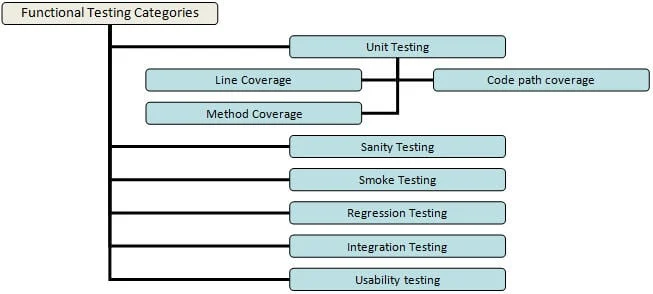
To achieve comprehensive coverage, QA teams employ various categories of functional testing, each serving a specific phase of the SDLC:
Unit Testing
Usually conducted by developers, this stage validates individual methods, functions, or classes. It is the first line of defense, ensuring that the smallest parts of the application are logically sound. Key metrics here include line, code path, and method coverage.
Smoke and Sanity Testing
Smoke testing acts as a "build verification" test. If a new build is too unstable to test, the smoke test fails, and the build is rejected. Sanity testing follows, focusing on whether major, vital functionalities are working correctly after a fix or minor update.
Integration Testing
Modern software is modular. Integration testing verifies that these distinct modules work together harmoniously. It identifies flaws in communication between interfaces and data flow between components.
Regression Testing
As new features are added, the risk of breaking existing functionality grows. Regression testing is the process of re-running functional tests to ensure that new code commits have not introduced regressions or instabilities in previously stable features.

System and End-to-End Testing
System testing evaluates the application as a holistic unit, while end-to-end (E2E) testing mimics the complete user journey from start to finish, often involving external integrations and databases.
Analytical Techniques for Test Optimization
Authoring a test case for every possible input is impossible. Professional testers use optimization techniques to maximize coverage while minimizing effort.
Equivalence Partitioning
This technique involves dividing input data into valid and invalid partitions. If a system accepts a range of 1–10, testing the number "5" is representative of the entire "valid" set. This reduces the number of test cases without sacrificing quality.
Boundary Value Analysis (BVA)
Most bugs occur at the "edges" of input ranges. If a password field requires 6 to 8 characters, testing with 5, 6, 8, and 9 characters is critical. BVA focuses on these boundaries where the system logic is most likely to fail.
Decision-Based Testing
This involves mapping out business logic paths. If a user performs action "A," outcome "B" should happen. If "A" is negated, outcome "C" should trigger. Creating a decision table helps ensure that every logical branch is covered.

Functional Test Automation: Balancing Efficiency and Reality
Automation is often touted as the "silver bullet" for testing, but it requires a strategic approach. While it significantly reduces manual effort and improves regression speed, it is not a replacement for human intuition.
When to Automate
Automation is most effective for:
- Repetitive tasks: Tests that need to be executed after every build.
- High-risk, high-frequency features: Core functionalities that the business cannot afford to break.
- Data-driven scenarios: Tests that require multiple sets of data input.
- Cross-browser/Cross-platform testing: Ensuring consistency across environments.
The Pitfalls of Over-Automation
Automating every test case is a common mistake. Tests that are brittle, require complex environment setup, or change frequently due to UI updates are poor candidates for automation. A robust strategy involves a "balanced diet" of manual exploratory testing—which is excellent for uncovering edge cases—and automated regression testing.
Supporting Data: The Case for a Dedicated Team
Research consistently shows that organizations with dedicated automation teams report higher defect detection rates. However, overloading every QA member with both manual and automation tasks often leads to burnout and reduced code quality.
Best practices for automation success include:

- Selecting the Right Tools: Evaluate tools like Selenium, Ranorex, or UFT based on the application’s technology stack, team skill set, and budget.
- Data-Driven Frameworks: Decouple test data from the script logic. Use external files (XML, JSON, CSV) so that the test framework remains maintainable.
- Resilient Selectors: Design automation to withstand minor UI changes by using stable element locators, reducing the need for constant script maintenance.
Implications of Functional Testing
The implications of robust functional testing extend far beyond the QA department.
- Customer Satisfaction: An application that functions as promised builds trust. A feature that fails on day one leads to immediate user churn.
- Cost Mitigation: The cost of fixing a bug in production is exponentially higher than fixing it during the development phase. Functional testing acts as a financial safeguard.
- Risk Management: In regulated industries (like FinTech or Healthcare), functional testing is not just a best practice—it is a compliance requirement to ensure system integrity.
Limitations: Where Functional Testing Ends
While vital, functional testing is not a complete quality strategy. It does not address non-functional requirements, such as:
- Performance: How fast is the response under heavy load?
- Security: Is the application vulnerable to injection attacks?
- Usability: Is the interface intuitive, or is the user getting lost?
Functional testing verifies what the system does, but performance and security testing verify how well and how safely it does it. A truly professional QA strategy must integrate functional and non-functional testing to ensure the product is not only correct but also robust and scalable.
Conclusion
Functional testing is the pulse of the software development process. It provides the empirical data needed to confirm that an application is ready for the real world. By employing a mix of rigorous manual techniques—such as boundary value analysis and exploratory testing—and strategic automation, teams can achieve a high standard of quality that satisfies both business requirements and user expectations.
As we look toward the future of software, the integration of AI and machine learning into functional testing will likely further automate the creation and maintenance of test cases. However, the human element—the ability to think critically about how a user interacts with a system—remains the most important tool in any tester’s arsenal.

For those interested in furthering their knowledge, we recommend exploring the provided links in our series covering everything from interview questions to the top 30 functional testing tools on the market today.