The Disposable Dilemma: Smart Rings and the Looming Repairability Reckoning
The relentless march of miniaturization in consumer electronics has brought forth an era of ubiquitous "smart" devices, seamlessly integrating technology into every facet of our lives. From wrist-worn fitness trackers to discreet earbud systems, these innovations promise enhanced convenience and data-driven insights. Yet, as these devices shrink, a critical and often overlooked challenge emerges: repairability. The Oura smart ring, a popular health tracker, has recently found itself at the nexus of this debate, with a recent teardown by repair advocacy group iFixit highlighting a severe "e-waste factor" and setting the stage for a confrontation with impending European Union regulations on user-replaceable batteries.
The Repairability Conundrum of Smart Rings
The quest to imbue every wearable device with intelligent capabilities demands an intricate dance of engineering — cramming sophisticated electronics, sensors, and power sources into increasingly confined spaces. Simultaneously, these devices must withstand the rigors of daily life, from unexpected rainstorms to routine handwashing, necessitating robust, often sealed, designs. These two factors converge to make smart rings a particularly compelling, and concerning, case study in repairability.
At the heart of the issue is the inherent design philosophy that prioritizes sleek aesthetics, water resistance, and compact form factors over the ability for consumers to maintain or repair their devices. The consequence is a growing mountain of electronic waste and a pervasive "disposable tech" culture that forces consumers to replace rather than mend their valuable gadgets.
iFixit, renowned for its meticulous teardowns and advocacy for the right to repair, recently turned its attention to a modern iteration of the Oura smart ring, specifically the Oura Ring 5. Their assessment was stark: this device, designed for intimate daily wear, is engineered to be virtually unrepairable, particularly when its integrated battery inevitably reaches the end of its life cycle. This finding is not merely a technical observation; it carries significant implications for consumer rights, environmental sustainability, and the future trajectory of wearable technology, especially in light of the European Union’s ambitious legislative agenda.
A Timeline of Wearable Evolution and Regulatory Scrutiny
The story of the smart ring’s repairability crisis is best understood through the lens of technological advancement and the parallel rise of consumer and environmental advocacy.
The Ascent of Smart Wearables
The journey of smart wearables began modestly with basic pedometers and heart rate monitors. Over the past decade, however, the category has exploded, driven by advancements in sensor technology, low-power microprocessors, and wireless communication. Smartwatches like Apple Watch and Samsung Galaxy Watch became mainstream, offering a plethora of health tracking, communication, and productivity features. As technology continued to miniaturize, designers began exploring even more discreet form factors. This led to the emergence of smart rings, promising continuous health monitoring without the bulk of a wrist-worn device. Companies like Oura Health carved out a significant niche, marketing their rings as sophisticated tools for sleep tracking, activity monitoring, and overall wellness insights. The appeal lay in their unobtrusive nature and seamless integration into daily life, often at a premium price point, with the Oura Ring 5 retailing for approximately $400.
iFixit’s Unpacking of the Oura Ring 5
iFixit’s recent teardown video, "This $400 Ring Is Designed to Die," offers a revealing, and somewhat violent, chronicle of attempting to dismantle the Oura Ring 5. Unlike earlier generations of Oura rings or some Samsung smart rings, where moderate heat application could sometimes coax internal components apart, the Oura Ring 5 proved far more resistant.
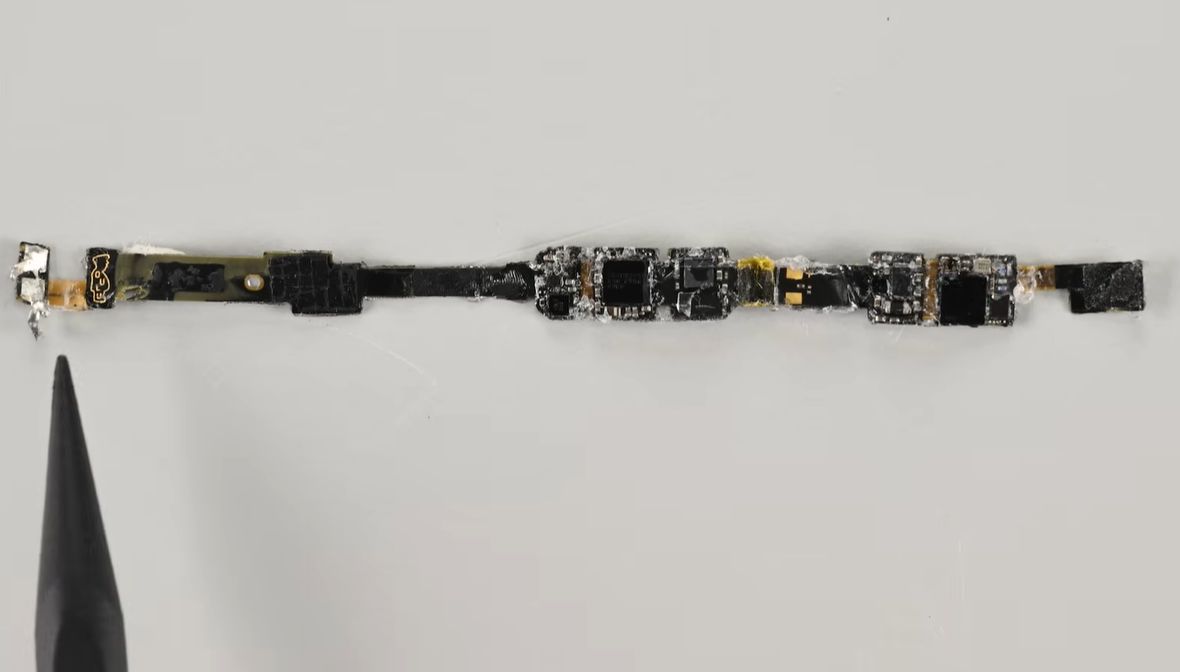
The teardown team initially applied heat, a standard procedure for loosening adhesive bonds in many electronics. However, the Oura Ring 5’s robust "metal-and-epoxy sandwich" construction remained stubbornly sealed. Escalating the heat application to the point where the inner ring began to slide out had a catastrophic consequence: the internal Li-ion battery, subjected to extreme temperatures, audibly "popped." This irreversible damage instantly rendered the device inoperable and compromised its critical water resistance.
Even after this incident, the disassembly was far from complete. The inner ring remained partially stuck, necessitating further forceful intervention. The process highlighted the sheer difficulty of accessing the ring’s minuscule internal components, especially the tiny 10.5 mAh LiPo cell. By the time the battery was finally extracted, the Oura Ring 5 was, without question, a mangled wreck – a testament to a design ethos that prioritizes sealing and structural integrity over any semblance of repairability. The exercise unequivocally demonstrated that, for the average consumer, replacing a dead battery in an Oura Ring 5 is an impossibility, effectively turning a $400 device into a piece of e-waste once its power source expires.
The European Union’s Legislative Push
This specific incident with the Oura Ring 5 occurs against a backdrop of increasing global scrutiny over the lifespan and reparability of consumer electronics. The European Union has emerged as a leader in this movement, championing a comprehensive "Right to Repair" legislative package aimed at promoting a circular economy, reducing electronic waste, and empowering consumers.
A key component of this legislation is the mandate for user-replaceable batteries in a wide range of electronic devices. With a looming deadline of February 2027, this regulation is set to fundamentally alter product design across various industries. The EU’s stance is clear: consumers should have the ability to easily replace batteries in their devices, extending product life and reducing the environmental footprint of discarded electronics.
The impact of this regulation is already being felt. Notably, Nintendo has reportedly been compelled to design a special version of its upcoming Switch 2 console specifically for the EU market, featuring a user-replaceable battery, to comply with the impending directive. This precedent underscores the seriousness with which the EU intends to enforce its legislation and the potential for widespread disruption to current manufacturing practices. For ultra-compact devices like smart rings, which rely heavily on sealed designs for durability and waterproofing, this regulation poses an existential challenge. Manufacturers will face intense pressure to either massively redesign their products, find a way to argue for an exception, or potentially withdraw from the lucrative European market altogether.
The Engineering and Environmental Imperatives
The repairability crisis of smart rings is rooted in a complex interplay of engineering challenges, economic drivers, and profound environmental consequences.
Miniaturization vs. Durability
The core engineering challenge for smart rings is achieving sophisticated functionality within an incredibly constrained volume. A device like the Oura Ring 5 packs an array of sensors—including photoplethysmography (PPG) sensors for heart rate and blood oxygen, accelerometers and gyroscopes for activity tracking, and temperature sensors—alongside a low-power processor, memory, Bluetooth Low Energy (BLE) communication module, and a battery. All of this must fit into a form factor that is comfortable, aesthetically pleasing, and durable enough to be worn on a finger 24/7.
To achieve water resistance, crucial for a device worn during handwashing, showering, or even swimming, manufacturers employ robust sealing techniques. This often involves encasing the electronics in durable materials like metal and epoxy, creating a hermetically sealed unit. While excellent for protecting sensitive components from moisture and impact, these construction methods are inherently antithetical to disassembly and repair. The very features that make the ring resilient in daily use are precisely what make it nearly impossible to open without destruction. The integrity of the seal is paramount, and any attempt to break it for repair invariably compromises the device’s original water resistance and structural strength.
The Battery at the Heart of the Problem
The Achilles’ heel of virtually all modern portable electronics, and particularly miniaturized ones, is the battery. The Oura Ring 5 contains a super-tiny 10.5 mAh Lithium Polymer (LiPo) cell. While impressive for its energy density relative to its size, LiPo batteries, like all rechargeable batteries, have a finite lifespan. Typically, under daily charge and discharge cycles, such small batteries in continuously active devices might last anywhere from two to three years before their capacity significantly degrades, leading to shorter operational times and eventually complete failure.
When this tiny, non-replaceable battery dies, the entire $400 device becomes inert. This directly fuels the burgeoning problem of electronic waste, or "e-waste." If millions of smart rings are sold globally, each becoming obsolete due to a dead battery, the collective environmental impact is staggering. E-waste contains hazardous materials such as lead, mercury, and cadmium, which can leach into soil and water if not disposed of properly. Even when recycled, the energy and resources expended in manufacturing a device that is designed for obsolescence represent a significant ecological footprint. The "disposable tech" paradigm, where a core component failure necessitates replacing the entire unit, runs contrary to principles of sustainability and resource conservation.
Economic and Consumer Impact
From an economic perspective, the current design philosophy of smart rings presents a challenging proposition for consumers. A $400 investment in a device with an anticipated lifespan of just a few years, due to an unserviceable battery, represents a considerable total cost of ownership. This forces consumers into a cycle of repurchase, benefiting manufacturers but eroding consumer trust and perceived value.
As environmental awareness grows, consumers are increasingly demanding products that are not only functional but also sustainable and long-lasting. The inability to repair a high-value item like a smart ring directly clashes with these evolving consumer expectations. The "right to repair" movement itself is a manifestation of this demand for greater longevity, transparency, and consumer control over purchased goods. Products that are demonstrably difficult or impossible to repair risk alienating a growing segment of environmentally conscious and economically savvy consumers.
Industry Reactions and Regulatory Stances
The unfolding debate surrounding smart ring repairability and the EU’s battery mandate elicits varied, and often conflicting, responses from different stakeholders.
Manufacturer’s Perspective (Oura/Wearable Brands)
Manufacturers of smart rings, such as Oura, are likely to articulate a defense rooted in design integrity and technical necessity. They would emphasize that the ultra-compact size, the desire for seamless aesthetics, and the imperative for robust water resistance necessitate the sealed, integrated designs currently employed. They might argue that any significant alteration to allow for user-replaceable batteries would compromise these critical attributes, potentially making the device larger, less durable, or less waterproof, thereby detracting from the core user experience and value proposition.
It is plausible that they would lobby for an "exception category" within the EU regulations, specifically for ultra-compact, high-performance wearables where the technical challenges of incorporating a user-replaceable battery are deemed insurmountable without fundamentally altering the product’s identity and functionality. Manufacturers might also highlight any existing recycling programs they have in place as an alternative solution to the e-waste problem, shifting the onus from repair to responsible disposal and material recovery. However, such programs are often seen by critics as insufficient to address the root issue of product longevity.
Regulatory Bodies (European Commission)
The European Commission, backed by the European Parliament and Council, is resolute in its commitment to the "Right to Repair" legislation. Their stance is unequivocally focused on reducing e-waste, promoting a circular economy, and empowering consumers with greater control over their purchased products. The regulators maintain that the general principle of user-replaceable batteries applies broadly across electronic devices, and any exceptions would need to be rigorously justified with strong technical arguments that demonstrate an absolute impossibility of compliance.
The success of the Nintendo Switch 2 in adapting to the regulation serves as a powerful counter-argument to claims of impossibility. The EU’s position is that innovation should not come at the cost of environmental responsibility or consumer rights. They expect manufacturers to innovate not just in functionality, but also in sustainable design, pushing engineering boundaries to meet both performance and repairability standards. The February 2027 deadline is firm, and non-compliance will likely lead to restrictions on market access within the EU.
Advocacy Groups (iFixit, Environmental NGOs)
Advocacy groups like iFixit, Greenpeace, and other environmental NGOs are staunch proponents of the "Right to Repair" and will continue to press for greater transparency, accountability, and repairability in product design. They contend that current manufacturing practices are unsustainable and that the "disposable tech" model is economically burdensome for consumers and environmentally destructive.
These groups highlight the environmental cost of premature obsolescence and the significant resources consumed in manufacturing and discarding short-lived devices. They advocate for a fundamental shift towards "design-for-repair" principles, where products are conceived with ease of disassembly and component replacement in mind from the very outset of the design process, rather than as an afterthought. They would likely argue strongly against broad exceptions for smart rings, viewing it as a loophole that undermines the intent of the legislation and sets a dangerous precedent for other product categories.
The Future Landscape of Smart Wearables
The intersection of rapidly advancing technology, evolving consumer expectations, and stringent new regulations is poised to profoundly reshape the future of smart rings and, by extension, the broader wearable technology market.
Redesign or Re-evaluation
The most immediate implication for smart ring manufacturers operating in the EU market is the necessity of a radical redesign. They will be forced to innovate new battery technologies or packaging methods that allow for straightforward user replacement without compromising the ring’s core attributes of size, durability, and water resistance. This could involve modular designs, albeit incredibly challenging for such small form factors, or revolutionary advancements in battery enclosure and sealing mechanisms.
Alternatively, if the engineering challenges prove too great or the cost of redesign too prohibitive, manufacturers might choose to re-evaluate their presence in the EU market. Smart rings could become a niche product available only in regions without similar stringent regulations, or their sales might significantly diminish in Europe. In an extreme scenario, if a viable redesign is impossible globally, the entire product category, in its current form, could face obsolescence. The ingenuity of engineers will be severely tested to reconcile the conflicting demands of miniaturization and repairability.
Broader Impact on Wearable Tech
The precedent set by smart rings and the EU’s battery regulation is likely to reverberate across the entire wearable technology ecosystem. Smartwatches, wireless earbuds, and other compact, sealed devices that currently suffer from similar repairability issues will inevitably come under increased scrutiny. Manufacturers of these devices will be compelled to proactively assess their designs and anticipate similar regulatory pressures, potentially leading to a broader shift towards more repairable designs across the industry.
Furthermore, if the EU’s "Right to Repair" initiatives prove successful in reducing e-waste and extending product lifespans, it is highly probable that other major global markets will follow suit. This could catalyze a worldwide movement towards more sustainable electronics manufacturing, driven by both regulatory mandates and growing consumer demand for environmentally responsible products.
Consumer Empowerment and Sustainability
Ultimately, these developments point towards an era of increased consumer empowerment and a stronger emphasis on sustainability in the tech industry. Consumers will likely gain greater control over the longevity of their devices, moving away from a forced cycle of repurchase. The ability to replace a battery, often the first component to fail, will significantly extend the useful life of many electronic products, reducing both financial burden and environmental impact.
The "Right to Repair" is not merely about fixing broken gadgets; it’s about fostering a more circular economy where resources are conserved, waste is minimized, and products are designed to last. The debate surrounding smart rings serves as a potent reminder of the delicate balance that must be struck between technological innovation, consumer convenience, and ecological responsibility. As the February 2027 deadline approaches, the choices made by smart ring manufacturers will not only define the future of their products but also underscore the profound influence of policy in shaping a more sustainable technological landscape for generations to come.