The TERMINUS Project: A Radical Rethink of Mobile Communication in the Age of Digital Fatigue
By [Your Name/Journalistic Byline]
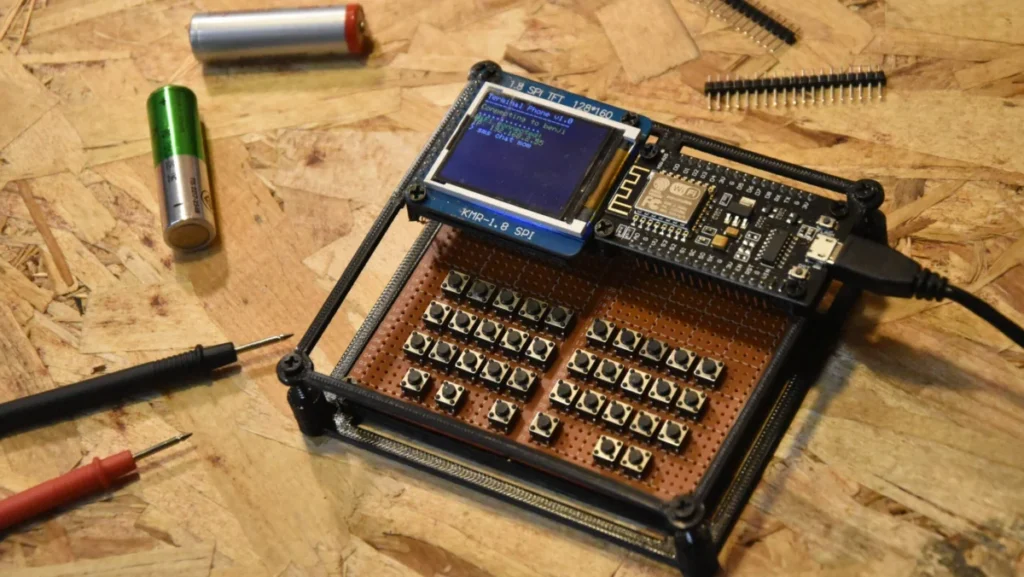
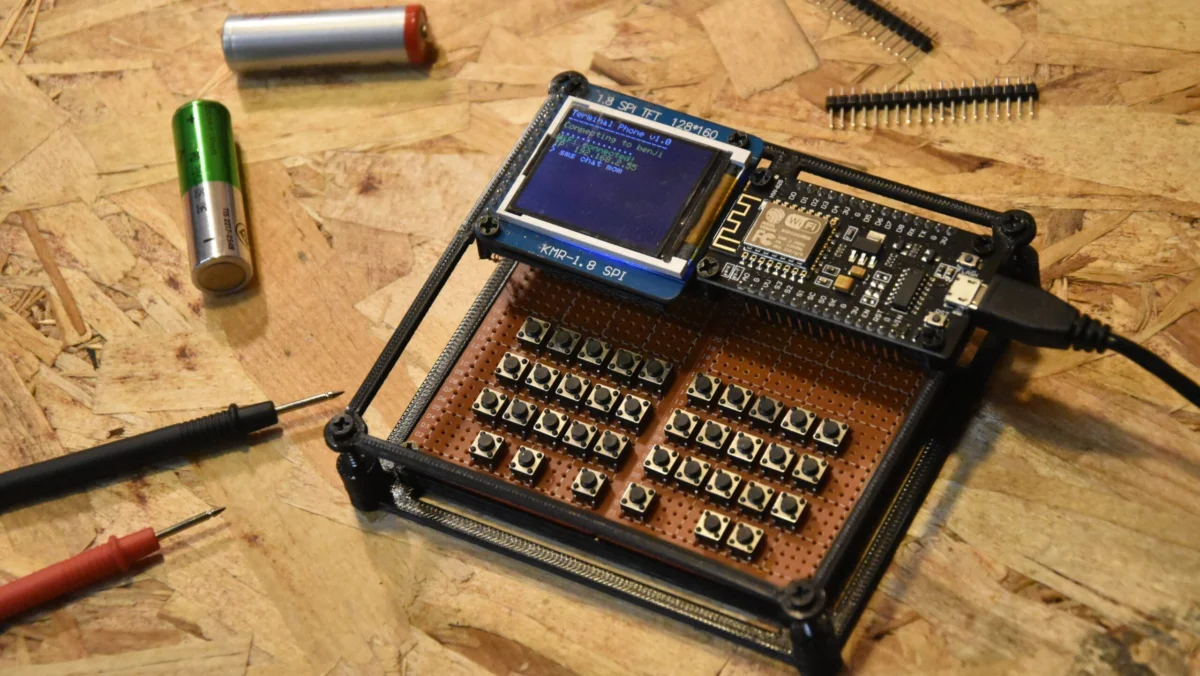
In an era defined by the omnipresent smartphone—a device simultaneously lauded for its capabilities and decried for its pervasive distractions—a singular project has emerged from the maker community, offering a starkly different vision for mobile communication. Bolan Xu’s "TERMINUS" is not merely another do-it-yourself gadget; it is a profound statement, a deliberate rejection of the digital cacophony, and a bold embrace of minimalist functionality. This texting-only cell phone, a prototype built with an ESP8266 microcontroller and a tiny OLED display, eschews voice calls, web browsing, social media, and cameras in favor of a singular, focused purpose: pure, unadulterated text messaging, complemented by the tactile satisfaction of a physical QWERTY keyboard.
The TERMINUS project taps into a growing vein of societal frustration with the modern mobile experience. As unsolicited calls, sophisticated scams, and relentless digital notifications increasingly erode the utility and peace of mind associated with our handheld devices, Xu’s creation posits a compelling alternative. It suggests that perhaps, for many, the true value of a mobile phone lies not in its boundless features, but in its ability to facilitate essential communication without the accompanying baggage of an attention economy. This article will delve into the main facts surrounding TERMINUS, trace its chronological development, explore the supporting data that underpins its rationale, consider potential responses from various stakeholders, and analyze its broader implications for the future of personal technology and digital wellness.
Main Facts: A Declaration of Digital Independence
At its core, Bolan Xu’s TERMINUS is an open-source hardware project designed to reclaim the utility of mobile communication from the clutches of digital overload. The name itself, "TERMINUS," suggests an endpoint, a boundary, or perhaps even a final destination for the relentless march of smartphone feature bloat. Conceived and developed by Xu, this device is fundamentally a cell phone stripped down to its most elemental function: sending and receiving text messages.
The primary hardware components are remarkably humble yet effective. A compact OLED display serves as the visual interface, offering crisp, clear text output while conserving power. The brains of the operation is an ESP8266 microcontroller, a popular choice within the maker community for its affordability, Wi-Fi capabilities, and sufficient processing power for many IoT and basic communication tasks. Crucially, and perhaps most defining, is the integration of a physical QWERTY keyboard. This feature is a deliberate nod to a bygone era of mobile phones, appealing to a demographic that laments the dominance of touchscreen-only interfaces and yearns for the tactile feedback and precision offered by dedicated keys.
While initially contemplating a Wi-Fi-based SMS bridging system akin to a text-only Voice over IP (VoIP), Xu ultimately opted to integrate a cellular modem. This decision, though adding a layer of complexity, ensures greater reliability and independence from Wi-Fi networks, allowing the TERMINUS to function as a true standalone mobile device anywhere there is cellular coverage.
The most striking aspect of TERMINUS, however, lies in what it deliberately lacks. There is no voice call functionality, no web browser, no access to social media platforms, and no integrated camera. These omissions are not accidental; they are foundational to the project’s philosophy. By shedding these ubiquitous smartphone features, TERMINUS offers a promise: an escape from incessant spam calls, freedom from intrusive spyware, and a significant reduction in the digital distractions that plague modern life. Currently existing in a prototype stage, characterized by its "skeletal case," TERMINUS represents a tangible exploration of what a truly minimalist and focused mobile device could be. It stands as a powerful counter-narrative to the prevailing smartphone design paradigm, challenging users and developers alike to reconsider their priorities in the digital realm.
Chronology: From Digital Frustration to a Tangible Solution
The journey of the TERMINUS project is best understood as a response to the evolving, often frustrating, landscape of modern mobile communication. Its genesis lies not in a desire for cutting-edge technology, but in a yearning for simplicity and control.
The Genesis of Digital Discontent
The seeds of TERMINUS were likely sown in the fertile ground of widespread digital fatigue. Over the past decade, smartphones have evolved from communication tools into indispensable digital Swiss Army knives, consolidating an unprecedented array of functions into a single device. While this convergence has brought immense convenience, it has also ushered in an era of constant connectivity and pervasive digital noise.
A significant contributor to this discontent is the explosion of unsolicited phone calls. According to data from the Federal Trade Commission (FTC) and various telecommunication analytics firms, robocalls and scam calls have reached epidemic proportions globally. In the United States alone, billions of unwanted calls are made monthly, ranging from simple telemarketing pitches to sophisticated phishing attempts that cost consumers billions of dollars annually. These calls not only disrupt daily life but also erode trust in the very concept of a "phone call," making users hesitant to answer unknown numbers, or even known ones. Bolan Xu’s sentiment, "unless your Grandma is still kicking, how many phone calls do you take that are actually worth picking up?" perfectly encapsulates this shared frustration, providing a potent rationale for a device that simply bypasses voice communication altogether.
The Allure of Tactile Feedback: A Nod to the Past
Beyond the avoidance of unwanted calls, TERMINUS also taps into a deep-seated nostalgia for a particular era of mobile phones. Before the iPhone revolutionized mobile interfaces with its multi-touch display, physical QWERTY keyboards were a hallmark of productivity-focused devices, most notably BlackBerry phones. For many, the tactile feedback, speed, and accuracy offered by physical keys remain superior to typing on a glass screen. The article itself notes, "that does seem to be what most of us miss in this era of black rectangles." This yearning for a more tangible, less abstract interaction with technology likely served as a significant design inspiration for Xu, aiming to recapture a sense of physical engagement that has largely vanished from mainstream mobile devices.
Project Inception and Initial Design Philosophy
While the exact start date of Bolan Xu’s TERMINUS project isn’t specified in the provided text, its appearance on Hackaday.io suggests a recent, ongoing development cycle, likely within the past year or two, given the rapid pace of open-source hardware innovation. Xu’s initial concept, as revealed in the project description, leaned towards an ingenious solution for text communication: bridging SMS over the internet via Wi-Fi. This "SMS version of VoIP" would have leveraged readily available Wi-Fi networks to send and receive messages, potentially bypassing traditional cellular carrier fees and offering a degree of independence. This approach highlights an early focus on cost-effectiveness and network flexibility.
Design Iterations and Technical Pivots
However, the practicalities of widespread, reliable mobile communication led to a crucial design pivot. Xu ultimately "ended up installing a cellular modem in it anyway." This decision, while perhaps moving away from the purely Wi-Fi-dependent model, dramatically enhances the device’s utility and reliability. Cellular connectivity ensures that TERMINUS can send and receive messages virtually anywhere there is mobile signal, without relying on the often-patchy availability of Wi-Fi hotspots. This pragmatic shift underscores the iterative nature of hardware development, where initial theoretical ideals often meet the realities of practical application.
The choice of the ESP8266 microcontroller is also telling. While the article notes that "ESP-based phones… tend to be a bit smarter, and run on ESP32," Xu’s decision to use the "more modest ESP8266" likely reflects a commitment to simplicity, cost-efficiency, and the principle of using only what is necessary. For a device whose primary function is text messaging, the ESP8266’s capabilities are more than sufficient, demonstrating a conscious effort to avoid over-engineering. The tiny OLED display further reinforces this minimalist approach, providing just enough visual information for messaging without consuming excessive power or space.
The Prototype Phase: A Glimpse into the Future
The current state of TERMINUS, described as having a "skeletal case," clearly indicates its prototype status. This raw, exposed form is characteristic of early-stage hardware projects, where functionality is prioritized over aesthetics and enclosure design. It signals that the project is still under active development, with potential for further refinement in terms of industrial design, battery life optimization, and software features. This transparent development process, common in the open-source community, allows for public feedback and collaboration, potentially guiding the project towards a more polished final form or inspiring others to build upon Xu’s foundational work.
Supporting Data: The Undercurrents Driving Minimalism
The TERMINUS project is not an isolated phenomenon; it resonates deeply with several burgeoning societal trends and empirical data points that highlight a collective re-evaluation of our relationship with technology.
The Scam Call Epidemic: A Justification for Disconnection
The most direct justification for a voice-call-free device like TERMINUS stems from the overwhelming problem of scam and robocalls. According to YouMail’s Robocall Index, Americans received over 50 billion robocalls in 2023. These calls are not merely annoying; they pose significant financial risks. The Federal Trade Commission reported that consumers lost over $10 billion to scams in 2023, with phone calls being a primary vector for fraud. The sheer volume and malicious intent behind these calls have led to a pervasive sense of distrust, rendering the traditional voice call an increasingly unwelcome intrusion. By eliminating voice functionality, TERMINUS effectively immunizes its user against this particular form of digital harassment, validating Xu’s core premise.
The Digital Detox and Minimalism Movement
Beyond specific annoyances, TERMINUS aligns perfectly with the broader cultural trend of digital minimalism and the "digital detox." A growing number of individuals are actively seeking to reduce their screen time, disengage from social media, and curate their digital lives to minimize distraction and maximize intentionality. Studies by organizations like the American Psychological Association have shown links between excessive smartphone use and increased anxiety, depression, and poor sleep quality. Devices like TERMINUS offer a tangible tool for those committed to reclaiming their attention and mental well-being, providing essential connectivity without the addictive pull of endless feeds and notifications. It’s a physical manifestation of the desire to use technology as a tool, rather than being used by it.
The Resurgence of Feature Phones and "Dumb Phones"
The idea of a simpler mobile device is not unique to TERMINUS. There has been a quiet but persistent resurgence in the market for "dumb phones" or feature phones. Companies like HMD Global (Nokia) and Punkt have seen modest success with devices that prioritize battery life, durability, and core communication functions over smartphone capabilities. For instance, the Nokia 2780 Flip, a modern feature phone, caters to those seeking a break from smartphone complexity. While TERMINUS is a DIY project and not a commercial product in the same vein, it taps into the same underlying demand for intentional, less distracting technology. It represents the ultimate expression of this trend: a phone custom-built for a specific, minimalist purpose.
Open-Source Hardware and the Maker Ethos
TERMINUS is a shining example of the open-source hardware movement. This global community of makers, engineers, and hobbyists shares designs, code, and knowledge freely, empowering individuals to build, modify, and understand their technology. The availability of powerful, affordable microcontrollers like the ESP8266 and ESP32 has democratized electronics development, moving it beyond corporate labs into garages and workshops. Projects like TERMINUS demonstrate the power of this ethos: to identify a problem, design a solution, and share the methodology, fostering innovation that might not fit traditional commercial models. The "no spyware" benefit, highlighted in the article, is a direct consequence of this open-source approach, as the transparent nature of the hardware and software makes it inherently more resistant to hidden surveillance mechanisms.
Privacy Concerns and the Quest for Control
In an era of increasing data breaches, surveillance capitalism, and concerns about personal privacy, the promise of "no spyware" is a powerful selling point for TERMINUS. Smartphones, with their myriad sensors, GPS tracking, and app permissions, collect vast amounts of personal data. While many users accept this trade-off for convenience, a significant segment of the population is deeply uncomfortable with the extent of data collection. A device like TERMINUS, with its minimal feature set and open-source foundation, offers a path towards greater digital privacy and control, appealing to privacy advocates and those wary of big tech’s data practices.
Official Responses: Echoes from the Ecosystem
Given that TERMINUS is an independent, open-source prototype, there are no "official" corporate responses in the traditional sense. However, we can extrapolate potential reactions and the broader context within which such a project would be received by various stakeholders.
The Tech Industry’s Perspective (Hypothetical)
Major smartphone manufacturers (Apple, Samsung, Google) would likely view TERMINUS as a niche curiosity, not a direct threat to their multi-billion-dollar empires. Their business models are predicated on ecosystem lock-in, continuous feature expansion, and planned obsolescence. A device like TERMINUS, which rejects virtually every one of their core tenets, serves as a stark contrast rather than a competitor.
However, its existence could serve as a subtle indicator of unmet market demand. While they may not pivot to producing "dumb phones," the growing interest in digital well-being features (screen time tracking, focus modes) within their operating systems suggests an acknowledgment of user fatigue. TERMINUS pushes this concept to its logical extreme, demonstrating that a significant segment of users might desire a far more radical intervention than mere software tweaks. Smaller, more agile electronics companies or startups, particularly those focused on niche markets or ethical technology, might pay closer attention, potentially exploring similar minimalist devices with commercial viability.
The Developer and Hacker Community
Within the open-source hardware and maker communities (like Hackaday.io, where TERMINUS was featured), the reception would be overwhelmingly positive. These communities thrive on innovation, problem-solving, and the spirit of "can I build it myself?" TERMINUS embodies these values perfectly. It’s a functional prototype that addresses a common frustration using accessible, off-the-shelf components. The project’s public documentation and the sharing of its design principles would be celebrated as contributions to the collective knowledge base, inspiring others to replicate, modify, or extend Xu’s work. The comparison to ESP32-based phones, noted in the original article, is not a critique but an invitation for further development and discussion within this collaborative environment.
Academic and Research Community
Academics in fields such as Human-Computer Interaction (HCI), digital sociology, and media studies would likely find TERMINUS a fascinating case study. It serves as a tangible example of user-driven innovation challenging established paradigms. Researchers exploring digital well-being, the sociology of technology, or the impact of ubiquitous computing could analyze TERMINUS as an artifact reflecting evolving user needs and resistances to technological determinism. It could be used to study the effectiveness of "digital detox" strategies or to explore how design choices influence user behavior and mental health. The device’s deliberate omissions make it an ideal subject for understanding the true "core" of mobile communication in a hyper-connected world.
The Public and Potential User Base
The public’s response would likely be polarized. For the majority accustomed to feature-rich smartphones, TERMINUS might appear overly simplistic or even anachronistic. However, a significant and growing minority would likely find it immensely appealing. This group includes:
- Digital Minimalists: Those actively curating their digital lives for focus and intentionality.
- Privacy Advocates: Individuals deeply concerned about data collection and surveillance.
- Nostalgia Seekers: People who miss the tactile satisfaction of physical keyboards and simpler mobile experiences.
- Parents: Those seeking a basic, distraction-free communication device for children without exposing them to the full spectrum of smartphone risks.
- Professionals: Individuals who require a secondary, robust device for essential communication during focused work periods or in environments where smartphone distractions are unwelcome.
This segmented appeal suggests that while TERMINUS may never achieve mass-market dominance, it addresses a genuine, albeit niche, demand for purposeful technology.
Implications: Reshaping Our Digital Future
The TERMINUS project, despite its prototype status and minimalist design, carries significant implications for the future of personal technology, digital wellness, and the very definition of a "phone."
Redefining the "Phone" in a Post-Smartphone Era
TERMINUS fundamentally challenges the prevailing notion that a mobile phone must be an all-encompassing supercomputer in our pocket. It proposes that the core utility of a mobile device can be radically simplified, offering a pathway to decouple essential communication from the endless features that often lead to distraction and digital fatigue. This could inspire a new category of "purpose-built" mobile devices, designed not for universal utility, but for specific, intentional use cases. Imagine a "hiking phone" with only GPS and emergency text, or a "focus phone" for students that only allows study apps and essential communication. TERMINUS is a vanguard for this potential diversification.
Impact on Digital Well-being and Mental Health
Perhaps the most profound implication of TERMINUS lies in its potential contribution to digital well-being. By stripping away common sources of distraction and anxiety—social media, internet browsing, constant notifications, and spam calls—it offers a tangible tool for mental clarity. In a world increasingly grappling with attention deficits, information overload, and the psychological impacts of constant connectivity, devices like TERMINUS could become crucial instruments for fostering mindfulness and reducing screen-induced stress. It empowers users to regain control over their attention, directing it towards real-world interactions and focused tasks.
The Power of Open-Source Innovation
TERMINUS stands as a testament to the power of open-source hardware and the maker movement. It demonstrates that meaningful technological innovation doesn’t exclusively emanate from well-funded corporate R&D labs. Individuals like Bolan Xu, armed with readily available components and a creative vision, can identify genuine user needs and develop compelling solutions. This democratizing effect of open-source technology encourages a more resilient, adaptable, and user-centric approach to technological development, fostering a community where ideas are shared and built upon rather than hoarded.
Potential for Niche Market Development
While a mass-market product based on TERMINUS might face challenges, its strong philosophical underpinnings and practical benefits suggest a viable niche market. A commercially refined version, perhaps with improved battery life, a more robust casing, and enhanced accessibility features, could appeal to specific demographics. Companies focused on ethical tech, digital wellness, or even educational tools could explore this minimalist approach. The success of existing "dumb phone" offerings indicates a latent demand that a project like TERMINUS could help further define and satisfy.
A Statement Against Planned Obsolescence and Consumerism
By choosing an ESP8266 and focusing on core functionality, TERMINUS implicitly pushes back against planned obsolescence and rampant consumerism. It suggests that complex, expensive devices with short lifespans are not the only, or even the best, solution for mobile communication. Its modular, open-source nature means it can be repaired, modified, and potentially updated by its users, extending its longevity and reducing electronic waste—a powerful statement in an industry often criticized for its environmental footprint.
In conclusion, Bolan Xu’s TERMINUS is more than just a prototype phone; it is a philosophical statement manifested in hardware. It represents a growing collective desire for intentionality, privacy, and simplicity in our digital lives. As the digital landscape continues to evolve, pushing the boundaries of connectivity and complexity, projects like TERMINUS serve as crucial reminders that sometimes, the most innovative path forward is found by looking back, and by deliberately choosing less. It prompts us to ask: what do we truly need from our mobile devices, and what are we willing to let go of to achieve it?