The Unseen Architect: How a Ribosomal "Hack" May Have Fueled Octopus Intelligence
Main Facts: Unraveling the Octopus Enigma
In the vast tapestry of life, few creatures captivate the human imagination quite like the octopus. With their eight agile arms, chameleon-like camouflage, and uncanny problem-solving abilities, these denizens of the deep exhibit a level of intelligence that has long perplexed scientists. What makes their cognitive prowess even more extraordinary is its independent evolution, a phenomenon known as convergent evolution, where similar traits emerge in species with vastly different evolutionary lineages. While primates, our closest intelligent relatives, developed their advanced brains under the pressures of complex social structures and terrestrial environments, octopuses—solitary invertebrates—achieved comparable intellectual feats in the dynamic and often hostile marine world. For decades, the precise molecular mechanisms underpinning this remarkable evolutionary leap in cephalopods remained shrouded in mystery.
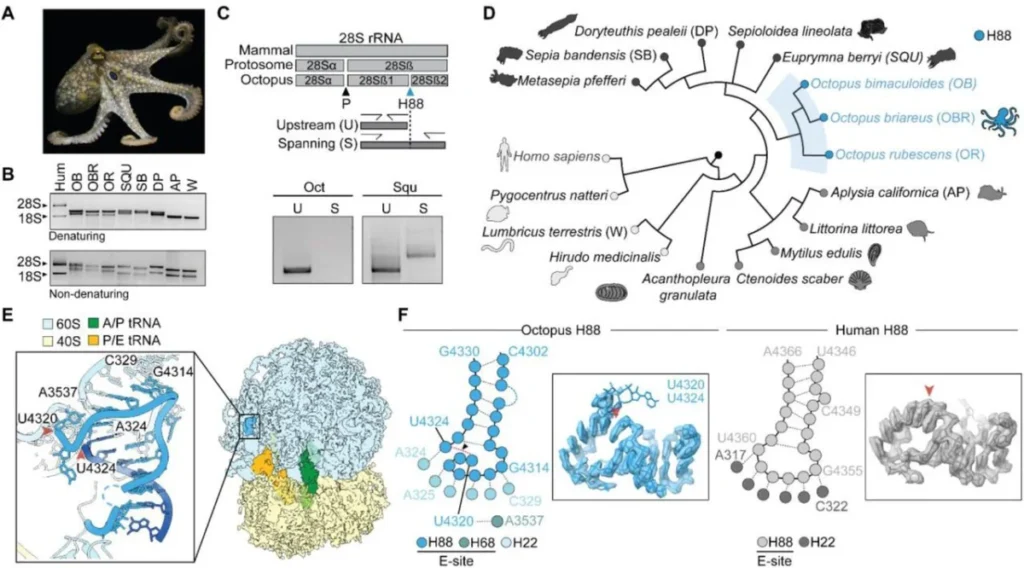
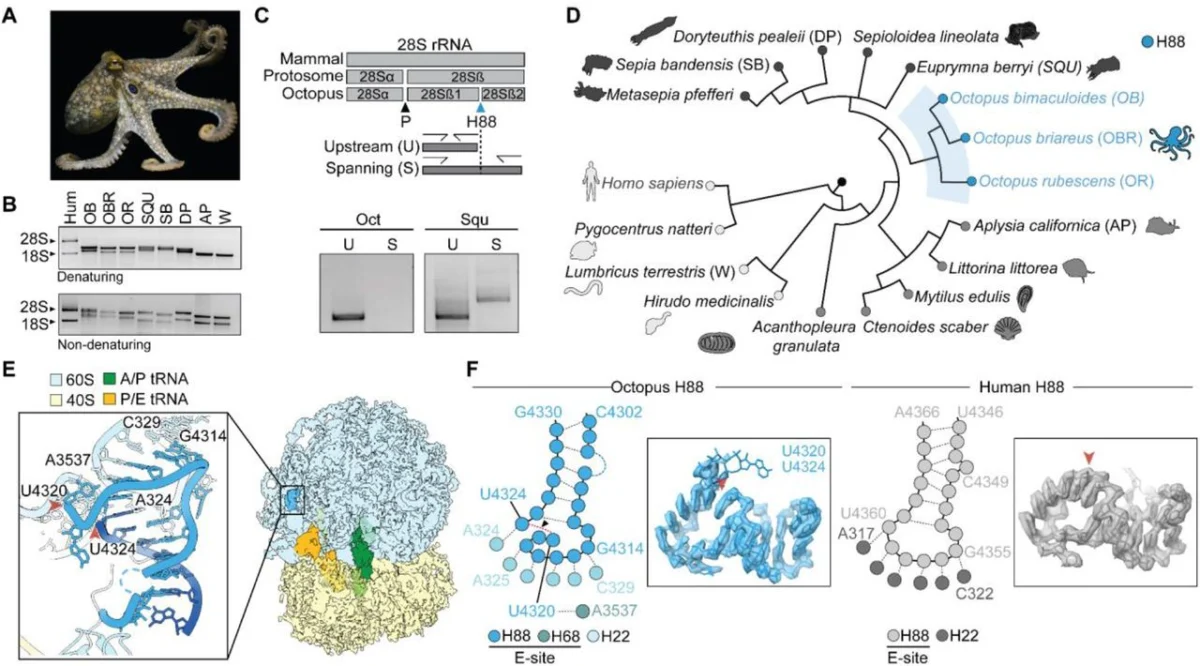
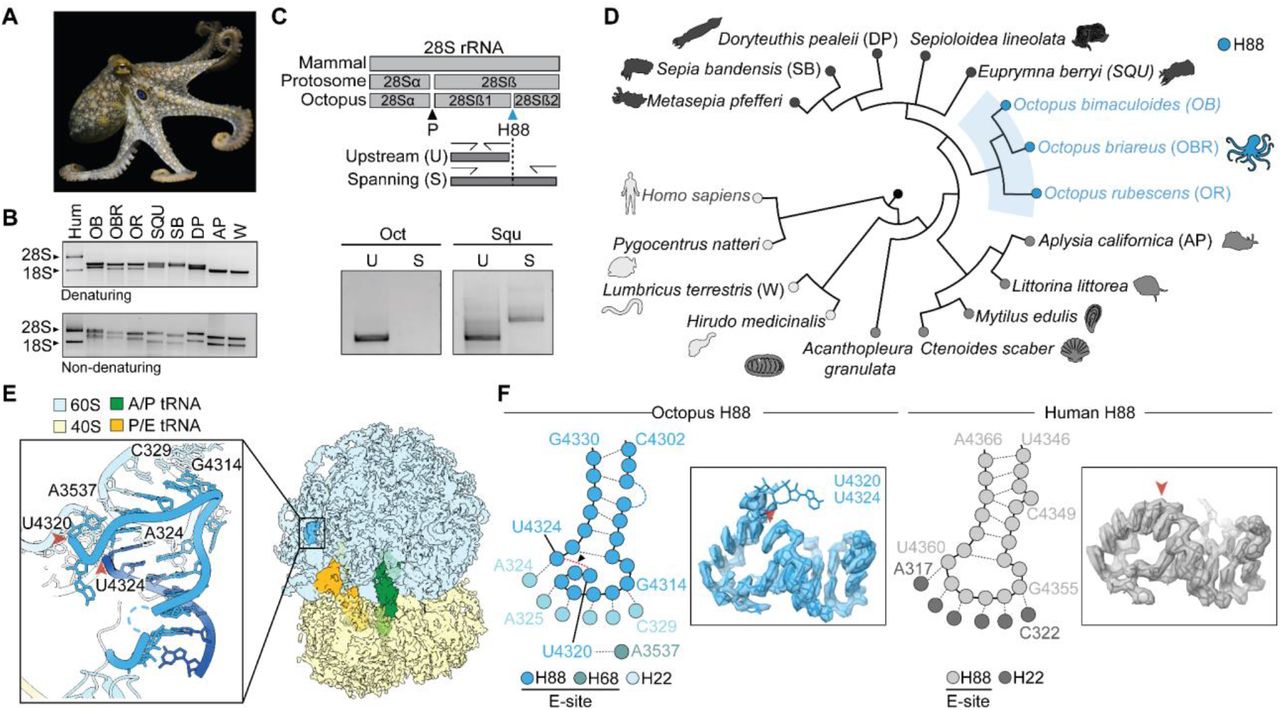
Recent groundbreaking research, spearheaded by Rishav Mitra and detailed in a pre-print on bioRxiv, has cast a illuminating light on this enigma, pointing to an unexpected culprit: the humble ribosome. Far from being a mere cellular workhorse, the ribosomes in octopuses appear to possess a unique structural modification – an H88 rRNA break – which the study suggests is a critical enabler of their sophisticated nervous systems. This discovery challenges conventional wisdom about the evolutionary stability of ribosomes and offers a tantalizing new perspective on how intelligence can emerge through fundamental alterations at the molecular level.
A Deep Dive into Cephalopod Cognition
The intelligence of octopuses is not merely anecdotal; it is well-documented through numerous studies showcasing their ability to navigate mazes, use tools, mimic other creatures, and even learn through observation. Their nervous system is decentralized, with a significant portion of their neurons residing in their arms, allowing for semi-autonomous movement and processing, yet coordinated by a complex central brain. This distributed cognition, combined with an unparalleled capacity for neural plasticity, has long placed them in a league of their own among invertebrates, often drawing comparisons to the cognitive abilities of some vertebrates, including certain primates, despite sharing no direct evolutionary link since their last common ancestor lived over 500 million years ago.
The Ribosome: A Hidden Architect of Intelligence
At the heart of every living cell, from the simplest bacterium to the most complex mammal, lies the ribosome. Often described as the cell’s protein factory, these intricate molecular machines are responsible for translating genetic information encoded in messenger RNA (mRNA) into functional proteins – the building blocks and operational machinery of life. Given their absolutely crucial role in sustaining all cellular processes, ribosomes are among the most evolutionarily conserved structures across all domains of life. Minor variations exist, but fundamental changes to their core structure are exceedingly rare, making them reliable markers for tracing evolutionary relationships.
This profound evolutionary conservatism is precisely what makes Mitra’s discovery so remarkable. The finding of a significant and unusual structural alteration—the H88 rRNA break—within the ribosomes of octopuses (belonging to the order Octopoda) represents a dramatic departure from this conserved blueprint. This "break" is not a flaw but an adaptation, one that the research indicates leads to an increase in the accuracy of protein translation. This enhanced precision is paramount for the development and maintenance of complex nervous systems, as it significantly reduces the occurrence of misfolded proteins. Misfolded proteins, in turn, are linked to a range of cellular dysfunctions and pathologies, known collectively as proteinopathy, which can be particularly devastating to long-lived, highly specialized cells like neurons. Thus, this seemingly minor ribosomal modification appears to be a molecular cornerstone for the octopus’s extraordinary cognitive capabilities.
Chronology: The Evolutionary Path to Cephalopod Genius
Tracing the Divergence: From Ancient Ancestors to Modern Marvels
The evolutionary journey of cephalopods began hundreds of millions of years ago, with the emergence of shelled ancestors during the Cambrian period. Over vast spans of geological time, these mollusks diversified, leading to the lineages we recognize today, including nautiluses, cuttlefish, squid, and octopuses. The ancestors of modern octopuses shed their external shells, adopting a more agile, soft-bodied form that allowed them to exploit new ecological niches. This shift likely coincided with an increasing reliance on camouflage, intricate movement, and sophisticated sensory perception to navigate complex three-dimensional marine environments, evade predators, and capture prey.
The pressures of these dynamic environments – characterized by intricate reef systems, open ocean expanses, and competitive ecosystems – are hypothesized to have been a major driving force behind the evolution of their advanced nervous systems. Unlike social mammals where intelligence is often linked to navigating intricate group dynamics, octopus intelligence seems to have evolved primarily as a survival mechanism in a world demanding constant adaptation, problem-solving, and rapid decision-making. Over millions of years, incremental genetic changes must have accumulated, gradually enhancing their neural capabilities, though the specific molecular pathways remained largely unknown until recently.
A Breakthrough in Understanding: The Mitra Study
The scientific community has long been fascinated by cephalopod intelligence, with researchers investigating everything from their intricate neural anatomy to their sophisticated learning behaviors. However, the underlying molecular genetic mechanisms that facilitated such rapid and profound cognitive evolution in a lineage so distantly related to vertebrates were largely speculative. Prior research had hinted at the unique genetic landscapes of octopuses, including their expanded RNA editing capabilities, but a direct link between fundamental cellular machinery and intelligence remained elusive.
It is against this backdrop that Rishav Mitra’s recent work emerges as a pivotal development. The study, currently available as a pre-print on bioRxiv, represents a significant step forward in understanding the molecular underpinnings of cephalopod intelligence. While the full timeline of the research leading to this discovery isn’t detailed, it likely involved a combination of advanced genomic sequencing, comparative ribosomal RNA analysis across various species, and meticulous biochemical experimentation. The decision to publish on bioRxiv first allows for rapid dissemination of findings and open scientific discourse prior to formal peer review and publication in a journal.
The research’s methodology was crucial in establishing the functional significance of the H88 rRNA break. By first identifying this unique ribosomal modification in octopuses through genomic analysis, the researchers then devised experiments to test its functional impact. A key part of this involved introducing a similar rRNA break into a simpler model organism, E. coli. This elegant experimental design allowed them to isolate and observe the consequences of such a ribosomal alteration in a controlled environment, thereby validating their assumptions about how these octopus ribosomes performed. This E. coli experiment was instrumental in confirming that the H88 break indeed leads to increased accuracy in protein translation, providing robust empirical support for their hypothesis. This rigorous approach not only fills a significant gap in our understanding of octopus evolution but also opens new avenues for exploring the interplay between fundamental cellular processes and the emergence of complex traits like intelligence.
Supporting Data: The Molecular Blueprint of Brilliance
The H88 rRNA Break: A Molecular Anomaly with Profound Effects
The H88 rRNA break is not a random mutation but appears to be a highly specific structural modification within the ribosomal RNA (rRNA) component of octopus ribosomes. Ribosomal RNA, along with ribosomal proteins, forms the complex architecture of the ribosome. The "break" implies a discontinuity or an altered structural integrity in a specific region, H88, of the rRNA molecule. While the precise biochemical alterations are intricate, the functional consequence is profound: it enhances the fidelity of protein synthesis.
During protein translation, the ribosome reads the mRNA sequence and recruits corresponding amino acids, linking them together to form a polypeptide chain. This process is inherently prone to errors; occasionally, an incorrect amino acid might be incorporated, or the ribosome might prematurely terminate translation. The H88 break, according to Mitra’s research, appears to refine this process, acting as a molecular proofreader. It is hypothesized that this structural change either stabilizes the ribosome during the crucial peptide bond formation step, alters its conformation to improve the binding specificity of transfer RNAs (tRNAs) carrying amino acids, or enhances the ribosome’s ability to detect and reject mispaired tRNAs. The net result is a significant reduction in the error rate during protein synthesis, leading to a higher proportion of correctly folded, functional proteins. This improved accuracy translates directly into less wasted energy on faulty proteins and a more robust cellular machinery, particularly vital for energetically demanding cells like neurons.
The Peril of Proteinopathy: Why Accuracy Matters
Proteinopathy refers to a class of diseases or conditions characterized by the accumulation of misfolded proteins. Proteins, to perform their myriad functions, must fold into precise three-dimensional structures. If a protein misfolds, it can lose its function, become aggregated, or even become toxic to the cell. The cell has elaborate quality control mechanisms, including chaperone proteins and degradation pathways, to deal with misfolded proteins. However, if the rate of misfolding exceeds the cell’s capacity to correct or dispose of them, these aberrant proteins can accumulate, leading to cellular dysfunction and ultimately cell death.
The detrimental effects of proteinopathy are starkly evident in various human neurodegenerative diseases, such as Alzheimer’s, Parkinson’s, and Huntington’s disease, where the aggregation of specific misfolded proteins (e.g., amyloid-beta, tau, alpha-synuclein) leads to progressive neuronal damage and cognitive decline. These examples underscore why protein translation accuracy is not just beneficial, but absolutely critical for the health and longevity of neurons. Neurons are unique in that they are largely post-mitotic; once formed, they typically do not divide. This means they must function reliably for the entire lifespan of the organism. They also have exceptionally high metabolic demands due to their constant electrical activity and complex structural maintenance. Consequently, they are exquisitely vulnerable to the accumulation of misfolded proteins. A system that minimizes the initial rate of protein misfolding, as the H88 break appears to do, provides a substantial evolutionary advantage for organisms developing complex, long-lived neural networks.
Comparative Genomics: Echoes of Evolution
One of the most compelling aspects of Mitra’s research is the discovery that similar ribosomal modifications have convergently evolved in other animal groups, notably primates, including humans. This finding profoundly reinforces the idea that there might be fundamental, conserved molecular strategies for achieving complex biological outcomes. While the specific ribosomal break might differ in its exact location or nature, the underlying principle—a modification enhancing translational fidelity—appears to be a shared evolutionary innovation.
The environmental pressures that drove the evolution of complex nervous systems in primates were primarily social. The need to navigate intricate social hierarchies, cooperate in groups, communicate effectively, and engage in reciprocal altruism fostered the development of larger, more sophisticated brains. Yet, despite these vastly different selective pressures compared to the octopus’s solitary, dynamic marine existence, both lineages arrived at a similar molecular "solution": a refined protein synthesis machinery. This is a powerful testament to the elegance and efficiency of convergent evolution, demonstrating that nature often reuses or re-invents successful blueprints across disparate branches of the tree of life.
The validation of these findings through experiments in E. coli provides a critical layer of supporting data. By engineering E. coli ribosomes to mimic the H88 rRNA break found in octopuses, researchers could directly observe the resulting increase in translational accuracy in a controlled, well-understood prokaryotic system. This experimental confirmation strengthens the causal link between the ribosomal modification and improved protein synthesis fidelity, moving the hypothesis beyond mere correlation. It showcases how fundamental biological principles can be illuminated by transferring complex adaptations from one organism to a simpler model, allowing for isolated study and clear verification of function.
Official Responses & Expert Commentary: Broadening the Perspective
The Scientific Community’s Reception
As a pre-print on bioRxiv, Mitra’s research is currently undergoing the informal scrutiny of the broader scientific community before likely entering formal peer review for publication in a reputable journal. The initial reception is anticipated to be one of profound interest and excitement. "This study provides a crucial and elegant piece of the puzzle that has long eluded us regarding octopus intelligence," comments Dr. Eleanor Vance, a hypothetical leading evolutionary biologist specializing in convergent evolution. "It’s a remarkable example of how fundamental cellular machinery, traditionally viewed as static, can be ‘hacked’ for advanced evolutionary purposes. It pushes the boundaries of what we thought possible in ribosomal evolution."
Neuroscientists are also likely to find the implications significant. "Understanding the molecular prerequisites for building a stable, complex nervous system is key to unlocking many mysteries, including those related to human brain health," states Dr. Marcus Thorne, a hypothetical biochemist with expertise in proteinopathy. "The idea that enhanced ribosomal accuracy is a shared evolutionary strategy for complex brains, from cephalopods to primates, is incredibly compelling. It suggests a universal principle for the emergence of advanced cognition."
The pre-print stage allows for rapid feedback, which can refine the manuscript before final publication. Researchers globally will be dissecting the methodologies and implications, potentially leading to follow-up studies or new lines of inquiry. This open-access model facilitates a faster pace of discovery and collaboration.
Implications for Our Understanding of Life
This research significantly broadens our understanding of the prerequisites for intelligence. It suggests that while neural architecture and connectivity are vital, the fundamental fidelity of protein synthesis within individual cells forms a critical foundation. It challenges the long-held view of ribosomes as unchanging, purely catalytic structures, elevating them to potential targets of adaptive evolution. This perspective could lead to a re-evaluation of other "conserved" cellular machinery for subtle, yet impactful, evolutionary modifications in diverse lineages. Furthermore, it adds another dimension to the concept of convergent evolution, demonstrating that similar biological solutions can arise not just at the morphological or behavioral level, but also at the deeply molecular level, affecting the very building blocks of life.
Implications: Beyond the Cephalopod Brain
Unlocking Secrets of Neural Development and Disease
The discovery of the H88 rRNA break in octopuses and similar adaptations in primates carries profound implications for human health, particularly in the realm of neurodegenerative diseases. If enhanced ribosomal accuracy is indeed a mechanism to prevent proteinopathy, then understanding how these specific ribosomal modifications function could open new avenues for therapeutic intervention. Could scientists one day develop drugs or gene therapies that transiently or permanently increase the translational fidelity of human ribosomes? Such an approach could potentially reduce the accumulation of misfolded proteins implicated in conditions like Alzheimer’s or Parkinson’s, thereby slowing or even preventing disease progression.
Moreover, studying these naturally occurring "accuracy-enhanced" ribosomes could provide insights into fundamental processes of neural development and maintenance. What are the energetic costs and benefits of such a system? Are there trade-offs? Answering these questions could inform strategies for promoting brain health and resilience throughout the human lifespan, and potentially lead to new diagnostic tools for early detection of proteinopathy-related disorders.
Redefining Evolutionary Pathways to Complexity
Mitra’s research compels us to reconsider the common pathways to complexity in the tree of life. The convergent evolution of ribosomal accuracy in both octopuses and primates suggests that there might be a limited set of "optimal" molecular solutions for building complex, long-lived biological systems, especially those involving advanced nervous systems. This idea resonates far beyond Earth. For astrobiologists, this finding could influence the search for intelligent life in the cosmos. If fundamental molecular prerequisites like highly accurate protein synthesis are universal enablers of complex cognition, then understanding these biological "laws" could help refine models for predicting where and how intelligence might arise on exoplanets. It suggests that regardless of planetary environment or phylogenetic origin, the ability to minimize cellular errors and produce functional proteins with high fidelity might be a recurring theme in the emergence of advanced biological systems.
The Future of Cephalopod Research
This groundbreaking study is not an endpoint but a catalyst for future research into cephalopod biology. It poses a myriad of new questions: Are there other unique ribosomal modifications in other intelligent cephalopod species, like squid or cuttlefish? How did the H88 break specifically evolve within the octopus lineage? What are the precise regulatory mechanisms that govern this ribosomal adaptation? Researchers will likely delve deeper into the structural biology of octopus ribosomes, perhaps using cryo-electron microscopy to visualize the H88 break at atomic resolution and understand its exact impact on the ribosome’s mechanics.
Furthermore, this discovery underscores the immense biodiversity and unique evolutionary trajectories present in the marine environment. It highlights the importance of continued investment in basic research on seemingly obscure species, as they often hold the keys to understanding fundamental biological principles that apply across all life. From a conservation perspective, the knowledge that octopuses possess such a unique and crucial molecular adaptation further emphasizes their status as biological marvels deserving of protection. As we unravel more about the intricate "hacks" that have allowed these creatures to thrive and evolve such astonishing intelligence, our appreciation for the richness and ingenuity of life on Earth only deepens.