The Battery Life Dilemma: Why Consumers Are Moving Beyond the Apple Watch Ecosystem
The Apple Watch has cemented its status as the world’s most popular smartwatch, and for good reason. Its seamless integration with the iPhone ecosystem, intuitive watchOS interface, and industry-leading safety features make it an indispensable companion for millions. Yet, despite its technological prowess, the device suffers from an "Achilles’ heel" that has plagued it since its inception: the daily charging ritual. While the latest Apple Watch Series 11 has finally reached the 24-hour threshold, real-world usage—ranging from GPS-heavy workouts to sleep tracking—often forces power users to hunt for a charging cable before the sun sets. Even the rugged Apple Watch Ultra, a device engineered for endurance, struggles to stretch beyond three days, even when relegated to low-power modes.
This inherent limitation has sparked a growing consumer trend: the search for "battery-first" wearables. For many, the utility of a smartwatch is diminished if it cannot last through a weekend camping trip or a long-haul flight without constant maintenance. Consequently, a new class of competitors has emerged, offering alternatives that prioritize longevity, often at the expense of deep ecosystem integration.
The Chronology of Wearable Endurance
The evolution of the wearable market has been characterized by a tug-of-war between power and efficiency. In the early days, smartwatches were glorified notification mirrors that needed charging every few hours. As chipsets became more efficient and display technologies—specifically AMOLED—improved, battery life began to plateau at the 18-to-24-hour mark.
Manufacturers initially focused on adding "smart" features—app stores, cellular connectivity, and complex health sensors—which consumed power at an exponential rate. However, around 2022, a shift occurred. Market data indicated that users were becoming fatigued by "charger anxiety." This led companies like Garmin, Withings, and newer entrants like CMF (by Nothing) to pivot their marketing toward longevity. Today, we are seeing a bifurcation in the market: the "all-day assistant" represented by Apple and Samsung, and the "set-it-and-forget-it" trackers that are defining the next generation of health-conscious hardware.
Comparative Data: How the Contenders Stack Up
When analyzing the landscape of high-endurance wearables, the disparity in performance is striking. Below is a breakdown of how current market alternatives perform against the industry standard.
| Device | Battery Life (Typical) | Key Advantage | Primary Constraint |
|---|---|---|---|
| Apple Watch S11 | ~24 Hours | Ecosystem integration | Daily charging required |
| Whoop 5.0 | 14 Days | Continuous tracking | No screen; Subscription model |
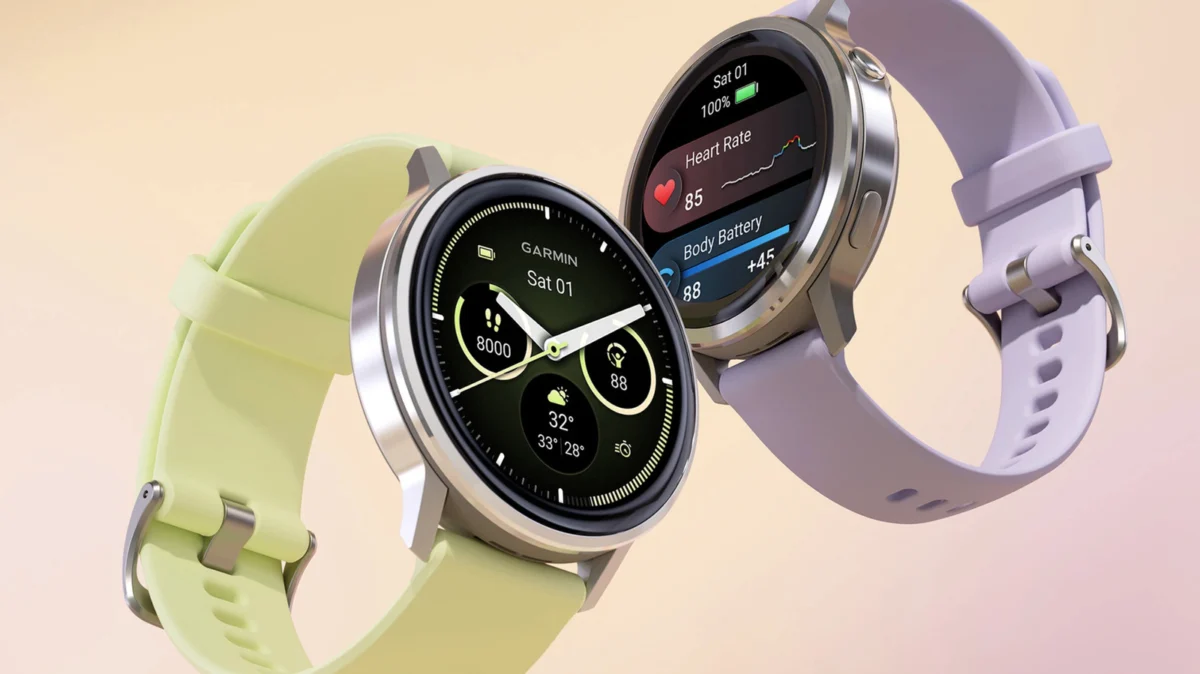
| Garmin Venu 4 | 10 Days | Advanced fitness metrics | Higher price point |
| Amazfit Bip 6 | 7 Days | Extreme value ($80) | Manual workout logging |
| CMF Watch 3 Pro | 13 Days | AI integration | Always-on display drain |
| Withings ScanWatch 2 | 35 Days | Classic aesthetic | No touchscreen |
| Oura Ring 5 | 9 Days | Form factor (Ring) | Subscription model |
Detailed Breakdown of Top Alternatives
1. Whoop 5.0: The Data-Driven Minimalist
The Whoop 5.0 abandons the concept of a traditional watch entirely. By removing the screen, the device eliminates the primary source of power drain. Designed for the "data-obsessed" athlete, it offers 14 days of continuous monitoring. Its sensors are sophisticated, covering ECG and blood pressure, yet the device remains unobtrusive. However, the business model is unique: the hardware is essentially provided as part of a recurring subscription fee ranging from $200 to $360 annually. It is a commitment, not just a purchase.
2. Garmin Venu 4: The Performance Titan
For those who want a legitimate smartwatch experience without the battery anxiety, the Garmin Venu 4 is the gold standard. With a 10-day battery life, it covers health tracking, skin temperature monitoring, and hormonal cycle tracking, all housed in a premium stainless steel and Gorilla Glass chassis. Priced at $550, it occupies a space between the standard Apple Watch and the Ultra, positioning itself as a serious tool for endurance athletes who demand both beauty and brawn.
3. Amazfit Bip 6: The Budget Champion
The Amazfit Bip 6 proves that long battery life doesn’t have to be expensive. At $80, it provides a week of battery life, built-in GPS, and an AMOLED display. It is remarkably lightweight, making it ideal for those who find standard smartwatches bulky. The caveat is software maturity; while the hardware is excellent, the automated workout detection is inconsistent compared to the polished algorithms found in Apple’s offerings. Users should be prepared to log their runs and cycles manually.
4. CMF by Nothing Watch 3 Pro: The Innovator
CMF, a sub-brand of Nothing, has injected personality into the budget space. The Watch 3 Pro offers 13 days of battery life and includes a unique integration with ChatGPT, allowing for AI-driven fitness coaching and custom watch face generation via AI. It is an impressive package for under $100, though users must be wary: enabling the Always-On Display (AOD) feature slashes the battery life to 4.5 days, illustrating the ongoing challenge of display efficiency.
5. Withings ScanWatch 2: The Analog Hybrid
The Withings ScanWatch 2 is for the consumer who wants the benefits of a health tracker but the look of a Swiss timepiece. With a staggering 35-day battery life, it is the clear winner in endurance. It tracks complex metrics like body temperature and heart rhythm, but it eschews a touchscreen for a classic analog dial. Like the Whoop, it relies on a subscription model for the most advanced data insights, making it a premium choice for those who value style over high-tech screen interactivity.
6. Oura Ring 5: The Invisible Tracker
The Oura Ring 5 represents the future of wearable minimalism. By shrinking the technology into a ring, Oura has created a device that lasts up to nine days without needing a screen. It is perfect for users who want to track sleep and health data without the "tech-heavy" aesthetic of a wrist-worn gadget. At $400 plus a subscription, it is a significant investment, but it offers a level of comfort and discretion that a smartwatch simply cannot match.
Implications for the Industry
The shift toward long-battery-life wearables signals a fundamental change in consumer values. We are moving away from the era where a device’s value was determined by how many apps it could run, and toward an era where the value is defined by how little the device interrupts the user’s life.
For Apple, the implication is clear: if the battery does not improve, the company risks losing a segment of its power-user base to specialized trackers. While Apple will likely maintain its dominance in the general consumer market, the "prosumer" athlete is increasingly migrating toward brands like Garmin and Withings.
Furthermore, the rise of subscription-based health tracking—seen in Whoop, Withings, and Oura—presents a new challenge. Consumers are being asked to choose between a one-time purchase that requires daily charging (Apple) or a recurring expense that offers "set-it-and-forget-it" convenience.
Final Verdict
The "perfect" wearable remains elusive. If you are deeply embedded in the Apple ecosystem and prioritize seamless text, call, and app integration, the Apple Watch Series 11 remains the superior choice. However, if your primary goal is health monitoring, fitness tracking, or simply avoiding the nightly hunt for a charger, the landscape has never been more diverse. Whether it is the endurance of the Withings ScanWatch 2, the data-rich nature of the Whoop 5.0, or the sheer value of the CMF Watch 3 Pro, there is now an option for every type of user—provided you are willing to trade a little bit of the "Apple magic" for a lot more time away from the outlet.