AWS Revolutionizes Generative AI Deployment with Amazon Bedrock Managed Knowledge Base
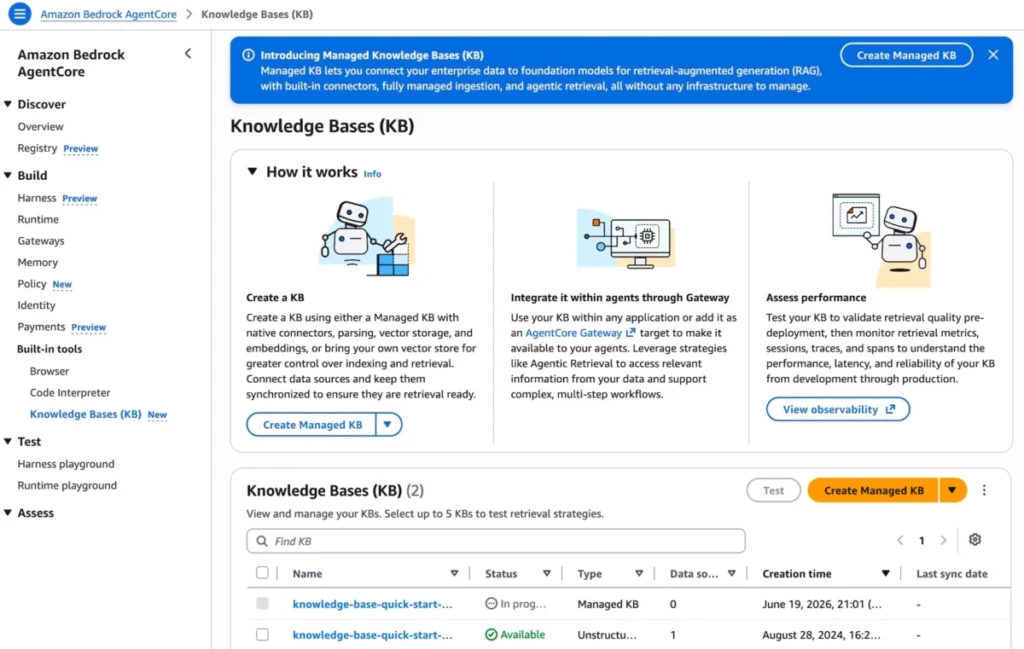
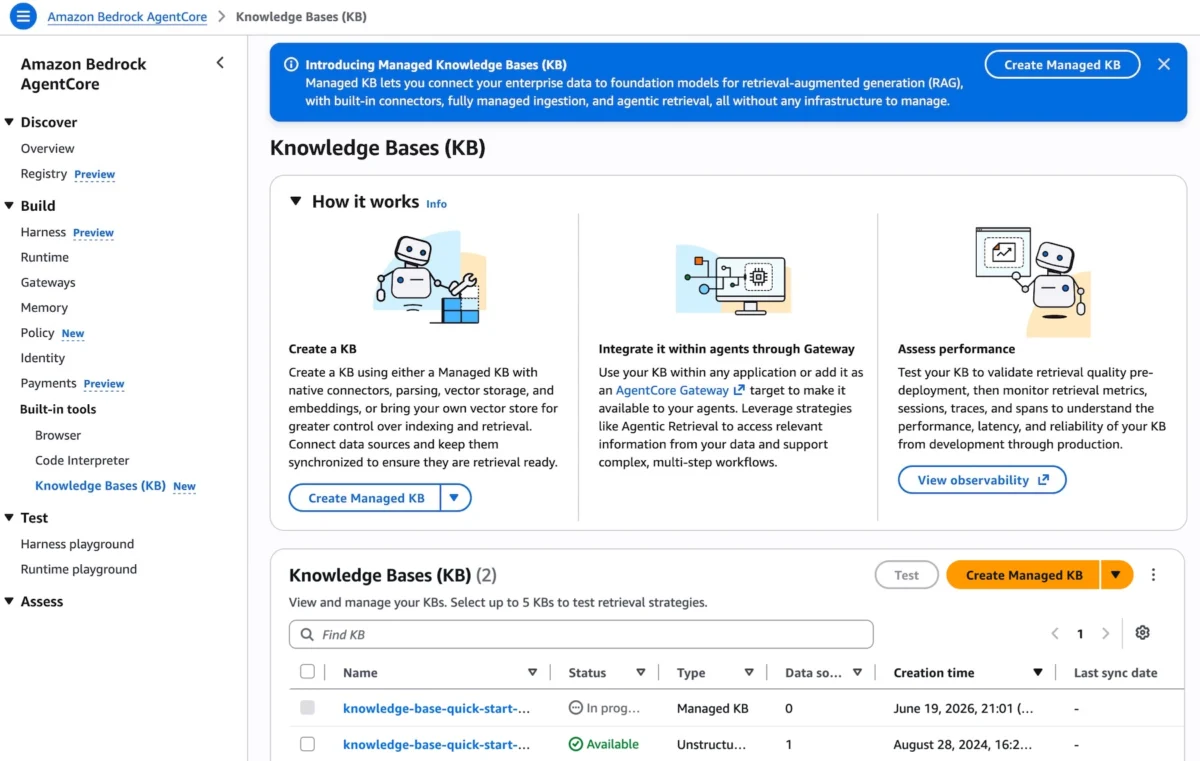
In a significant leap forward for enterprise-grade generative AI, Amazon Web Services (AWS) has unveiled the Amazon Bedrock Managed Knowledge Base. This new suite of capabilities is designed to dismantle the barriers that have historically prevented businesses from deploying Retrieval-Augmented Generation (RAG) pipelines at scale. By abstracting the complex infrastructure required for data ingestion, retrieval, and orchestration, AWS is enabling developers to transition from proof-of-concept to production-ready agentic applications in mere minutes.
The State of Generative AI: Moving Beyond Infrastructure Management
For many organizations, the promise of generative AI has been tempered by the reality of "undifferentiated heavy lifting." Building a reliable RAG system—where an AI model queries proprietary enterprise data to provide grounded, accurate responses—has traditionally required managing a fragmented stack. Developers have had to manually configure vector databases, manage embedding models, build re-ranking logic, and handle complex data parsing.
The launch of the Amazon Bedrock Managed Knowledge Base serves as a definitive response to these challenges. By consolidating storage, retrieval, embeddings, re-ranking, and model selection into a single managed primitive, AWS is allowing engineering teams to pivot their focus from managing plumbing to delivering tangible business outcomes.
Chronology: The Evolution Toward "Agentic" Intelligence
The journey toward this release represents a natural progression in AWS’s generative AI strategy:
- Phase 1: Foundation Models: Initially, AWS focused on providing broad access to diverse foundation models (FMs) through Bedrock, allowing developers to experiment with various LLMs.
- Phase 2: Data Grounding: The introduction of standard Knowledge Bases allowed developers to connect their private data to models. However, this still required significant configuration regarding data chunking, vector stores, and retrieval logic.
- Phase 3: The Managed Era (Current): With the Managed Knowledge Base, AWS has moved into the realm of "Agentic AI." By introducing intelligent parsing and multi-hop reasoning (Agentic Retriever), the system no longer just fetches information—it understands and executes complex, multi-step queries.
Core Innovations: Smart Parsing and the Agentic Retriever
The power of the new Managed Knowledge Base lies in two primary technological breakthroughs: Smart Parsing and the Agentic Retriever.
Smart Parsing: Eliminating the Data Bottleneck
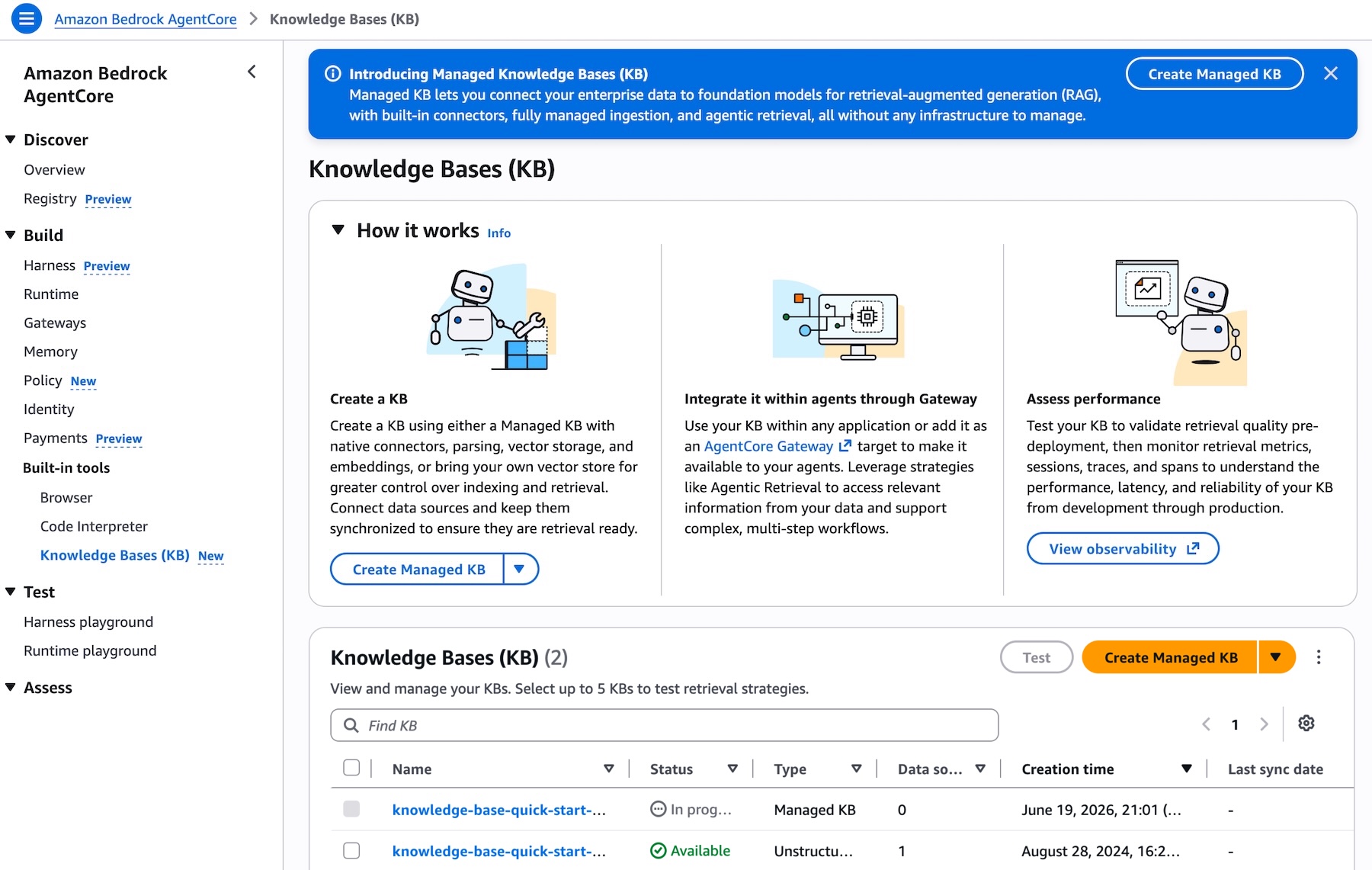
Data ingestion is often the "Achilles’ heel" of AI projects. Raw enterprise data—spread across SharePoint, Confluence, Google Drive, and various S3 buckets—is rarely in a format optimized for AI consumption.
The Managed Knowledge Base introduces Smart Parsing, an automated engine that determines the optimal parsing strategy for any given document type. Whether it is a dense PDF table, a structured spreadsheet, or a complex HTML page, the system automatically applies the necessary techniques to ensure that the retrieved data is high-quality and contextually relevant. This eliminates the weeks of iterative trial-and-error that data engineers traditionally endure to achieve production-grade retrieval accuracy.
Agentic Retriever: Solving for Complex Reasoning
Perhaps the most transformative feature is the Agentic Retriever. Standard retrieval systems often struggle with queries that require multiple steps of logic.

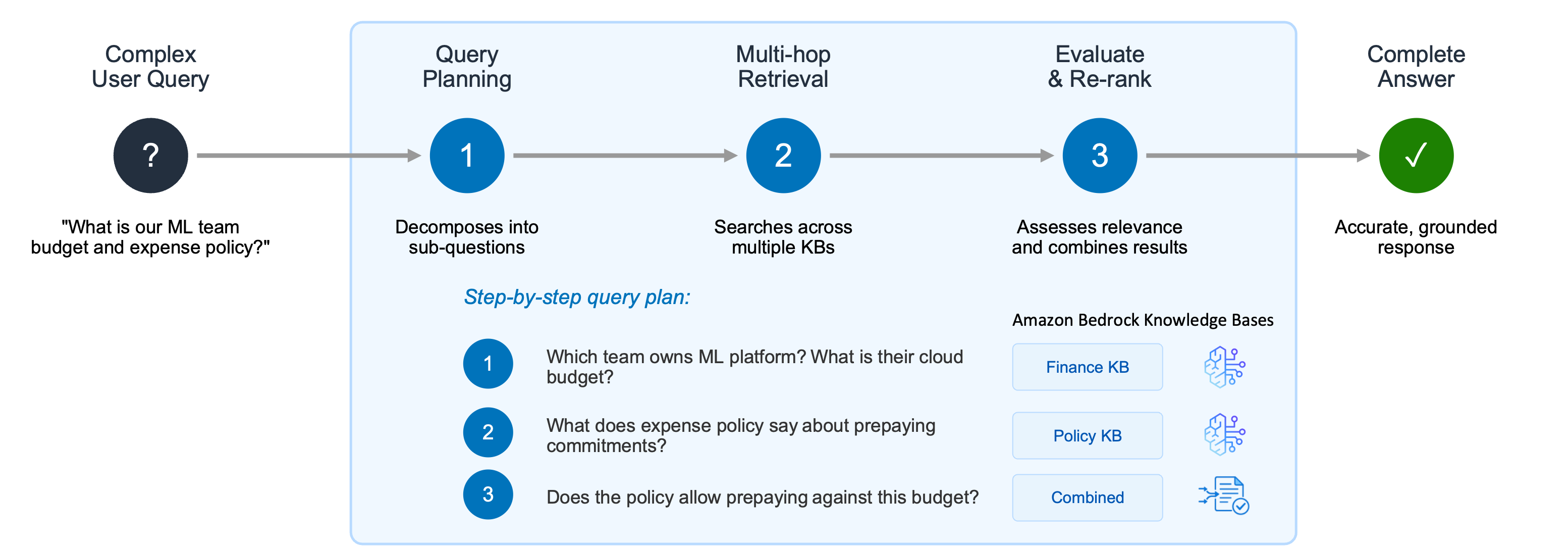
Consider a scenario where an employee asks, "Does our current expense policy allow the ML team to prepay for annual cloud commitments?" This question requires:
- Identifying the ML team’s specific budget.
- Retrieving the company’s expense policy documentation.
- Synthesizing these two data points to provide a definitive answer.
The Agentic Retriever automatically decomposes this query into a plan. It performs multi-hop retrieval, evaluates intermediate findings, and gathers the necessary context before synthesizing a grounded response. By automating this "thought process," AWS has drastically reduced the amount of orchestration logic developers must write to support sophisticated AI agents.
Supporting Data and Integration Architecture
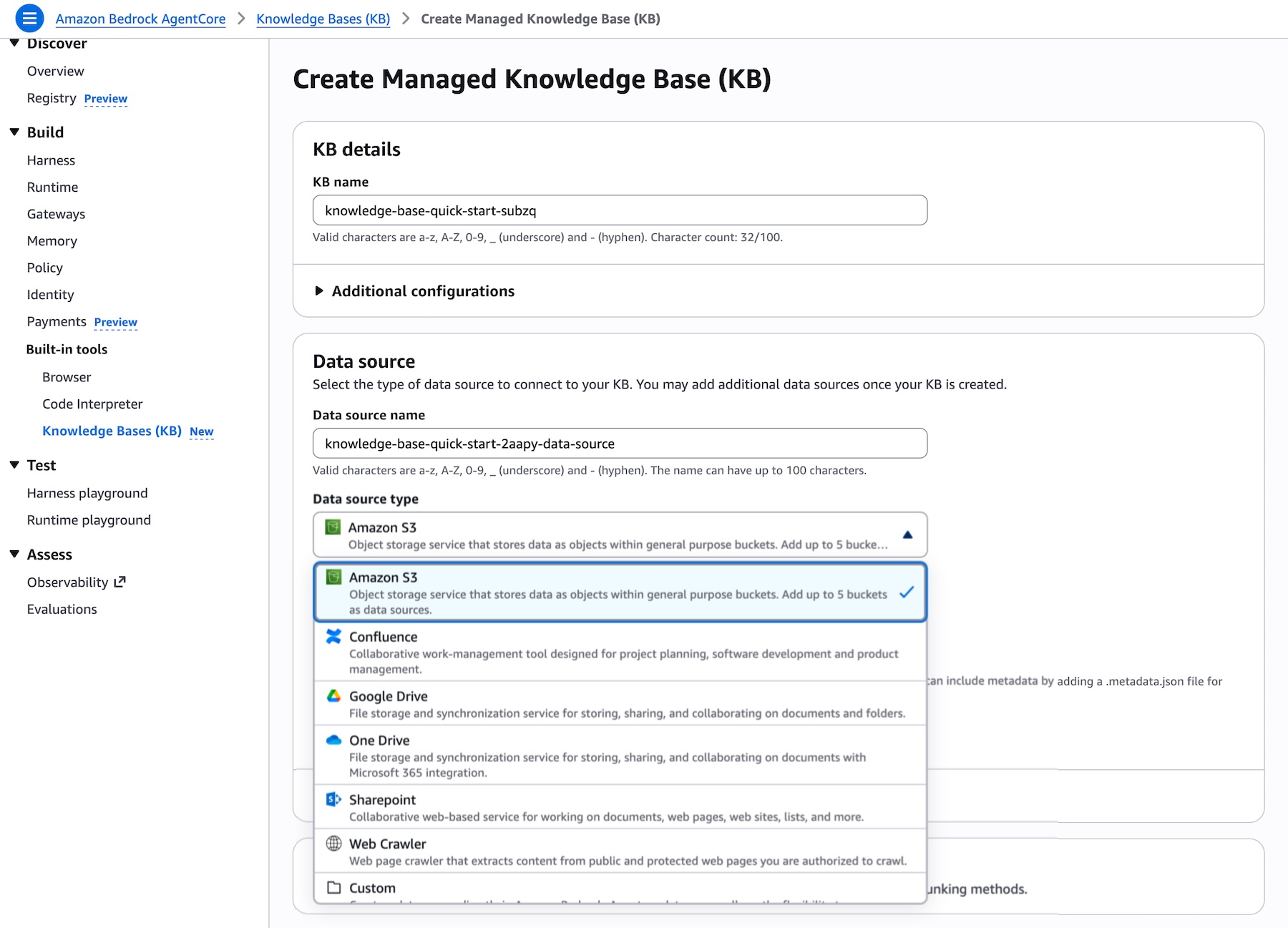
The integration strategy for the Managed Knowledge Base is built around the Model Context Protocol (MCP). By acting as a pre-built target type within the Amazon Bedrock AgentCore Gateway, the Managed Knowledge Base ensures that data is immediately available to a wide ecosystem of AI frameworks.
Whether a team is utilizing LangChain, CrewAI, LlamaIndex, or LangGraph, the integration remains seamless. Because the system exposes the standard MCP, these tools can automatically discover and query the knowledge base without requiring custom bridge code. This interoperability ensures that organizations are not locked into a single framework, but can instead leverage the best-of-breed tools currently dominating the open-source landscape.
Operational Metrics and Observability
Crucially, the Managed Knowledge Base does not function as a "black box." Through the AgentCore Observability dashboard, developers gain full visibility into the performance of their retrieval pipelines. From role-based permission tracking to evaluation metrics that measure retrieval accuracy, the system provides the telemetry necessary for enterprise compliance and optimization.
Official Perspectives: The Developer Experience
During the announcement, AWS highlighted the shift in the developer experience. According to Daniel Abib, the lead for this initiative, the goal was to remove the "infrastructure tax" associated with RAG.
"Developers shouldn’t have to choose between speed and control," notes the updated documentation. "By providing optimized defaults for embedding and re-ranking models, we allow teams to start immediately, while still granting them the power to swap components as their performance needs evolve."
This design philosophy preserves the "Bedrock Promise"—the idea that users should have the flexibility to switch models as new, more capable foundation models hit the market. Because the infrastructure (parsing, storage, retrieval) is decoupled from the model selection, a business can upgrade its underlying LLM without re-engineering its entire data pipeline.
Implications for the Enterprise
The release of the Managed Knowledge Base has profound implications for the industry at large:
1. The Democratization of AI Agents
By lowering the barrier to entry, AWS is effectively democratizing the creation of "Agentic AI." Small-to-mid-sized enterprises, which previously lacked the resources to build complex, multi-hop RAG pipelines, can now compete on equal footing with large tech firms.
2. Focus on "Business Outcomes"
By automating the undifferentiated heavy lifting, the conversation shifts from how to build the search index to how to solve the business problem. Whether it is an HR bot answering policy questions or a legal AI analyzing contract clauses, the focus is now entirely on the quality of the prompt and the utility of the agent.
3. Cost-Performance Optimization
The pay-as-you-go model, combined with the ability to tune retrieval models, allows for granular cost management. Organizations can optimize their spend based on the sensitivity and complexity of the task, ensuring that high-performance, expensive models are only utilized when truly necessary.
4. Security and Compliance
Because the system integrates natively with AWS Identity and Access Management (IAM), permissions are handled at the data source level. This ensures that an AI agent only has access to the documents that a specific user would be authorized to see, a critical requirement for any enterprise operating in regulated industries like finance, healthcare, or government.
Conclusion: A New Standard for RAG
The introduction of the Amazon Bedrock Managed Knowledge Base marks a maturation point for the generative AI industry. As the market moves past the "novelty phase" of chatbots, the demand for reliable, grounded, and secure enterprise AI has skyrocketed. By addressing the critical challenges of data ingestion, complex query reasoning, and seamless framework integration, AWS has provided a blueprint for how the next generation of intelligent enterprise applications will be built.
As of June 2026, the service is available across multiple global regions, including US East (N. Virginia), US West (Oregon), and major hubs in Europe and Asia Pacific. For developers looking to integrate these capabilities, the path forward is clear: move the data, define the policy, and let the Agentic Retriever handle the rest. The era of manual RAG orchestration is officially coming to a close, replaced by a streamlined, managed, and highly scalable future.