Ethical Breach in the Oval Office: White House Teleprompter Operator Placed on Leave Over Insider Betting Scandal
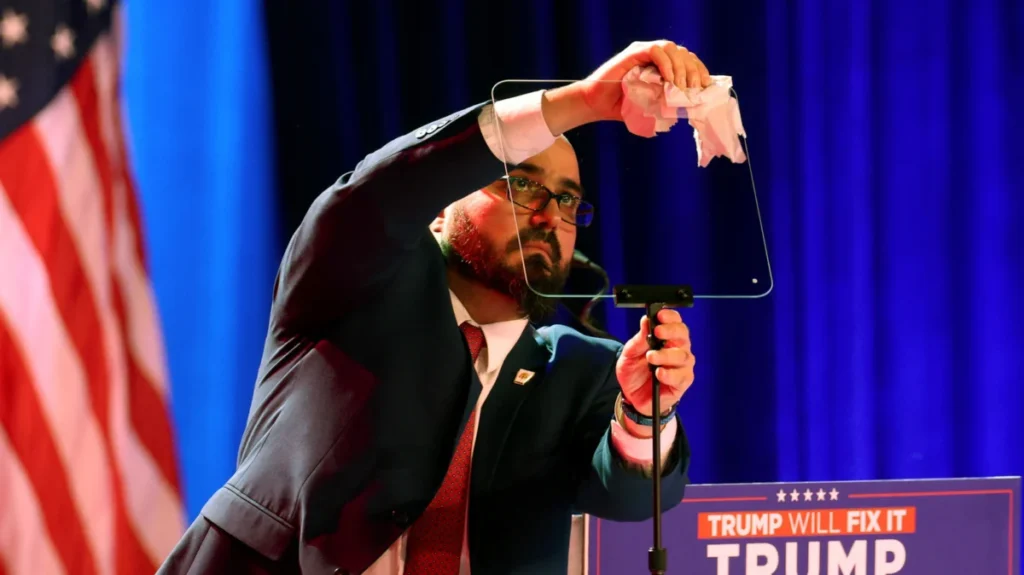
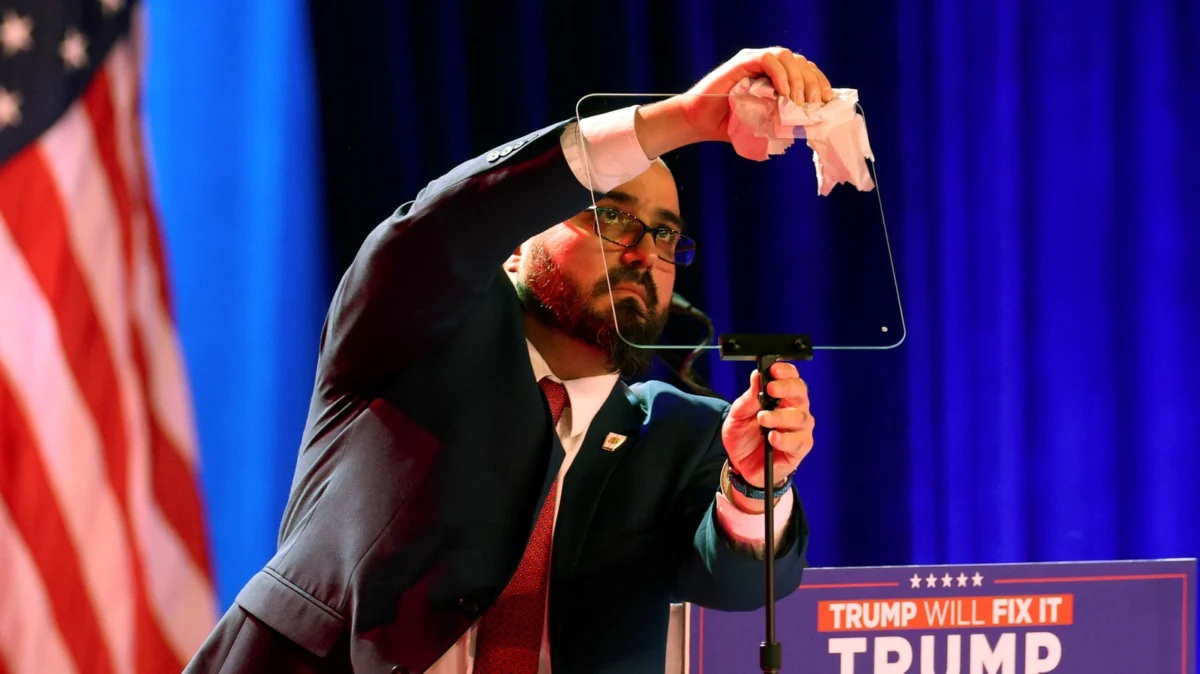
In a stunning breach of public trust, a high-level White House staffer has been placed on unpaid administrative leave following revelations that he leveraged his proximity to the President to profit from predictive betting markets. Gabriel Perez, who served as the primary teleprompter operator for President Donald Trump, allegedly pocketed over $100,000 by betting on the specific details and lengths of the President’s prepared remarks through the prediction platform Kalshi.
The scandal, which has sent shockwaves through both the political establishment and the nascent prediction-market industry, highlights the growing tension between the rise of “event betting” and the ethical guardrails required to protect the integrity of governance.
The Anatomy of an Insider Scheme
The nature of Perez’s position provided him with a unique, non-public advantage. As the individual responsible for finalizing the text displayed on the President’s teleprompters, Perez had access to the President’s prepared remarks well before they were delivered to the public or the press.
According to reports, Perez utilized this “last-look” privilege to place wagers on Kalshi, a platform that allows users to bet on the outcomes of future events, including political developments and economic metrics. His betting strategy was remarkably precise, targeting the specific duration of high-profile speeches. By knowing exactly how many pages or lines of text were loaded into the teleprompter, Perez could calculate the length of the speech with a degree of accuracy that the general public—and the betting market—could not replicate.
The scope of his activity was extensive. Investigators have linked his account to dozens of wagers, including bets on the State of the Union address, a high-stakes speech at the World Economic Forum, and remarks delivered during a March Medal of Honor ceremony. The sophistication of the scheme was such that when the President occasionally opted to go “off-script,” deviating from the prepared text, Perez reportedly took steps to back out of his bets, further demonstrating his awareness that his inside information was the primary driver of his success.
A Chronology of the Discovery
The exposure of Perez’s activities did not happen overnight, but rather through the internal monitoring systems of the betting platform itself.
- Initial Discovery: Kalshi’s internal risk management and integrity teams detected a pattern of highly accurate, high-volume betting originating from a single user profile. These trades were inconsistent with standard market behavior, appearing to move in lockstep with the finalization of presidential remarks.
- The Referral: Acting on these anomalies, Kalshi “promptly flagged and referred” the activity to the Commodity Futures Trading Commission (CFTC), the federal agency tasked with the oversight of event-contract exchanges.
- The Confession: Following the referral, investigators initiated a formal inquiry. In subsequent interviews with federal authorities, Perez reportedly confessed to placing the trades, acknowledging that he had used his access to official documentation to inform his wagering.
- Administrative Action: Upon learning of the severity of the investigation, the White House acted swiftly. White House Press Secretary Karoline Leavitt confirmed that Perez had been placed on unpaid administrative leave and explicitly stated, “He will no longer be here,” signaling an effective termination of his role within the administration.
The Regulatory Tug-of-War
The incident involving Perez is the latest in a series of challenges for Kalshi, which has spent the last year attempting to navigate a hostile regulatory landscape while simultaneously trying to prove that its market integrity protocols are robust.
In April 2026, anticipating the potential for abuse, Kalshi implemented a suite of “new guardrails” specifically designed to prevent athletes, politicians, and high-level staff from betting on events over which they exercise influence. Despite these policies, the platform has had to suspend multiple political candidates for violating these rules. By June, the company intensified its restrictions, mandating that users provide detailed employment information before placing bets on sensitive categories.
The Perez case, however, tests the efficacy of these disclosures. While the platform was able to identify the suspicious trades, the speed with which a staffer could exploit the system has reignited the debate over whether private betting platforms can effectively police the intersection of government and finance without more stringent federal oversight.
Furthermore, the legal environment remains volatile. When the state of New Jersey attempted to enact a total ban on the Kalshi platform, it was met with a swift rebuke from the U.S. Circuit Court of Appeals. The court ruled that states lacked the authority to ban federally regulated prediction markets, essentially consolidating power within the CFTC. This ruling puts the onus on the CFTC to not only monitor these markets but to craft enforceable standards that prevent “insider trading” in a sector that, until recently, was largely unregulated.
Official Responses and Political Fallout
The White House has been quick to distance itself from the scandal. During a press briefing, Press Secretary Karoline Leavitt expressed the administration’s dismay, labeling the incident as “deeply unfortunate” and a “disgrace.”
“The President is aware of the situation,” Leavitt told reporters. “Any action that undermines the integrity of this office or utilizes public service for personal financial gain is unacceptable. We are cooperating fully with all investigative bodies to ensure this does not happen again.”
While the White House has framed this as an isolated incident involving a rogue employee, the broader political implications are significant. Critics of the administration and proponents of stricter financial disclosure laws have used the Perez case to demand greater transparency regarding the personal financial activities of West Wing staff. The incident has raised questions about whether current ethics training for White House employees adequately addresses the unique risks posed by the rise of decentralized and digital betting markets.
Implications for the Future of Prediction Markets
The scandal carries profound implications for the future of prediction markets. For years, proponents of these markets have argued that they provide valuable, objective data on public sentiment and event outcomes. However, the ability of an insider to extract six figures in profit from such a market serves as a cautionary tale.
1. Market Integrity and Trust
If participants believe that markets are being manipulated by individuals with “first-look” access to information, liquidity will dry up. Maintaining the perception of a level playing field is essential for the survival of platforms like Kalshi.
2. Heightened Scrutiny for the CFTC
The CFTC is now under immense pressure to prove that it can manage the proliferation of event-based betting. The agency is currently in talks to reach a settlement with Perez, which would likely include the total forfeiture of his $100,000 in winnings and potentially additional civil penalties. This settlement will likely serve as a blueprint for how the government handles future cases of “prediction market insider trading.”
3. The Need for Stricter Employment Disclosure
The Perez case will almost certainly lead to more invasive “Know Your Customer” (KYC) requirements. It is likely that in the near future, platforms will be required to verify the employment status of users in real-time against databases of government employees, lobbyists, and high-ranking officials to automatically block trades that fall within a user’s professional sphere of influence.
Conclusion
Gabriel Perez’s alleged actions represent a collision between the old world of political secrecy and the new world of digital, high-speed betting. While the $100,000 profit may seem like a significant windfall, the cost to his career and the reputational damage to the White House are likely far higher.
As the regulatory dust settles, the Perez case will stand as a landmark moment in the history of prediction markets—a reminder that in an age of instantaneous information, the temptation to monetize proximity to power remains a persistent, if ultimately self-destructive, endeavor. For now, the administration continues to manage the fallout, while the CFTC faces the daunting task of defining the boundaries of fair play in a digital era where every event is a wager.