The Epigenetic Echo: How Early Life Adversity Rewrites the Biological Blueprint
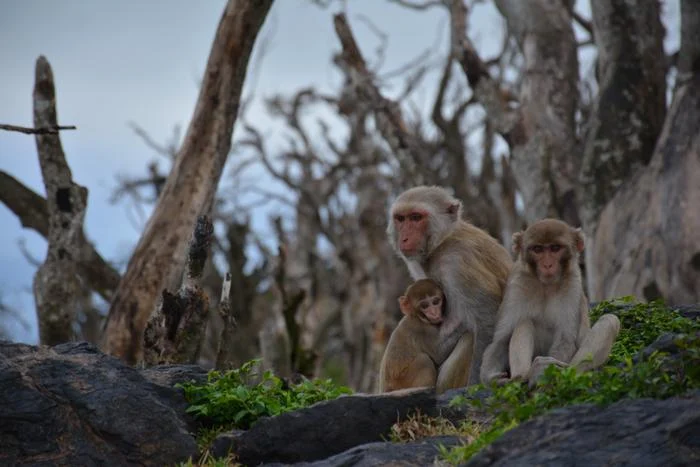
New research from a collaborative team at Arizona State University and Vanderbilt University has fundamentally shifted our understanding of how the environment of our youth shapes our physiology in old age. By studying a unique population of free-ranging rhesus macaques on "Monkey Island" (Cayo Santiago, Puerto Rico), researchers have uncovered that early life adversity (ELA) does not merely "speed up" the aging process, as long theorized. Instead, it leaves a complex, systemic, and highly coordinated molecular signature across the entire body—a finding that challenges long-held medical assumptions about biological aging.
The study, published in the journal Science, offers one of the most comprehensive looks at the "epigenome"—the chemical markers that dictate how genes are expressed without altering the underlying DNA sequence—providing a new lens through which to view the developmental origins of health and disease.
The Core Findings: A New Paradigm for Aging
For decades, the scientific community has operated under the hypothesis that childhood adversity accelerates the biological aging process, leading to earlier onset of age-related diseases. However, the data generated by this study suggests that this is an oversimplification.
The research team, led by Noah Snyder-Mackler, PhD, of Arizona State University, and Amanda Lea, PhD, of Vanderbilt University, utilized a massive, longitudinal dataset of 237 rhesus macaques. By analyzing DNA methylation (DNAm)—a primary epigenetic marker—across 12 distinct tissues in these animals, the researchers were able to map how chronological age and past adversity interact to change the biological state of the body.
The most striking discovery is that while aging itself is a highly tissue-specific process—meaning the liver, heart, and pituitary gland age at different rates and through different molecular pathways—early life adversity acts differently. ELA leaves a "coordinated, organism-wide response." Unlike the aging process, which is localized and divergent, the impact of childhood hardship is systemic, etching its influence into the molecular architecture of multiple organ systems simultaneously.
Chronology of the Study: From Cayo Santiago to the Laboratory
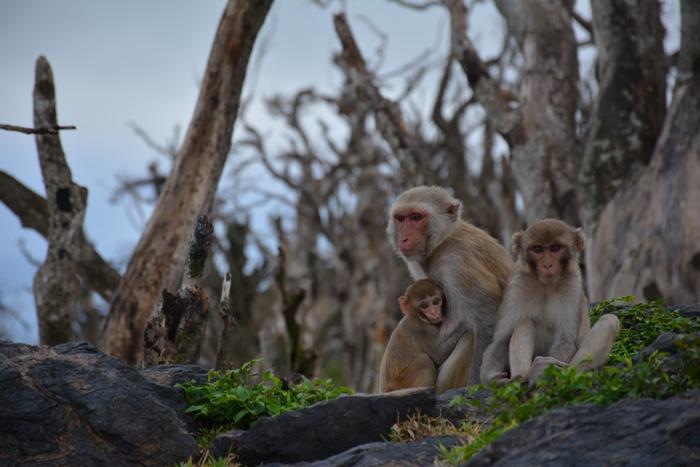
The power of this research lies in the rarity of the study subjects. Cayo Santiago is a 38-acre island off the east coast of Puerto Rico, home to over 1,500 rhesus macaques. Managed by the University of Puerto Rico and the Caribbean Primate Research Center, the island provides a "semi-natural" environment where animals live in complex social groups, much like humans.
1. Longitudinal Documentation (The Life History)
For years, researchers have meticulously tracked the lives of these macaques. Unlike laboratory animals kept in sterile, controlled environments, these monkeys experience natural social challenges: maternal loss, low maternal social status, and the stress of crowded living conditions. This provided the researchers with a high-resolution map of each animal’s "early life adversity."
2. Multi-Tissue Genomic Sampling (The Molecular Data)
As the subjects reached adulthood, the team collected tissue samples from 12 different sites across the body. This allowed the researchers to move beyond the traditional "blood-only" analysis that dominates human studies. By comparing these tissues, they could observe how aging and adversity intersected in specific organs versus the body as a whole.
3. Computational Modeling (The Epigenetic Clocks)
The team developed highly precise, tissue-specific "epigenetic clocks." These tools allow scientists to estimate biological age—the physiological state of an organism—with an accuracy of about one year compared to chronological age. By running these clocks against the social history data, the team could isolate the "noise" of aging from the "signal" of early-life trauma.
Supporting Data: Why "Accelerated Aging" is a Myth
The study’s data suggests that the relationship between ELA and aging is not linear. Researchers identified thousands of genomic regions where DNA methylation patterns were altered by childhood adversity.
Crucially, when these regions were compared to those associated with natural aging, they often overlapped, but the direction of the effect was inconsistent.
- The Nuanced Model: In some tissues, ELA appeared to accelerate the epigenetic clock, consistent with traditional theories.
- The Divergent Reality: In other tissues, the changes went in the opposite direction or showed no clear correlation with "speeding up" the clock.
"In some cases, adversity-related changes looked like accelerated aging. In others, they went in the opposite direction," said co-lead author Rachel Petersen, PhD. This evidence indicates that early adversity does not simply turn the dial on the aging clock; it fundamentally "reshapes the epigenome" in a way that is distinct from, yet intertwined with, the standard aging process.
Furthermore, the team noted that while aging is largely tissue-dependent, there is an underlying "internal consistency." An animal that appeared biologically "old" in its blood sample also tended to be biologically older in other tissues, suggesting that there is a master regulatory system that coordinates the rate of aging across the body, even if the molecular execution varies by tissue.
Official Perspectives: Expert Commentary
The significance of this study is bolstered by the interdisciplinary approach of the authors.
Dr. Noah Snyder-Mackler summarized the core philosophical shift in the research: "Our goal was to understand how aging unfolds across the body, and how early experiences might influence that process. What we found is that early life adversity leaves a coordinated epigenetic signature that spans multiple tissues—but it doesn’t simply accelerate aging in a uniform way."
Dr. Amanda Lea emphasized the importance of the methodology: "At a molecular level, aging looks very different depending on which tissue you examine. Blood, which is most commonly measured in human studies, only captures part of the picture. Some tissues, like the thymus and pituitary gland, showed particularly strong and distinct age-related patterns, while others exhibited more subtle changes."
Dr. Baptiste Sadoughi, a postdoctoral researcher and co-lead author, added, "Different tissues have their own epigenetic landscapes and respond differently to both age and adversity. To fully understand health and disease, we need to take a whole-body perspective."
Implications: A New Frontier in Medicine
The implications of these findings extend far beyond primatology. They provide a vital roadmap for understanding human health, particularly regarding the "Developmental Origins of Health and Disease" (DOHaD) hypothesis.
Clinical Intervention
By identifying the specific biomarkers that differentiate natural aging from the lasting damage of early adversity, clinicians may one day be able to predict future health risks long before they manifest as overt disease. If we can identify which organs are most sensitive to early-life stress, we can tailor screenings to monitor those systems in at-risk individuals.
Moving Beyond Blood Samples
The study serves as a strong warning to the medical community that blood-based markers may be insufficient for a complete understanding of systemic health. If epigenetic signatures of adversity are sequestered in specific tissues like the pituitary or thymus, relying solely on blood draws may lead to an incomplete or misleading picture of a patient’s health trajectory.
The Complexity of Human Health
Perhaps the most important takeaway is the realization that there is no "simple story" when it comes to the impact of the environment on biology. Human health is a result of a complex interplay between genetics, time, and environment. By validating that early experiences are literally "written into our biology," this study underscores the necessity of social and environmental interventions early in life.
As the researchers conclude, the findings establish a comprehensive "tissue atlas" that will serve as a foundational resource for future studies. By mapping how our early environments sculpt the molecular foundations of our later years, science is moving closer to understanding not just how to extend life, but how to ensure that the process of growing older is not defined solely by the traumas of the past.
In the future, the ability to read these epigenetic signatures could allow us to mitigate the long-term biological consequences of childhood adversity, potentially breaking the cycle between early-life struggle and late-life chronic disease. This study marks a vital step in transforming that possibility into a reality.