Linux Kernel 7.1 Arrives: A New Era of Performance, Hardware Support, and NTFS Integration

The open-source landscape witnessed a significant milestone this week with the official release of Linux Kernel 7.1. Following the landmark release of Linux 7.0 in April and a series of subsequent stable point releases, version 7.1 emerges as a substantial feature-rich update that signals the ongoing evolution of the world’s most versatile operating system kernel.
From the formal deprecation of legacy hardware to the integration of a long-awaited NTFS driver, Linux 7.1 is not merely a maintenance update—it is a strategic pivot designed to optimize modern silicon, improve storage interoperability, and refine the user experience on platforms ranging from handheld gaming devices to high-end enterprise servers.
The Core Developments: What’s New in 7.1?
Linux 7.1 brings a collection of enhancements that bridge the gap between legacy compatibility and cutting-edge performance. The development cycle for this release has been characterized by rigorous testing and a focus on I/O efficiency, particularly for Intel and AMD hardware architectures.
1. Intel FRED Enabled by Default
Perhaps the most notable architectural change in this release is the default enablement of Intel’s Flexible Return and Event Delivery (FRED). Previously an experimental feature requiring the fred=on boot flag, FRED is now active out-of-the-box.

FRED represents a fundamental shift in how the CPU handles interrupts and exceptions, streamlining the transition between user space and kernel space. For users operating on Intel Core Ultra Series 3 "Panther Lake" processors, the impact is expected to be significant. Early benchmarks and reports from Phoronix indicate that this change yields measurable gains in I/O-heavy workloads, including database management, high-concurrency networking, and professional-grade audio processing.
2. The "Resurrection" of NTFS
After a grueling four-year development process, a new, robust NTFS driver has finally landed in the mainline kernel. Often referred to by Linus Torvalds as the "NTFS resurrection," this driver provides a modern approach to interacting with Microsoft’s proprietary file system.
The path to integration was not without friction; Torvalds briefly un-pulled the code due to concerns regarding Git structure, but a revised pull request was quickly accepted. This new driver—accessible via the NTFS_FS Kconfig switch—is set to coexist with the existing NTFS3 driver for the time being, offering users a more reliable and performance-oriented path for cross-platform storage compatibility.
3. AMD Power and Performance Tuning
AMD users receive a significant boost in control via the amd-pstate driver. This update introduces CPPC Performance Priority, Dynamic EPP (Energy Performance Preference), and Raw EPP support. These additions allow for highly granular power management, enabling users to fine-tune the balance between energy efficiency and raw computing power on modern Ryzen and EPYC platforms. Furthermore, the AMDgpu driver has been updated with SMU 15.0.8 support and DCN 4.2 display updates, alongside critical fixes for GPU page faults on non-4K page size builds.

Chronology: The Road to 7.1
The development of Linux 7.1 did not happen in a vacuum. It is the culmination of months of iterative testing that began immediately following the debut of the 7.x series.
- April 2026: Linux 7.0 launches, setting the foundation for the new major version series.
- May 2026: Initial testing for the new NTFS driver begins to ramp up, with kernel developers vetting the code against various edge cases.
- Early June 2026: The deprecation of i486 CPU support is finalized, formally removing it from the kernel build system—a decision aimed at streamlining the codebase by shedding support for hardware that is now four decades old.
- Mid-June 2026: Linus Torvalds oversees the final merge window, where the "ntfs resurrection" is reviewed, challenged, and ultimately accepted.
- Late June 2026: The official release of Linux 7.1 is tagged and released to the public, marking the transition from development to stable production.
Supporting Data: Hardware and Performance Metrics
The sheer scale of Linux 7.1 is best illustrated by its expanded support for System-on-Chips (SoCs). This release adds support for 12 new platforms, widening the reach of Linux in the embedded and mobile sectors. Notable additions include:
- Qualcomm: Glymur, Mahua, Eliza, and the IPQ5210 networking platform.
- Microchip: LAN9691 and the PIC64GX series.
- Renesas: RZ/G3L industrial-grade processor.
- NXP: S32N79, often used in automotive applications.
- Rockchip: RV1103B, a popular choice for budget-friendly AI-camera modules.
- ARM: Zena and Corstone-1000-A320.
In addition to hardware support, the crypto subsystem has seen a performance injection through the expansion of Intel Quick Assist Technology (QAT). With Gen4 and Gen5 hardware now benefiting from basic Zstd compression offloading, and Gen6 hardware (targeting the upcoming Diamond Rapids platform) receiving native Zstd implementation, the kernel is now significantly better equipped to handle high-speed data encryption and compression tasks.
Official Perspectives and Community Responses
The Linux kernel development process is famously transparent, yet highly demanding. The inclusion of the new NTFS driver was a point of particular interest for Linus Torvalds. By resolving the Git structure conflicts early in the cycle, the kernel maintainers demonstrated the efficiency of the "Linus-led" review process—a system that prioritizes technical integrity over rushed deadlines.
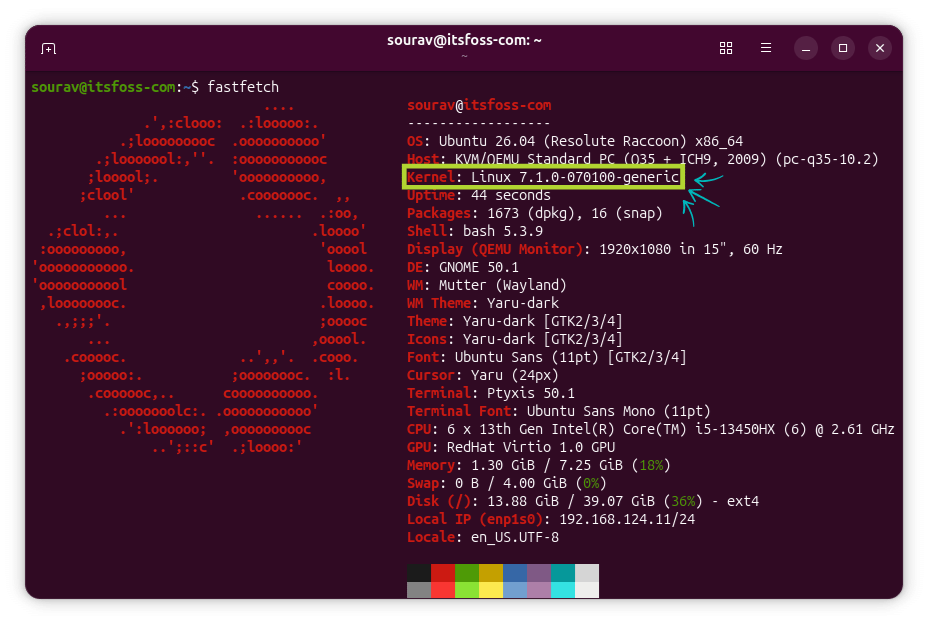
On the community front, users have reacted positively to the bug fixes addressing audio issues on the Steam Deck OLED. For a device that relies heavily on a custom Linux environment, kernel-level audio stability is paramount. The collaborative effort between Valve developers and the upstream kernel team serves as a testament to the power of the Linux ecosystem in supporting modern consumer hardware.
Implications for the Linux Ecosystem
The release of Linux 7.1 has distinct implications for different classes of users.
For Enthusiasts and Power Users
For those running rolling-release distributions like Arch Linux, or bleeding-edge distributions like Fedora, the upgrade path is clear and imminent. These users will likely see the 7.1 update pushed to their repositories within the coming weeks. For these individuals, the new power management features for AMD and the improved I/O throughput for Intel will provide immediate, tangible benefits.
For Enterprise and Stable Distros
Conversely, for users of Debian, RHEL, or Linux Mint, the impact of 7.1 will be muted. These distributions prioritize long-term stability over the rapid adoption of the latest kernel versions. Consequently, users on these platforms should not expect a mandatory update to 7.1. In most cases, it is advised to wait for the distribution’s maintainers to certify the kernel for their specific environment.

The "Intermediate-to-Expert" Warning
It is vital to reiterate that installing a new kernel from a source tarball is an "intermediate-to-expert" operation. While the allure of having the latest features is strong, manual kernel compilation carries the risk of breaking system dependencies, particularly with proprietary drivers (such as NVIDIA or specific Wi-Fi chipsets) that may not yet be compatible with the newest kernel headers.
Conclusion: A Step Forward for Open Source
Linux 7.1 stands as a balanced release. It acknowledges the past by formally retiring ancient architectures like the i486, yet it looks firmly toward the future by optimizing for the latest Intel and AMD silicon. The integration of a new NTFS driver proves that even after decades, the Linux kernel continues to prioritize the interoperability that users demand in a multi-OS world.
As the industry shifts toward more specialized hardware—evidenced by the dozen new SoCs supported in this release—Linux remains the unifying layer that allows these disparate devices to communicate and perform at their peak. Whether you are a database administrator seeking better I/O performance on a Panther Lake server, or a handheld gamer looking for a more stable audio experience, Linux 7.1 delivers a suite of improvements that solidify the kernel’s role as the backbone of modern computing.
For those eager to dive in, the source code is available on the official kernel repository. For everyone else, keep an eye on your distribution’s update manager—a more stable, faster, and more compatible Linux experience is just around the corner.