The Exascale Shift: China’s ‘LineShine’ Shatters Supercomputing Records
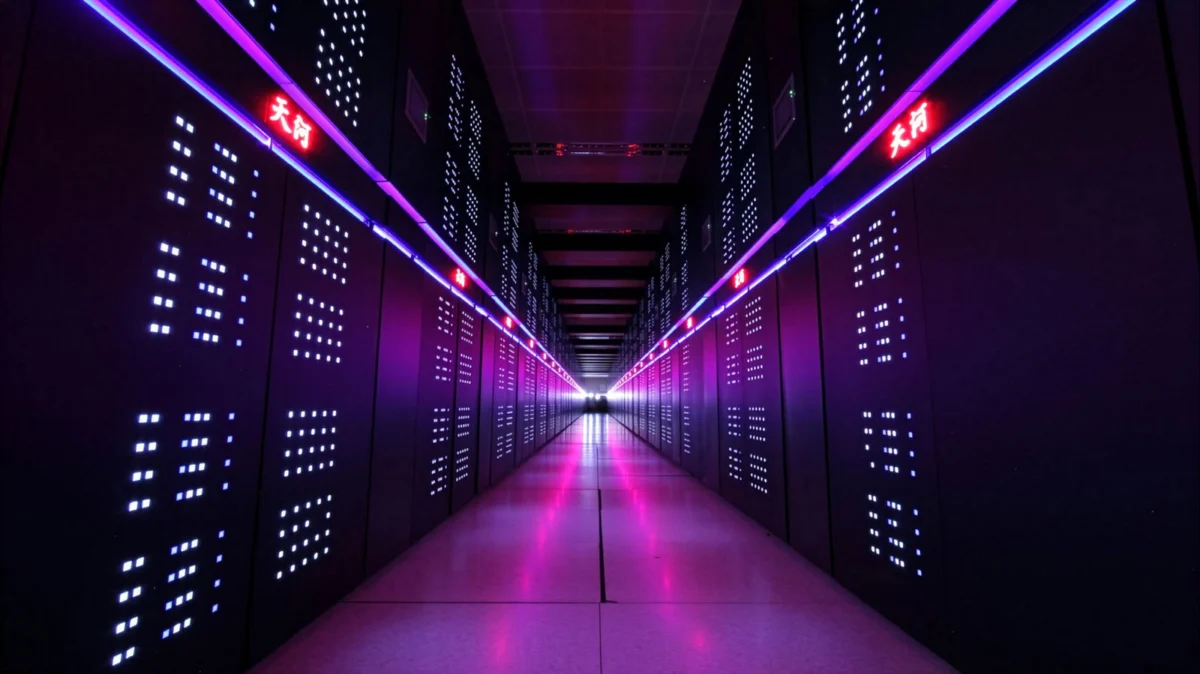
In a move that has sent shockwaves through the global technological establishment, China has reclaimed the title of the world’s fastest supercomputer. The newly unveiled "LineShine" system, housed at the National Supercomputer Center, has officially eclipsed the United States’ long-standing champion, the Lawrence Livermore National Laboratory’s "El Capitan." By surpassing the elusive two-exaflop threshold, LineShine has not only rewritten the performance records but has fundamentally challenged the prevailing orthodoxy of high-performance computing (HPC) architecture.
The Dawn of a New Performance Era: Main Facts
The latest Top500 list, the definitive benchmark for global supercomputing power, places LineShine firmly at the summit. Delivering a sustained double-precision performance of 2.198 exaflops, the machine represents a monumental leap in raw computational capability. For context, an exaflop is equivalent to a quintillion calculations per second.
Crucially, LineShine has achieved this milestone through a design philosophy that defies the current industry trend of relying heavily on massive GPU (Graphics Processing Unit) acceleration. While its competitors—such as the US-based Frontier and Aurora systems—leverage the parallel processing power of thousands of GPUs to handle complex workloads, LineShine is a CPU-only architecture. This distinction is vital; it demonstrates that China has developed a homegrown, high-density CPU infrastructure capable of scaling to levels previously thought impossible without the aid of specialized graphics accelerators.
A History of Competition: The Chronology of the Supercomputing Race
The race for computational supremacy has been a defining feature of the 21st-century geopolitical landscape.
- 2010–2017: China signaled its arrival as an HPC superpower with the debut of the Tianhe-1A, which briefly held the number one spot. Throughout the early 2010s, systems like the Sunway TaihuLight solidified China’s position as a dominant force in the Top500 list.
- 2017–2022: Following a shift in priorities and the introduction of stricter US export controls on high-end semiconductors, China’s visibility in the global rankings plateaued. During this time, the United States surged ahead with the development of the "Exascale Era" systems, starting with Frontier at Oak Ridge National Laboratory.
- 2022–2025: The era of the "Exaflop" was officially inaugurated by US systems. El Capitan, Frontier, and Aurora became the gold standard, effectively pushing China out of the top tier of publicly acknowledged systems.
- 2026 (The Current Milestone): The emergence of LineShine marks the first time since 2017 that a Chinese system has occupied the top spot. Its development, shrouded in mystery until the final performance validation, signals a pivot toward self-reliance in the face of persistent Western technology embargoes.
Anatomy of a Beast: Technical Specifications and Supporting Data
The technical architecture of LineShine is a masterclass in defiance of trade restrictions. Because the system does not rely on the high-end, Western-manufactured GPUs currently under strict export control, it represents a "closed-loop" engineering triumph.
The Processor Architecture
At the heart of the system lies a custom 304-core processor. These chips, which remain the subject of intense industrial espionage analysis, run at a base clock speed of 1.55GHz. The system integrates a massive total of 13.79 million cores. By opting for a high-core-count CPU design, the engineers behind LineShine have minimized the overhead associated with the CPU-to-GPU data transfer bottleneck, which typically plagues heterogeneous computing systems.
Energy Efficiency and Power Dynamics
Power consumption is the "Achilles’ heel" of modern supercomputing. LineShine draws approximately 42.2 megawatts of power. While this is a significant load, its performance-per-watt ratio—measured at 52.07 Gigaflops per watt—is highly competitive. This efficiency is achieved through a proprietary interconnect technology that facilitates lightning-fast communication between the millions of cores, ensuring that data is processed with minimal thermal loss.
The Expert Perspective: Official Responses and Industry Analysis
The reaction from the global scientific community has been one of cautious admiration. Dr. Jack Dongarra, the primary architect of the Top500 list and a legendary figure in the world of high-performance computing, characterized the system as an "impressive engineering feat."
"They have successfully bypassed the traditional GPU-dependent pathway that the rest of the world has adopted," Dr. Dongarra remarked in an interview with The New York Times. "By doubling down on a custom, high-density CPU architecture, they have proven that the roadmap for exascale computing is not a monolith. They have effectively upped the ante."
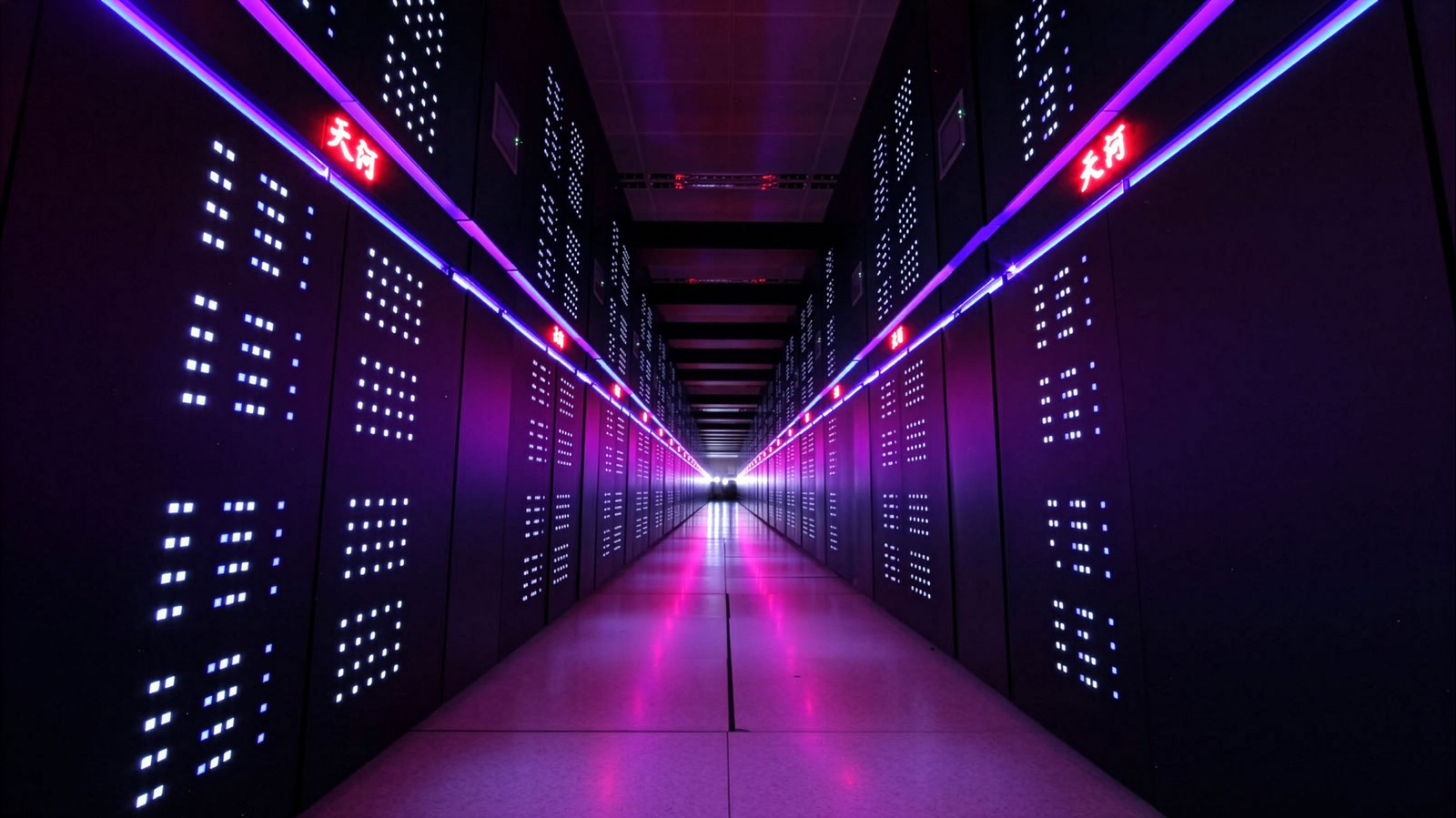
However, the lack of transparency regarding the manufacturing process remains a point of contention. Unlike the US systems, where the manufacturers (such as HPE, AMD, and Intel) are transparent about their supply chains and technological origins, the origins of the LineShine processors remain obscured. Reports suggest the project was developed without direct, centralized public funding, allowing the designers to bypass certain state-mandated disclosure requirements—a strategy that has allowed them to maintain a degree of intellectual property security.
The Global Landscape: A Multi-Polar Computing World
The current Top500 list reflects a new reality: the dominance of exascale computing is no longer concentrated in a single nation. The top five systems now demonstrate a diverse geographical and architectural spread:
- LineShine (China): 2.198 Exaflops (CPU-centric)
- El Capitan (USA): 1.809 Exaflops (GPU-accelerated)
- Frontier (USA): 1.353 Exaflops (GPU-accelerated)
- Aurora (USA): 1.012 Exaflops (GPU-accelerated)
- Jupiter Booster (Germany): 1.000 Exaflops (Hybrid architecture)
This diversity is a positive development for the broader computing industry. It suggests that there is no "one-size-fits-all" solution to complex problems like weather modeling, nuclear physics simulations, and advanced pharmaceutical research.
Implications for Geopolitics and Industry
The success of LineShine has profound implications for the ongoing "chip war." For years, the United States has operated under the assumption that by limiting China’s access to advanced NVIDIA and AMD GPUs, it could effectively throttle the development of China’s artificial intelligence and military-industrial computational capabilities.
LineShine suggests that this assumption may need recalibration. If China can achieve exascale performance using custom, non-GPU architectures, it suggests that the country has reached a level of maturity in semiconductor design that makes it less vulnerable to Western trade restrictions than previously estimated.
Furthermore, the shift toward custom interconnects and proprietary core designs points to a future where supercomputers become increasingly "bespoke." As different nations move toward different technological paths, the ability to benchmark these systems against one another will become increasingly complex.
For the scientific community, the availability of such massive computational power is a boon. Whether used for decoding protein structures to cure diseases or for refining climate change mitigation models, the existence of a 2-exaflop machine creates a new frontier for scientific inquiry. The competition between nations, while politically charged, continues to drive the rapid acceleration of hardware development, ultimately benefiting global research capabilities.
As the international community watches, the next question is not just who will build the next fastest machine, but how these systems will be utilized in the coming years. Will China share its findings, or will LineShine remain a siloed tool for national development? As we move deeper into the exascale era, one thing is certain: the computational map of the world has been permanently redrawn.