Redefining Bioprocessing: Cytomos Unveils the Future of Predictive Cell Analytics with AuraCyt® and Celledonia®
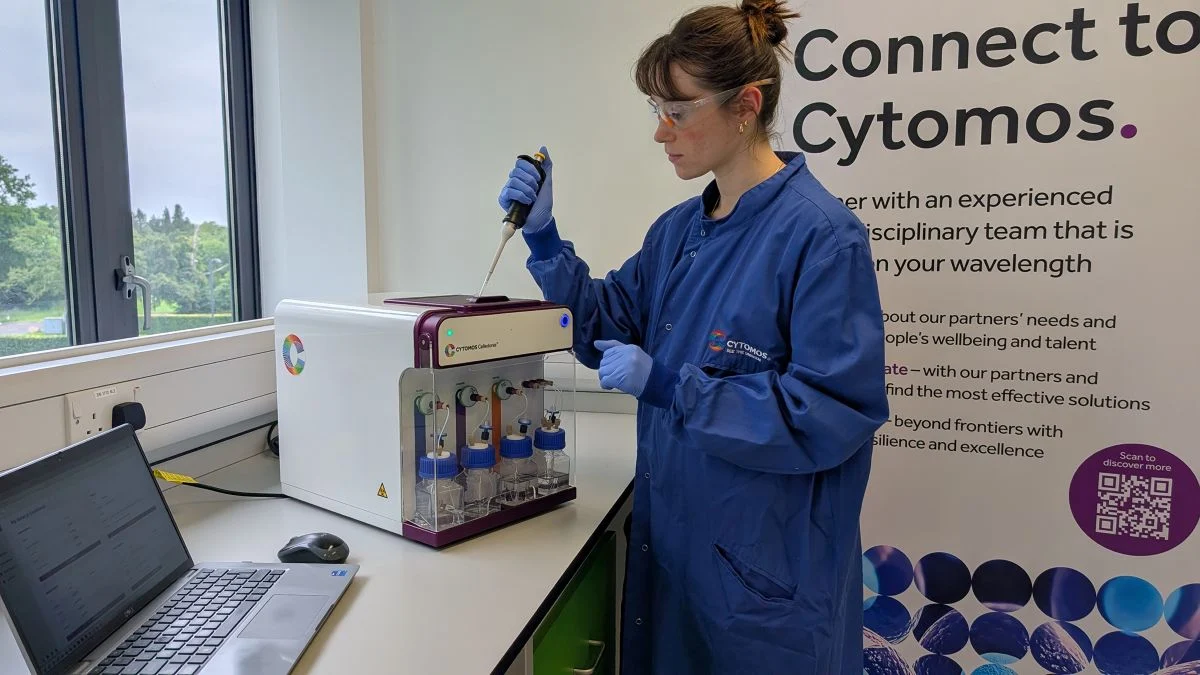
In an era where biopharmaceutical manufacturing is racing to meet the demands of personalized medicine and complex cell therapies, the bottleneck often lies not in the biological synthesis itself, but in the analytical lag. Cytomos, a pioneer in cell analysis technology, has officially unveiled its flagship platform, AuraCyt®, paired with its breakthrough benchtop technology, Celledonia®. Together, these systems represent a paradigm shift in how bioprocessors monitor, predict, and optimize cellular performance. By moving away from traditional, label-dependent methods, Cytomos is providing the industry with the tools to transition from reactive monitoring to predictive intelligence.
The Core Challenge: Breaking the Analytical Bottleneck
The bioprocessing landscape has long been hampered by antiquated analytical methodologies. For years, the industry has relied on label-dependent assays—processes that require tagging cells with fluorescent markers or other reagents to observe their behavior. While functional, these methods are notoriously slow, labor-intensive, and often destructive to the cell populations they seek to analyze.
"Current challenges in the bioprocessing space include slow, label-dependent analytical methods that are inefficient to scale-up and provide limited predictive insight," notes a Cytomos spokesperson. These limitations create a "blind spot" in the development cycle. When researchers cannot predict how a cell line will perform in a large-scale bioreactor, they risk costly failures, wasted batch runs, and significant delays in bringing life-saving therapies to market. As the industry moves toward high-throughput, automated manufacturing, the need for a real-time, label-free analytical solution has become a strategic imperative.
The Technology: AuraCyt® and the Power of Digital Fingerprinting
At the heart of the Cytomos solution is the AuraCyt® platform. Rather than forcing cells to conform to the requirements of chemical labels, AuraCyt® observes the cells in their native, undisturbed state. By measuring the intrinsic physics of individual cells—their size, shape, dielectric properties, and internal complexity—the system generates "AI-ready digital fingerprints."
The Celledonia® Integration
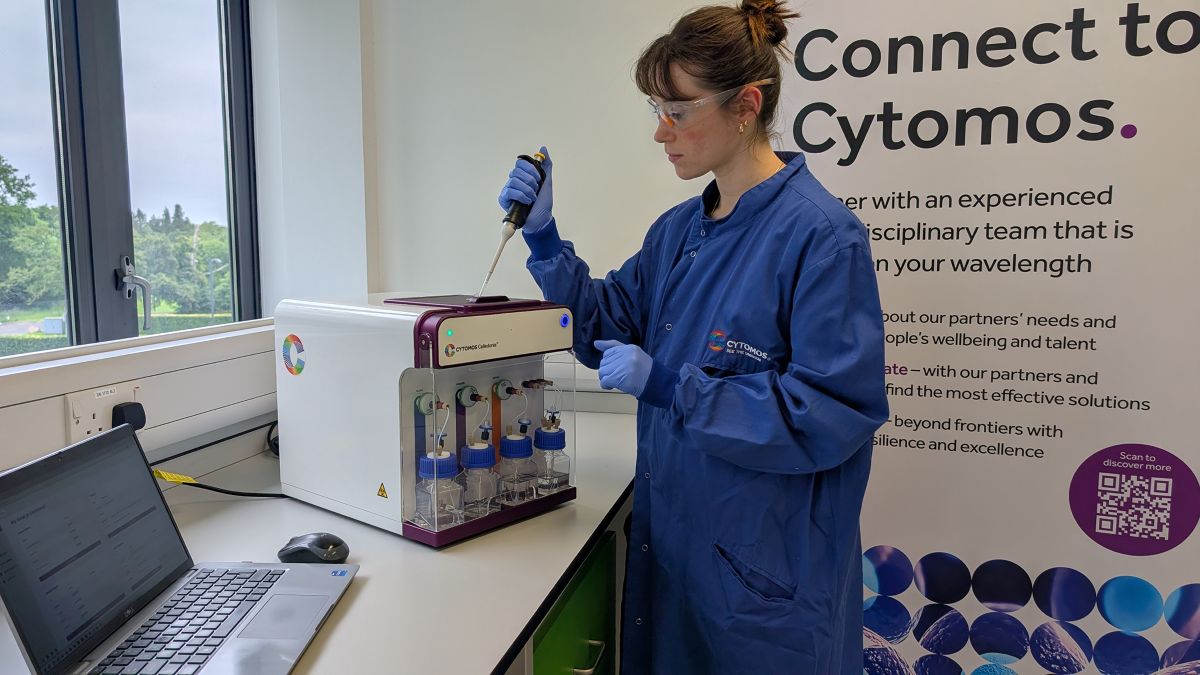
The hardware manifestation of this intelligence is the Celledonia® benchtop analyzer. Designed for ease of use and high-performance throughput, the Celledonia® unit houses the proprietary sensor modules of the AuraCyt® system. This combination transforms raw, complex cellular data into actionable, multi-dimensional insights.
By analyzing the "physics" of the cell, the platform can infer the biological "state" of the cell without needing to modify it. This label-free approach ensures that the cells analyzed are representative of the actual population, rather than artifacts created by the testing process itself. This, according to the company, is the key to unlocking predictive analytics regarding future productivity, genetic stability, and manufacturing robustness.
Chronology: A Trajectory of Innovation
The journey toward the release of the AuraCyt® and Celledonia® platforms has been one of rigorous validation and strategic development.
- Early R&D Phase (2022–2024): Cytomos focused on proving the hypothesis that intrinsic cell physics could serve as a reliable proxy for biological behavior. During this period, the company secured key partnerships to test their sensor modules in diverse environments, from academic research labs to early-stage industrial pilot projects.
- Proof of Concept (2025): The company successfully demonstrated that their "digital fingerprinting" could predict clone stability in Cell Line Development (CLD) programs. This served as a vital milestone in establishing the platform’s commercial viability.
- The Launch (June 2026): At the BIO International Convention, Cytomos officially introduced the integrated AuraCyt® and Celledonia® ecosystem to the global bioprocessing community. The showcase, located in the UK Pavilion of the BIO Business Forum, marked the transition from pilot technology to a commercialized, industry-ready solution.
Supporting Data: Quantifiable Impacts on Efficiency
The value proposition of Cytomos is not merely theoretical; it is backed by empirical data derived from real-world applications in bioprocessing. The shift from slow, traditional methods to the rapid, predictive intelligence of the AuraCyt® platform has resulted in significant time and resource savings.
1. Accelerating Cell Line Development (CLD)
CLD is often the longest phase in the development of a therapeutic protein. Cytomos has demonstrated that their platform can reduce these timelines by up to 40%. By identifying high-performing clones earlier in the process through physics-based screening, developers can eliminate inferior candidates sooner, focusing resources only on the most promising cell lines.
2. Optimizing Lentivirus Batch Production
The production of viral vectors, such as lentivirus, is notoriously resource-heavy and fraught with variability. Cytomos’ data indicates that the implementation of their technology can save up to 65% of the resources typically consumed in batch production. This is achieved by providing real-time data that allows for tighter process control and reduced material wastage.
3. Streamlining CAR T-Cell Therapies
Perhaps the most critical application lies in the field of CAR T-cell therapy, where time-to-patient is a life-or-death metric. Cytomos has reported a reduction in overall process time of up to 30%. By enabling faster, more accurate characterization of the cells, the system ensures that the manufacturing process is not only faster but also more consistent, directly impacting the quality of the therapeutic product.
Official Responses and Strategic Vision
Alan Raymond, the Executive Chair of Cytomos, emphasizes that the platform is not just about faster data—it is about better decision-making. "This enables earlier insights and real-time decision-making, lowering risk, providing scalable impact, optimizing process and improving product consistency," Raymond stated.
The company’s presence at the BIO 2026 conference is part of a larger strategy to integrate into the global biopharmaceutical supply chain. By positioning the Celledonia® unit as a benchtop-friendly device, Cytomos is aiming for widespread adoption in R&D labs, where the most critical early-stage decisions are made. The ability to bring "big data" analytics to the benchtop is a major selling point for mid-sized biotech firms that lack the massive infrastructure of global pharmaceutical giants.
Implications for the Future of Bioprocessing
The introduction of the AuraCyt® platform signals a broader trend in the life sciences: the digitalization of cell biology. As AI and machine learning continue to permeate the industry, the "digital fingerprinting" approach used by Cytomos provides the high-quality, high-dimensional data that these algorithms require to function effectively.
Bridging the Gap Between Discovery and Manufacturing
Historically, there has been a disconnect between the biology observed in the discovery lab and the engineering requirements of the manufacturing plant. Cytomos aims to bridge this gap. Because the AuraCyt® system measures the same physical parameters regardless of the scale—from a small vial to a large-scale bioreactor—the data remains consistent throughout the scale-up process. This "data continuity" reduces the risk of failure when transferring processes from the lab to the factory floor.
Sustainability and Cost Reduction
Beyond the technical benefits, the platform addresses the economic and environmental pressures facing the industry. By reducing the reliance on chemical labels and reagents, Cytomos is contributing to a more sustainable bioprocessing model. Lowering resource consumption in lentivirus and CAR T production directly lowers the cost of goods sold (COGS), which is essential for making advanced therapies more affordable and accessible to the broader patient population.
The Role of Real-Time Analytics
The industry is moving toward a "Quality by Design" (QbD) framework, where product quality is built into the process rather than tested at the end. Cytomos’ real-time analytical capabilities are perfectly aligned with this philosophy. When a system can detect, in real-time, that a cell population is deviating from its optimal state, the operator can adjust process parameters on the fly, preventing the batch from failing. This is a level of process control that was previously unattainable.
Conclusion: A New Standard for Analytical Intelligence
The showcase at the BIO 2026 conference serves as a testament to how far cell analytics has come in a relatively short period. By successfully merging physics, AI, and bioprocessing, Cytomos has created a tool that addresses the most painful aspects of therapeutic development.
As the industry continues to push the boundaries of what is possible in medicine, the demand for precise, fast, and reliable analytical tools will only increase. The AuraCyt® platform and the Celledonia® analyzer are not merely new pieces of equipment; they represent a fundamental shift toward an era of predictive bioprocessing. For researchers and manufacturers, the promise is clear: less time spent guessing, fewer resources wasted, and a more robust path toward delivering the next generation of life-changing treatments.
As attendees at the UK Pavilion in Exhibit Hall 2221 witnessed this week, the future of the laboratory is not just in the reagents on the shelf, but in the intelligence of the systems that analyze the cells themselves. Cytomos has laid the foundation for a more efficient, predictable, and scalable future, ensuring that the promise of biopharmaceutical innovation can be realized at the speed that patients require.