AI-Powered Precision: A Paradigm Shift in the Search for Solid Tumor CAR T Targets
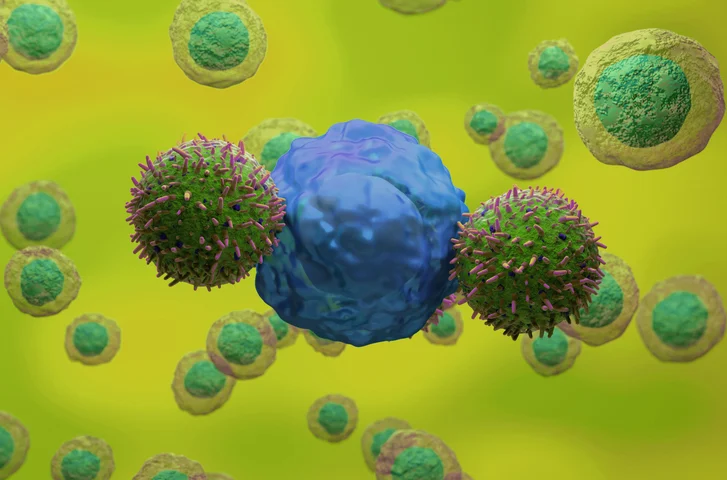
The landscape of oncology is on the precipice of a seismic shift. For over a decade, Chimeric Antigen Receptor (CAR) T cell therapy has stood as a monumental triumph in the treatment of hematologic malignancies, effectively turning once-terminal blood cancers into manageable or curable conditions. However, the translation of this success into the realm of solid tumors—which account for the vast majority of cancer-related deaths—has been persistently hindered by a critical bottleneck: the identification of safe, highly selective, and broadly expressed tumor antigens.
A groundbreaking study published in the journal Cell, titled “AI-driven discovery of GPNMB CAR T cells as a multi-cancer therapy,” introduces a transformative solution. A multidisciplinary team led by researchers at the Perelman School of Medicine at the University of Pennsylvania and the Abramson Cancer Center, in collaboration with the Icahn School of Medicine at Mount Sinai and RWTH Aachen University, has unveiled a "human-in-the-loop" AI framework. This system leverages Large Language Models (LLMs) to scan the overwhelming "haystack" of genomic data, successfully identifying GPNMB as a promising, high-value target for solid tumors.
The Bottleneck: Navigating the Genomic Haystack
The clinical success of CAR T therapy relies on the ability of engineered T cells to recognize specific proteins—antigens—on the surface of cancer cells. In blood cancers, targets like CD19 are highly restricted to the lineage of the cancer, allowing T cells to strike with precision. Solid tumors, however, are notoriously heterogeneous. They often lack such "clean" markers, expressing antigens that are also found on vital healthy tissues, which creates a significant risk of "on-target, off-tumor" toxicity.
"Discovering a good CAR target is like trying to find a needle in a haystack, except the haystack keeps growing as more sequencing data becomes available," explains lead author Daniel Baker, PhD. As high-throughput technologies like single-cell RNA sequencing (scRNA-seq) generate petabytes of data, human researchers have found themselves unable to manually parse the sheer volume of information to identify the most viable therapeutic candidates.
The Chronology of Discovery: From Data to Drug
The development of the new AI-enabled strategy followed a rigorous, multi-stage methodology designed to bridge the gap between computational prediction and biological validation.
Phase 1: Constructing the Framework
The researchers initiated the project by designing a modular, human-in-the-loop AI system. Rather than relying on a "black box" automated system, the team opted for an architecture that integrates LLMs with complex scRNA-seq datasets. The goal was to create a symbiotic relationship: the AI handles the massive, high-speed data processing, while human experts provide the biological context and final "sanity checks" to prevent algorithmic errors or "hallucinations."
Phase 2: Targeted Screening in Skin Cancer
To stress-test the framework, the team utilized four publicly available scRNA-seq datasets focusing on skin cancer. By filtering these datasets through a series of stringent criteria—including tumor-specific expression profiles, lack of expression in critical healthy organs, and clinical druggability—the system narrowed down over 10,000 potential candidates. To ensure robustness, the researchers performed 1,000 independent simulation runs using multiple LLMs. This consensus-based approach effectively reduced noise and ensured that the candidates prioritized were not mere artifacts of the data.
Phase 3: The Identification of GPNMB
Through this consensus process, the AI consistently pointed toward Glycoprotein non-metastatic melanoma protein B (GPNMB). Following the AI’s recommendation, the human team reviewed the literature and validated the target’s potential. GPNMB emerged as the top candidate due to its high expression in various solid tumors and relative absence in vital healthy tissues.
Phase 4: Preclinical Validation
The final phase involved the engineering of a GPNMB-directed CAR T cell. In controlled mouse models, these cells demonstrated potent tumor-clearing abilities. Remarkably, the therapy was effective not only against melanoma but also against monoblastic leukemia and colorectal adenocarcinoma, providing early evidence that the GPNMB target could serve as a "pan-cancer" anchor for future immunotherapies.
Supporting Data and Technical Robustness
The strength of the Penn team’s approach lies in its systematic reduction of the discovery cycle. Traditional target discovery can take years of laboratory labor. By automating the filtering process, the team compressed the initial phase of candidate identification into a fraction of the usual time.
The integration of scRNA-seq was pivotal. By analyzing individual cells rather than bulk tumor samples, the AI could differentiate between the expression profiles of malignant cells, stromal cells, and infiltrating immune cells. This granularity is essential for safety; it allows researchers to see if a potential antigen is "hiding" in healthy tissues that might be overlooked in bulk analysis.

The 1,000-run simulation protocol serves as a standard for future AI-driven biology. By analyzing the frequency with which GPNMB was flagged across these runs, the researchers established a statistical confidence level that is rarely seen in initial drug discovery screens. This statistical rigor, combined with the successful in vivo elimination of tumors in preclinical models, establishes GPNMB as a high-priority candidate for clinical trials.
Official Perspectives: The Synergy of Human and Machine
The project was conducted under the mentorship of pioneers in the field, including Carl June, MD, and Zoltan Arany, MD, PhD. Their perspective on the findings underscores the paradigm-shifting nature of the work.
"This study represents one of the first uses of large language models in the field of cell and gene therapy, including CAR T cell therapy," stated Dr. June. His endorsement highlights the legitimacy of using AI as a partner in the laboratory, moving away from the perception of AI as a competitor to expert scientists.
Dr. Arany emphasized the scalability of the methodology. "This is only the tip of the iceberg, as agentic AI is on the rise," he noted. By keeping the framework "modular and disease-agnostic," the team has ensured that as LLMs improve and as new genomic datasets become available, the system can be updated with minimal friction. This future-proofing is a deliberate attempt to create a "discovery engine" that can be applied to any cancer type, from pancreatic to lung, without requiring a complete redesign of the workflow.
Implications: A New Era for Oncology
The success of the GPNMB study signals a broader transition in how medical research will be conducted in the coming decade.
1. Accelerating Clinical Translation
The primary implication is a significant reduction in the "bench-to-bedside" timeline. By shortening the discovery phase, researchers can move faster toward Phase I clinical trials, potentially bringing life-saving therapies to patients months or even years earlier than under the traditional model.
2. Democratizing Discovery
Because the team included the full framework in the study’s methods section, other research groups can now adopt and refine this approach. This democratization of AI-driven target discovery could lead to a surge in novel CAR T candidates, fostering a more diverse and competitive pipeline of solid tumor therapies.
3. Toward Precision "Multi-Cancer" Therapies
The effectiveness of GPNMB-directed CAR T cells across multiple tumor types suggests that we may be entering an era of "universal" or "broad-spectrum" CAR T targets. If a single CAR T construct can be adapted to treat diverse malignancies—colorectal, melanoma, and leukemia—the logistics of manufacturing and the economies of scale for clinical adoption could be significantly improved.
4. Refining the AI-Scientist Partnership
The "human-in-the-loop" model established by the Penn researchers provides a blueprint for the future of scientific inquiry. It addresses the ethical and technical concerns surrounding AI by keeping the final decision-making authority in the hands of trained clinicians and scientists. This ensures that the biological complexity of human disease is never sacrificed for the sake of computational efficiency.
Conclusion
As the medical community looks toward the future, the work led by the University of Pennsylvania represents a milestone in the convergence of artificial intelligence and cellular engineering. By successfully navigating the "haystack" of genomic data to identify a viable, broad-spectrum target like GPNMB, the team has not only provided a new tool for cancer treatment but has also validated a methodology that will likely become standard practice in modern oncology.
The "needle" found in this haystack—GPNMB—is now set to advance through the rigorous stages of clinical development. However, the true legacy of this study may well be the "needle-finding machine" itself: a modular, AI-powered framework that promises to unlock the vast, untapped potential of CAR T therapy for the millions of patients currently fighting solid tumors. As agentic AI continues to evolve, the partnership between human intuition and machine intelligence will undoubtedly remain the most potent weapon in our arsenal against cancer.