The Convergence of Silicon and Silk: Raspberry Pi Pico Debuts on the New York Fashion Week Runway

Introduction: The Unlikely Intersection of High Tech and High Fashion
The Raspberry Pi, a credit-card-sized computer originally conceived to promote basic computer science education in schools, has long since transcended its humble origins. It has monitored underwater conservation areas from the backs of sea turtles, managed precision viticulture in Japanese vineyards, and orbited the Earth aboard the International Space Station. However, the latest milestone for this versatile piece of hardware took place in an environment far removed from laboratories or low-earth orbit: the high-glamour runways of New York Fashion Week (NYFW).
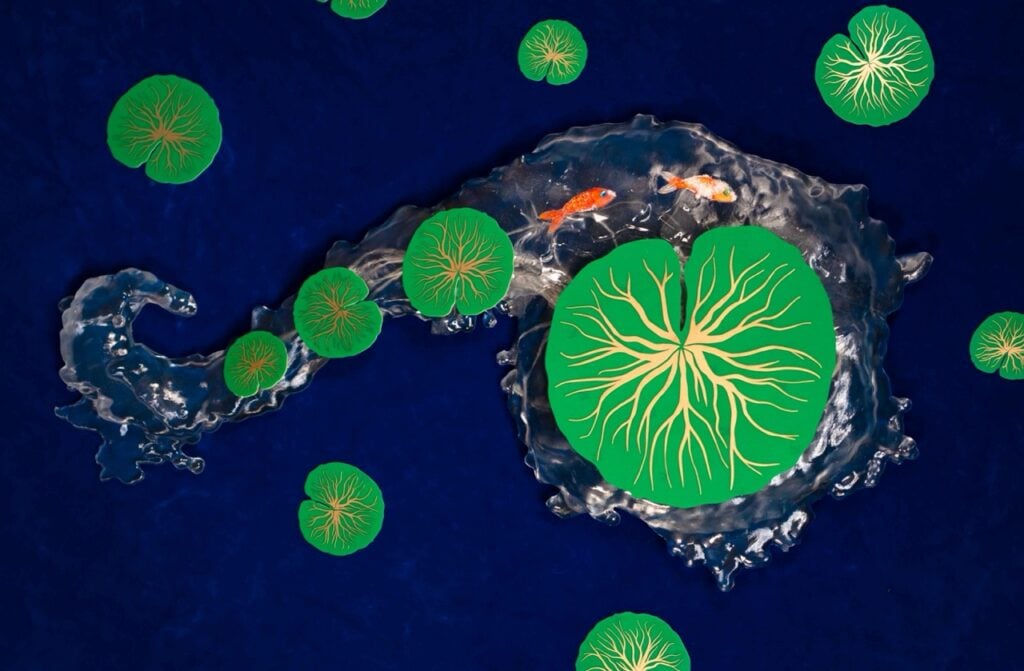
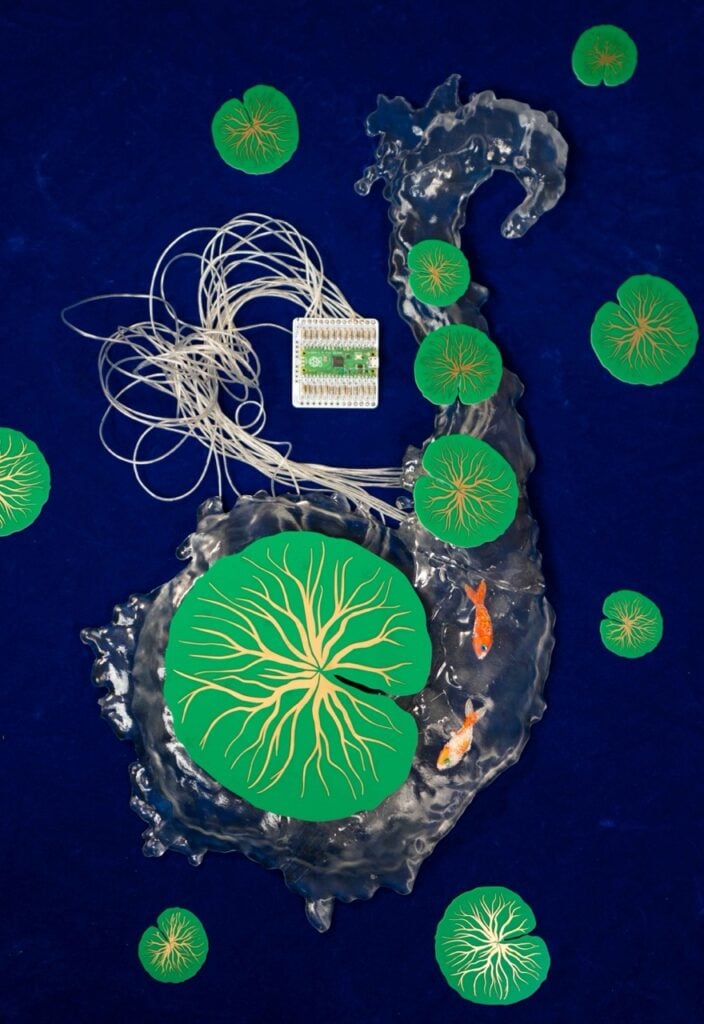
The centerpiece of this debut was the "Koi-Tar," a stunning, ethereal MIDI controller guitar that bridges the gap between functional engineering and avant-garde wearable art. Designed by engineer and artist Monique Evette, known professionally as "Evette’s Niche," the Koi-Tar represents a new frontier in the "Maker" movement—one where complex circuitry and microcontrollers are integrated into the world of haute couture.
Main Facts: The Anatomy of the Koi-Tar
The Koi-Tar is not a traditional stringed instrument, but a sophisticated MIDI (Musical Instrument Digital Interface) controller. It is the flagship piece of Evette’s Whimsical Machines series, a collection of instruments designed with a "fairy-tale" aesthetic that belies their technical complexity.
Technical Specifications
At the heart of the Koi-Tar lies the Raspberry Pi Pico, a high-performance microcontroller board featuring the RP2040 chip designed by Raspberry Pi in the UK. The device serves as the brain of the instrument, processing inputs and translating them into musical data.
Key technical components include:
- Microcontroller: Raspberry Pi Pico.
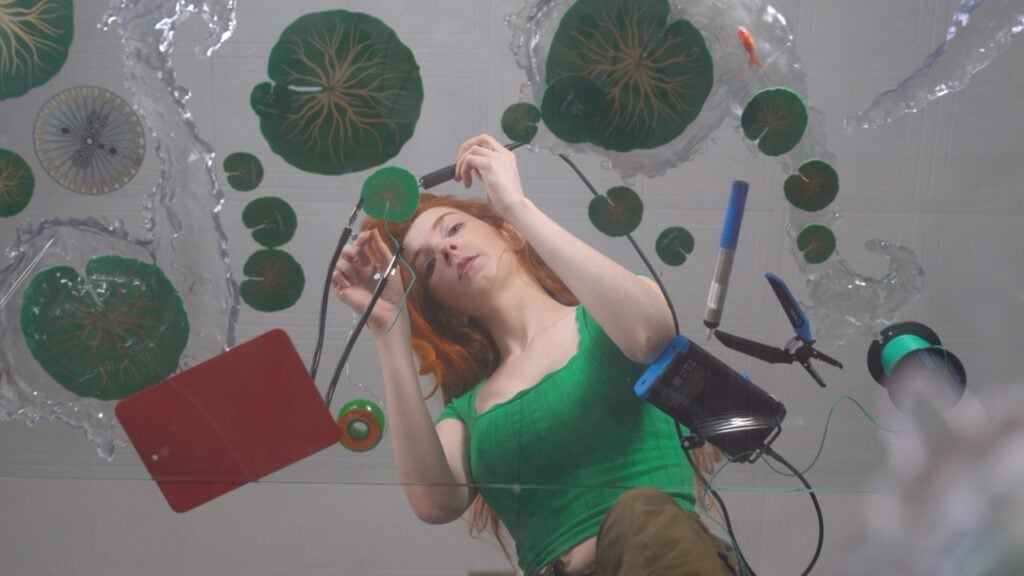
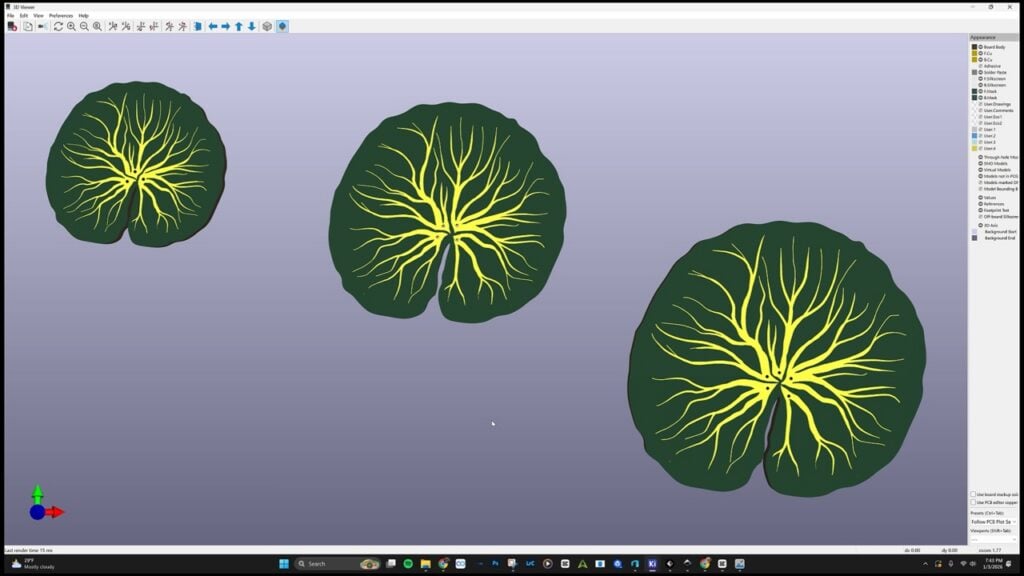
- Input Interface: Custom-designed PCB (Printed Circuit Board) capacitive touch sensors shaped like lily pads.
- Chassis: A high-detail SLA (Stereolithography) 3D-printed resin housing.
- Electronics: A SPOKE-mini resistor array, which facilitates the capacitive touch functionality required for the "lily pad" buttons.
- Software Design: The body was modeled in Blender, utilizing advanced water physics simulations to capture the organic, "frozen in time" appearance of a water splash.
The result is an instrument that looks like a translucent piece of aquatic sculpture but functions as a fully capable electronic musical tool. When the performer touches the "lily pads," the Pico processes the change in capacitance and sends a MIDI signal to a computer or synthesizer, triggering notes, chords, or atmospheric sounds.
Chronology: From Computer Science to the Runway
The journey of the Koi-Tar began long before the lights of New York City. The project is the culmination of years of multidisciplinary study and professional experience by its creator, Monique Evette.
The Foundation (Early 2010s – 2020)
Evette’s background provided the perfect pedigree for this hybrid project. Holding a dual degree in computer science and physics, she spent nearly a decade working as a professional software engineer. During this period, she maintained a parallel artistic practice, experimenting with how code and physical hardware could be used to express aesthetic concepts.
The "Whimsical Machines" Concept (2021 – 2023)
The Whimsical Machines series was born from a desire to create "an orchestra’s worth of instruments that fairies might play." Evette sought to move away from the industrial, "black box" look of traditional synthesizers and controllers, aiming instead for designs inspired by the natural world.
The development of the Koi-Tar was the most ambitious phase of this series. Evette utilized Blender—a professional 3D modeling suite—not just for static design, but to simulate the fluid dynamics of water. This ensured that the guitar’s body had a naturalistic, flowing geometry that would be impossible to achieve through traditional carving or molding.
Prototyping and Peer Review (Late 2023 – Early 2024)
Before its public debut, the Koi-Tar underwent rigorous testing. In a move that bridged the gap between the "Maker" community and the professional music industry, Evette sought feedback from renowned electronic musicians and synthesists, including Benn Jordan and Venus Theory. These collaborators played the prototype and provided technical feedback on its ergonomics and latency, ensuring the instrument was more than just a visual prop—it was a viable tool for performance.
The New York Fashion Week Debut (September 2024)
The Koi-Tar’s appearance at New York Fashion Week marked a significant cultural moment. It was featured as a wearable accessory and performance piece, held by models on the runway to demonstrate how technology can be integrated into high-fashion aesthetics. The appearance solidified Evette’s position as a leading voice in the "Techno-Artisan" movement.
Supporting Data: The Engineering Behind the Aesthetics
The success of the Koi-Tar relies on the seamless integration of several disparate technologies.
1. SLA 3D Printing and Resin Work
Unlike standard FDM (Fused Deposition Modeling) printing, which uses melted plastic filament, SLA printing uses a UV laser to cure liquid resin. This allowed Evette to achieve the glass-like transparency and intricate curves necessary for the "splash" effect. The resin body provides both the structural integrity to hold the electronics and the optical properties that make the device glow when internal LEDs are activated.
2. Capacitive Sensing via Raspberry Pi Pico
The use of the Raspberry Pi Pico was a strategic choice. The RP2040 chip features Programmable I/O (PIO), which allows for high-speed, low-latency handling of sensor data. By using the SPOKE-mini resistor array, Evette transformed the lily-pad PCBs into sensitive touchpads. Capacitive sensing detects the electrical charge of the human finger, allowing for a "buttonless" interface that maintains the instrument’s organic look.
3. The "Apollo 11" Precedent
The Koi-Tar was not Evette’s first foray into high-profile wearable tech. She previously gained attention for her Apollo 11 hatch chest plate, a wearable replica of the lunar module’s hatch. This piece was worn to an event at the Kennedy Space Center and utilized similar Raspberry Pi-based logic to control lighting and interactive elements, proving the scalability of her design philosophy.
Official Responses: The Philosophy of "Evette’s Niche"
In public statements regarding the Koi-Tar and her broader body of work, Monique Evette emphasizes the importance of "STEM to STEAM"—the movement to integrate Art into Science, Technology, Engineering, and Mathematics.
"I love making art inspired by engineering concepts and celebrating the beauty of the natural world," Evette stated during the project’s unveiling. She describes the Koi-Tar as her "most ambitious" project to date, noting that the goal was to prove that "whimsy" and "hard engineering" are not mutually exclusive.
The Raspberry Pi Foundation has also noted the significance of such projects. By showcasing the Pico in a fashion context, the project highlights the accessibility of their hardware. It demonstrates that the same $4 microcontroller used in industrial sensors can also power a centerpiece at one of the world’s most prestigious fashion events.
Professional musicians Benn Jordan and Venus Theory, who tested the device, praised the instrument for its "tactile inspiration." Jordan noted that the unique form factor of a MIDI controller can often change the way a musician approaches composition, moving them away from the standard keyboard layout toward more improvisational, touch-based interactions.
Implications: The Future of Wearable Technology and Maker Culture
The appearance of a Raspberry Pi-powered instrument at New York Fashion Week has several long-term implications for the tech and fashion industries.
The Democratization of Wearable Tech
Historically, "smart" clothing and high-tech wearables were the exclusive domain of large corporations with massive R&D budgets (such as Google’s Project Jacquard). The Koi-Tar proves that an individual "maker" can produce world-class wearable technology using off-the-shelf components like the Raspberry Pi Pico and open-source software like Blender. This suggests a future where fashion is more personalized and technically sophisticated, driven by independent creators rather than just mass-market brands.
Artistic Engineering as a Career Path
Monique Evette’s transition from a standard software engineering career to "Evette’s Niche" serves as a blueprint for a new type of professional: the Creative Technologist. As automation handles more routine coding tasks, the value of human creativity—specifically the ability to apply engineering to art and fashion—is likely to increase.
The Evolution of Musical Instruments
The Koi-Tar challenges the traditional definition of a musical instrument. As MIDI technology becomes more embedded in everyday objects, the "interface" for music becomes limitless. We may see a rise in "site-specific" or "outfit-specific" instruments, where the performer’s clothing or accessories are the very tools used to create the soundscape of a show.
Conclusion
The Koi-Tar is more than a novelty; it is a proof of concept for the "Whimsical Machine." By successfully navigating the path from a digital simulation in Blender to the physical reality of a New York runway, Monique Evette has demonstrated that the future of technology is not just functional—it is beautiful. As the Raspberry Pi continues to find its way into the hands of artists, the line between the laboratory and the gallery will continue to blur, one "lily pad" at a time.