The Next Frontier of Cloud Computing: AWS Launches Graviton5-Powered M9g Instances
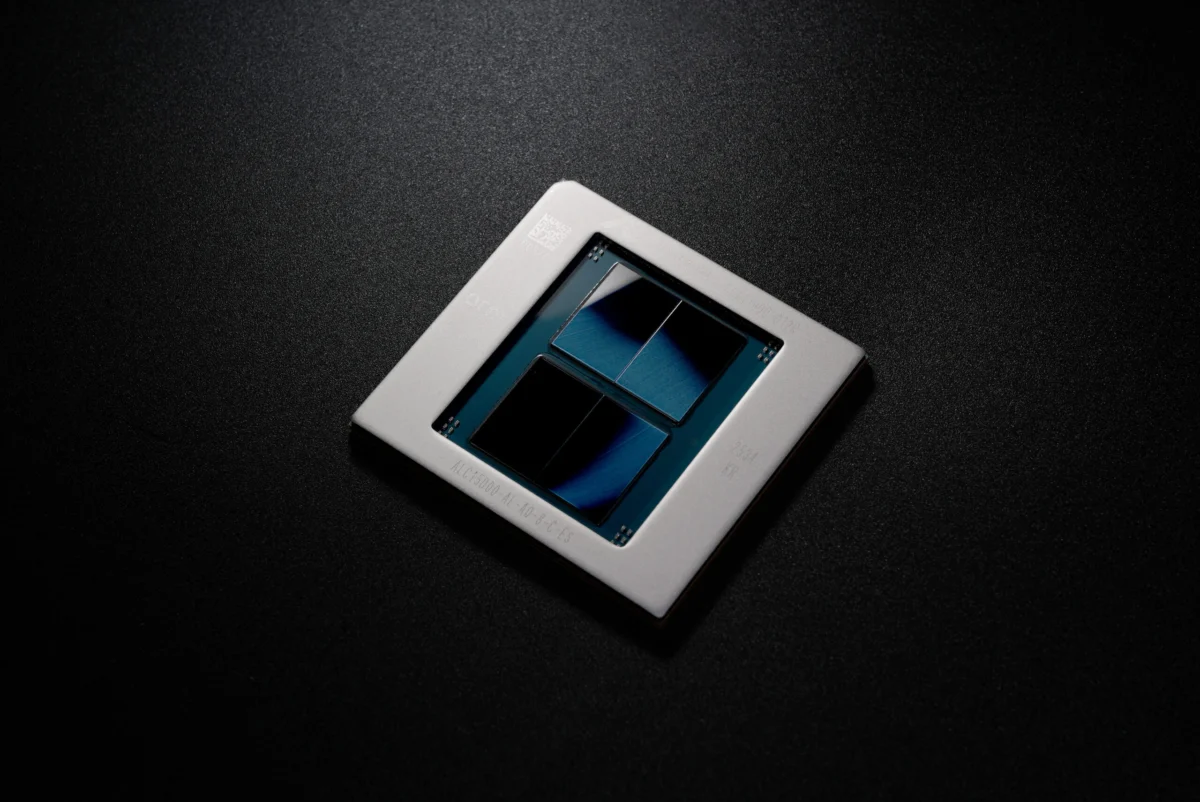
In a major leap for cloud infrastructure, Amazon Web Services (AWS) has officially announced the general availability of the M9g and M9gd instances, marking the commercial debut of the highly anticipated Graviton5 processor. Representing the culmination of eight years of custom silicon development, these instances arrive as the most powerful and energy-efficient compute units ever produced by AWS. As enterprises navigate the escalating demands of agentic AI and high-performance data processing, the Graviton5 platform arrives to provide the raw throughput and architectural security required for the modern digital landscape.
The Evolution of Custom Silicon: A Chronology of Graviton
The journey of AWS Graviton is a testament to the company’s pivot from being a consumer of merchant silicon to a leader in custom semiconductor engineering.
- 2018: The Genesis. AWS launched the original Graviton processor, signaling a move toward Arm-based architecture to solve the price-performance limitations of traditional x86 server hardware.
- 2020: Breaking Through. Graviton2 introduced massive gains in performance, successfully positioning AWS as a formidable player in the high-performance computing (HPC) space.
- 2021-2023: Maturation. Graviton3 and Graviton4 refined the architecture, focusing on memory bandwidth and cache efficiency, while simultaneously expanding the instance catalog to cover specialized use cases from databases to machine learning.
- 2025: The M9g Preview. At re:Invent 2025, AWS unveiled the M9g instances, allowing early adopters like ClickHouse, Honeycomb, and HubSpot to stress-test the new silicon.
- 2026: General Availability. Today, the Graviton5 platform reaches full production status, supported by the new Nitro Isolation Engine, setting a new benchmark for cloud security and performance density.
Architecting for the Agentic AI Era
As artificial intelligence transitions from passive chatbot interfaces to "agentic" systems—AI that can autonomously execute multi-step workflows, write code, and orchestrate software tools—the underlying compute requirements have shifted dramatically. Unlike training models, which rely heavily on GPUs, the reasoning and orchestration layers of AI agents are intensely CPU-bound.
Graviton5 was specifically engineered for this paradigm shift. Featuring 192 cores and a 5x larger L3 cache than its predecessor, the chip is designed to handle massive concurrent environments. With up to 33% lower inter-core latency and the integration of DDR5-8800 memory, the processor ensures that agents spend less time in "wait states" and more time processing logic.
The strategic importance of this development is underscored by Meta’s massive adoption. By deploying Graviton5 across tens of millions of cores, Meta is effectively setting a global standard for infrastructure supporting large-scale agentic AI, leveraging the chip’s superior core density to keep their AI systems responsive and agile.
Performance Metrics: The Case for Migration
The performance gains reported by early adopters during the preview phase provide a compelling narrative for migration. For organizations managing massive datasets, the transition to Graviton5 has yielded immediate, measurable results:
- ClickHouse: Experienced a 36% performance boost over the previous generation (M8g) without requiring a single line of code change, highlighting the seamless compatibility of the Arm-based architecture.
- Honeycomb: Through six months of rigorous A/B testing on production observability workloads, the company observed a 36% improvement in throughput per core.
- HubSpot: By deploying M9g for their MySQL database workloads, they reported a dramatic 60% reduction in query duration, a critical improvement for user-facing applications.
The technical specifications explain these gains. By supporting PCIe Gen6 and the fastest memory currently available in the cloud, the Graviton5 architecture addresses the "I/O bottleneck" that has historically plagued high-throughput applications.
Technical Deep Dive: M9g vs. M9gd
AWS has launched two distinct flavors of the new instance family to address varying storage needs:
The M9g Family
The standard M9g instances are optimized for general-purpose workloads, including application servers, microservices, and containerized architectures. With a 1:4 vCPU-to-memory ratio, these instances are the workhorses of the modern cloud, offering massive scalability for distributed systems.
The M9gd Family
For workloads that demand low-latency, high-speed local storage, the M9gd family integrates local NVMe SSDs. This is particularly beneficial for data logging, media processing, and caching fleets where I/O latency can become the primary constraint. With up to 11.4 TB of local storage and a 30% increase in IOPS performance compared to M8gd, these instances are engineered for data-intensive applications.
Bandwidth Optimization
A critical new feature is the Instance Bandwidth Configuration (IBC). This allows architects to dynamically reallocate network and EBS bandwidth, offering up to a 25% adjustment flexibility. This granular control is a game-changer for database administrators who need to prioritize write-heavy traffic during peak operations without over-provisioning their entire fleet.
Security: The Nitro Isolation Engine
Perhaps the most significant advancement, outside of raw processing power, is the introduction of the Nitro Isolation Engine. Security in multi-tenant cloud environments is a high-stakes game; AWS has historically relied on the Nitro System to physically isolate workloads.

The new Nitro Isolation Engine takes this to a mathematical extreme. By utilizing "formal verification"—a rigorous, proof-based approach to software and hardware engineering—AWS has created a system where isolation is not just a policy, but a mathematical certainty. This ensures that memory access, CPU registers, and I/O devices are partitioned with absolute precision, protecting virtual machines even from the most sophisticated side-channel attacks. This development marks the first formally verified cloud hypervisor in the industry, effectively raising the security ceiling for enterprise and government clients.
Strategic Implications for the Enterprise
For CTOs and infrastructure leads, the arrival of Graviton5 is not merely a hardware upgrade; it is a strategic lever for cost and sustainability.
- Sustainability Targets: As energy costs and carbon reporting become central to corporate governance, the improved energy efficiency of Graviton5 allows companies to scale their compute footprints while maintaining or reducing their total energy consumption.
- AI Orchestration: With the shift toward autonomous AI agents, the ability to run more concurrent threads per server is a direct competitive advantage. Companies that can run their orchestration layers on more efficient, denser hardware will see lower latency in their agentic workflows.
- Modernization Pipelines: AWS has made the migration path easier than ever. With tools like the AWS Graviton Getting Started Guide and the AI-powered AWS Transform service—which automates the conversion of Java applications—the barrier to entry for shifting from x86 to Graviton has been reduced to near zero.
Conclusion
The release of the M9g and M9gd instances powered by Graviton5 represents the maturation of a decade-long vision. AWS has successfully moved beyond simple price-performance advantages to offer a sophisticated, secure, and AI-optimized platform. By integrating formal verification, the fastest memory in the cloud, and specialized support for agentic AI workloads, AWS is not just keeping pace with industry demands—it is actively defining the architecture of the next generation of computing.
As enterprises begin to integrate these instances into their production environments, the focus will undoubtedly shift from "Can we migrate?" to "How fast can we scale?" In the race to build the next generation of intelligent, high-performance applications, Graviton5 provides the foundation upon which that future will be built.