The Intersection of Science Fiction and Silicon: DIY AI Robotics and the Realization of ‘Project Hail Mary’s’ Rocky


In the landscape of modern science fiction, few characters have captured the collective imagination of the "maker" community quite like Rocky, the multi-legged, musically speaking engineer from Andy Weir’s Project Hail Mary. As the 2026 film adaptation approaches, the anticipation for this extraterrestrial companion has transitioned from the pages of a novel to the workstations of hardware enthusiasts. This week’s "Maker Monday," featured in Issue 167 of the Raspberry Pi Official Magazine, highlights a breakthrough project by the creator known as Leviathan Engineer. By leveraging the computational power of the Raspberry Pi 5 and the generative capabilities of modern Artificial Intelligence, Leviathan Engineer has successfully brought a functional, interactive version of Rocky to life, signaling a new era in accessible, high-level hobbyist robotics.
Main Facts: Bringing an Eridian to Life
The core of the project is a sophisticated blend of additive manufacturing, traditional robotics, and cutting-edge Large Language Model (LLM) integration. The "Rocky" robot is not merely a static model; it is an autonomous-feeling entity capable of speech recognition, natural language processing, and reactive physical movement.
Key Technical Specifications:
- Central Processing: Raspberry Pi 5 (4GB RAM variant).
- Motor Control: PCA9685 16-channel, 12-bit PWM/Servo Driver HAT.
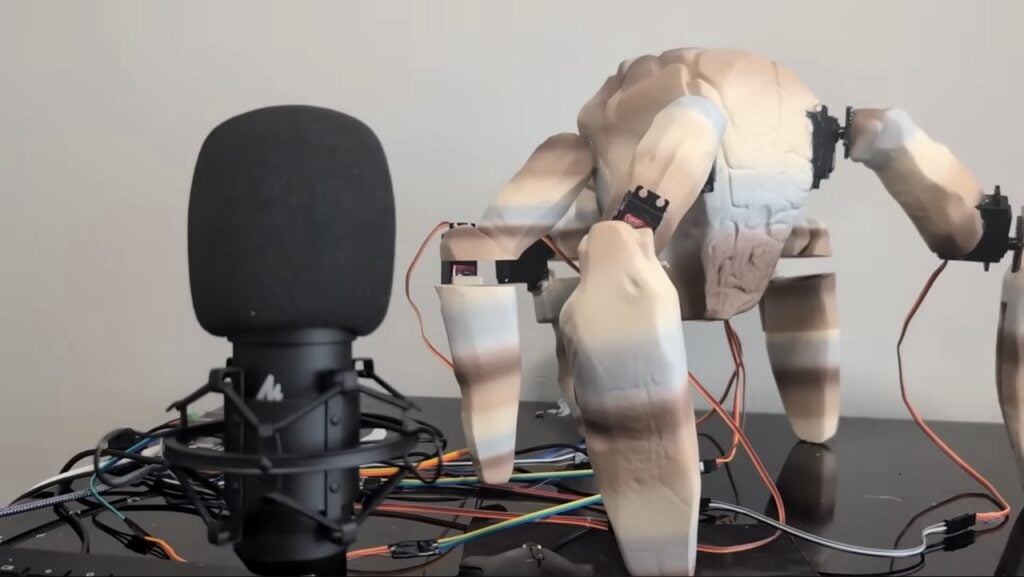
- Actuation: Seven high-torque servos dedicated to leg and limb articulation.
- Audio Interface: Integrated internal microphone for command reception and a high-fidelity speaker for output.
- Intelligence Layer: Claude Code (Anthropic’s developer-centric AI tool).
- Physical Housing: Custom 3D-printed chassis utilizing multi-colored gradient filament.
Unlike traditional hobbyist robots that rely on rigid, pre-programmed "if-then" logic, Leviathan Engineer’s Rocky utilizes AI to interpret intent. This allows the robot to respond to complex, unscripted verbal prompts—such as a request for a "fist bump"—by calculating the necessary motor movements in real-time or via AI-generated scripts.
Chronology: From Literary Concept to Physical Prototype
The journey of this project follows the trajectory of Project Hail Mary’s rise in popular culture. When Andy Weir released the novel in 2021, readers were introduced to the Eridian race—beings that perceive the world through ultrasound and communicate via chords of music. The challenge for any maker was how to translate a creature designed for high-pressure, ammonia-rich environments into a desktop-sized robot.
The Design Phase
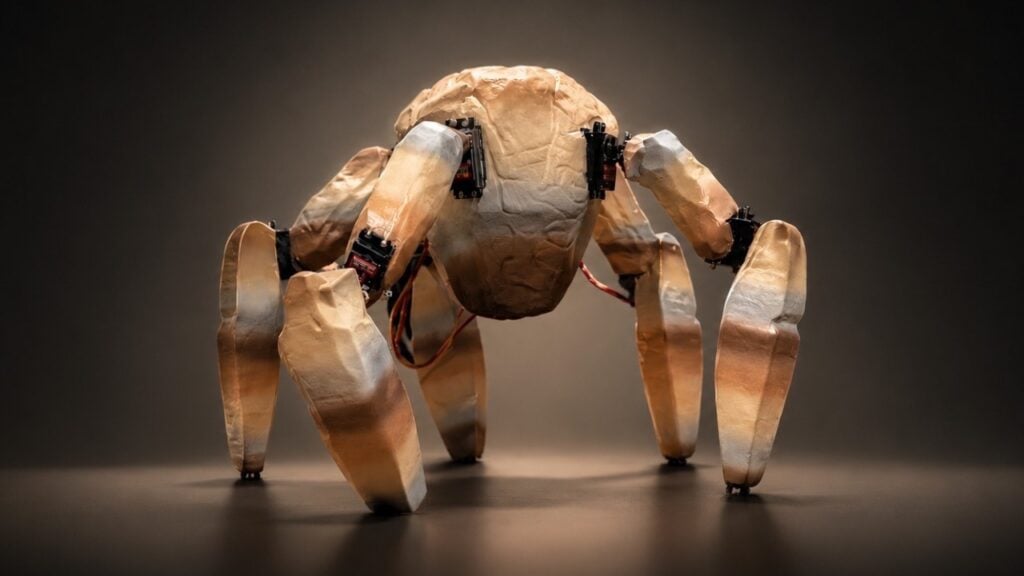
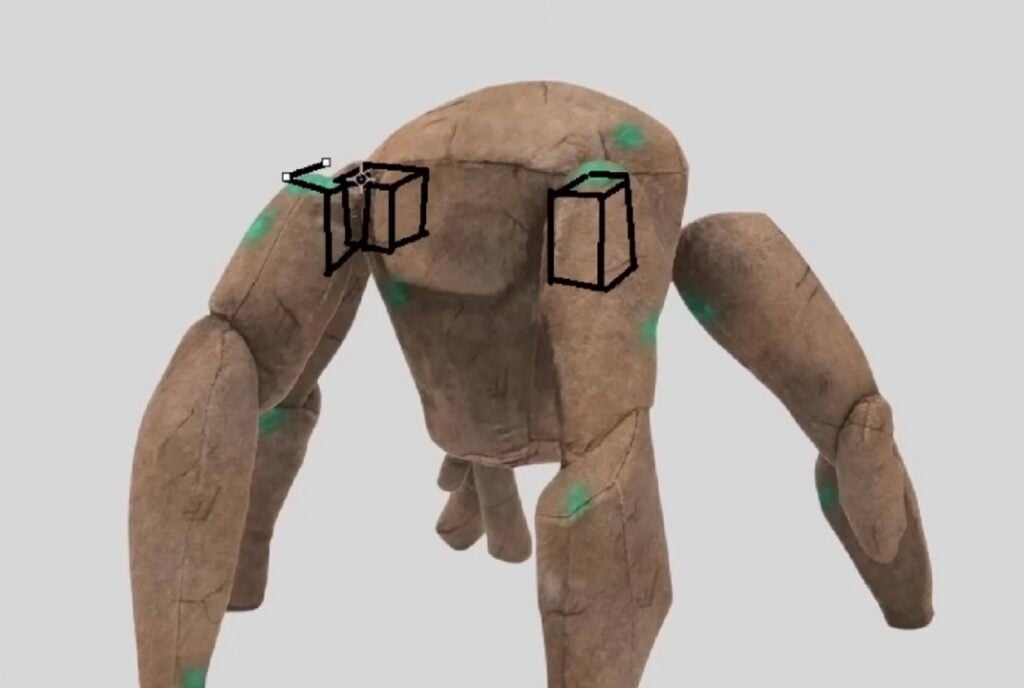
The chronology of the build began with the aesthetic realization. In the novel, Rocky is described as having a pentagonal symmetry with five limbs and a "metallic" stone-like skin. Leviathan Engineer utilized 3D modeling software to create a chassis that honored this description while allowing for the internal placement of the Raspberry Pi 5 and its associated HATs.
The Hardware Integration
Following the printing of the shell, the focus shifted to the mechanical skeleton. Integrating seven servos into a relatively small frame required a meticulous approach to wire management and weight distribution. By mid-development, the maker realized that the Raspberry Pi 5, while powerful, could not safely provide the peak current required to stall seven servos simultaneously. This led to the integration of a secondary, dedicated power supply—a common hurdle in advanced robotics where logic and locomotion must remain electrically isolated to prevent system brownouts.
The AI Revolution
The final and most critical phase was the software deployment. The timing of this project coincided with the release of Claude Code, a tool designed to allow AI to interact directly with a computer’s file system and terminal. Leviathan Engineer moved away from traditional Python scripting in favor of an AI-driven environment where the robot’s "personality" and "logic" were bridged by the LLM.
Supporting Data: The Power of the Raspberry Pi 5 and Claude Code
The success of the Rocky build is rooted in the specific hardware capabilities of the Raspberry Pi 5. Launched as a significant leap over its predecessor, the Pi 5 features the Broadcom BCM2712 SoC, which provides the necessary overhead to run speech-to-text (STT) and text-to-speech (TTS) engines locally or via high-speed API calls without significant latency.
Processing Efficiency
In robotics, "latency is the enemy of immersion." For Rocky to feel "alive," the delay between a human speaking and the robot responding must be under two seconds. The 4GB of LPDDR4X-4266 SDRAM on the Pi 5 allows for the fluid handling of the Claude Code interface, which manages the "thinking" process.
The PCA9685 Advantage
By using the PCA9685 servo driver, the maker offloaded the Pulse Width Modulation (PWM) tasks from the Pi’s CPU. This is crucial because:
- Precision: It provides 12-bit resolution for each output, allowing for the smooth, "organic" leg movements seen in the project videos.
- Scalability: It uses I2C communication, leaving the Pi’s other GPIO pins free for the microphone and speaker arrays.
AI Interactivity Data
The most impressive data point from the Leviathan Engineer project is the robot’s ability to handle "unprogrammed" tasks. In traditional robotics, a "fist bump" would require a developer to manually map the degrees of rotation for all seven servos and save it as a function. Through Claude Code, the AI understands the spatial concept of a "fist bump" and can generate the code or command sequence to actuate the servos to meet the user’s hand, effectively "learning" through the LLM’s vast training data on human-robot interaction.
Official Responses: The Maker Community and Raspberry Pi Ltd.
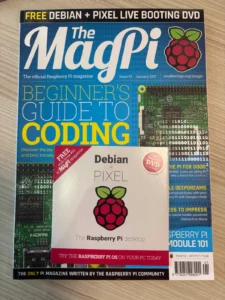
The project has garnered significant attention from both the Raspberry Pi Foundation and the broader tech community. Featured as the centerpiece of Raspberry Pi Official Magazine Issue 167, the project is being hailed as a "gold standard" for how AI can be integrated into physical builds.
Raspberry Pi Editorial Perspective
The editorial team at The MagPi (the official magazine) noted that Leviathan Engineer’s work represents a shift in the "Maker" philosophy. "We are seeing a transition from makers being ‘coders’ to makers being ‘system architects,’" the magazine stated. The inclusion of a free Raspberry Pi Pico 2 W for new subscribers to the magazine further emphasizes the organization’s commitment to getting this hardware into the hands of people who want to replicate projects like Rocky.
The AI Integration Trend
Anthropic (the creators of Claude) has not officially commented on this specific build, but the use of Claude Code in a hobbyist robotics context validates their push toward "agentic" AI—software that doesn’t just talk but does. This project serves as a case study for how their API can be used to control physical hardware, a field previously dominated by specialized industrial AI.
Implications: The Future of Companion Robotics and Education
The implications of the Rocky build extend far beyond a "cool toy" for sci-fi fans. It serves as a harbinger for several shifts in technology and society.
1. The Democratization of Robotics
Historically, building a robot that could "understand" and "react" required a PhD in computer science and thousands of dollars in hardware. Leviathan Engineer has proven that with a $60 microcomputer and an AI subscription, a single individual can create a companion robot that rivals the functionality of high-end consumer products from a decade ago.
2. Educational Transformation
This project provides a roadmap for STEM education. By following the Rocky build, students learn about:
- Mechanical Engineering: 3D design and torque requirements.
- Electrical Engineering: Power rails, I2C communication, and PWM control.
- Computer Science: AI prompt engineering and API integration.
3. The "Sci-Fi to Reality" Pipeline
As Project Hail Mary hits theaters in 2026, the demand for "smart" merchandise will skyrocket. However, this project suggests that the future of fandom is not in buying mass-produced plastic toys, but in "building" the characters. The emotional connection established between the maker and the robot—especially one as endearing as Rocky—changes the nature of how we consume media.
4. Hardware/AI Synergy
The project highlights the necessity for more powerful edge computing. While the Raspberry Pi 5 handled the task admirably, the next generation of "Rockys" will likely require even more on-device NPU (Neural Processing Unit) power to handle AI tasks without an internet connection, ensuring privacy and even lower latency.
Conclusion: "Amaze, Amaze, Amaze"
In the words of Rocky himself, the project is an "amaze." Leviathan Engineer has done more than just build a replica; they have bridged the gap between a fictional alien engineer and a real-world technological feat. As AI continues to evolve, the line between what is "programmed" and what is "alive" will continue to blur. For the Raspberry Pi community, Rocky is not just a character from an Andy Weir novel—he is a testament to the power of the modern maker to turn science fiction into science fact, one servo at a time.
For those interested in embarking on their own journey of Eridian engineering, the full technical breakdown and code snippets are available in the latest issue of the Raspberry Pi Official Magazine, providing a blueprint for the next generation of AI-powered companions.