Bridging Eras: Swift Arrives on the Apple II, A Testament to Ingenuity and AI
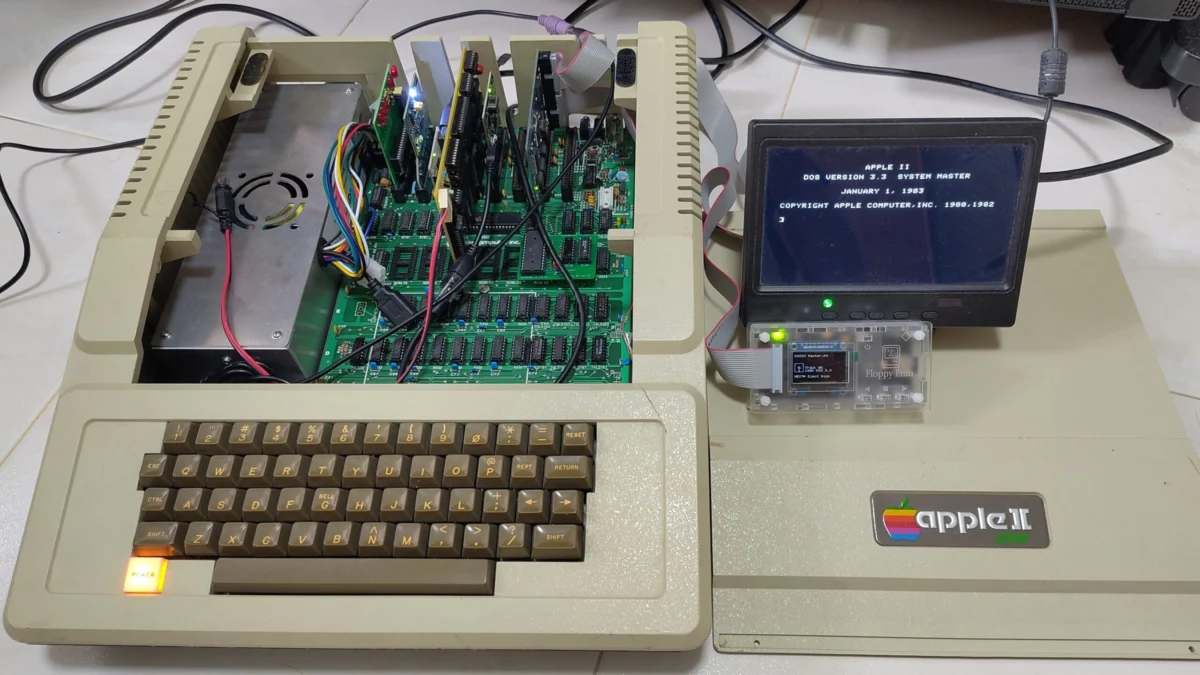
CUPERTINO, CA (Simulated News Release Date: June 18, 2026) – In an audacious feat of retro-computing and modern programming, developer Yeo Kheng Meng has successfully ported Apple’s contemporary Swift programming language to the venerable Apple II platform. This remarkable achievement, bridging a technological chasm of nearly four decades, allows the robust, modern Swift language to run on machines that debuted with a mere 1 MHz 6502 CPU and as little as 4 KB of RAM. The project not only highlights the enduring legacy of early personal computing but also underscores the incredible versatility of Swift and the burgeoning role of artificial intelligence in complex development challenges.
Swift, introduced by Apple in 2014 as a successor to Objective-C, quickly became the cornerstone for app development across macOS, iOS, watchOS, and tvOS. Its design emphasizes safety, performance, and modern programming patterns, making it a powerful tool for contemporary software creation. The notion of transplanting such a sophisticated language onto the 8-bit architecture of the Apple II, first released in 1977, seemed almost paradoxical. Yet, Yeo Kheng Meng has transformed this "simple yet fun idea" into a tangible reality, delivering a development environment that targets a range of Apple II models, from the original to the IIe and beyond.
The core of Yeo’s innovation lies in a meticulously crafted compiler that outputs bytecode, which is then interpreted by a custom virtual machine running natively on the Apple II’s 6502 processor. This ingenious approach sidesteps the immense complexities of direct compilation for such disparate architectures. While the original 1977 Apple II boasted a paltry 4 KB of RAM, Yeo’s implementation necessitates a common, albeit crucial, upgrade to 48 KB of RAM – a testament to the resource demands even a highly optimized virtual machine places on vintage hardware. The project further distinguishes itself by leveraging advanced AI tools, specifically Claude Code and GPT 5.5 Codex, to assist in piecing together the intricate components of this cross-generational port. This unprecedented blend of retro-tech and cutting-edge AI opens new avenues for understanding the capabilities of both.
Main Facts: A Bridge Across Eras: Swift on the Apple II
The headline-grabbing accomplishment by Yeo Kheng Meng represents a significant milestone in both retro-computing and programming language adaptation. At its heart, the project is a testament to the persistent human drive to push technological boundaries, even when those boundaries span nearly half a century.
A Modern Language for a Vintage Icon:
The most striking aspect of this project is the successful integration of Swift, a language born in the second decade of the 21st century, with the Apple II, a machine that defined the dawn of personal computing in the late 1970s. Swift, with its robust type system, automatic memory management, and high-level abstractions, represents a pinnacle of modern language design, optimized for multi-core processors, vast memory pools, and sophisticated operating systems. The Apple II, by contrast, operates with an 8-bit microprocessor, a single megahertz clock speed, and extremely limited memory resources, interacting directly with hardware in ways modern languages rarely contemplate. Yeo Kheng Meng’s achievement is not merely a novelty; it is a profound demonstration of engineering ingenuity.
The Visionary Behind the Port:
Yeo Kheng Meng’s motivation stemmed from a seemingly straightforward yet deeply challenging idea: to bring the power and elegance of Swift to the very first platform that bore the Apple name. This vision required a comprehensive understanding of both the intricacies of the Swift compiler toolchain and the deep, low-level mechanics of the 6502 microprocessor and the Apple II’s unique architecture. His dedication to this vision has yielded a fully functional development environment, allowing code written in Swift to execute on these classic machines.
Targeting the Apple II Family:
The project’s scope extends beyond a single model, encompassing the original Apple II, the Apple II Plus, and the highly popular Apple IIe. This broad compatibility ensures that a wider range of retro-computing enthusiasts and vintage hardware owners can experience Swift on their machines. This multi-platform approach within the Apple II ecosystem further complicates the development, requiring careful consideration of subtle hardware differences across generations, yet Yeo’s solution appears robust enough to handle these variations.
The Virtual Machine Paradigm: A Technical Imperative:
At the core of the implementation is a clever two-stage process. First, a custom compiler translates Swift source code into an intermediate bytecode format. This bytecode is then executed by a specially designed virtual machine (VM) that runs directly on the Apple II’s 6502 processor. This VM acts as an abstraction layer, shielding the Swift bytecode from the raw hardware differences and constraints of the Apple II. Without this VM, directly compiling Swift into 6502 assembly would be an exponentially more complex, if not impossible, task, given Swift’s high-level features and Apple II’s limited instruction set. The VM approach is a common strategy for achieving portability across diverse architectures, famously utilized by languages like Java and Python, but its implementation on an 8-bit, 1 MHz machine is particularly impressive.
The 48 KB RAM Requirement: A Pragmatic Compromise:
While Yeo’s stated goal was to enable the setup to work on a "standard 1977 Apple II from the factory," a crucial prerequisite is a RAM upgrade to 48 KB. The original 1977 Apple II shipped with as little as 4 KB of RAM, upgradable to 16 KB or 48 KB. The 48 KB configuration was a very common upgrade, necessary for running many popular applications and games of the era, including most versions of Apple DOS. This requirement is a pragmatic concession to the memory footprint of the virtual machine and the Swift runtime environment. Even in its most optimized form, a modern language runtime demands more resources than the bare minimum offered by the earliest Apple II models, making the 48 KB upgrade a necessary foundation for this ambitious port.
AI as a Co-Pilot: Leveraging Claude Code and GPT 5.5 Codex:
Perhaps one of the most forward-looking aspects of this project is Yeo’s open acknowledgement of utilizing advanced AI models, specifically Claude Code and GPT 5.5 Codex, in the development process. These AI tools played a significant role in "piecing things together," suggesting their involvement in tasks ranging from code generation for specific routines, debugging assistance, parsing vintage documentation, or even translating high-level concepts into low-level instructions compatible with the 6502 architecture. This highlights a burgeoning trend where AI is becoming an indispensable tool for complex engineering challenges, especially those involving bridging disparate technological generations.
Chronology: The Evolution of Programming and Platforms
To fully appreciate the scope of Yeo Kheng Meng’s project, it’s essential to understand the distinct evolutionary paths of the Apple II and the Swift programming language. Their origins and developments represent vastly different epochs in computing history.
The Genesis of the Apple II: A Personal Computing Revolution (1977-1993):
The Apple II, designed by Steve Wozniak, debuted at the West Coast Computer Faire in April 1977. It was not the first personal computer, but it was arguably the first "appliance" computer – a fully assembled machine that could be taken home, plugged in, and used immediately, largely due to its built-in integer BASIC interpreter. This user-friendliness, combined with its color graphics capabilities (unusual for its time) and open architecture (expansion slots), made it an instant hit and a cornerstone of the burgeoning personal computer industry.
Key specifications of the original Apple II included:
- CPU: MOS Technology 6502, running at 1.023 MHz. This 8-bit processor was renowned for its simplicity, efficiency, and low cost.
- RAM: Initially 4 KB, expandable to 16 KB, 32 KB, or a then-generous 48 KB. Later models pushed this further.
- ROM: 8 KB, containing the monitor, a disassembler, and the Integer BASIC interpreter.
- Graphics: Text mode (40×24 characters), low-resolution graphics (40×48 with 15 colors), and high-resolution graphics (280×192 with 6 colors).
- Storage: Initially audio cassette, later floppy disk drives (Apple Disk II, 1978) which dramatically increased its utility.
The Apple II series evolved over nearly two decades, with models like the Apple II Plus (1979), Apple IIe (1983), Apple IIc (1984), and the most advanced, the Apple IIGS (1986). The IIe, in particular, became a workhorse in homes and schools, known for its expanded memory, 80-column text support, and overall robustness. Throughout its lifespan, the Apple II primarily relied on languages like BASIC (Integer BASIC, then Applesoft BASIC), Assembly language (for speed-critical applications), and later Pascal and FORTRAN with CP/M compatibility. Its operating systems evolved from primitive monitor ROMs to Apple DOS, then ProDOS, offering more sophisticated file management. The Apple II family was officially discontinued in 1993, leaving behind an indelible mark on computing history.
The Rise of Modern Paradigms: From Objective-C to Swift (1980s-Present):
Apple’s journey into modern software development is deeply intertwined with Objective-C, a language that predates Apple’s involvement with it. Objective-C was developed in the early 1980s by Brad Cox and Tom Love, combining C-level procedural programming with Smalltalk-style object-oriented messaging. It gained prominence as the primary language for NeXTSTEP, the operating system developed by Steve Jobs’ NeXT Inc. after he left Apple. When Apple acquired NeXT in 1997, Objective-C became the foundational language for macOS (then Mac OS X) and later iOS.
Objective-C, while powerful and flexible, had its quirks. Its syntax, particularly for method calls (e.g., [myObject doSomethingWithArgument:someValue]), could be verbose, and its C-based heritage meant manual memory management (using reference counting) was often a developer responsibility, a common source of bugs. Over time, Apple introduced Automatic Reference Counting (ARC) to mitigate this, but the language still carried legacy baggage.
In 2014, at its annual Worldwide Developers Conference (WWDC), Apple unveiled Swift. It was presented as a modern, safer, and faster alternative to Objective-C, designed from the ground up with contemporary programming practices in mind. Key features of Swift include:
- Modern Syntax: Clean, expressive, and easy to read.
- Safety: Strong type system, optional types to handle
nilvalues, and automatic memory management (ARC) by default, significantly reducing common programming errors. - Performance: Designed for speed, leveraging modern compiler optimizations.
- Interoperability: Seamless integration with existing Objective-C codebases.
- Open Source: Apple open-sourced Swift in 2015, allowing it to be adopted on platforms beyond Apple’s own, including Linux and Windows, fostering a broader community and ecosystem.
Swift quickly became the preferred language for new development on Apple platforms, and many existing applications began migrating parts of their codebases to Swift. Its evolution has been rapid, with new versions introducing powerful features and refining the language further. The contrast between Swift’s design philosophy and the Apple II’s architectural limitations could not be starker, making Yeo Kheng Meng’s bridge-building project all the more extraordinary.
Supporting Data: The Technical Underpinnings of a Retro-Modern Port
The act of bringing Swift to the Apple II is not merely an act of creative coding; it’s a profound exercise in technical problem-solving, involving deep understanding of disparate architectures and ingenious workarounds.
Architectural Chasm: Bridging the 6502 and Modern Architectures:
The fundamental challenge lies in the vast difference between the Apple II’s 8-bit MOS 6502 CPU and the 64-bit ARM or x86 processors found in modern Apple devices.
- CPU Architecture: The 6502 is an 8-bit processor with a highly optimized, but limited, instruction set. It has only a handful of registers (accumulator, X and Y index registers, stack pointer, program counter, and status register). Memory addressing is typically 16-bit, allowing access to 64 KB of memory. Modern CPUs boast hundreds of registers, extensive instruction sets (including SIMD and vector operations), multiple execution units, complex caching hierarchies, and virtual memory management units. Swift, designed for these powerful architectures, takes advantage of these features for efficient function calls, data manipulation, and memory access. Reconciling Swift’s demands with the 6502’s constraints is a monumental task.
- Memory Constraints: The Apple II’s initial 4 KB of RAM, even when upgraded to 48 KB, is minuscule by modern standards (gigabytes are common). Swift’s runtime, standard library, and even basic data structures would overwhelm this without extreme optimization. The 48 KB requirement is critical because it provides enough contiguous memory space for the virtual machine, the bytecode, and a limited heap for Swift’s objects. This means careful memory management within the VM itself is paramount, potentially involving custom allocators and garbage collection schemes (or strict manual management) to prevent memory exhaustion.
- Operating Systems and I/O: The Apple II runs simple disk operating systems like Apple DOS 3.3 or ProDOS, which provide basic file I/O and memory management. There’s no sophisticated multitasking, virtual memory, or rich API layer akin to macOS’s Cocoa or iOS’s UIKit. The Swift VM must directly interact with the Apple II’s hardware for screen output, keyboard input, and disk access, often bypassing or minimally using the underlying DOS. The demo video shows text-based output, implying the VM primarily interacts with the Apple II’s text mode, which is the simplest and most resource-efficient display method.
The Virtual Machine Approach: A Necessity for Compatibility:
The decision to use a virtual machine is not just smart; it’s practically unavoidable.
- Abstraction Layer: The VM provides a necessary abstraction layer. Instead of generating native 6502 assembly code directly from Swift, which would be incredibly complex due to the vast semantic differences and resource limitations, Swift is compiled into a simpler, platform-agnostic bytecode. The VM then interprets this bytecode, translating each instruction into a sequence of 6502 operations. This decouples the Swift compiler from the specific quirks of the 6502.
- Resource Management: The VM is responsible for managing the Apple II’s precious resources. It allocates memory for the bytecode, the Swift runtime, and any objects created by the Swift program. It must handle stack operations, function calls, and error conditions within the extremely limited memory footprint. This likely involves a highly optimized VM written in 6502 assembly, designed for maximum efficiency.
- Performance Implications: Running a VM on a 1 MHz processor inherently introduces a performance overhead. Each bytecode instruction must be fetched, decoded, and then executed as a series of native 6502 instructions. This means Swift programs on the Apple II will run significantly slower than equivalent assembly programs or even BASIC programs, but the gain is the ability to use a modern, high-level language. The project prioritizes functionality and language compatibility over raw speed, which is a common trade-off in VM-based systems.
The Role of AI: Claude Code and GPT 5.5 Codex:
Yeo Kheng Meng’s use of AI tools like Claude Code and GPT 5.5 Codex is a modern twist that underscores the evolving landscape of software development.
- Code Generation and Translation: AI models excel at generating code snippets based on descriptions, translating code between languages, or even porting small functions. For a project like this, AI could have been instrumental in:
- Generating 6502 assembly routines for specific tasks (e.g., basic I/O, memory manipulation) based on higher-level descriptions.
- Translating parts of the Swift standard library’s logic into a form suitable for the VM’s bytecode or directly for the 6502.
- Creating scaffolding code for the virtual machine itself.
- Debugging and Problem Solving: AI can analyze code, identify potential bugs, suggest fixes, or even explain complex error messages. In the context of an unfamiliar vintage architecture, this could be invaluable.
- Documentation and Research: Large Language Models (LLMs) can rapidly process vast amounts of information. Yeo might have used them to quickly understand archaic Apple II documentation, 6502 instruction sets, or existing retro-computing projects, accelerating the research phase.
- Conceptual Assistance: AI could have helped Yeo brainstorm architectural approaches, evaluate different VM designs, or refine the compiler’s output.
The use of AI is not about replacing the developer’s skill but augmenting it, allowing a single individual to tackle a project of this magnitude with greater efficiency and insight than previously possible.
The Development Environment: A Modern Workflow for Vintage Hardware:
Developing for the Apple II with Swift would involve a cross-compilation setup. Yeo likely writes Swift code on a modern machine (e.g., a Mac). This code is then compiled by his custom Swift compiler, which targets the Apple II’s VM bytecode.
- Cross-Compilation: The compiler runs on a modern operating system and produces output (the bytecode) intended for a different, much older target system.
- Emulation and Physical Hardware: For testing and debugging, Yeo would likely use Apple II emulators (like AppleWin or Virtual II) which allow rapid iteration. Final testing and demonstrations would then occur on physical Apple II hardware to ensure true compatibility and performance characteristics.
- Toolchain Integration: The modern development environment would integrate the Swift compiler, a bytecode assembler, a tool to package the bytecode and VM into a disk image, and a method to transfer this image to an emulator or a physical Apple II (e.g., via SD card solutions like the Apple II MicroDrive or Floppy Emu). This seamless workflow, despite the vast age difference of the target, is crucial for productivity.
Official Responses and Community Reactions
While it is highly improbable that Apple Inc. would issue an official corporate statement regarding a third-party port of Swift to the Apple II, the project resonates deeply within the retro-computing community and subtly reflects Apple’s broader strategic movements with the Swift language.
A Nod from Cupertino? (Hypothetical):
Apple’s corporate focus is firmly on its current and future platforms. However, the company has historically shown a nuanced appreciation for its heritage and the broader developer ecosystem. The open-sourcing of Swift itself in 2015 was a monumental decision, aimed at broadening the language’s adoption beyond Apple’s walled garden. Projects like Yeo Kheng Meng’s, while niche, serve as powerful demonstrations of Swift’s versatility and robustness, even in the most constrained environments.
- Reinforcing Swift’s Design: From Apple’s perspective, such a port validates Swift’s clean design, its separation from specific hardware, and its potential for adaptation. It showcases that Swift is not just an "Apple language" but a powerful, general-purpose language capable of extreme portability.
- Community Engagement: While not directly endorsed, such community-driven projects contribute to the overall vibrancy and reputation of the Swift ecosystem. They generate positive buzz and demonstrate the passion of developers using the language. One could imagine an internal nod of appreciation or a mention in a less formal blog post from an Apple engineer, acknowledging the technical prowess.
The Retrocomputing Renaissance: A Thriving Niche:
The retrocomputing community is a passionate and growing segment of the tech world, driven by nostalgia, the desire for historical preservation, and a deep technical curiosity. For this community, Yeo Kheng Meng’s Swift port is nothing short of a triumph.
- Celebration of Ingenuity: Projects that push vintage hardware beyond its original design parameters are highly celebrated. The Apple II, in particular, has a dedicated following that delights in seeing modern capabilities brought to the platform. The Portal game port to the Apple II, mentioned in the original article, is another prime example of such admired ingenuity. These projects prove that old hardware is not merely for display but remains a fertile ground for technical exploration.
- Preservation and Education: These projects contribute to the preservation of computing history by ensuring that classic machines remain relevant and understood. They also serve as powerful educational tools, demonstrating fundamental computer science concepts (like virtual machines, compilers, and low-level programming) in a tangible, engaging way that connects modern developers to the roots of their craft.
- Online Community Buzz: Expect significant discussion and excitement across retro-computing forums (e.g., AppleFritter, VCFed), social media platforms (Twitter/X, Mastodon), and specialized news sites like Hackaday. The embedded YouTube demo video would undoubtedly garner numerous comments expressing amazement, technical questions, and encouragement. Such projects foster a sense of shared accomplishment and collective wonder within the community. The enthusiasm for projects like "Doom on an Apple II" or "macOS on an Apple IIGS" sets the precedent for the reception of Swift on the Apple II.
Implications: Beyond the Technical Marvel
Yeo Kheng Meng’s Swift on Apple II project transcends the immediate technical achievement, offering broader implications for programming language design, retro-development, and the evolving role of artificial intelligence in engineering.
The Enduring Legacy of the Apple II:
This project breathes new life into the Apple II, reinforcing its status as a foundational platform in personal computing history.
- Proof of Design Excellence: The fact that the Apple II, with its modest specifications, can host a virtual machine capable of running a modern language like Swift, speaks volumes about its original open architecture and hackability. It was designed to be expanded and tinkered with, a philosophy that continues to bear fruit decades later.
- Continued Relevance: Such ports ensure that the Apple II remains more than just a museum piece. It becomes a platform for active development, learning, and creative expression, encouraging a new generation to interact with and understand its intricacies. This contributes significantly to the machine’s cultural and historical longevity.
- Inspiring New Explorations: The success of this project could inspire other developers to explore porting different modern languages or frameworks to the Apple II, or indeed to other vintage platforms, further expanding the capabilities of retro hardware.
Swift’s Versatility: A Language for All Seasons (and Eras):
The port serves as a powerful testament to Swift’s adaptability and robustness, extending its perceived reach far beyond Apple’s contemporary hardware.
- Beyond Mobile and Desktop: While Swift is primarily known for app development on Apple platforms, its open-source nature has already led to its adoption in server-side development, machine learning, and command-line tools. The Apple II port further demonstrates its potential for highly constrained environments, such as embedded systems, IoT devices, or even other niche, low-power computing platforms.
- Language Design Principles: The project validates the design principles behind Swift – its focus on safety, clarity, and performance – even when those principles are tested against the extreme limitations of an 8-bit, 1 MHz machine. It shows that a well-designed language can be surprisingly flexible.
- Educational Tool: For aspiring Swift developers, this project can be an invaluable educational resource, illustrating how a modern language interacts with fundamental computer architecture, the role of compilers and virtual machines, and the challenges of resource management in a starkly clear context.
The Future of Retro-Development: AI as a Catalyst:
The explicit use of AI tools like Claude Code and GPT 5.5 Codex is perhaps the most forward-looking implication of Yeo’s work.
- Democratizing Complex Projects: Historically, porting a language to a foreign architecture, especially a vintage one, required an encyclopedic knowledge of compilers, operating systems, and assembly language. AI could significantly lower this barrier to entry, assisting developers with generating boilerplate code, debugging, understanding documentation, and even suggesting architectural patterns. This could democratize complex retro-engineering, making it accessible to a broader range of enthusiasts.
- Accelerating Development Cycles: AI can drastically reduce the time spent on repetitive or knowledge-intensive tasks, allowing human developers to focus on higher-level design and problem-solving. This acceleration could lead to more ambitious and frequent retro-porting projects.
- Ethical and Methodological Considerations: The increasing reliance on AI also raises questions about attribution, originality, and the verification of AI-generated code, especially in critical systems. However, in projects like this, where the goal is exploration and creation, AI’s role as a powerful assistant is undeniable and largely positive. It heralds a new era where human creativity, augmented by AI, can achieve previously unimaginable feats.
Bridging Generations: Inspiring New Developers:
Ultimately, Yeo Kheng Meng’s project serves as a powerful bridge between generations of technology and generations of developers. It connects the cutting-edge of programming with the foundational elements of computing, inspiring both seasoned veterans and newcomers. For those who grew up with the Apple II, it’s a nostalgic thrill to see their beloved machine running a language they use daily. For younger developers, it offers a tangible connection to the history of their craft, demonstrating that the principles of computing remain constant even as the technology evolves at breakneck speed. This blend of the old and the new sparks curiosity, encourages learning, and ensures that the spirit of innovation, which the Apple II itself embodied, continues to thrive.