Bridging the Gap: How Google’s AI-Powered Ultrasound Technology is Revolutionizing Maternal Healthcare
In the landscape of global health, the disparity in access to prenatal care remains a persistent and tragic challenge. According to the World Health Organization (WHO), the world witnesses approximately 287,000 maternal deaths and 2.4 million neonatal deaths annually. A staggering 95% of these fatalities occur in under-resourced settings, where the lack of basic medical imaging often prevents the detection of high-risk complications.
A team of researchers at Google, led by the Health AI division, is currently pioneering a transformative solution. By leveraging TensorFlow Lite—an open-source framework designed for machine learning on edge devices—Google is developing AI-driven ultrasound tools that allow non-experts to perform life-saving prenatal screenings. This initiative aims to democratize maternal healthcare, ensuring that a pregnant individual’s location does not determine their survival.
The Crisis: Why Maternal Health Care Lacks Accessibility
The traditional ultrasound is a cornerstone of modern obstetric care, providing essential data on gestational age and fetal presentation. These metrics are not merely clinical checkboxes; they are critical indicators that allow doctors to plan for safe deliveries and identify when urgent medical intervention is required.
However, there is a global "imaging gap." Modern ultrasound machines, while becoming more portable and affordable, still require years of specialized training to operate effectively. In rural and underserved regions, trained sonographers are scarce. Consequently, it is estimated that as many as two-thirds of pregnant people in these regions do not receive a single ultrasound screening during their entire pregnancy. This leaves millions to navigate childbirth without knowing if they face complications such as breech presentations or placental issues that could be mitigated with early detection.

Chronology: From Concept to Clinical Reality
The journey to develop this technology has been marked by rigorous interdisciplinary collaboration and a commitment to "responsible AI."
- Initial Research Phase: The team recognized that for AI to be effective in low-resource environments, it had to function offline and on low-power, portable hardware. The focus shifted from high-end clinical equipment to smartphone-integrated portable ultrasound devices.
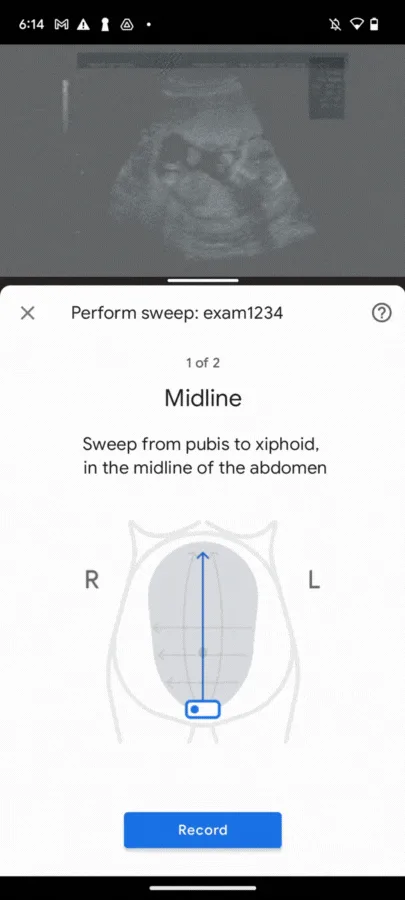
- The "Blind Sweep" Innovation: Recognizing the skill barrier, researchers developed the "blind sweep" protocol. Instead of requiring a technician to navigate the complex internal anatomy of the fetus, the user simply sweeps the ultrasound probe over the abdomen in a standardized motion.
- Model Development: Using a grouped convolutional LSTM architecture and MobileNetV2 for feature extraction, the researchers trained models capable of interpreting these "blind" video clips.
- Validation and Publication: In a landmark study published in Nature Communications Medicine, the team proved that non-experts—guided by AI—could achieve performance levels comparable to standard clinical care in estimating gestational age and identifying fetal malpresentation.
- Optimization with TensorFlow Lite: The final phase involved porting these robust models to mobile devices, ensuring real-time inference without the need for cloud connectivity.
Supporting Data: The Power of On-Device AI
The technical hurdles were significant. To ensure the tool was viable for rural clinics, the AI had to be fast, accurate, and memory-efficient.
Performance Benchmarks
By employing the TensorFlow Lite GPU delegate, the team achieved a 2x speed improvement in execution. The system now runs at over 30 frames per second, allowing it to provide instantaneous, real-time feedback to the user. If the AI detects that a "sweep" is of insufficient quality, it immediately instructs the user to apply more pressure or adjust the angle of the probe, effectively turning the smartphone into a real-time teaching tool.
Accuracy Comparisons
The study results were compelling. In comparisons against the clinical standard—where expert sonographers perform measurements—the AI-assisted non-expert sweeps matched standard-of-care performance. For gestational age, the model demonstrated high precision, and for fetal malpresentation, the ROC (Receiver Operating Characteristic) curves confirmed that the AI could accurately distinguish between normal and abnormal presentations, regardless of whether the scan was performed by an expert or a novice.

Official Perspectives: The Google Research Vision
"Our vision is to enable safer pregnancy journeys using AI-driven ultrasound," state Angelica Willis and Akib Uddin, researchers on the Health AI team. Their approach is deeply rooted in Google’s AI Principles, which emphasize social benefit and the mitigation of bias.
The team has been clear about the collaborative nature of this project. "Partnerships are critical," they noted. By collaborating with Northwestern Medicine in the United States and Jacaranda Health in Kenya, Google is ensuring that their models are evaluated against diverse populations and in real-world, high-stakes environments. This collaborative model ensures that the technology is not just an academic exercise, but a robust tool capable of being integrated into existing community health workflows.
Implications: The Future of Global Health
The potential implications of this technology are profound. If successfully deployed at scale, this system could shift the paradigm of prenatal care in the developing world.
1. Decentralization of Care
By empowering community health workers with AI-assisted ultrasound, the burden on centralized hospitals is significantly reduced. Early detection of high-risk pregnancies means that patients can be transported to specialized facilities before an emergency occurs, rather than after.

2. Privacy and Security
One of the most significant advantages of using TensorFlow Lite is that the AI models run entirely on-device. Sensitive medical imagery never needs to be uploaded to the cloud or transmitted over unstable internet connections. This provides a "privacy-by-design" framework that protects patient data in regions where data security infrastructure may be underdeveloped.
3. A Template for Future AI Medical Tools
The success of this project serves as a blueprint for other medical fields. If AI can "democratize" the skill required to interpret ultrasound, it could potentially do the same for dermatological screenings, ophthalmology, or even cardiology. By lowering the barrier to entry for diagnostic tasks, Google is essentially increasing the global workforce of skilled medical diagnostic providers.
Limitations and Ethical Considerations
It is vital to acknowledge the disclaimer provided by the research team: TensorFlow Lite has not been certified or validated for clinical, medical, or diagnostic purposes.
The researchers are acutely aware that this is a tool for augmentation, not replacement. The goal is to provide health workers with an additional layer of information to support their decision-making. The responsibility for clinical outcomes remains with the healthcare providers who use these tools. Furthermore, the team continues to address the challenges of "algorithmic bias," ensuring that the models are trained on diverse datasets so that they perform with equal accuracy across different ethnicities and body types.

Conclusion: A Step Toward Equity
The work being done by Google Research is a testament to the power of "Appropriate Technology"—the idea that the most effective solutions are those that are simple to use, affordable, and adapted to the specific constraints of the user’s environment.
As the project moves from the research phase to potential real-world implementation, the focus will remain on scalability and rigorous validation. By bridging the gap between high-tech AI and the urgent needs of rural maternal health, the researchers are helping to ensure that the gift of life is supported by the best technology the world has to offer, regardless of where that life begins.
The path forward is clear: with continued partnership, ethical oversight, and iterative improvements in machine learning, the "imaging gap" may one day be a thing of the past, replaced by a world where every pregnant person has access to the life-saving information they deserve.