Precision Illumination: Diffraction Limited Unveils Advanced Fiber-Coupled Laser Source
FOR IMMEDIATE RELEASE
[City, State] – [Date] – In a significant development for precision optics and advanced scientific research, a pioneering team operating under the moniker "Diffraction Limited" has successfully engineered and demonstrated a sophisticated fiber-coupled laser source. This innovative device addresses a long-standing challenge in optical experimentation: transforming the often-unsuitable elliptical beam profile of standard laser diodes into a pristine, circular Gaussian beam ideal for demanding applications. The project, meticulously documented and shared with the broader scientific and engineering community, highlights ingenious solutions to micro-scale alignment challenges, promising enhanced stability and performance for a wide array of optical setups.
Main Facts: Redefining Optical Beam Quality
The core of Diffraction Limited’s achievement lies in its ability to harness the inherent advantages of single-mode optical fibers to reshape and deliver laser light with unparalleled precision. While conventional laser diodes offer convenience and power, their native beam characteristics – typically elliptical and subject to astigmatism – often fall short of the rigorous demands of modern optical work, such as high-resolution microscopy, interferometry, quantum optics, and advanced metrology.
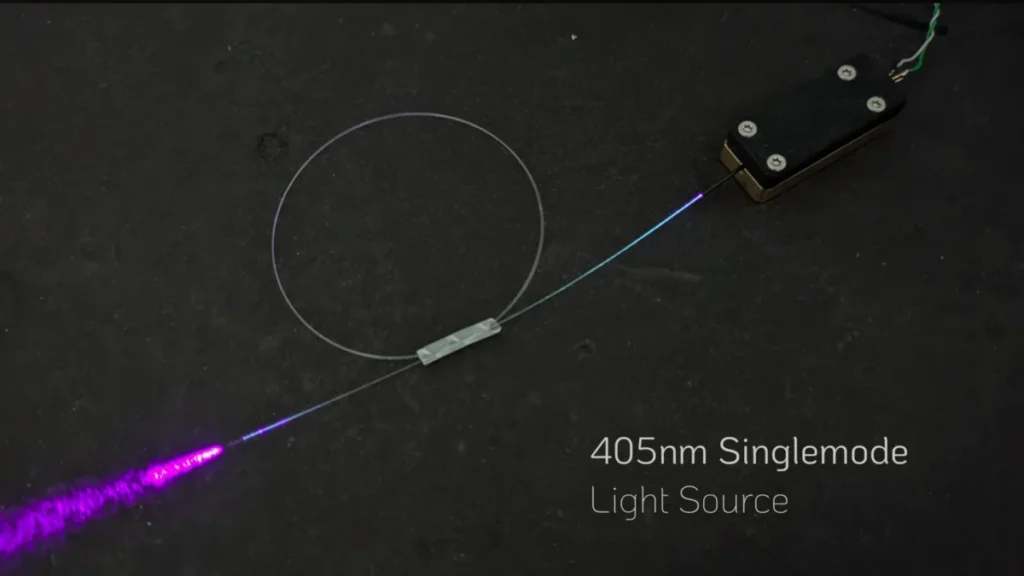
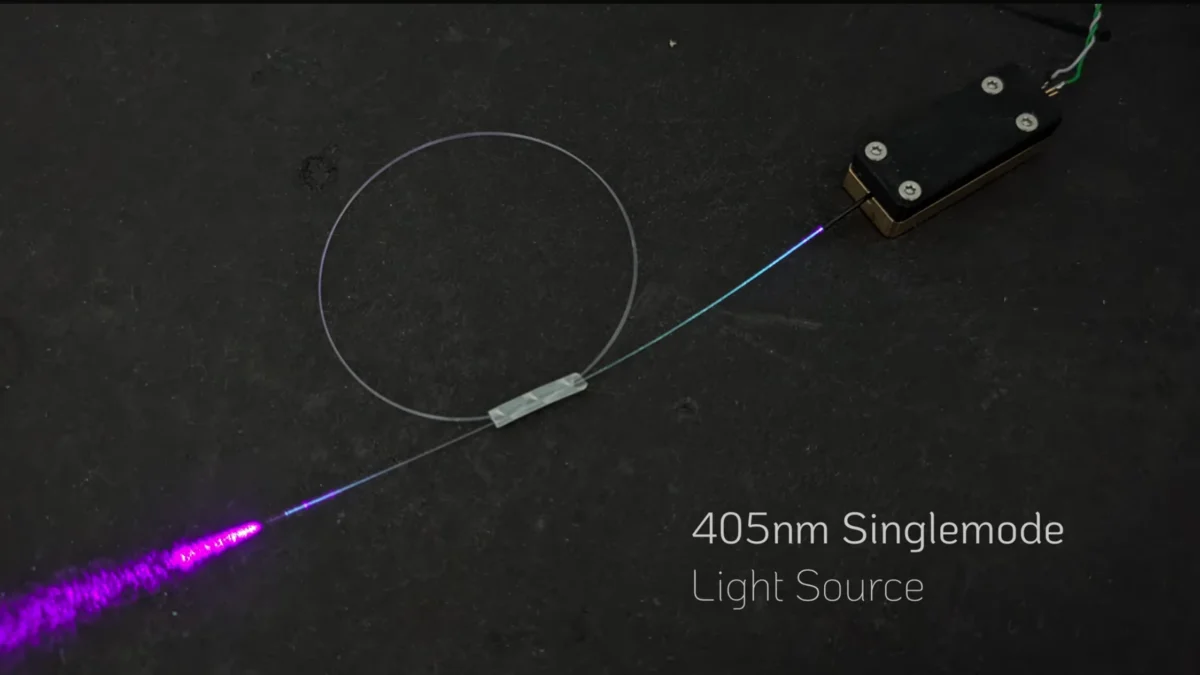
The solution devised by Diffraction Limited involves precisely coupling the divergent, elliptical output of a laser diode into the minute core of a single-mode optical fiber. This process effectively acts as a spatial filter, forcing the light to propagate in a fundamental mode that emerges from the fiber’s distal end as a near-perfect circular Gaussian beam. This highly desirable beam profile is characterized by its symmetrical intensity distribution and minimal divergence, crucial for accurate focusing, steering, and interaction with samples or detectors.
The engineering feat is underscored by the team’s meticulous approach to design and fabrication, utilizing CNC-machined brass for the device body and employing a critical aspheric lens for efficient light collection. The most significant innovation, however, lies in their elegant solution to the notoriously difficult task of aligning a laser beam with a fiber core mere microns in diameter, especially when contending with the unpredictable shrinkage of UV-cured adhesives. This project stands as a testament to practical problem-solving at the frontier of micro-optics.
The Quest for Pristine Light: Understanding the Challenge
The journey to achieve a pristine, Gaussian laser beam profile is central to many high-precision scientific and industrial applications. Laser diodes, while ubiquitous and cost-effective, inherently suffer from a non-circular, often elliptical, beam shape due to the geometry of their active gain medium. This ellipticity, coupled with potential astigmatism (where the beam focuses differently in orthogonal planes), creates significant hurdles for researchers and engineers. When such an imperfect beam is focused, it results in an elongated spot rather than a perfectly circular one, limiting resolution in imaging, introducing errors in alignment-sensitive experiments, and reducing coupling efficiency into other optical components.
For instance, in confocal microscopy, a highly symmetrical and tightly focused spot is paramount for achieving high spatial resolution and signal-to-noise ratio. Similarly, in optical trapping, the ability to precisely manipulate microscopic particles relies on the creation of a stable, symmetrical potential well formed by a perfectly focused Gaussian beam. In quantum optics, where single photons or delicate quantum states are manipulated, any deviation from an ideal beam can introduce noise, reduce coupling efficiency into resonators, or disrupt quantum coherence.
Single-mode optical fibers offer a powerful solution to this problem. A single-mode fiber is designed to guide only one electromagnetic mode, the fundamental mode, which naturally has a Gaussian intensity distribution. By coupling the output of a laser diode into such a fiber, the fiber acts as a "beam conditioner," filtering out higher-order modes and delivering a high-quality Gaussian beam at its output. This transformation not only regularizes the beam profile but also provides other benefits, such as excellent beam pointing stability, immunity to environmental fluctuations affecting the laser source, and the flexibility to deliver light remotely to an experimental setup. The challenge, therefore, shifts from managing the laser diode’s inherent beam quality to efficiently and robustly coupling its light into the minuscule fiber core.
Engineering Precision: A Chronology of Development
The development of Diffraction Limited’s fiber-coupled laser source followed a rigorous design and fabrication process, marked by careful material selection, optical component integration, and innovative solutions to unforeseen challenges. The project commenced with a clear objective: to design a robust, stable, and highly efficient coupling mechanism capable of transforming a raw laser diode output into a single-mode Gaussian beam.
The initial design phase focused on selecting appropriate materials and components. For the housing, the team opted for brass, a material known for its excellent machinability, thermal stability, and density. CNC machining allowed for the creation of a highly precise body that could accommodate the laser diode, the critical focusing lens, and the fiber mounting mechanism with sub-micron tolerances. The laser diode itself was press-fit into one end of the brass body, ensuring a secure and thermally efficient mount.
The Crucial Role of the Aspheric Lens
A cornerstone of the design is the inclusion of an aspheric lens positioned directly in front of the laser diode. The choice of an aspheric lens over a conventional spherical lens is critical. Spherical lenses introduce spherical aberration, particularly when focusing highly divergent light sources like laser diodes, leading to a blurred focal spot. Aspheric lenses, with their non-spherical surfaces, are specifically designed to correct for spherical aberration, enabling them to focus light into a much tighter, diffraction-limited spot.
For efficient coupling into a single-mode fiber, the laser diode’s divergent light must be precisely focused down to a tiny point that matches the diameter of the fiber core, which in this case is a mere three microns. Furthermore, the light must enter the fiber within its "acceptance cone" – a specific angle range determined by the fiber’s numerical aperture (NA). Light approaching from outside this cone will not be guided by the fiber. The aspheric lens was carefully selected and positioned to create a cone of incoming light narrower than the fiber’s acceptance cone, maximizing coupling efficiency by ensuring that nearly all focused light is captured by the fiber core. The lens was meticulously glued into place, with its focal point precisely positioned just above the end of the mounting pin designed to hold the glass fiber.
Confronting the Alignment Conundrum
While the theoretical optical design was sound, the practical implementation presented formidable challenges, particularly in the precise positioning and fixing of the optical fiber. The minute size of the fiber core demands alignment accuracy on the order of hundreds of nanometers – a task that pushes the limits of conventional mechanical adjustment. Initial attempts to simply place the fiber against the focused light source yielded negligible results, as the vast majority of photons missed the tiny three-micron target. This underscored the absolute necessity of a highly precise alignment mechanism. The team understood that even the slightest deviation from the optimal focal point or lateral position would severely reduce coupling efficiency, potentially resulting in no light output from the fiber. This critical step became the focal point of their innovative problem-solving.
Overcoming Micro-Scale Obstacles: The Ingenuity of Adjustment
The most significant hurdle in the construction of the fiber-coupled laser source was, by far, the precise positioning and permanent fixation of the single-mode optical fiber. Achieving efficient coupling requires aligning the three-micron fiber core with the laser diode’s focused beam with sub-micron accuracy. This level of precision is extremely difficult to achieve and maintain, especially given the dynamic nature of adhesive curing.
The Micro-Manipulator’s Indispensable Role
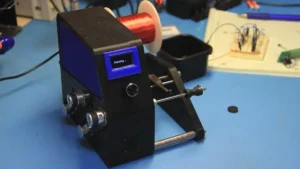
To address the initial alignment challenge, Diffraction Limited leveraged a sophisticated tool from a previous project: an open-source micro-manipulator. This device, capable of making extremely fine movements in multiple axes, proved indispensable for the initial delicate task of bringing the fiber core into the optimal position relative to the focused laser beam. The micro-manipulator allowed the engineers to painstakingly adjust the fiber’s position while monitoring the coupled light output, iteratively optimizing for maximum signal. This step alone highlights the specialized equipment and expertise required for such micro-optical assemblies. The ability to precisely control movements in the nanometer range is a prerequisite for achieving even preliminary coupling.
Countering Adhesive Contraction
Once the optimal alignment was achieved using the micro-manipulator, the next critical step was to permanently fix the fiber in place. The team opted for a UV-set glue, known for its rapid curing properties. However, a well-known phenomenon in micro-optics is the shrinkage of adhesives during the curing process. Even a minute amount of shrinkage can pull the precisely aligned fiber out of position, rendering the meticulous initial alignment efforts futile. This proved to be the project’s most formidable antagonist. As anticipated, after the UV glue was cured, the completed source initially produced no light, confirming that adhesive shrinkage had indeed shifted the fiber away from its critical alignment point.
To circumvent this persistent issue, Diffraction Limited devised an ingenious post-gluing adjustment mechanism. They integrated two small set screws strategically placed beneath the mounting pin for the glass fiber. These set screws allowed for subtle, controlled adjustments to the fiber’s position after the glue had fully cured. This two-stage adjustment process – initial coarse-to-fine alignment with the micro-manipulator, followed by post-curing fine-tuning with the set screws – proved to be the breakthrough. After careful manipulation of these set screws, the highly anticipated circular Gaussian beam finally appeared, validating the efficacy of their creative solution. This practical innovation demonstrates a deep understanding of the challenges in micro-optics assembly and a resourceful approach to overcoming them.
Broader Implications and Supporting Context
The successful development of this fiber-coupled laser source by Diffraction Limited carries significant implications for various scientific disciplines and the broader maker community. It underscores the increasing demand for high-quality, stable light sources in advanced research and demonstrates how meticulous engineering can bridge the gap between off-the-shelf components and demanding experimental requirements.
The Landscape of Fiber-Coupled Lasers
Fiber-coupled lasers are not new to the market, with commercial units readily available. However, these often come with a substantial price tag, making them inaccessible to smaller research groups or individual enthusiasts. Diffraction Limited’s project highlights a pathway for researchers and hobbyists to construct high-performance optical tools at a fraction of the commercial cost, fostering greater accessibility and innovation. The ability to customize the laser diode wavelength, power, and fiber type offers significant advantages over fixed commercial solutions, allowing for tailor-made instruments specific to unique experimental needs.
This work also builds upon a foundation of existing knowledge and community contributions. The article itself points to related endeavors, such as Les Wright’s work on homebrew fiber couplings, which provides further context on the ongoing efforts to democratize access to precision optical engineering. Wright’s contributions, for instance, might delve into alternative coupling strategies or the broader utility of fiber optics in laboratory settings. Furthermore, the suggestion of using an anti-bumping bead as an economical alternative to an aspheric lens for fiber coupling showcases the pragmatic spirit of the engineering community, constantly seeking effective yet accessible solutions. These alternative approaches are crucial for expanding the reach of advanced optical techniques beyond well-funded institutions.
Pioneering Accessible Precision Optics
The meticulous documentation of this project, particularly through platforms like Hackaday and the embedded video, serves as an invaluable resource. It not only demonstrates the feasibility of constructing complex optical instruments outside of traditional industrial settings but also provides a detailed blueprint for others to replicate or build upon. This open-source ethos is vital for accelerating scientific progress, as it fosters collaboration, knowledge sharing, and iterative improvement within the global engineering community.
The successful implementation of such a device directly impacts fields requiring stable and high-quality laser beams. In metrology, for instance, a stable Gaussian beam is essential for interferometric measurements with nanometer precision. In biophotonics, such as in advanced fluorescence microscopy or optical coherence tomography, improved beam quality translates directly to enhanced image resolution and contrast. For emerging fields like quantum computing and communications, where light is often used as a carrier of quantum information, the purity and stability of the laser source are paramount. By making such high-performance tools more accessible, Diffraction Limited’s work can accelerate discoveries and innovations across these diverse domains.
Conclusion and Future Outlook
Diffraction Limited’s fiber-coupled laser source represents a remarkable synthesis of optical theory, precision machining, and ingenious problem-solving. By effectively taming the idiosyncratic output of a standard laser diode and transforming it into a pristine, stable Gaussian beam, the team has delivered a powerful tool for advanced optical experimentation. The project’s success, particularly in navigating the intricate challenges of micro-scale alignment and adhesive shrinkage, underscores the depth of engineering expertise involved.
This achievement not only provides a valuable instrument for current research but also serves as an inspiring example for the broader scientific and engineering community. It highlights that with careful design, perseverance, and a willingness to innovate, high-performance optical systems can be developed and made accessible, pushing the boundaries of what is achievable in laboratories worldwide. As optical technologies continue to evolve, the demand for precise, stable, and customizable light sources will only grow, making contributions like that of Diffraction Limited increasingly vital for the next generation of scientific discovery and technological advancement. The open sharing of such sophisticated builds paves the way for a more collaborative and democratized future in precision optics.