Pine64 Challenges the Smart Speaker Status Quo with Privacy-Focused PineVoice
In a market dominated by the ubiquitous, cloud-tethered smart speakers of Silicon Valley giants, PINE64 has carved out a reputation for championing hardware transparency, open-source compatibility, and budget-conscious engineering. Since its inception in 2015 with the launch of the original PINE A64 single-board computer, the organization has consistently provided hobbyists and developers with alternatives to the "black box" hardware models favored by Big Tech.
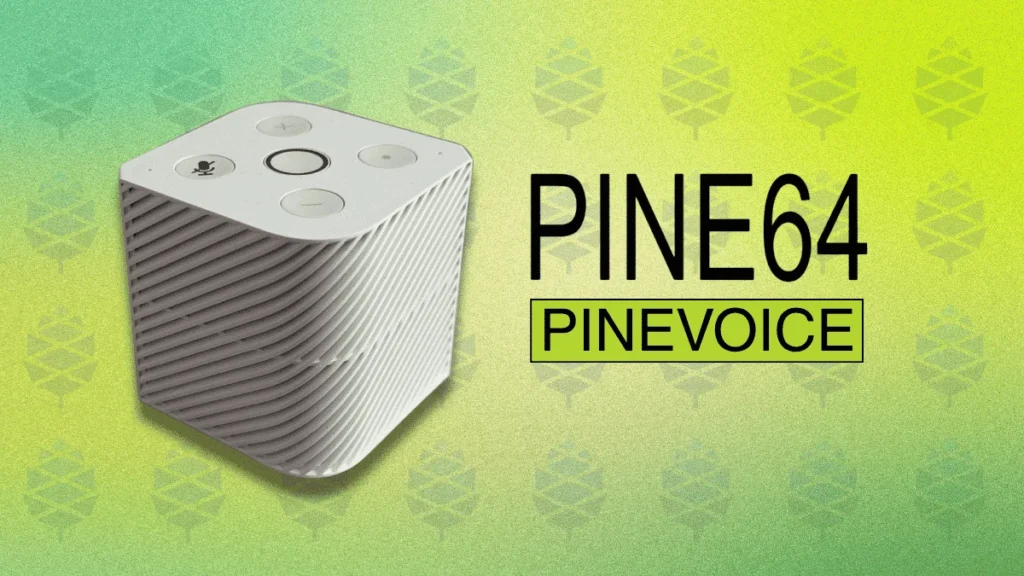
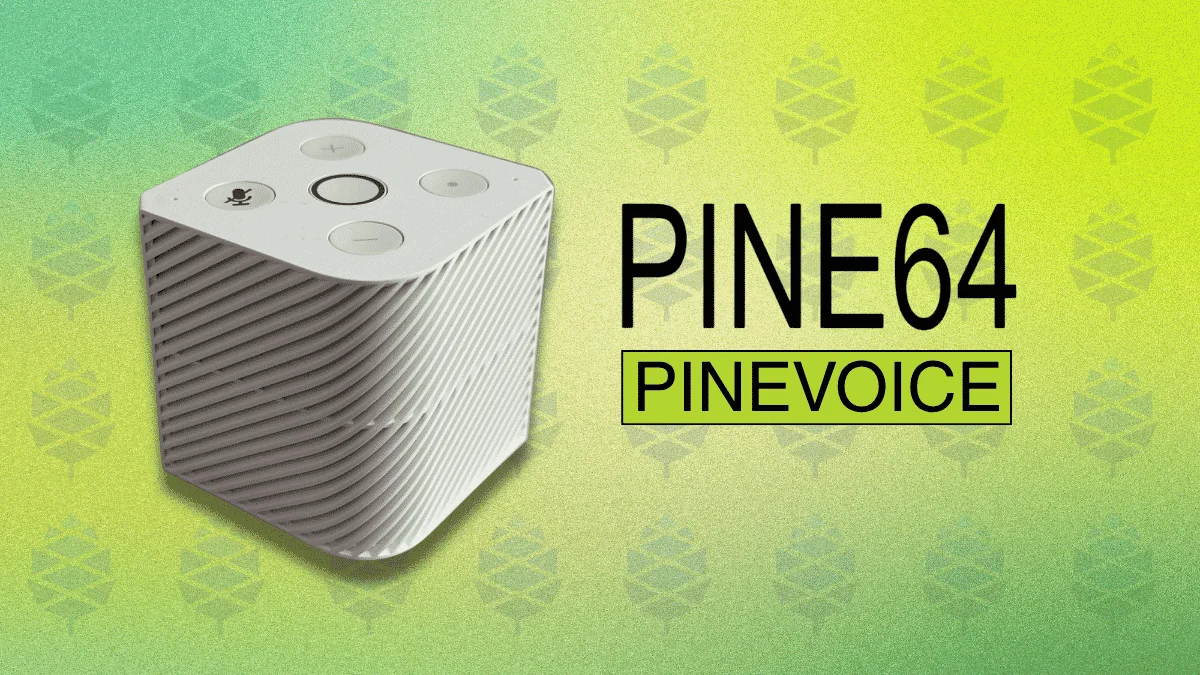
Today, PINE64 is making its most significant foray into the consumer electronics space yet with the release of PineVoice—a compact, privacy-centric smart speaker designed specifically to integrate with the Home Assistant ecosystem. By eschewing the reliance on Alexa, Google Assistant, or Siri, the PineVoice represents a radical shift in how we might interact with our living spaces, prioritizing local data processing and open standards over data-harvesting business models.
Main Facts: What is PineVoice?
At its core, the PineVoice is not intended to function as a standalone, general-purpose smart speaker like an Amazon Echo or a Google Nest Audio. Instead, it is a dedicated "voice satellite"—a relay device that captures audio, processes wake-word detection locally, and routes commands directly to a Home Assistant instance running on your local network.
The device measures a modest 65 mm x 65 mm x 66 mm, housing a hardware configuration that balances performance with low-power efficiency. PINE64 has built the PineVoice around the Bouffalo Lab BL606P, a RISC-V System-on-Chip (SoC) that includes:
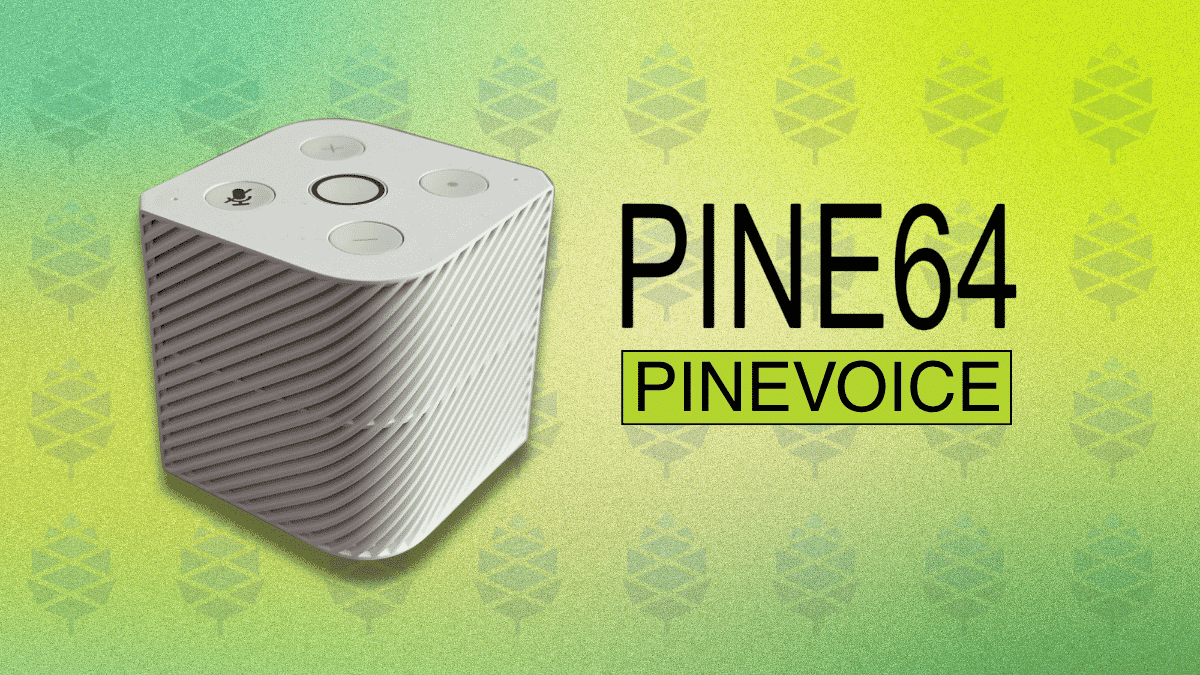
- T-Head C906 (480 MHz, 64-bit): The primary processing unit.
- T-Head E907 (320 MHz, 32-bit): Handling peripheral tasks.
- T-Head E902 (150 MHz, 32-bit): Optimized for low-power management.
The memory architecture consists of 32 MiB of pSRAM and 788KB of SRAM, supplemented by 16 MiB of XSPI NOR flash for storage. Connectivity is handled through standard 802.11 b/g/n WiFi and Bluetooth 5.2 (including support for BLE). Unlike traditional smart speakers that stream audio to the cloud for processing, the PineVoice uses the Wyoming Protocol—the open standard used by Home Assistant—to ensure that your voice commands remain within your home walls.
Chronology: From SBCs to Smart Home Integration
PINE64’s journey to the PineVoice did not happen overnight. It is the culmination of a decade-long evolution of the PINE64 community-driven hardware model.
- 2015: The PINE A64 launches on Kickstarter, establishing the company’s reputation for cost-effective ARM-based hardware.
- 2019-2020: The introduction of the PinePhone and the expansion of the ROCK series of Single-Board Computers (SBCs) signals a shift toward complete product ecosystems rather than just developer boards.
- 2022-2024: The rise of RISC-V adoption within the PINE64 lineup, exemplified by the Ox64, demonstrates the company’s commitment to architectural diversity.
- Early 2026: PINE64 officially announces the PineVoice. The project represents a pivot from "raw" hardware for tinkerers to a refined, user-ready product that aims to bridge the gap between DIY hobbyism and consumer-grade smart home convenience.
- Present Day: PineVoice is now available for purchase, signaling a move into the competitive smart home market.
Supporting Data: Engineering for Privacy
The most compelling aspect of the PineVoice is its commitment to local-only processing. Most commercially available smart speakers require constant connectivity to a cloud server, where audio is uploaded, analyzed, and returned as a command. This raises significant privacy concerns.
The PineVoice addresses this through the implementation of MicroWakeWord. Instead of sending audio clips to a cloud server to determine if you’ve said the wake word, the PineVoice runs the "Hey Jarvis" model locally on the BL606P SoC.

Audio and Interaction Design
The hardware includes a dual-microphone array optimized for voice capture, paired with an integrated speaker for feedback. Rather than mimicking the chatty, synthetic personalities of commercial assistants, the PineVoice utilizes a central LED ring. This ring provides visual cues for the device’s status, such as listening, processing, or muting.
For users concerned about privacy, the device includes:
- Hardware Mute: A physical switch that electrically disconnects the microphones.
- Visual Feedback: The LED ring provides an unambiguous indicator of when the device is "live," removing the ambiguity of software-based status indicators.
- USB-C Connectivity: A single port handles both power and data, keeping the cable management clean and the setup process straightforward.
Official Responses and Transparency
PINE64 has been characteristically transparent about the current state of the PineVoice. In their documentation, they explicitly categorize the device as being in the "early stages of development."
The company states: "PINE64 points out that this device is still in the early stages of development and might have some snafus."
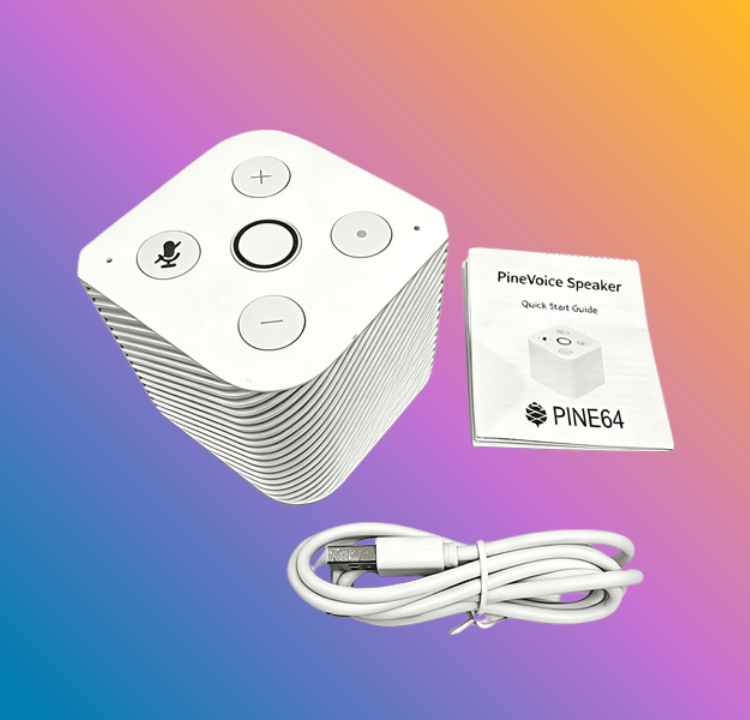
This admission is consistent with PINE64’s philosophy: they provide the hardware and the open-source SDK, inviting the community to refine, improve, and extend the device’s functionality. By making the source code available on Codeberg, PINE64 is ensuring that the PineVoice is not a "dead-end" product. If the official firmware lacks a specific feature, the user community has the documentation and the source code to modify it.
At a price point of $49.99 (the community price) or $59.99 (retail), PINE64 is positioning the PineVoice as an accessible gateway for users who want to move away from Big Tech ecosystems without needing a degree in electrical engineering.
Implications: The Future of the "Local" Home
The release of the PineVoice carries significant implications for the broader smart home industry.
1. The Death of the "Cloud-Dependent" Smart Home
For years, the smart home industry has been defined by forced obsolescence. When a company stops supporting a cloud-based smart speaker, the hardware effectively becomes a paperweight. By utilizing the Wyoming Protocol and local processing, the PineVoice is designed for longevity. It does not require a subscription, a login to a third-party server, or a constant internet connection to the manufacturer.

2. The Rise of RISC-V in Consumer Electronics
The use of the Bouffalo Lab BL606P is a major milestone for the RISC-V architecture. While RISC-V has long been a staple in academic and industrial settings, its presence in a consumer-facing audio device shows that it is ready for high-performance, real-time applications. This could pave the way for a new generation of low-power, high-efficiency RISC-V consumer devices.
3. Empowerment through Home Assistant
By aligning with Home Assistant, PINE64 is leveraging the power of one of the world’s most robust open-source automation platforms. Users can build complex, automated "if-this-then-that" scenarios that are processed entirely on their own hardware. This shift is not merely technical; it is ideological. It moves the center of control from the manufacturer’s cloud back to the user’s home.
4. Acknowledging the Friction
It is important to note that the PineVoice is not for the average "plug-and-play" consumer. It requires a functioning Home Assistant server, a stable home network, and a willingness to troubleshoot potential early-adopter issues. However, for those who value privacy, control, and the right to repair/modify, these hurdles are a small price to pay.
Conclusion
The PineVoice is more than just a smart speaker; it is a statement of intent. In an era where our homes are increasingly monitored by data-hungry devices, PINE64 has provided a vessel for voice control that respects the boundary between the user and the manufacturer.
While the device may experience "snafus" in its early days, the combination of a RISC-V architecture, the Wyoming Protocol, and a transparent, community-driven approach makes the PineVoice a vital experiment. If successful, it could serve as the blueprint for a new generation of consumer electronics—devices that are built to last, designed for privacy, and owned entirely by the people who use them. Whether you are a dedicated home automation enthusiast or simply someone looking to decouple your home from Big Tech, the PineVoice is a development worth watching closely.