GSK Bolsters Oncology Portfolio with $10.6 Billion Acquisition of Nuvalent
In a move that signals a significant shift in its long-term growth strategy, GlaxoSmithKline (GSK) has officially announced a definitive agreement to acquire Boston-based precision oncology specialist Nuvalent for $10.6 billion. The acquisition, one of the largest pharmaceutical deals of the year, is set to fundamentally reshape GSK’s cancer pipeline by integrating a suite of next-generation, highly selective kinase inhibitors targeting non-small cell lung cancer (NSCLC).
The deal, which represents a 40% premium over Nuvalent’s most recent closing price, underscores GSK’s aggressive intent to secure its position in the competitive oncology market. With two of Nuvalent’s lead assets currently under FDA review, the acquisition is not merely a play for future R&D potential, but a strategic effort to secure immediate commercial revenue streams as the company navigates the looming loss of exclusivity for its cornerstone HIV blockbuster, dolutegravir.
The Core Assets: Precision Oncology at the Forefront
At the heart of the acquisition are three NSCLC candidates that leverage structure-based drug design to overcome the limitations of existing therapies.
Leading the pipeline are two brain-penetrant inhibitors: zidesamtinib (NVL-520), a ROS1 inhibitor, and eladalkib (NVL-655), an ALK inhibitor. Both therapies are designed to address the specific challenge of resistance mutations, such as the “solvent front” G2032R and G1202R mutations that often render first- and second-generation treatments ineffective. By specifically avoiding inhibition of the tropomyosin receptor kinase (TRK) family, these candidates are engineered to minimize central nervous system (CNS) adverse events, a common drawback in current standard-of-care medications.
The third pillar of the acquisition is NVL-330, a HER2 inhibitor currently navigating Phase I clinical trials. Beyond these lead assets, the deal grants GSK access to Nuvalent’s proprietary discovery engine—a platform built to identify and address the clinical limitations of established kinase targets.
Chronology of the Deal and Regulatory Outlook
The path to this multibillion-dollar agreement has been defined by rapid clinical success and strategic alignment.
- Mid-2025: Nuvalent reports robust, pivotal data at the IASLC World Conference on Lung Cancer, demonstrating that zidesamtinib and eladalkib possess “best-in-class” potential in terms of durability and patient tolerability.
- Early 2026: Positive momentum continues at the ASCO Annual Meeting, where further clinical data reinforces the candidates’ efficacy in treating brain metastases and compound mutations.
- May 27, 2026: Nuvalent updates the investor community on its business trajectory, projecting significant peak year sales and solidifying its value proposition.
- June 2026: GSK and Nuvalent formalize the $10.6 billion acquisition agreement.
- September 18, 2026 (Projected): The FDA is expected to reach a decision on the approval of zidesamtinib.
- November 27, 2026 (Projected): The FDA is expected to reach a decision on the approval of eladalkib.
The acquisition process is now underway, with GSK preparing a tender offer to acquire all outstanding shares of Nuvalent’s Class A and Class B stock. The deal is expected to close in the third quarter of 2026, subject to customary regulatory approvals, including the Hart-Scott-Rodino Act.
Supporting Data: Economic Potential and Market Impact
The financial logic behind the $10.6 billion price tag is rooted in the projected commercial performance of the two lead assets. According to data released by Nuvalent, the potential for market disruption is substantial.
For the ROS1-positive NSCLC segment, Nuvalent has projected peak annual sales between $1.4 billion and $2.1 billion. The ALK-positive NSCLC market represents an even larger opportunity, with worldwide peak sales estimated between $3.4 billion and $5 billion. These projections vastly outpace the peak sales achieved by previous market incumbents, such as Xalkori (crizotinib) and Alecensa (alectinib).
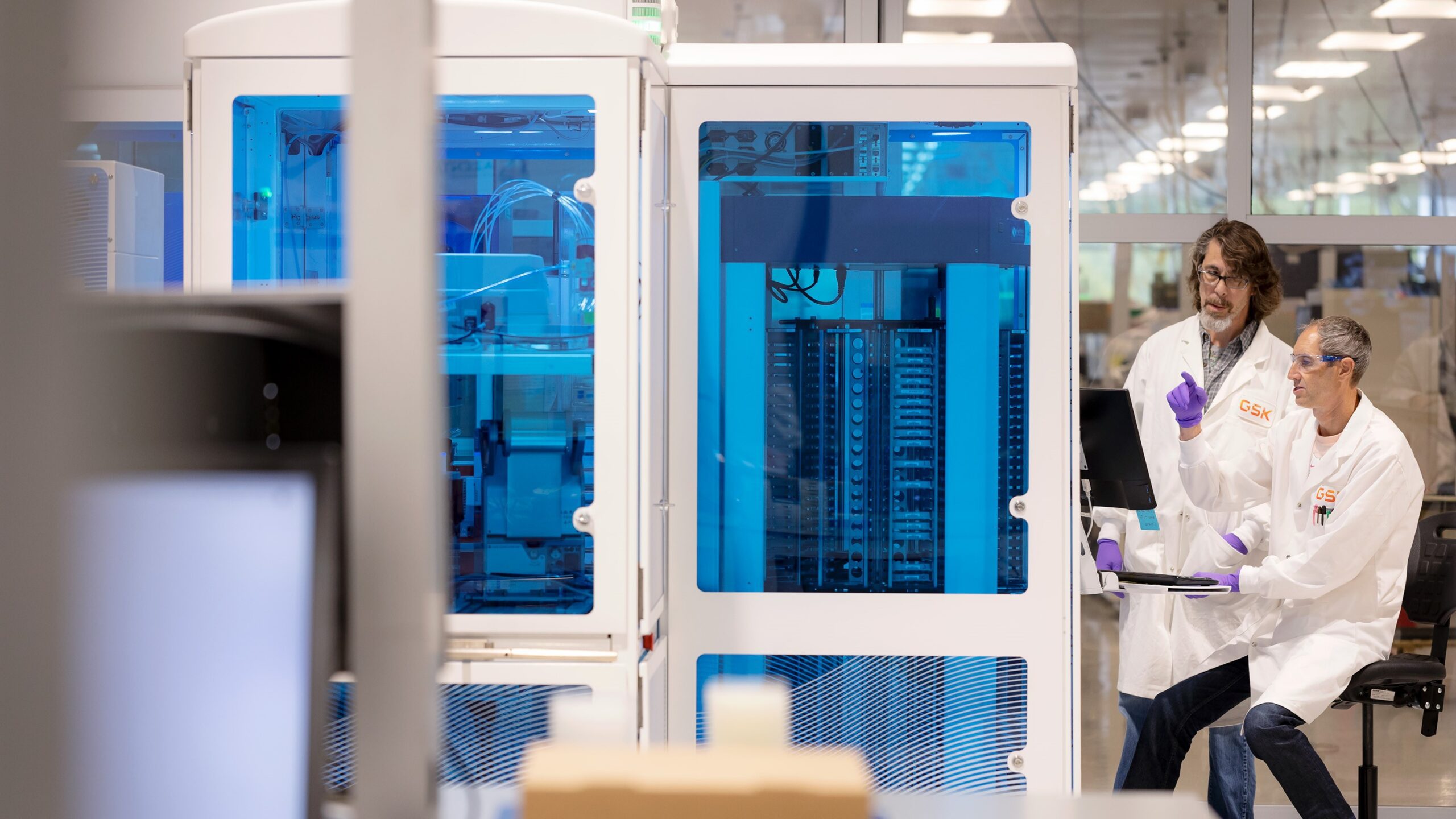
The acquisition also serves to enhance GSK’s existing R&D footprint. By integrating Nuvalent’s 144 R&D personnel and their specialized discovery platform, GSK aims to accelerate its broader lung cancer strategy, including its B7-H3 targeted antibody-drug conjugate (ADC), Ris-Rez, currently in Phase III trials.
Official Perspectives: Leadership and Strategy
For GSK CEO Luke Miels, the acquisition is a quintessential example of the company’s “multi-product” strategy.
“Today’s acquisition is consistent with our approach to acquire assets that have clinically proven targets and meaningfully address an efficacy and/or tolerability gap,” Miels stated. “The two lead products are potential best-in-class assets that could launch this year if approved by the FDA and offer significant new treatment options to patients with two forms of non-small cell lung cancer.”
Dr. James Porter, CEO of Nuvalent, highlighted the synergy between his company’s scientific agility and GSK’s global infrastructure. “Since our founding, we have leveraged our deep expertise in chemistry and structure-based drug design to develop a portfolio of novel, potentially best-in-class kinase inhibitors,” Dr. Porter remarked. “GSK’s proven track record, infrastructure, and expertise will support the successful commercialization of zidesamtinib and neladalkib, as well as accelerate the advancement of our broader discovery pipeline.”
Implications for GSK’s Future
The acquisition carries significant weight for GSK’s financial health, particularly in the period between 2028 and 2030, when the company’s blockbuster HIV drug, dolutegravir, will face loss of exclusivity.
Strengthening the Bottom Line
While the immediate impact of the deal involves a $9.4 billion net-of-cash investment, GSK remains confident in its long-term financial guidance. The company anticipates that the acquisition will begin contributing to revenue growth by 2027 and will be accretive to core earnings per share (EPS) by 2029. To achieve these targets, GSK plans to implement a “reprioritization” strategy, shifting resources away from lower-yield legacy programs toward high-value clinical assets.
Market Reaction
The market response to the news was mixed. While Nuvalent shareholders celebrated a 39% jump in stock price to $123.25, GSK shares on the London Stock Exchange experienced a modest 0.5% dip. Analysts suggest this reflects the typical investor caution regarding the high price of large-scale M&A in the current economic climate, as well as the inherent risks associated with the upcoming FDA decisions.
A New Platform for Growth
Beyond the two lead drugs, the acquisition provides GSK with a durable platform for future innovation. By securing a portfolio of novel kinase inhibitors, GSK is effectively insulating its future revenue against the inevitable patent cliffs that plague the pharmaceutical industry. The integration of Nuvalent’s team and technology into the larger GSK R&D apparatus is intended to create a sustainable pipeline that can adapt to evolving oncology landscapes.
Conclusion
The acquisition of Nuvalent is more than just a purchase of assets; it is a calculated bet on the future of precision medicine. By securing these next-generation therapies, GSK is positioning itself to lead in the treatment of specific, molecularly defined lung cancer populations. As the company looks toward the end of the decade, the success of zidesamtinib and eladalkib will be critical in determining whether this $10.6 billion investment serves as the cornerstone for a new era of growth or as a cautionary tale of consolidation. For now, the focus remains on the upcoming FDA decisions—the first major milestones in what both companies hope will be a transformative partnership for patients and shareholders alike.