Raspberry Pi Bolsters Industrial Edge Security with Major Update to Secure Boot Provisioning Suite
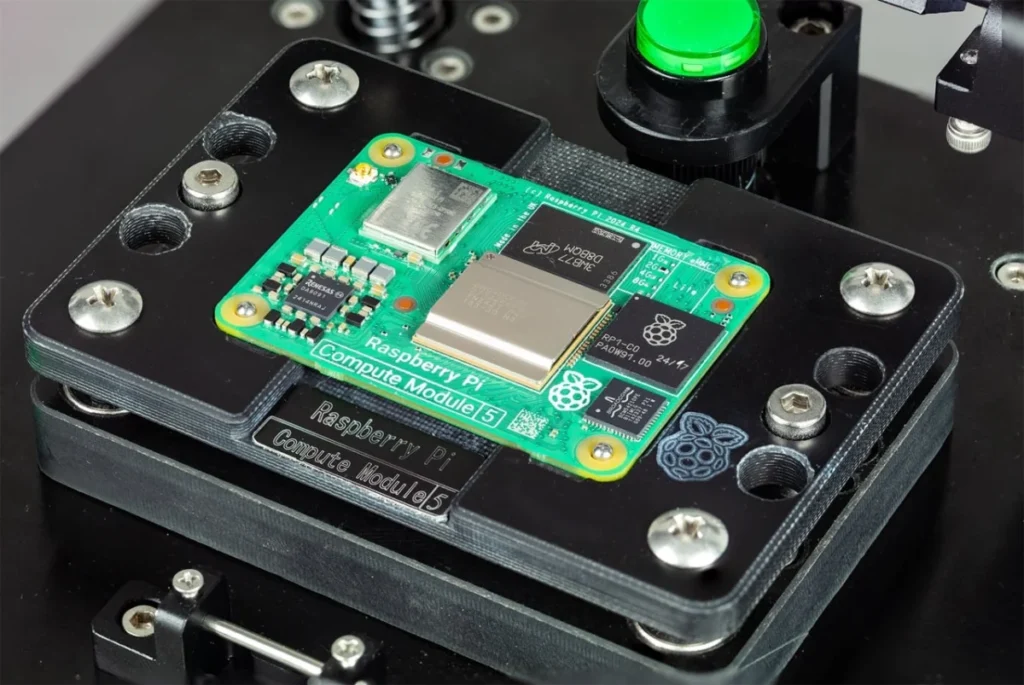
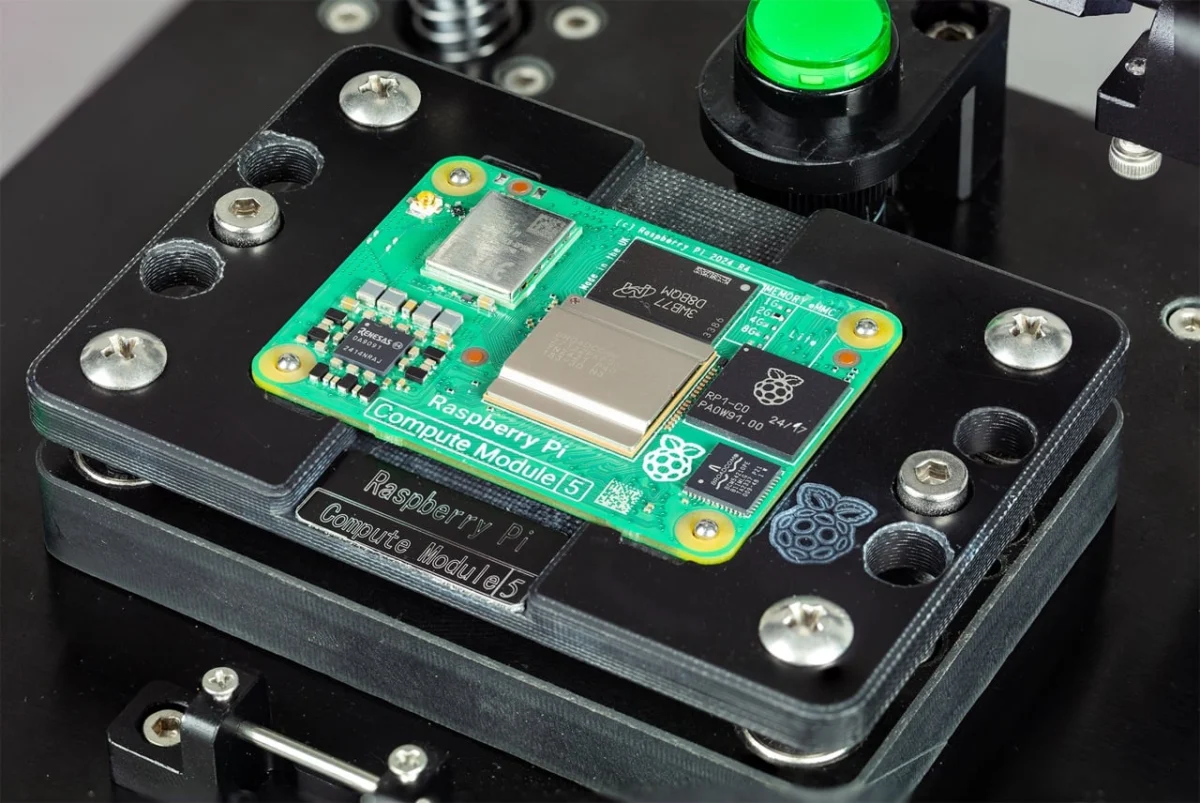
CAMBRIDGE, UK – Raspberry Pi Ltd has announced the release of version 2.3 of its secure boot provisioning software, rpi-sb-provisioner. This major upgrade marks a significant milestone in the company’s efforts to streamline the deployment of high-security, industrial-grade Raspberry Pi applications. By integrating advanced features such as Image Description Provisioning (IDP), Raspberry Pi Connect for Organisations, and enhanced cryptographic support via rpi-fw-crypto, the new release aims to transform what was once a complex, manual bottleneck into a seamless, automated manufacturing process.
As Raspberry Pi continues its evolution from a hobbyist favorite to a staple of the industrial and embedded markets, the need for robust, scalable security has never been more pressing. The latest update addresses the "last mile" of device manufacturing: the secure injection of keys, the encryption of storage, and the remote management of fleets at scale.
1. Main Facts: The Evolution of Secure Provisioning
The core of the version 2.3 release is the transformation of rpi-sb-provisioner from a specialized tool into a comprehensive production-grade ecosystem. The update introduces three primary pillars of functionality:
- Seamless Remote Management Integration: The software now natively supports "Raspberry Pi Connect for Organisations." This allows manufacturers to assign an immutable identity to each device during the provisioning phase. Once deployed, these devices are automatically associated with an organization’s account, surviving factory resets and OS re-installs—a critical requirement for remote fleet management.
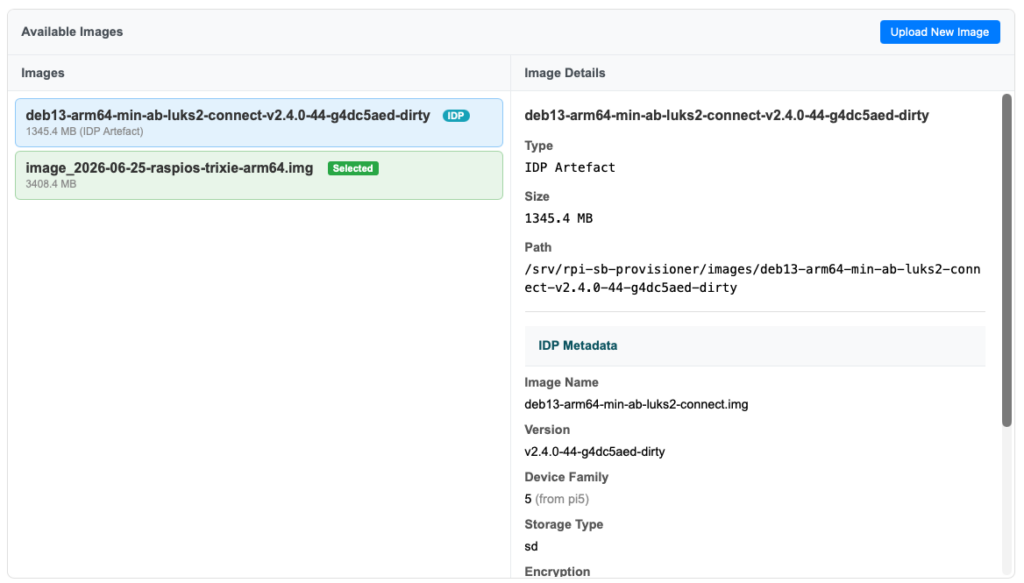
- Programmable Image Deployment: The introduction of Image Description Provisioning (IDP) allows developers to move beyond standard Raspberry Pi OS layouts. IDP enables the definition of complex partition schemes, custom file systems, and specific attribute sets, making the provisioner "image-agnostic."
- Hardware-Rooted Cryptography: By leveraging the newly released
rpi-fw-cryptolibrary, version 2.3 enables the use of asymmetric cryptography. This allows for secure operations using device-unique private keys that remain protected within the hardware, ensuring that even if the software layer is compromised, the root of trust remains intact.
The update also brings quality-of-life improvements for manufacturing environments, including an enhanced Web UI, a robust manufacturing database for tracking units, and detailed audit logs for compliance and quality control.
2. Chronology: From Shell Scripts to Enterprise Infrastructure
The journey of rpi-sb-provisioner reflects the broader maturation of the Raspberry Pi platform in professional environments.
2023 – The Problem Identified:
Engineers working on industrial Raspberry Pi deployments frequently cited "Secure Boot" and "Full Disk Encryption" (FDE) as the most significant hurdles to deployment. While the hardware supported these features, the software tooling required to implement them was fragmented, often relying on custom-made scripts that were difficult to maintain and prone to error.
Early 2024 – Version 1.0 Release:
Raspberry Pi released the first iteration of rpi-sb-provisioner. It was designed with a philosophy of making security "boring and predictable." The initial version focused on the basics: blowing eFuses, signing bootloaders, and setting up initial encryption keys. It was largely a collection of command-line tools aimed at experienced developers.
Late 2024 to Mid-2025 – Feedback and Refinement:
As industrial partners adopted the tool, feedback poured in. Users demanded more than just a signing tool; they needed a system that could sit on a factory floor. This led to the development of a centralized manufacturing database to prevent duplicate key assignments and the creation of a Web UI to allow non-engineer production staff to oversee the provisioning process.
June 2026 – The Version 2.3 Milestone:
The current release represents the culmination of two years of field feedback. It bridges the gap between the hardware (Raspberry Pi 4 and 5) and the cloud (Raspberry Pi Connect), creating a unified pipeline from the moment a board is powered on in the factory to its entire lifecycle in the field.
3. Supporting Data: Solving the Complexity of Scale
To understand the impact of this update, one must look at the technical challenges of securing edge devices.
The Challenge of Manual Association
In traditional deployments, associating a device with a management cloud (like Raspberry Pi Connect) required a manual "handshake" after the OS was installed. For a company deploying 10,000 units, this manual step represents hundreds of man-hours and a high margin for human error.
- Data Point: Version 2.3’s bulk provisioning support reduces the time-to-cloud for new devices by an estimated 90%, as the identity is "baked in" during the initial 2-minute provisioning cycle.
Image Description Provisioning (IDP) Metrics
Previously, rpi-sb-provisioner was optimized for images created via pi-gen. However, industrial users often use Yocto Project or Buildroot to create custom Linux distributions.
- Flexibility: IDP supports custom partition offsets, varying UUIDs, and diverse file systems (ext4, f2fs, etc.). This allows the provisioner to handle images that are significantly more complex than the standard two-partition (Boot/Root) layout.
The Cryptographic Shield
The integration of rpi-fw-crypto is a technical response to the increasing sophistication of edge-device attacks. By using asymmetric cryptography (RSA/ECDSA), the system ensures:
- Identity Verification: The device can prove its identity to a server without ever revealing its private key.
- Secure Updates: Only firmware signed by the manufacturer’s private key can be executed, preventing "evil maid" attacks or malicious firmware overrides.
4. Official Responses: The Philosophy of "Boring Security"
Internal lead software engineers at Raspberry Pi have long advocated for a shift in how security tools are designed. In statements regarding the release, the development team emphasized that the complexity of secure boot has historically been a barrier to entry for smaller firms.
"In my many years as a software engineer, I always found working with secure boot more complicated than it had any right to be," noted the lead developer of the provisioner. This sentiment drove the design of version 2.3. The goal was to remove the "black magic" feel of cryptographic provisioning and replace it with a UI-driven process that provides immediate visual confirmation of key hashes and encryption states.
The team further explained that the integration with Raspberry Pi Connect for Organisations was a direct response to customer demand. "Users find Raspberry Pi Connect incredibly useful for remote management, but at scale, you can’t afford to slow down. You want those associations to survive OS updates and factory resets. Version 2.3 makes that a reality."
By making these tools open source, Raspberry Pi Ltd aims to foster a community where "hard-earned tales from manufacturing devices at scale" can inform future updates, ensuring the tool remains grounded in real-world application rather than theoretical security.
5. Implications: A New Standard for the IoT Industry
The release of rpi-sb-provisioner 2.3 has far-reaching implications for the broader Internet of Things (IoT) and Industrial IoT (IIoT) sectors.
Democratizing High-Security Hardware
Historically, implementing full-disk encryption and secure boot required expensive proprietary middleware or a team of specialized security engineers. By providing these tools for free and open-source, Raspberry Pi is democratizing access to high-level security. Small-to-medium enterprises (SMEs) can now deploy products that meet the same security standards as those from much larger tech conglomerates.
Compliance with Emerging Regulations
With the European Union’s Cyber Resilience Act (CRA) and similar legislation in the United States, manufacturers are now legally required to ensure their connected devices have robust security features, including secure boot and regular update mechanisms. The rpi-sb-provisioner provides a "compliance-in-a-box" solution for companies using Raspberry Pi hardware, significantly lowering the legal and technical risks of bringing a new product to market.
Impact on the Manufacturing Floor
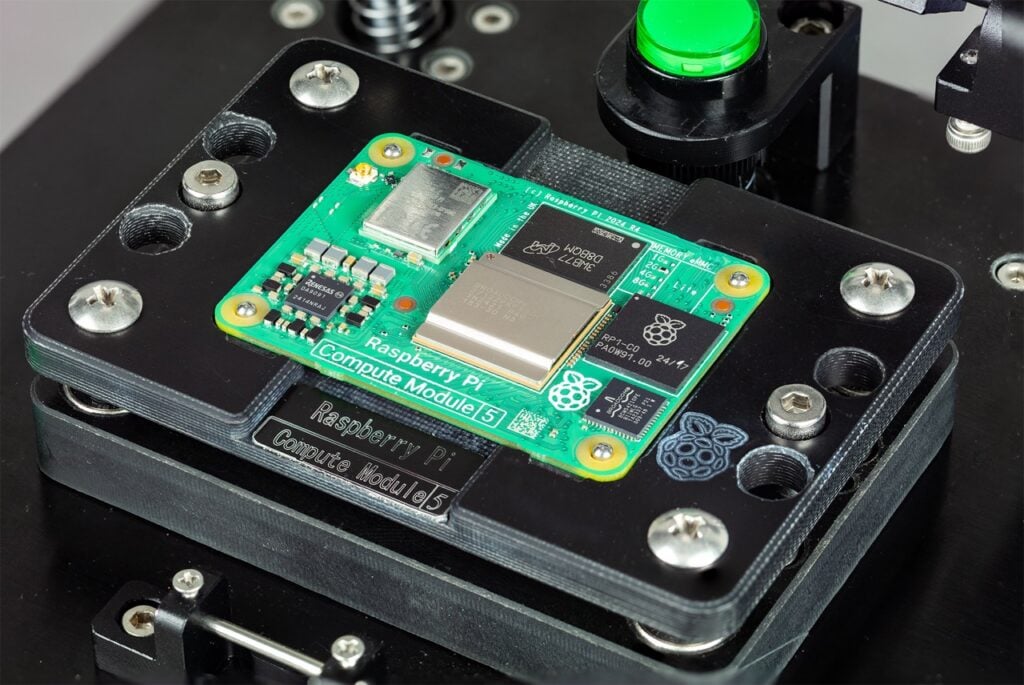
The shift toward a Web UI and a centralized manufacturing database means that security is no longer confined to the R&D lab. It can be integrated directly into the assembly line. A technician can now plug in a Raspberry Pi, see the green light on the provisioning dashboard, and know that the device is encrypted, signed, and registered to the company’s cloud—all without typing a single line of code.
The Future of the Ecosystem
As rpi-sb-provisioner continues to evolve, we can expect further integrations with hardware security modules (HSMs) and more advanced TPM (Trusted Platform Module) support. The trajectory is clear: Raspberry Pi is no longer just a board manufacturer; it is a full-stack security and management provider for the edge computing era.
Conclusion
The release of version 2.3 of the rpi-sb-provisioner is more than just a software update; it is a declaration of intent. By tackling the friction points of secure provisioning—scalability, complexity, and remote management—Raspberry Pi has solidified its position as a serious contender in the industrial space. For developers and manufacturers, the message is simple: secure, at-scale deployment is no longer a luxury—it is now "boring," predictable, and ready for production.
For those looking to implement these features, Raspberry Pi has updated its bulk provisioning documentation, and the source code for rpi-sb-provisioner, rpi-fw-crypto, and rpi-image-gen remains available on their official GitHub and software sources pages.