The "Undo" Button for Infrastructure: AWS Unveils Kubernetes Version Rollbacks for Amazon EKS
For years, the phrase "Kubernetes upgrade" has struck a chord of anxiety in the hearts of platform engineers and DevOps teams worldwide. In the fast-moving, open-source world of Kubernetes, control plane upgrades have historically been a "one-way door." Once a cluster was migrated to a newer minor version, there was no native path to revert to a previous state. If a compatibility issue emerged or a critical third-party add-on failed, administrators were forced into a high-pressure "fix-forward" scenario, often requiring manual cluster rebuilding or emergency troubleshooting.
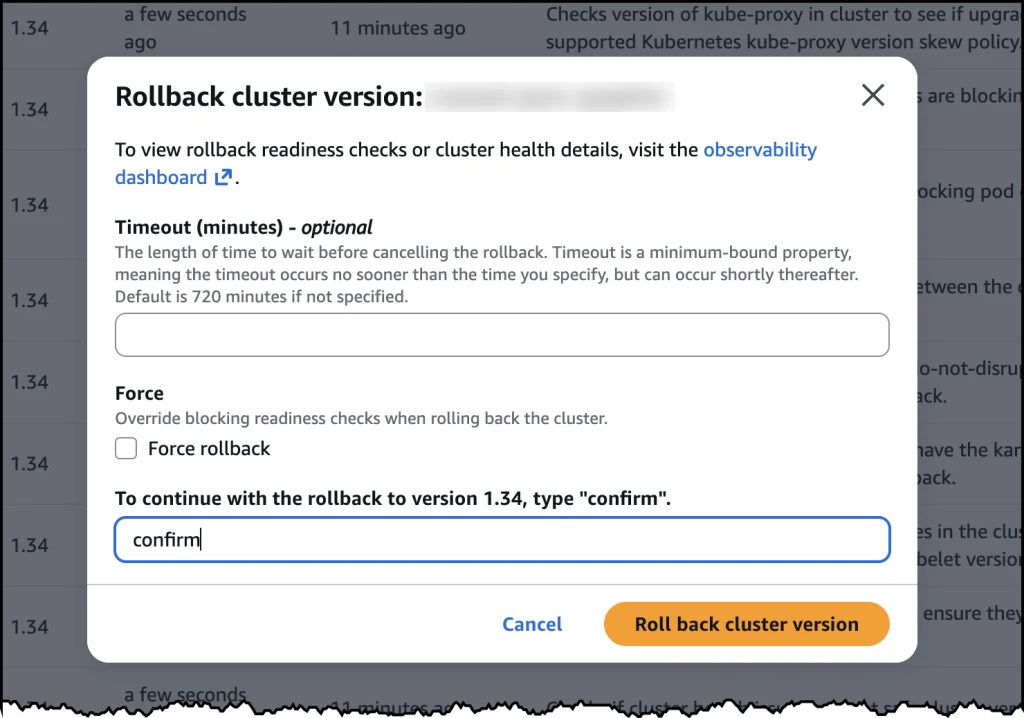
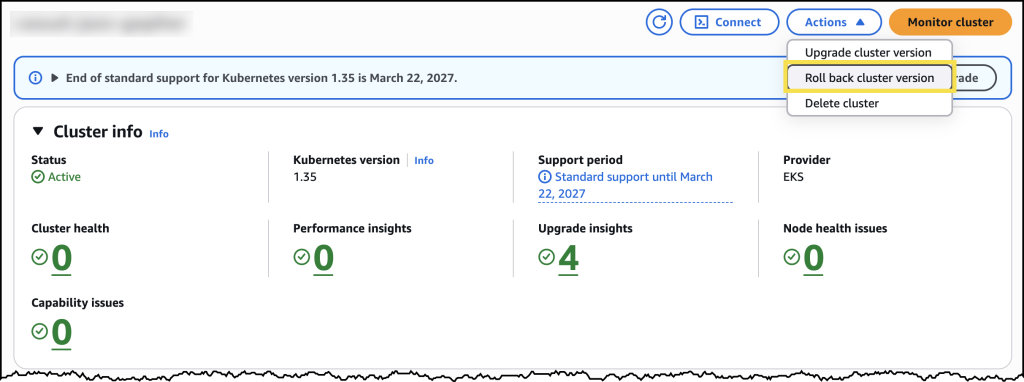
Today, Amazon Web Services (AWS) is fundamentally shifting that paradigm. The company has announced the general availability of Kubernetes version rollbacks for Amazon Elastic Kubernetes Service (Amazon EKS), providing cluster administrators with a long-awaited safety net. This feature allows teams to revert an EKS cluster to its previous, fully validated version within a seven-day window, effectively serving as an "undo" button for infrastructure upgrades.
Main Facts: A New Safety Net for EKS
The introduction of version rollbacks addresses the primary pain point of Kubernetes lifecycle management: the lack of a viable reversion path. Unlike community-led efforts that rely on "emulated versions"—which often leave clusters in a complex, transitional state—the AWS implementation reverts the cluster to a genuine, previously operational version of Kubernetes.
Key technical specifications of the new feature include:
- The Seven-Day Window: Administrators have a one-week period post-upgrade to trigger a rollback if they encounter unexpected behavior.
- Native Reversion: The process restores the cluster to the exact minor version it occupied prior to the upgrade.
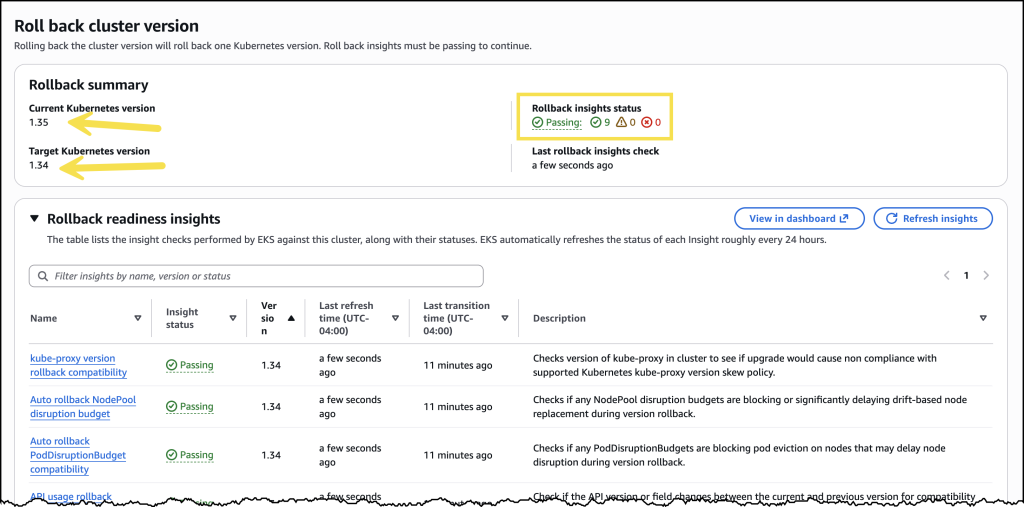
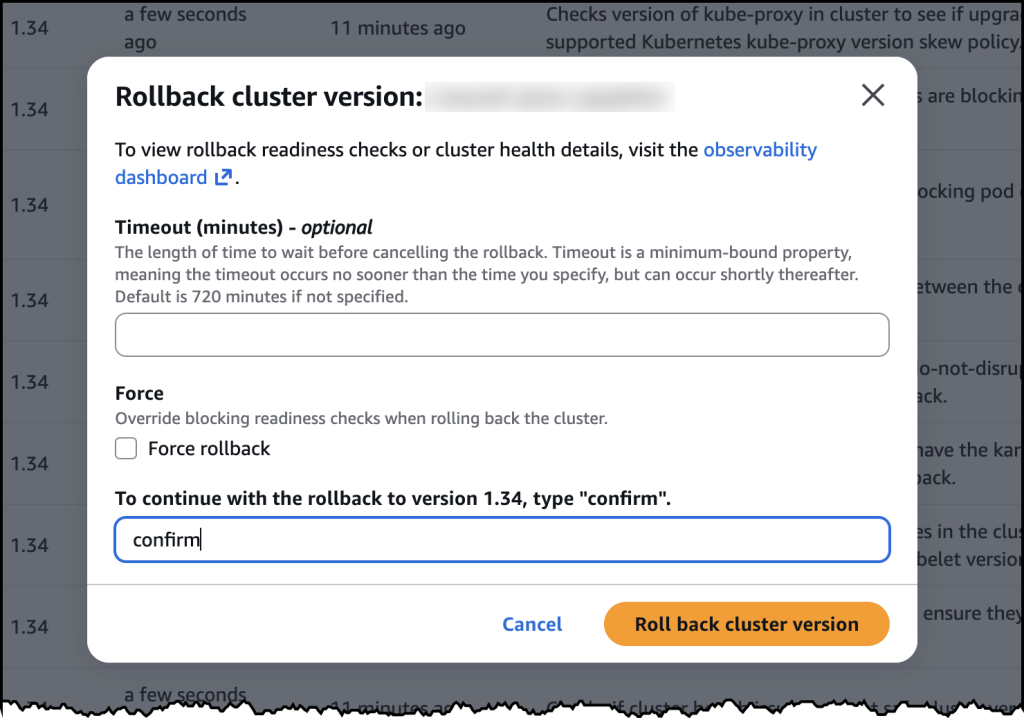
- Integrated Readiness Checks: Leveraging AWS’s existing "Cluster Insights" tool, EKS automatically evaluates the cluster for potential compatibility conflicts—such as node version mismatches or add-on dependency issues—before initiating the rollback.
- Safety-First Design: For clusters using EKS Auto Mode, the rollback process respects existing Pod Disruption Budgets (PDBs), ensuring that application availability is not compromised during the transition.
- Zero Additional Cost: The feature is available at no extra charge across all commercial AWS regions where EKS is supported.
Chronology: From "One-Way Doors" to Controlled Flexibility
The evolution of Kubernetes management has been characterized by a constant tension between the desire for rapid innovation and the necessity of enterprise stability.
The Era of "Fix-Forward" Constraints
In the early days of Kubernetes, the open-source community focused on the challenge of moving forward. Because Kubernetes releases three minor versions per year, the pace of change is blistering. For organizations, particularly those in regulated industries like finance and healthcare, this cadence created a "fear of missing out" on security patches versus a "fear of breaking production." Many organizations responded by creating bloated, multi-month upgrade cycles, "bake periods," and complex approval workflows to minimize risk. Despite these efforts, the inability to roll back meant that one bad upgrade could trigger a catastrophic incident.

The Shift toward Reliability
Recognizing that the community-led KEP-4330 (which introduces emulated versions) was a step in the right direction but insufficient for production enterprise needs, AWS began developing a more robust mechanism. The goal was to provide a "full state" restoration rather than an emulation. By mid-2026, internal testing confirmed that AWS could safely restore the control plane to a stable prior version, paving the way for the feature release announced this week.
Supporting Data: Why Rollbacks Matter
The decision to implement rollbacks is backed by data regarding the "upgrade inertia" observed in the EKS ecosystem. According to AWS, many clusters remain stuck on deprecated or older Kubernetes versions simply because the risk of a botched upgrade—and the subsequent inability to revert—is viewed as higher than the risk of running on an older, unpatched version.
- Upgrade Failure Rates: Industry surveys suggest that nearly 30% of cluster upgrades in large-scale environments encounter some form of incompatibility with third-party operators or custom controllers.
- The Cost of Downtime: For enterprise-grade clusters, the cost of an hour of downtime can reach tens of thousands of dollars. The ability to revert a faulty upgrade in minutes, rather than spending hours or days debugging complex version conflicts, directly impacts the bottom line.
- Operational Efficiency: By reducing the "fear factor," AWS expects to see an increase in the adoption of newer Kubernetes minor versions, as teams will be more willing to test upgrades knowing they have an immediate recovery path.
Official Perspectives: The Philosophy of Managed Kubernetes
The AWS team emphasizes that this feature is not intended to encourage sloppy upgrade practices, but rather to increase the confidence of operators working in complex, high-stakes environments.
"We wanted to give cluster administrators a safety net," said an AWS spokesperson during the announcement. "By providing a way to return to a fully validated state, we are moving Kubernetes management from an ‘all-or-nothing’ gamble to a controlled, reversible process. We are prioritizing workload stability above all else."
For users of EKS Auto Mode, the philosophy extends to infrastructure management. Because Auto Mode manages the lifecycle of nodes alongside the control plane, the rollback process is inherently more complex. AWS has addressed this by implementing a new "Cancel API," which allows administrators to halt a node rollback if they determine the process is taking too long or if business requirements have shifted. This granular level of control ensures that even in fully managed environments, the human operator retains the final say on the state of their infrastructure.
Implications: Changing the DevOps Lifecycle
The introduction of EKS version rollbacks is expected to have significant ripple effects on how organizations manage their Kubernetes lifecycle.
1. Shortening the Upgrade Cycle
With a "safety valve" in place, companies that currently utilize six-month upgrade cycles may feel comfortable compressing these windows to three months or less. This helps keep clusters closer to the current upstream release, ensuring better security and access to the latest performance improvements.
2. Impact on Regulated Industries
For sectors governed by strict compliance mandates (SOC2, HIPAA, PCI-DSS), the ability to prove a reliable "roll-back" capability is a significant boon. It satisfies audit requirements for disaster recovery and business continuity, as the organization can now document a standardized, automated process for reversing infrastructure changes.
3. A New Standard for Managed Kubernetes
AWS is effectively setting a new bar for managed Kubernetes services. By delivering this at the cloud-provider level, they are shielding their customers from the inherent limitations of upstream open-source Kubernetes. Competitors in the managed Kubernetes space—such as Google Kubernetes Engine (GKE) and Azure Kubernetes Service (AKS)—will likely face increased pressure to provide similar, high-fidelity rollback capabilities to match the EKS offering.
4. Encouraging Innovation
When the cost of failure is lowered, the frequency of experimentation increases. Teams that were previously hesitant to test new Kubernetes features, ingress controllers, or service meshes because of potential upgrade-path conflicts may now feel empowered to iterate faster.
Conclusion: A New Era of Confidence
The arrival of Kubernetes version rollbacks for Amazon EKS represents a maturation of the platform. By addressing the "one-way door" constraint that has haunted the Kubernetes community for years, AWS has provided a pragmatic, enterprise-ready solution that balances the rapid pace of Kubernetes development with the non-negotiable requirement for production stability.
For the platform engineer, the message is clear: upgrades are no longer a high-wire act without a net. With the integration of the rollback feature into the existing AWS console and the support for both standard EKS and EKS Auto Mode, the barrier to maintaining a healthy, secure, and current Kubernetes footprint has been significantly lowered. As organizations continue to migrate mission-critical workloads to EKS, these infrastructure-level safety features will become the cornerstone of sustainable, long-term cloud operations.