Innovation at the Crossroads: Maker Faire Rome 2024 and the Future of Sustainable Technology
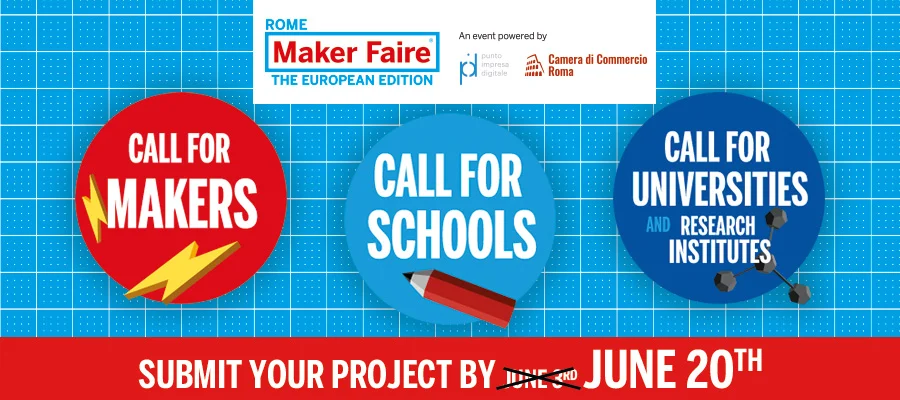
As the global community grapples with the accelerating realities of climate change and resource depletion, the imperative to innovate has never been more pressing. In this context, Maker Faire Rome (MFR) has cemented its status as Europe’s premier showcase for technological ingenuity. Now entering its eleventh edition this October, the event serves as a vital bridge between grassroots invention and industrial-scale implementation, transforming abstract concepts into tangible solutions for a greener, more inclusive planet.
The Nexus of Innovation: Maker Faire Rome 2024
Organized by the Rome Chamber of Commerce in collaboration with the Italian Trade Agency, the event acts as a grand laboratory where the "makers"—students, researchers, startups, and hobbyists—converge. Alessandro Ranellucci, the event’s content manager, articulates the core mission of the fair: “The Maker Faire promotes the exchange of ideas and the evolution of technologies; it presents prototypes that help change the world.”
This year, the spotlight is firmly on sustainability. From volcanic fields in Sicily to high-tech urban centers in Paris, the innovations presented at MFR represent a shift toward circular economies and AI-driven efficiency.
Chronology of Progress: From Local Inventions to Global Scalability
The evolution of the maker movement is best tracked through the diversity of projects on display. The history of MFR is one of constant expansion, moving from simple hobbyist electronics to sophisticated, interdisciplinary solutions.
- Early Days: The fair began as a grassroots gathering for DIY electronics enthusiasts, focusing on open-source hardware and small-scale automation.
- The Mid-Phase: Integration of academic research allowed for more complex applications, such as sustainable energy systems and early-stage robotics.
- The Current Era: We are witnessing the "Industrialization of the Maker." Startups are now leveraging AI, biotechnology, and advanced material science to solve global crises, moving projects from the garage to the factory floor.
Sustainability: The Engine of Modern Innovation
The exhibition floor at MFR is a testament to the belief that technology can—and must—repair the damage done to the environment.
Agriculture and Geoenergy
In Bronte, a region famous for its volcanic soil and pistachio groves, traditional farming is often hampered by the rugged, inaccessible terrain of Mount Etna. Local high school students have bypassed this limitation by developing a drone-based "pollen blower." This ingenious device facilitates fertilization in areas where heavy machinery cannot operate, resulting in a 24% increase in pistachio production.
Energy production is similarly being reimagined. Inventors like Giorgio Palamara are debuting wind turbines with curved blade tips, a design modification that facilitates a double-rotation effect, boosting energy output by 20%. Meanwhile, the solar sector is moving beyond rigid panels toward flexible, adaptive membranes that can contour to the surfaces of boats, golf carts, and caravans. These innovations, paired with AI-driven geoenergy units like Biosphera Genesis, demonstrate a move toward total energy self-sufficiency.
The Circular Economy: Waste as a Resource
The Sapienza University of Rome has introduced an "intelligent waste container" capable of autonomous sorting. By using advanced sensors to identify material compositions, the system streamlines recycling, removing the human error that often plagues waste management. Other projects are even more radical: researchers are experimenting with mushroom-based materials to replace plastics, and food producers are turning olive residue into compost, embodying the "cradle-to-cradle" design philosophy.
Technology for Inclusion and Social Good
Innovation is only truly effective if it is accessible. A significant portion of MFR 2024 is dedicated to assistive technology.

- Brailly: Developed by students at the European Institute of Technology, this hand-sized cube integrates tactile vibration and audio to simplify the learning of Braille.
- Inclusive Mobility: Officine Zero, a multifactory project, repurposes wheels from discarded rental scooters to create low-cost, highly maneuverable attachments for wheelchairs. This provides users with greater independence in urban environments where standard wheelchairs may be too bulky.
- Sensory Assistance: Rita Consonni and Luciano Fumagalli have unveiled a low-cost device that amplifies voice frequencies for the hearing impaired, designed specifically to operate in rural settings via solar power.
The Role of Startups and Global Collaboration
The fair serves as a critical launchpad for startups, which Stefan Petersson of the Norwegian firm Xplorico describes as the "true innovators of the 21st century." Petersson notes that while China and the US currently dominate the AI startup landscape, Europe’s strength lies in the robust connection between its university business accelerators and the private sector.
However, challenges remain. Corinne Raclin, head of a business incubator in Paris, emphasizes that Europe must move toward greater industrialization to reduce its dependence on Asian manufacturing. "Artificial intelligence allows for a better connection with reality in project development," Raclin says, "leading to cleaner production and more localized supply chains."
Deep Dive: The Safecutter Project
One of the most significant technical breakthroughs at this year’s fair is the Safecutter project, a collaboration between the Leibniz Institute for Plasma Science and Technology (INP) Greifswald and Mr Beam Lasers GmbH. Historically, laser cutting was reserved for large-scale industrial facilities due to the hazards of toxic vapors and high equipment costs.
The Safecutter prototype democratizes this technology through:
- Preventative Hazard Detection: AI-driven sensors identify materials before cutting to prevent toxic off-gassing.
- Integrated Filtration: Sophisticated exhaust treatment systems ensure that air quality remains safe for indoor, small-shop environments.
- Safety Shutdowns: Automated systems that cut power instantly in the event of a detected anomaly.
By reducing the barrier to entry for small businesses and creative studios, the Safecutter project represents a paradigm shift in how we approach industrial safety and decentralized manufacturing.
DIY Mastery: The GALDEANO Calculator
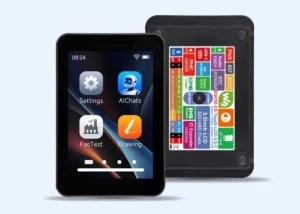
Beyond industrial projects, MFR continues to celebrate the individual "maker." Ángel Cabello, an IT professional with three decades of experience, has presented GALDEANO, a DIY calculator capable of symbolic mathematics. Using an ESP32 microcontroller and a custom MicroPython distribution, the device solves complex algebraic problems on a 320×240 touch display. It serves as a reminder that the heart of the maker movement remains the personal pursuit of knowledge and the joy of building something from scratch.
Implications: The Future of the Maker Movement
The breadth of projects at Maker Faire Rome 2024 signals a transition in the global tech landscape. We are moving away from the era of "disposable technology" toward a future characterized by:
- Resilience: Creating tools that can withstand and mitigate natural disasters, such as the Lifeshell wooden earthquake shelter.
- Responsibility: AI is no longer just for profit; it is now being applied to predictive irrigation and pest management to maximize crop yields with minimal chemical input.
- Human-Centric Design: Technology is increasingly being developed to solve specific, local problems, ensuring that the benefits of innovation are felt by the most vulnerable populations.
As Alessandro Ranellucci noted, the prototypes presented in Rome are not merely academic exercises; they are the blueprints for a more sustainable, equitable world. The collaboration between universities, government agencies like the Italian Trade Agency, and private inventors creates a unique ecosystem where "little Leonardos" can thrive.
In conclusion, Maker Faire Rome 2024 stands as a beacon for what is possible when curiosity meets purpose. Whether it is through a drone helping a Sicilian farmer or an open-source device helping a student with a disability, the message is clear: the future is being built, one prototype at a time, by those who refuse to accept that the world cannot be improved. As we look toward the next decade of the fair, the focus will undoubtedly remain on refining these solutions, scaling them to meet global demand, and ensuring that the spirit of open-source innovation remains at the forefront of the fight for our planet’s future.