Engineering the "Magic" of Life: USC Researchers Unlock the Secrets of Kidney Organoid Development
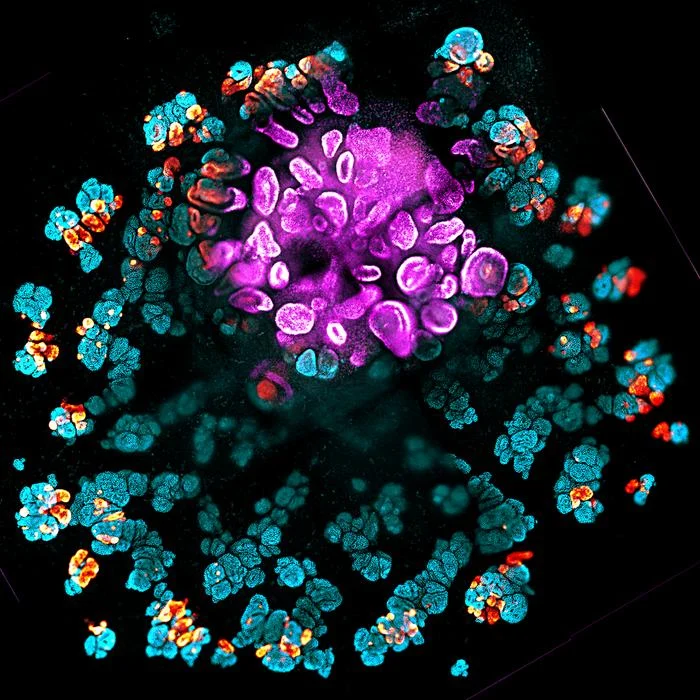
In a groundbreaking synthesis of developmental biology and synthetic engineering, researchers at the University of Southern California (USC) have achieved a milestone in regenerative medicine: the creation of highly reproducible, structurally accurate kidney organoids. By identifying a previously unknown developmental axis and deploying "synthetic organizers," the team has bridged the gap between the chaotic self-organization of laboratory cultures and the precise architectural requirements of human organs.
The study, published in the journal Science under the title "Patterning human kidney organoids with synthetic Wnt-secreting organizers," represents a shift in how scientists approach the challenge of growing human tissue in the lab. By moving away from "chemical baths" and toward localized, biological signaling, the researchers have unlocked a new level of control over how stem cells assemble into functional kidney units.
The Challenge of Architecture in a Dish
For the past decade, the field of organoid research has relied on the inherent biological capacity of human pluripotent stem cells (hPSCs) to self-organize. While this has allowed scientists to create miniature versions of hearts, brains, and kidneys, it has historically been a hit-or-miss process. Typically, researchers add a mixture of growth factors and proteins to a culture dish, hoping that the stem cells will "know" what to do.
This approach, while successful in generating cell types, often results in structural variability. Because these chemical cues are applied uniformly, the resulting organoids lack the spatial orientation found in a natural embryo. In a living kidney, cells do not just differentiate into the right type; they position themselves with exacting precision. Without a blueprint, laboratory organoids often struggle to replicate the complex, elongated architecture of nephrons—the kidney’s fundamental filtering units—leading to models that are inconsistent and difficult to standardize for clinical use.
Chronology of a Discovery: From Mapping to Modeling
The breakthrough began with a deep dive into the natural history of the human kidney. Led by Nils Lindström, PhD, and Leonardo Morsut, PhD, of the Keck School of Medicine of USC and the USC Viterbi School of Engineering, the team utilized spatial transcriptomics to map the developing human kidney at a molecular level.
1. Identifying the "Hidden" Axis
The research team made a startling discovery: there is an undiscovered developmental axis that governs how nephrons form. Traditionally, developmental biologists focused on the "proximal-distal (PD) axis," which describes the path from the filtering end of the nephron to the urine-drainage end. However, the USC team identified a second, critical axis defined by the proximity of the nephron to the collecting duct.
In a developing fetus, the collecting duct acts as a signaling hub, releasing Wnt proteins. These signals do more than just tell a cell what to become; they act as a magnetic pull, dictating the shape and orientation of the surrounding tissue.
2. Engineering the "Synthetic Organizer"
Once the role of Wnt signaling was identified, the team faced a challenge: how to recreate this localized signal in a dish. Standard organoids lack the collecting duct structure entirely. Postdoctoral researcher Fokion Glykofrydis, PhD, engineered a "synthetic organizer" (SO) cell—a specialized cell line designed to secrete controlled, localized amounts of Wnt.
Graduate student Connor Fausto then tested these SO cells by introducing them into kidney organoid cultures. The result was a dramatic shift in behavior. The organoids, which usually grow in a radially symmetrical, disorganized clump, began to respond to the SO cells. The nephrons did not just differentiate; they physically elongated and oriented themselves toward the Wnt source, mimicking the natural developmental process of a human kidney.
Supporting Data: Why Localization Matters
The difference between a "chemical bath" and a "synthetic organizer" is profound. In a traditional culture, the entire organoid is bathed in a uniform concentration of Wnt, which forces all cells to react simultaneously. By contrast, the synthetic organizer provides a spatial gradient.
According to the study, this localized signaling triggered two critical phenomena:
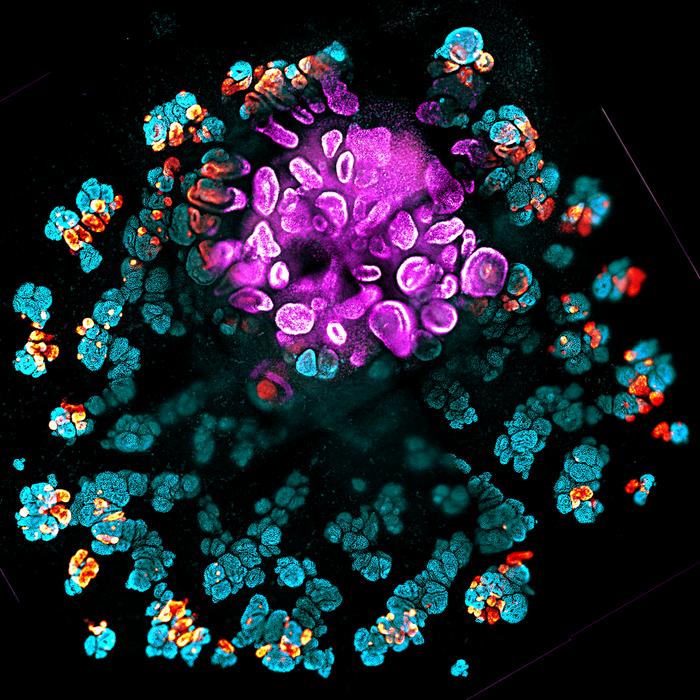
- Cell Identity: The cells receiving the Wnt signal were steered toward a specific distal identity, allowing them to eventually connect to a drainage system.
- Morphogenesis: The physical structures (tubules) elongated and "reached" toward the source of the Wnt. This directed growth is exactly what occurs in the human body, but it had never before been achieved in an in vitro model.
This spatial control solves the primary issue of "reproducibility." Because the SO cells provide a fixed coordinate system for the tissue, the organoids become consistent. Researchers can now predict where and how a nephron will form, making the model a viable candidate for drug testing and disease modeling.
Official Perspectives: Controlling the "Magic"
The interdisciplinary nature of the project—combining the stem cell biology expertise of the Lindström lab with the synthetic biology prowess of the Morsut lab—was key to the project’s success.
"It is important that we’re starting to get good reproducibility from organoid models that can lead to robust preclinical models of cell function and disease to benefit patients," said Nils Lindström. He noted that the discovery of the new developmental axis was a rare "Eureka" moment, as it is uncommon to find previously unrecognized, fundamental developmental patterns in human biology at this stage of scientific advancement.
Leonardo Morsut emphasized that the goal was never to replace nature, but to work with it. "With our approach, we are trying to control self-organization, and work with it as opposed to trying to completely override it," Morsut explained. He described the synthetic organizer as a "little cluster of cells that don’t build anything themselves, but they produce a powerful field that aligns the stem cells and gives them a direction."
For Morsut, this project touches on the fundamental mystery of biology. "At the beginning of my talks, I always show a video of embryonic development," he said. "You start from a single cell, and you get to a complete organism, and that’s as close to magic as it gets. Now, we open a possibility of controlling this magic technology for building organs."
Implications for the Future of Medicine
The implications of this research extend far beyond the kidney. While this study focused on renal development, the "synthetic organizer" framework is inherently modular. It could, in theory, be applied to any organoid system where spatial signaling is crucial to development—including the liver, pancreas, or intestines.
1. Revolutionizing Drug Discovery
Currently, pharmaceutical companies often rely on animal models to test new drugs, which are notoriously poor proxies for human physiology. High-fidelity, reproducible kidney organoids could serve as "human-on-a-chip" models, allowing researchers to observe how a drug affects human tissue without risking patient safety.
2. Toward Transplantable Tissue
The ultimate goal of regenerative medicine is to grow replacement organs. While we are still far from growing a full-sized, transplantable kidney, this study provides the missing link: the ability to engineer tissue architecture. By learning how to "program" cells to organize themselves, scientists are moving closer to the day when lab-grown tissue can be used to treat end-stage renal disease.
3. A Framework for Synthetic Biology
This study effectively demonstrates that complex developmental signals can be reconstructed synthetically. By providing a "scaffold" of information rather than just a scaffold of material, the researchers have created a blueprint for how to bridge the gap between simple cell clusters and complex, functional biological structures.
As the scientific community continues to digest these findings, the "synthetic organizer" approach is likely to become a foundational tool in the laboratory. By proving that the geometry of development can be controlled, the USC team has provided a powerful new lever for scientists to pull in the quest to understand, repair, and eventually build the human body.