Retro Revival or UI Nightmare? A Post-Mortem of itch.io’s “Ameyega” April Fools’ Experiment
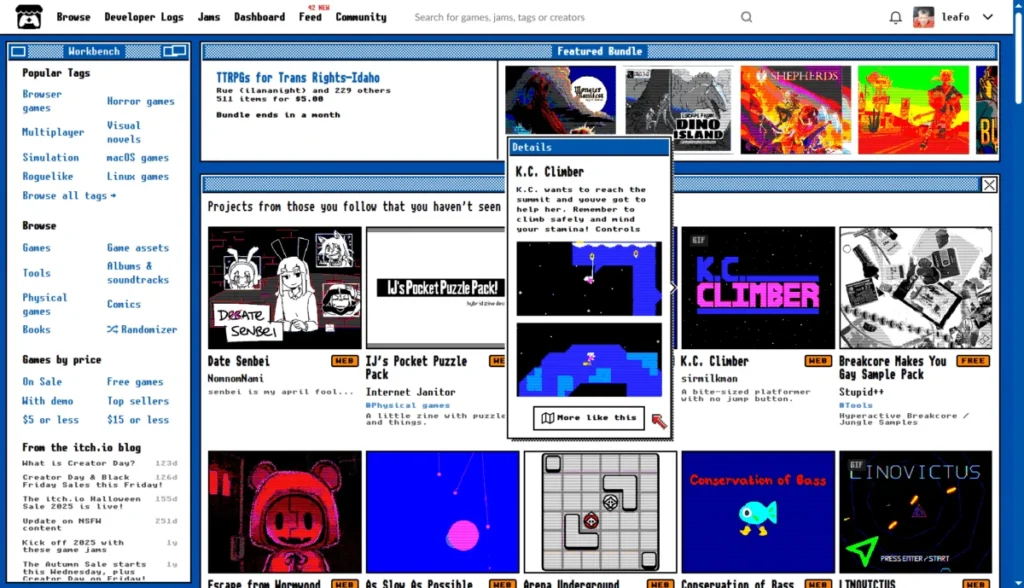
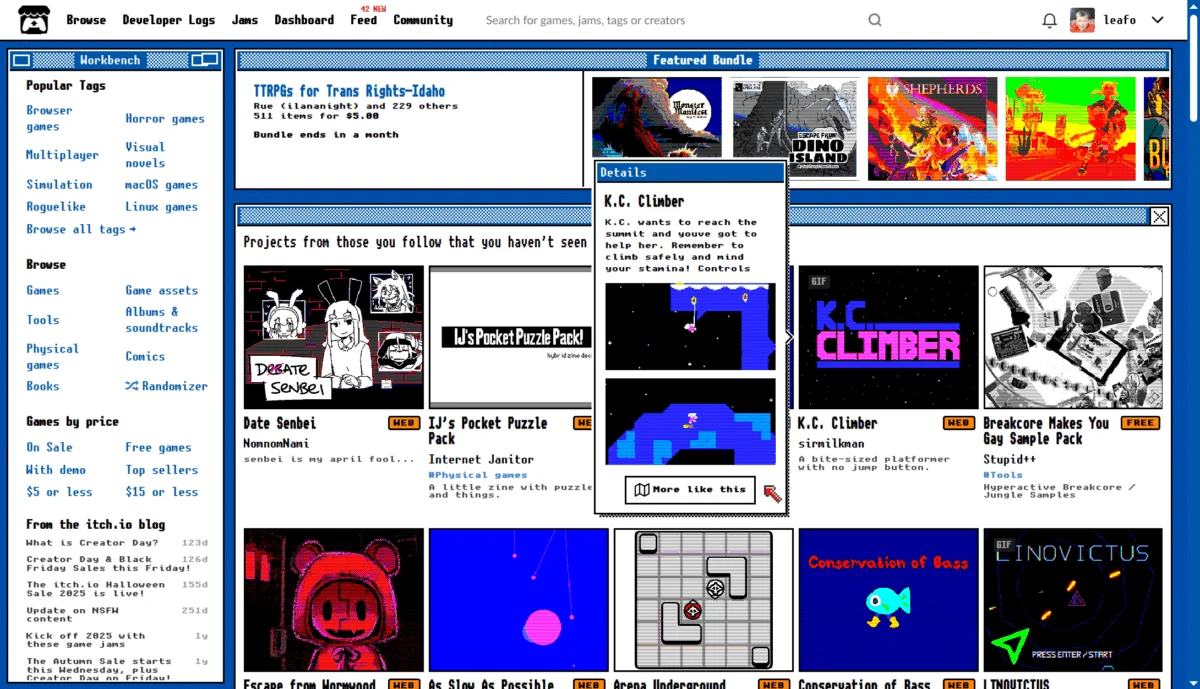
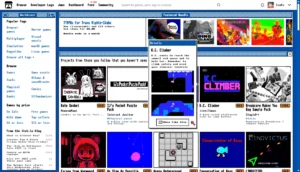
For the digital gaming community, April 1st is often met with a mixture of excitement and deep skepticism. While many tech companies opt for transparently fake press releases or impossible product announcements, itch.io—the premier independent storefront for indie developers—decided to take a different, more visceral approach this year. They transformed their entire homepage into a brutalist, ASCII-art-infused retro interface dubbed “Ameyega Mode.”
What began as a whimsical homage to the early days of computing quickly devolved into a polarizing flashpoint for the platform’s user base, sparking a complex debate regarding accessibility, UI design, and the boundaries of corporate humor. As the dust settles on the experiment, the platform has officially moved on, leaving behind a trail of lessons on how user interfaces influence the health and perception of a community hub.
The Chronology of the “Ameyega” Takeover
The transformation was subtle in its arrival but immediate in its impact. On the morning of April 1st, visitors to the itch.io homepage were greeted not by the familiar clean, modern grid of game thumbnails and developer spotlights, but by a stark, monochrome, character-based interface. Utilizing the specialized "Unscii" font—a tribute to the classic low-resolution character sets of the 1980s—the site underwent a complete visual overhaul.
The transition was, by the developers’ own admission, a "late-breaking" effort. Due to the last-minute deployment, the itch.io team opted to keep the theme active well beyond the standard 24-hour window usually reserved for April Fools’ Day pranks. This extended duration was intended to give users more time to appreciate the technical craft behind the site’s rendering, but it ultimately exacerbated the friction between those who found the aesthetic charming and those who found the navigation functional-breaking.
By the second and third days of the event, the novelty had largely worn off for a significant portion of the user base. Reports of broken dark-mode settings, navigation errors, and general visual fatigue began to flood the site’s comment sections and social media channels. It wasn’t until the end of the week that the itch.io team officially pulled the plug on the experiment, reverting the site to its standard, high-fidelity interface while providing a specialized URL (itch.io/?ameyega) for those who still wished to revisit the ASCII aesthetic.
Supporting Data: A Divided Community
The reception of Ameyega Mode was characterized by a distinct "love-it-or-hate-it" dichotomy, visible in the high volume of community engagement during the event. An analysis of user feedback across the platform reveals three primary camps:
- The Nostalgia Enthusiasts: A vocal minority praised the aesthetic for its "charming" and "delightful" nature. For these users, the retro-tech interface provided a breath of fresh air in an increasingly homogenized web environment. Many argued that the style reflected the "spirit of indie," which is intrinsically linked to the history of home computing and early game development.
- The Accessibility Advocates: Perhaps the most significant blowback came from users with visual impairments or sensory processing sensitivities. The high-contrast, low-resolution nature of the ASCII fonts made the site functionally unusable for many. Comments highlighting the physical strain, headaches, and general confusion caused by the layout were frequent, forcing the development team to engage in real-time "hotfixing" of UI elements like dark mode.
- The Pragmatic Professionals: Many developers and curators viewed the prank as an impediment to business. Since itch.io serves as a professional storefront, users who rely on the platform to market, review, and organize their libraries found the disruption to be a hurdle. Comments such as "I need a professional homepage" highlighted the tension between a platform’s desire for fun and its core responsibility as a marketplace.
Official Responses and Technical Adjustments
The itch.io development team remained largely hands-off in the comment sections, allowing the community discourse to flourish, but they were active on the back end. The most notable technical response involved the platform’s integration of "Dark Mode."
Initially, the ASCII overlay forced a white-on-black or monochrome scheme that overrode individual user settings. As reports of the site "breaking" surfaced, the team pushed silent updates to the front-end code to ensure that the site’s native CSS rules could interact better with the temporary theme. This "pay-attention" approach—as noted by users who observed the fixes happening in real-time—showed that while the team was committed to the bit, they were monitoring the site’s usability metrics to prevent a total breakdown of navigation.
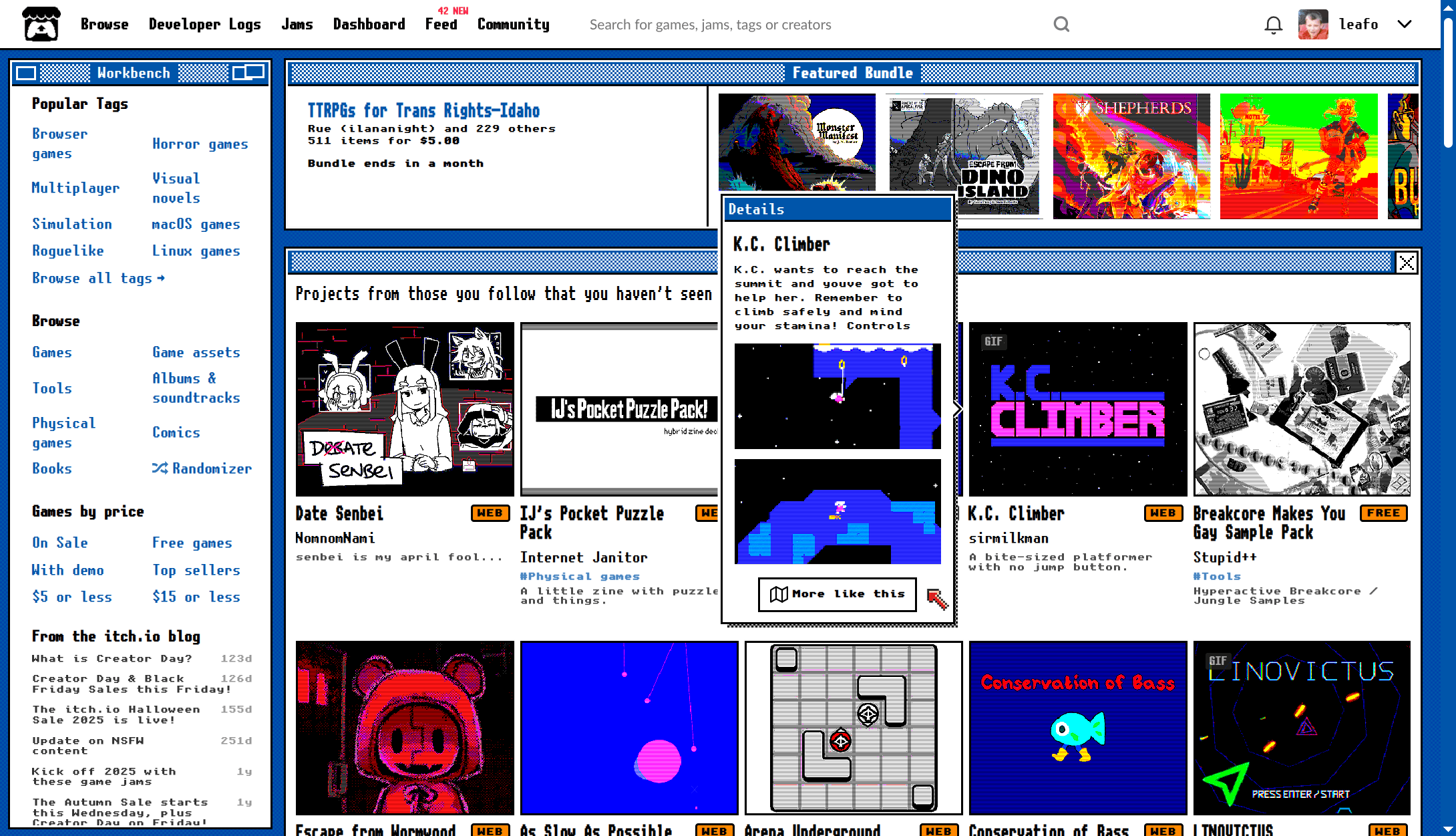
Regarding the "why," the team’s communication remained sparse, maintaining the mystery of the “Ameyega” moniker. By providing a permanent URL to view the aesthetic, they effectively turned the prank into an "easter egg," a move that softened the blow for those who enjoyed the art style while restoring the standard experience for the general public.
The Implications of UI-Driven Experiments
The Ameyega incident provides a fascinating case study for web developers and platform managers. It raises a fundamental question: When does a creative brand identity experiment become an infringement on user utility?
The Accessibility Trap
The primary takeaway from this event is the inherent risk of overriding system-wide UI settings. Accessibility is not merely a "preference" but a necessity for a massive portion of the user base. When an aesthetic choice—no matter how clever—interferes with the ability of disabled users to interact with a site, it ceases to be a prank and becomes a barrier. The backlash regarding the "hard to navigate" nature of the site suggests that future experiments must be opt-in, rather than forced upon the entire user base.
The Value of Nostalgia in Web Design
Conversely, the fact that a significant number of users requested a permanent "ASCII Mode" suggests that there is a market for non-standard, retro-inspired UI options. Many modern websites suffer from "design fatigue," where every landing page follows the same sterile, minimalist layout. The success of the Ameyega aesthetic among those who enjoyed it indicates that users appreciate platforms that are willing to take risks and inject personality into their interface, provided those choices remain customizable.
Trust and Stability
Finally, the incident highlights the precarious nature of trust in a marketplace. itch.io is a site built on the backs of independent developers who rely on it for their livelihood. When a user logs in and finds the interface drastically changed, the immediate reaction is often one of alarm rather than amusement. For professional platforms, the stability of the interface is a promise made to the user. Breaking that promise, even for a few days, can have long-term consequences for how a platform is perceived by its power users.
Conclusion: The Legacy of Ameyega
As the digital landscape continues to evolve toward higher resolutions and more complex animations, the "Ameyega" experiment served as a paradoxical reminder of the power of simplicity. While the execution was divisive and arguably prioritized whimsy over usability, it sparked a genuine conversation about what a platform should look like in the modern age.
For the itch.io team, the event was a lesson in the fine line between engaging a community and alienating it. They successfully created a "top-tier jump scare," as one user described it, but they also learned that their users are deeply invested in the platform’s functionality. Whether this will lead to more robust, user-selectable themes in the future—or a more cautious approach to April Fools’ Day—remains to be seen.
For now, the ASCII text has faded, the modern grid has returned, and the indie community can go back to its primary purpose: creating, playing, and sharing games in an environment that, for at least 364 days of the year, remains predictably and reliably accessible.