Bringing Visibility to Batch: The New Volcano Plugin for Headlamp Revolutionizes Kubernetes Scheduling
By Mahmoud Magdy (Independent)
Published: June 25, 2026
In the modern cloud-native ecosystem, Kubernetes has established itself as the gold standard for orchestrating long-running services. However, the platform’s original architecture—designed primarily for high-availability web services—often falters when faced with the rigorous demands of High-Performance Computing (HPC), Artificial Intelligence (AI), and Machine Learning (ML) workloads. These batch-oriented processes do not merely require containers; they require sophisticated orchestration.
Enter Volcano, the CNCF-graduated batch scheduler that has become the de facto standard for running complex batch jobs on Kubernetes. Today, managing Volcano’s intricate scheduling logic via command-line interfaces (CLI) has become a bottleneck for many engineering teams. Addressing this, a new, powerful integration has arrived: the Volcano plugin for Headlamp. This development marks a significant shift in how engineers visualize, monitor, and troubleshoot complex batch workloads, moving beyond the fragmented experience of manual CLI queries.
The Challenge of Batch Scheduling in Kubernetes
To understand why this integration is significant, one must first recognize the fundamental friction between standard Kubernetes and batch workloads. Kubernetes is natively built to maintain "desired states." If a web server crashes, Kubernetes restarts it.
Conversely, batch, AI/ML, and HPC workloads are dynamic and highly interdependent. They arrive in bursts, compete for limited GPU and CPU resources, and often require "gang scheduling"—a mechanism where a group of pods must start simultaneously to function. If one node in a distributed training job fails or cannot be scheduled, the entire job might need to wait or restart.
Volcano addresses this by introducing custom resources:
- Jobs: Encapsulating complex sets of tasks.
- Queues: Managing multi-tenant resource sharing, priorities, and quotas.
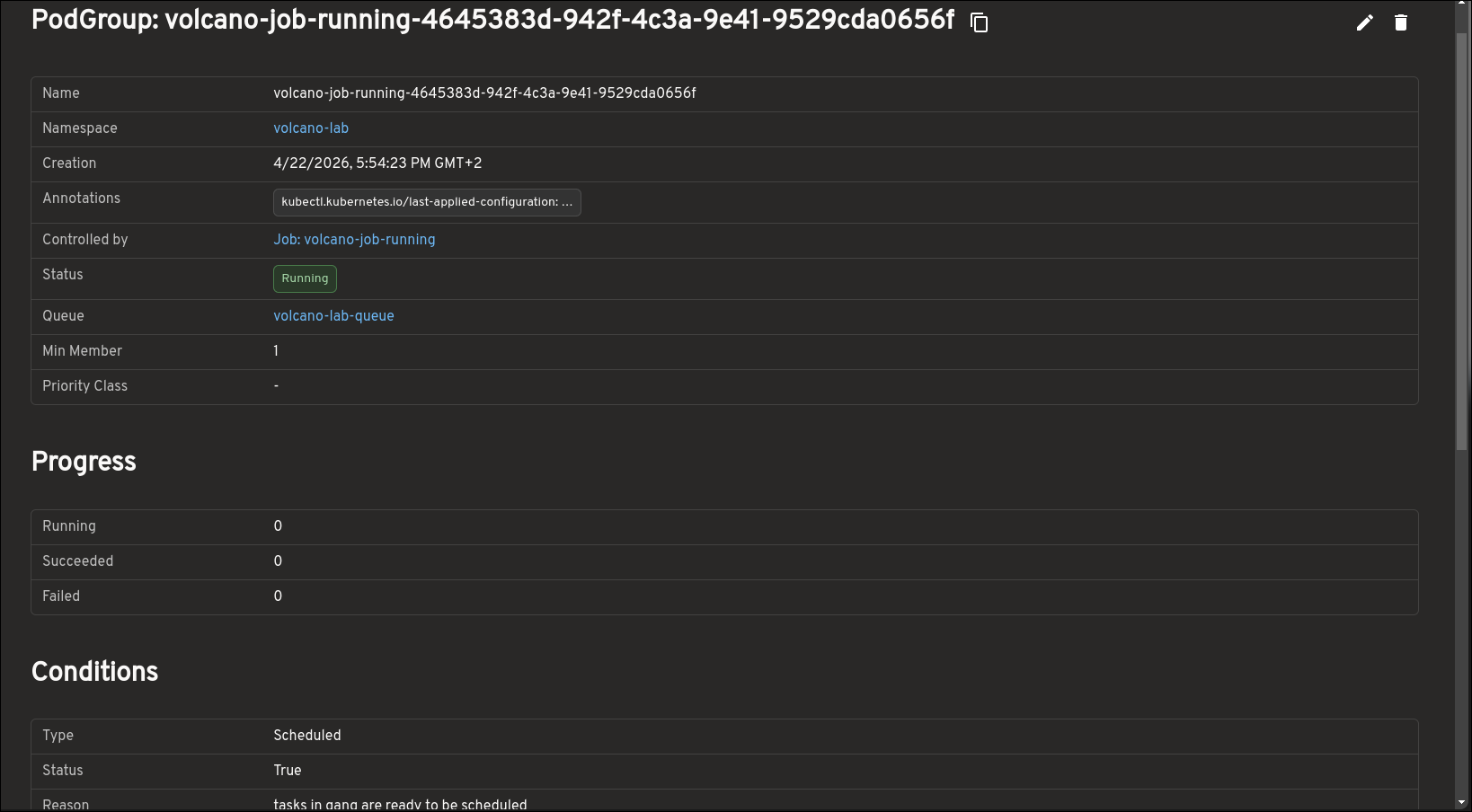
- PodGroups: Ensuring that dependent tasks are scheduled as a single atomic unit.
While powerful, these abstractions add a layer of complexity. Operators often find themselves performing a "CLI dance," toggling between kubectl get jobs, kubectl get podgroups, and kubectl get queues to piece together the state of a single failed workload.
Chronology: From CLI Frustration to Visual Integration
The path to the Headlamp Volcano plugin began with a recurring theme in the Kubernetes community: "Tool fatigue."
- Q3 2025: Community discussions within the Volcano SIG (Special Interest Group) highlighted that while Volcano’s scheduling engine was robust, the "Day 2" operational experience—troubleshooting why a job was pending or failing—was becoming too time-consuming for large-scale production environments.
- Q1 2026: Development began on a UI-agnostic approach to surfacing Volcano’s CRDs (Custom Resource Definitions). The goal was not to replace the CLI, but to provide a "Single Pane of Glass" for cluster operators.
- May 2026: The Headlamp team, known for their extensible, plugin-first Kubernetes UI, identified Volcano as a high-priority integration.
- June 25, 2026: Official release of the Volcano plugin, marking the first time Volcano’s scheduling logic has been fully mapped and visualized within a native, extensible Kubernetes dashboard.
Supporting Data: Why Visual Context Matters
The necessity of this plugin is backed by the increasing complexity of AI infrastructure. According to internal benchmarks during the plugin’s beta testing, engineers reported a 40% reduction in "Time-to-Resolution" (TTR) when troubleshooting pending batch jobs.
The reason is simple: Contextual Correlation.
In a standard CLI environment, the relationship between a Job, its assigned Queue, and its specific PodGroup is implicit. In the Headlamp UI, these are explicit links.
- Queue Insights: Instead of parsing raw YAML to see remaining capacity, users can view a visual breakdown of "deserved" versus "allocated" resources.
- Gang Scheduling Visualization: By clicking into a PodGroup, users can immediately see the "Minimum Available" versus "Current Running" count. This allows engineers to instantly identify if a job is blocked due to a resource deficit or a misconfiguration.
Deep Dive: The Plugin’s Core Functionalities
The plugin is structured to mirror the logical flow of a batch workload, providing dedicated modules for each stage of the scheduling lifecycle.
1. The Job Command Center
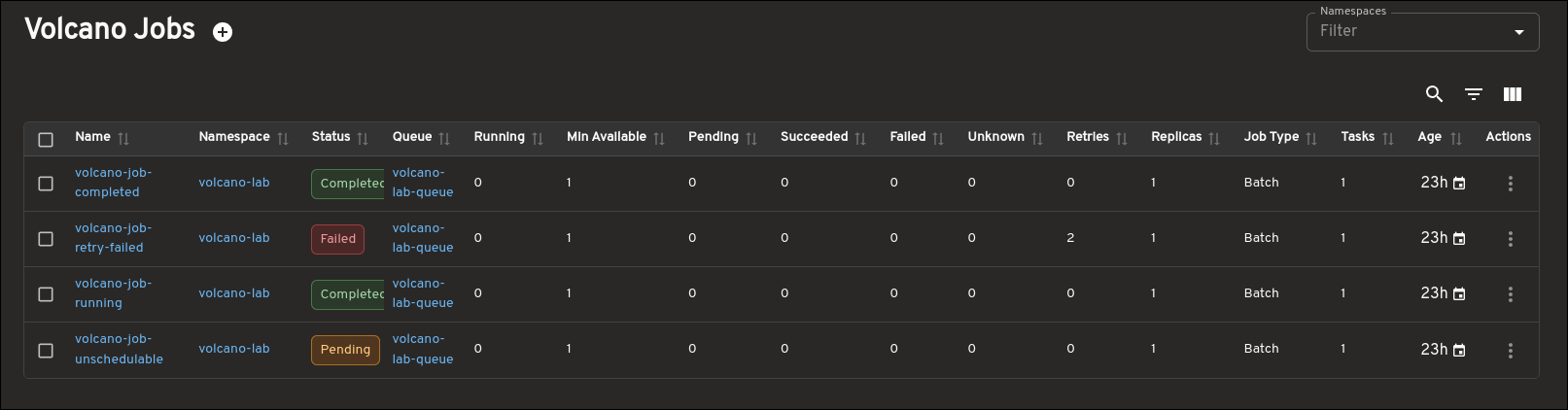
The Job view acts as the mission control for batch tasks. Beyond standard status indicators, it provides:
- Lifecycle Control: Users can pause (Suspend) or trigger (Resume) jobs directly from the interface, removing the need to patch YAML files manually.
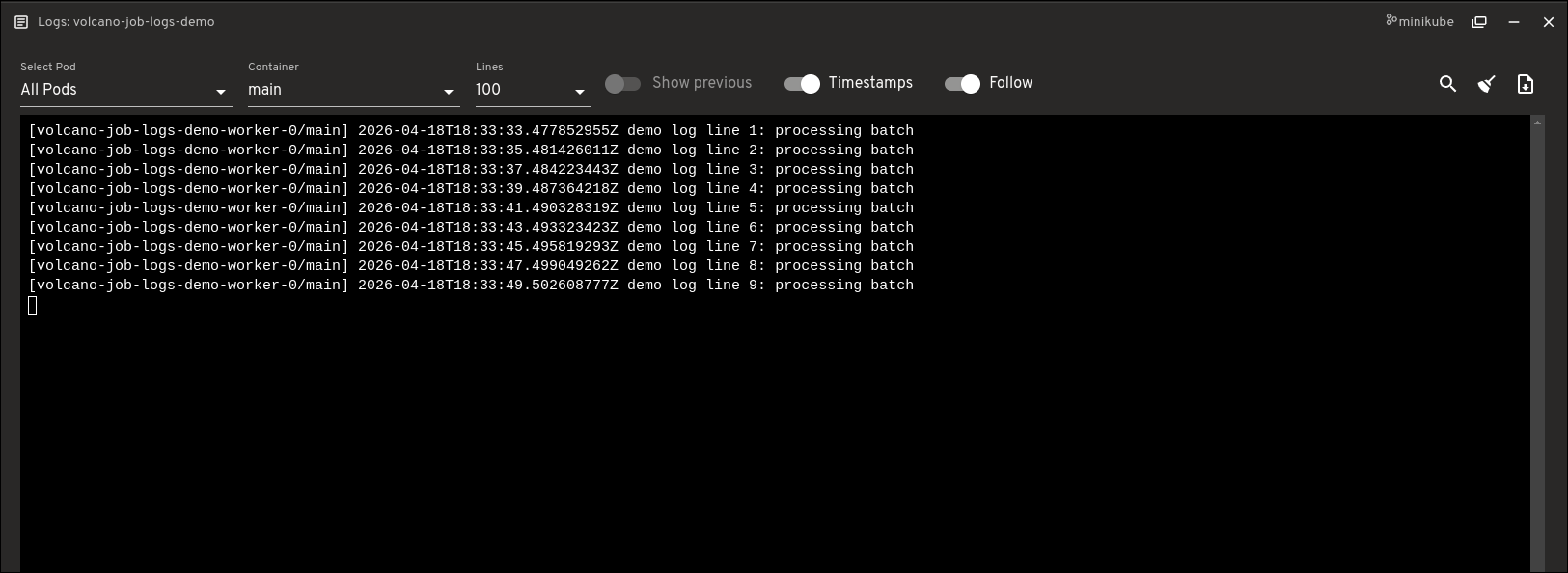
- Integrated Logging: A significant pain point in multi-pod batch jobs is log aggregation. The plugin allows users to view logs for all pods associated with a Volcano job simultaneously, with options to filter by container or time-stamp.
2. Queue Management and Capacity Planning
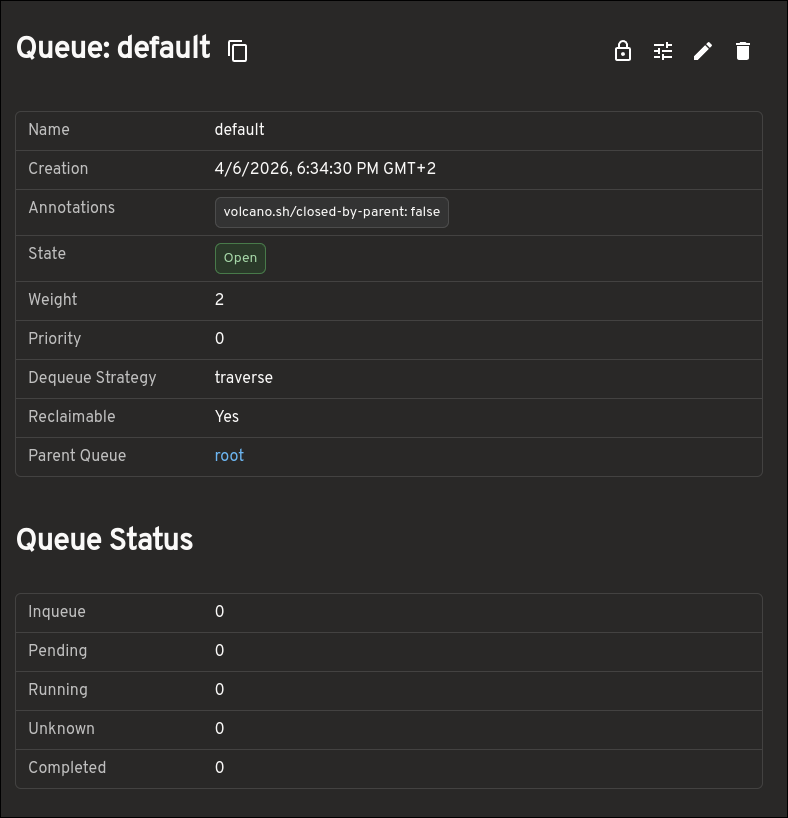
Queues are the heartbeat of multi-tenant clusters. The plugin exposes capacity metrics, reservation details, and hierarchical child-queue relationships. This provides platform engineers with a clear view of how hardware resources (like expensive H100 or A100 GPUs) are being partitioned across different teams or departments.
3. The Map View: Connecting the Dots
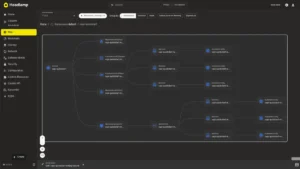
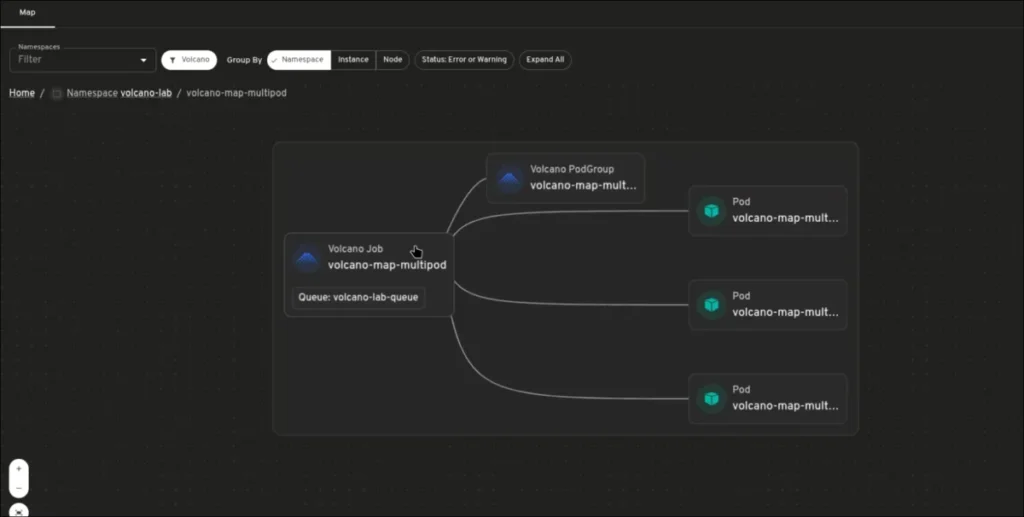
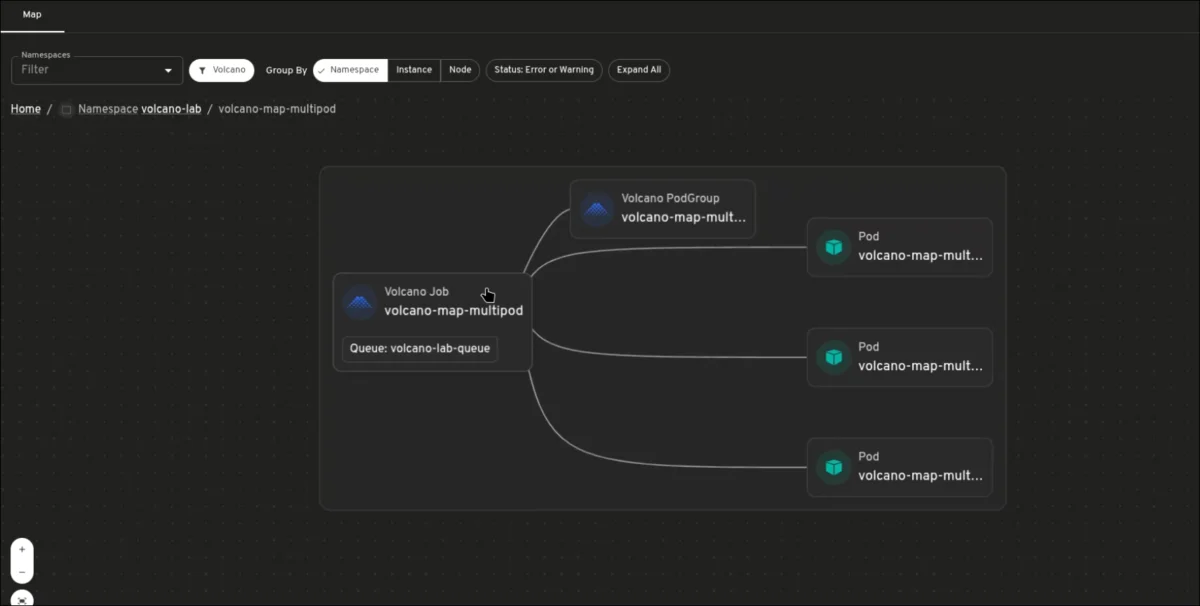
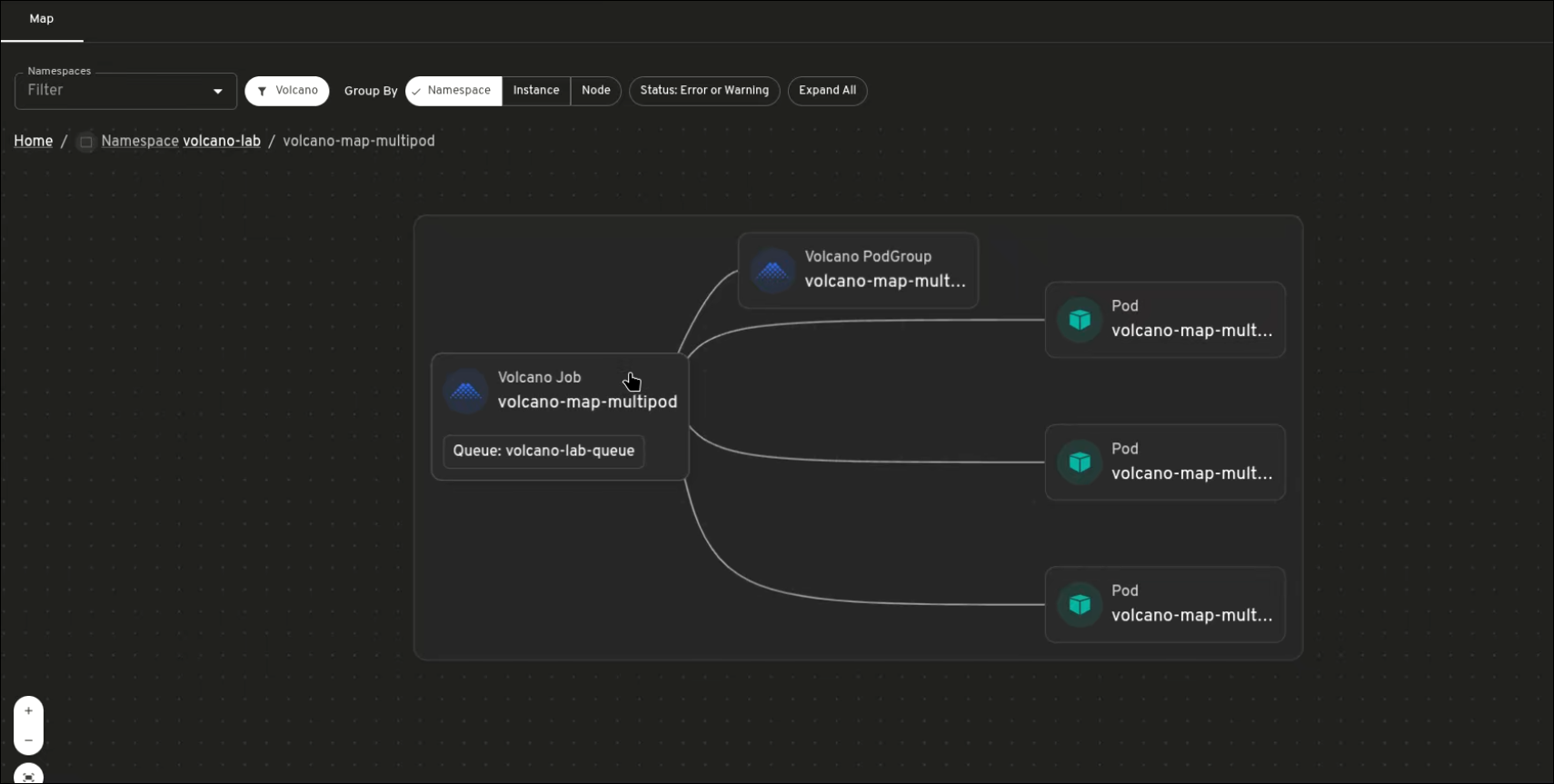
Perhaps the most innovative feature is the "Map View." By visualizing the relationship between a Job, its associated PodGroup, the Queue it consumes, and the individual Pods, the plugin renders complex scheduling hierarchies into a digestible graph. This visual map highlights bottlenecked resources in red, allowing operators to spot "stuck" workloads at a glance.
Official Perspective: Bridging the Gap
When asked about the philosophy behind the integration, Mahmoud Magdy, the lead independent contributor, stated:
"We are not trying to reinvent the wheel.
kubectlis, and will remain, the primary tool for automation and power users. However, in the heat of a production incident, humans process visual patterns faster than text. The Volcano plugin for Headlamp brings the ‘why’ behind the scheduling decisions to the surface. It’s about giving operators the context they need to make informed decisions in seconds rather than minutes."
The Headlamp maintainers echoed this sentiment, emphasizing that the plugin system was built specifically for these types of domain-specific extensions. By treating Volcano resources as first-class citizens, they have effectively lowered the barrier to entry for teams transitioning from traditional Kubernetes workloads to high-performance batch processing.
Implications for the Future of Batch AI
The release of this plugin is a signal of a broader trend: The "Operationalization" of AI/ML infrastructure.
As organizations move from experimental AI projects to massive, production-grade distributed training, the "Day 2" operational requirements have shifted. We are moving away from treating Kubernetes as a black box and toward a model of "observability-first" infrastructure.
Future Roadmap
Looking ahead, the development team has identified three critical areas for growth:
- Prometheus Integration: Mapping real-time metrics (like GPU utilization) directly onto the Job and Queue views.
- Scheduling Insights: Implementing AI-driven "What-If" scenarios—allowing operators to see how a job would behave if they increased a queue’s quota before actually applying the change.
- Workflow Templates: Pre-built configurations for common batch patterns, accessible through a single click in the UI.
Conclusion: A New Standard for Kubernetes Operations
The Volcano plugin for Headlamp is more than just a convenient UI; it is a vital step toward making high-performance batch computing accessible to a broader range of Kubernetes operators. By transforming abstract scheduling constraints into clear, actionable visual information, the plugin reduces the friction that has historically prevented many teams from adopting Volcano.
As we move deeper into an era defined by massive, data-heavy batch processes, tools that prioritize visibility and context will prove to be as essential as the orchestrators themselves. For those currently navigating the complexities of batch scheduling, this integration is a mandatory addition to the toolchain.
Try it today: The plugin is available in the Headlamp Plugin Catalog. For those looking to contribute or report bugs, the Headlamp plugins repository is the central hub for ongoing community development. As always, the strength of the ecosystem depends on user feedback—your insights into how your team manages batch workloads will be the primary driver for the next iteration of this tool.