High Tech Meets High Fashion: The Raspberry Pi-Powered “Koi-Tar” Debuts at New York Fashion Week


NEW YORK — In an era where microcontrollers are typically found tucked away in server racks, industrial sensors, or DIY home automation hubs, the last place one might expect to see a Raspberry Pi is on the high-glitz runways of New York Fashion Week (NYFW). However, the boundary between engineering and haute couture has been shattered by the "Koi-Tar," a functional MIDI controller and wearable art piece that merges advanced fluid dynamics simulations with embedded computing.
Created by engineer and artist Monique Evette—known professionally as "Evette’s Niche"—the Koi-Tar represents a milestone in the "FashTech" movement. It is a centerpiece of her Whimsical Machines series, a collection of instruments and wearables designed to look as though they belong in a digital fairy tale. Powered by the Raspberry Pi Pico, the Koi-Tar is more than a prop; it is a sophisticated musical instrument that has caught the attention of both the tech industry and the avant-garde music scene.
Main Facts: The Intersection of Silicon and Silk
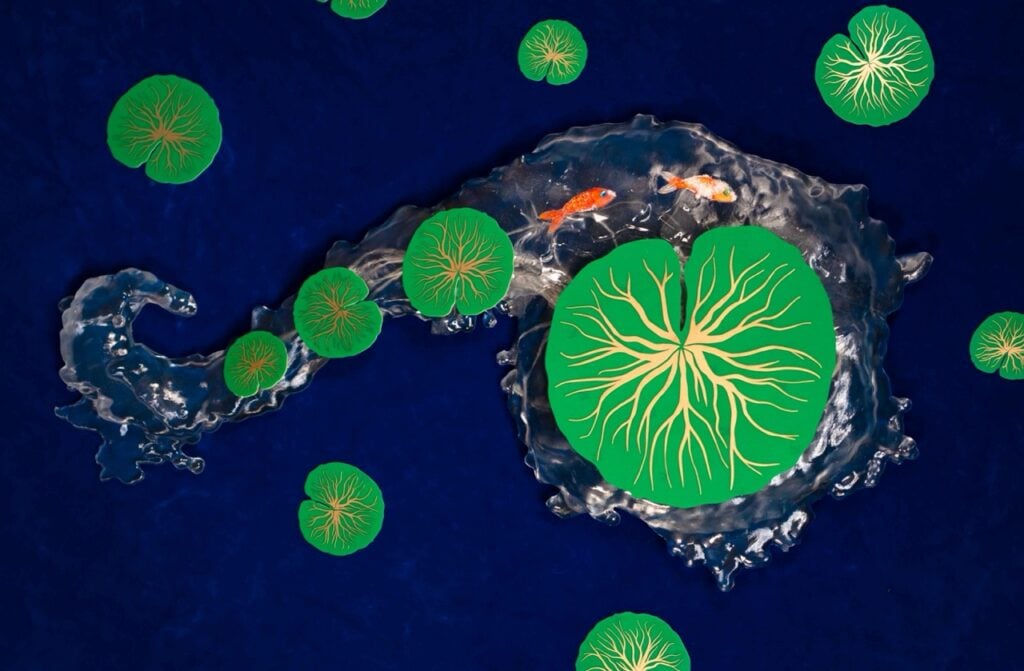
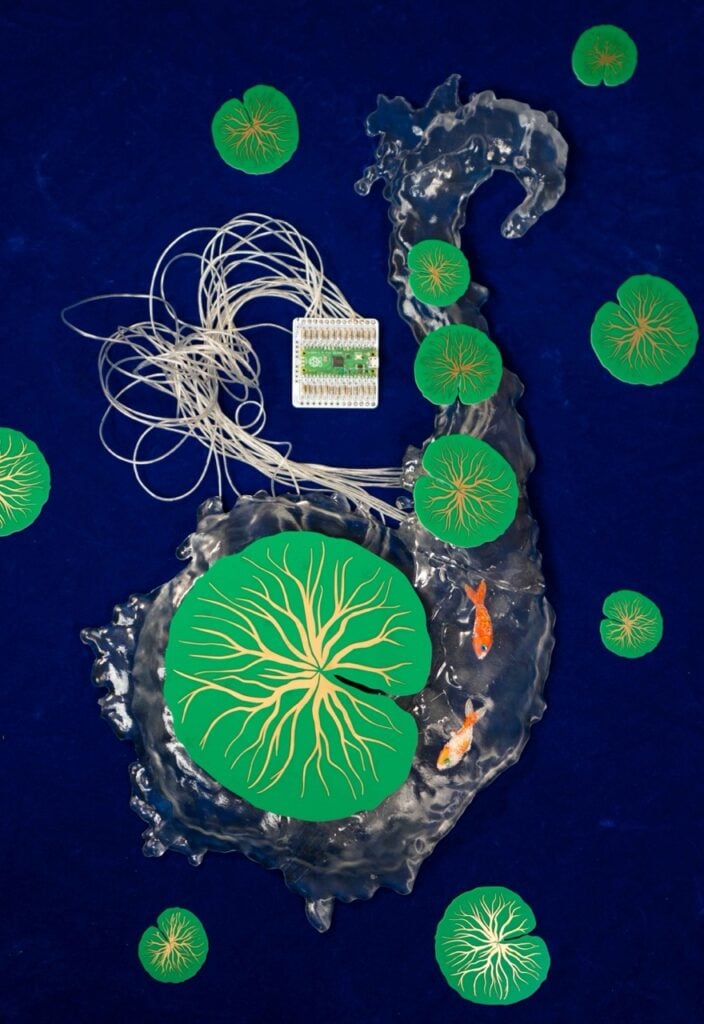
The Koi-Tar is a MIDI (Musical Instrument Digital Interface) controller designed to resemble a koi pond, complete with lily pads that function as capacitive touch sensors. Unlike traditional guitars that rely on vibrating strings, the Koi-Tar utilizes the Raspberry Pi Pico—a high-performance microcontroller chip designed by Raspberry Pi in the UK—to translate physical touch into digital musical notes.
Technical Architecture
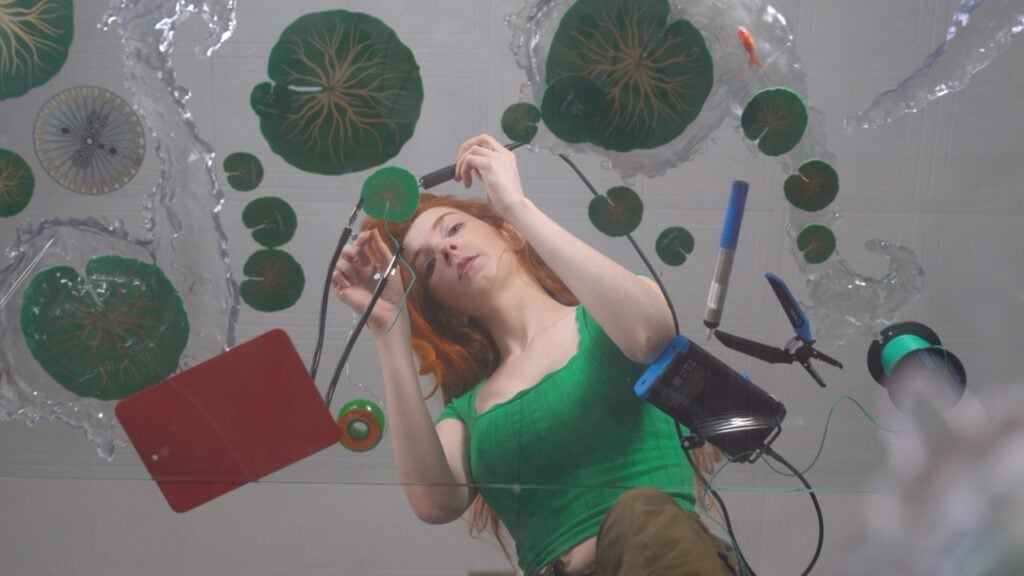
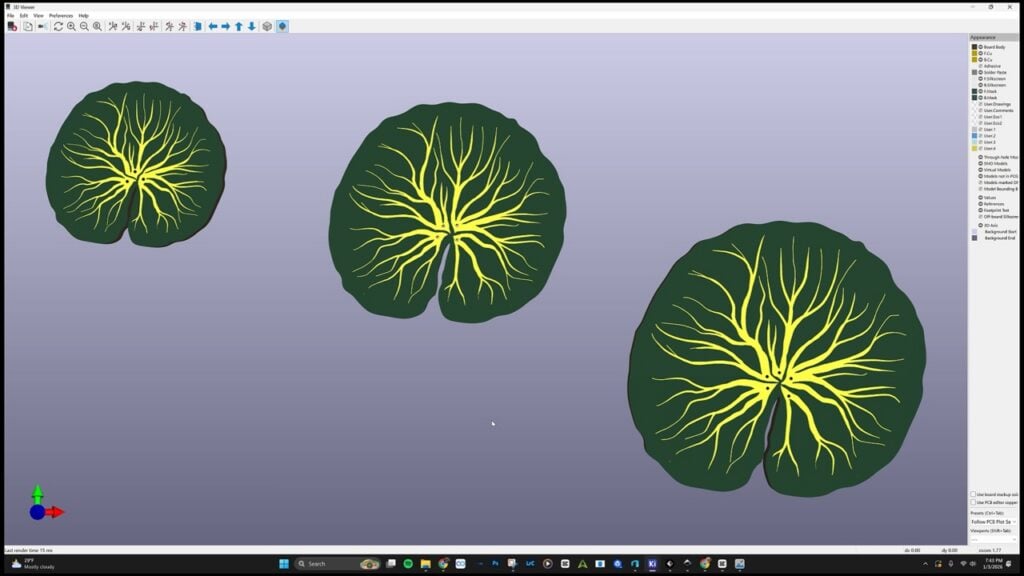
The device’s core is built around a SPOKE-mini resistor array, which serves as the interface for the Raspberry Pi Pico. This setup allows the instrument to handle multiple inputs simultaneously, ensuring low-latency response times essential for professional musical performance. The "strings" of this guitar are actually custom-designed Printed Circuit Boards (PCBs) shaped like lily pads. These pads utilize capacitive touch technology, detecting the minute electrical changes when a finger makes contact, which the Pico then processes and outputs as MIDI data to a computer or synthesizer.
Aesthetic Engineering
The housing of the Koi-Tar is a feat of modern additive manufacturing. Evette utilized Stereolithography (SLA) 3D printing to create a translucent, resin-based body. To achieve the "frozen splash" effect, she employed water physics simulations within Blender, a professional 3D modeling suite. This allowed the physical form of the guitar to mimic the organic, chaotic movement of water, providing a stark contrast to the rigid, geometric nature of the internal electronics.
Chronology: From Software Engineering to the Runway
The journey of the Koi-Tar from a conceptual sketch to a New York Fashion Week highlight is a testament to the evolving career of its creator.
The Foundation (Pre-2023)
Monique Evette’s background provided the perfect pedigree for this project. With a dual degree in computer science and physics, she spent several years navigating the corporate world as a software engineer. While her professional life was rooted in code and logic, her personal passion remained in the "whimsical"—the intersection where technology meets organic art. This period saw the birth of "Evette’s Niche," a platform where she began documenting her experiments in combining 3D printing with embedded systems.
The Development Phase (Late 2023 – Early 2024)
The development of the Koi-Tar was an iterative process that involved bridging the gap between "artistic object" and "functional tool." During the prototyping phase, Evette sought feedback from the professional music community to ensure the device was playable. Notable experimental musicians and tech-influencers Benn Jordan and Venus Theory were brought in to test early versions of the Koi-Tar. Their feedback led to refinements in the sensitivity of the capacitive sensors and the ergonomics of the resin body, ensuring the device could withstand the rigors of a live performance.
The NYFW Debut (September 2024)
The culmination of this work was the Koi-Tar’s appearance at New York Fashion Week. Carried down the runway as part of a tech-forward ensemble, the instrument served as a proof-of-concept for wearable technology. It signaled a shift in how the fashion industry views "gadgets"—moving away from clunky peripherals toward integrated, aesthetically driven hardware.
Supporting Data: The Rise of the Raspberry Pi Ecosystem
The success of the Koi-Tar is inextricably linked to the versatility of the Raspberry Pi ecosystem. Originally designed as an educational tool, the Raspberry Pi has seen its use cases expand into extreme environments and high-level professional industries.
- Environmental Monitoring: Raspberry Pis are currently used in underwater conservation, mounted on the backs of turtles to track ocean health.
- Precision Agriculture: In Japan, winemakers utilize the Pi to monitor vineyard microclimates, optimizing harvest times for high-end vintages.
- Aerospace: The platform has been "space-hardened" for use on the International Space Station and in various satellite deployments.
- The Pico Factor: The Raspberry Pi Pico, used in the Koi-Tar, has sold millions of units since its launch in 2021. Its low cost ($4), small footprint, and powerful RP2040 silicon make it the preferred choice for artists like Evette who require high processing power without the bulk of a full-sized computer.
The Koi-Tar also highlights the accessibility of the modern "maker" supply chain. By utilizing services like PCBWay for custom circuit boards and Bambu Lab or Elegoo printers for rapid prototyping, individual creators can now produce hardware that rivals the quality of mass-manufactured consumer electronics.
Official Responses: Celebrating the "Whimsical"
The response to the Koi-Tar has been overwhelmingly positive, spanning the tech, art, and music sectors.
Monique Evette, Creator:
"I love making art inspired by engineering concepts and celebrating the beauty of the natural world," Evette stated regarding the project. She describes the Whimsical Machines series as an attempt to create an "orchestra’s worth of instruments that fairies might play." For Evette, the goal is to demystify engineering by wrapping it in an enchanting, accessible shell.
The Raspberry Pi Foundation:
While the Foundation typically highlights industrial or educational applications, they have embraced the Koi-Tar as a pinnacle of "creative engineering." In an official communication, the organization noted that while they have seen their boards go to the depths of the ocean and the vacuum of space, seeing one on a New York runway was a "first" that demonstrates the limitless potential of their hardware.
Music Industry Experts:
Feedback from Benn Jordan and Venus Theory emphasized that the Koi-Tar represents a new category of "expressive MIDI controllers." They noted that the tactile nature of the "lily pad" sensors allows for a different style of performance than traditional plastic keys or rubber pads, offering a more "organic" connection between the performer and the digital soundscape.
Implications: The Future of FashTech and Creative Engineering
The debut of the Koi-Tar at New York Fashion Week carries significant implications for several industries.
1. The Democratization of High-End Design
Evette’s work proves that a single engineer-artist can produce "exquisite original works of art" that are both wearable and functional. Through her online shop, she offers these designs to the public, albeit at a premium price reflecting their status as "original works of art." This marks a move toward "boutique engineering," where consumers buy hardware not just for its specs, but for its provenance and aesthetic value.
2. The Integration of "Artistic Practice" in STEM
The Koi-Tar serves as a premier example of STEAM (Science, Technology, Engineering, Arts, and Mathematics). It suggests that the next generation of software engineers and physicists may find their greatest successes by cultivating an artistic practice alongside their technical skills. Evette’s transition from a standard software engineering role to a celebrated "tech-artist" provides a roadmap for professionals looking to escape the "cubicle" and enter the "studio."
3. Wearable Tech Beyond the Smartwatch
For years, wearable technology has been dominated by fitness trackers and smartwatches. The Koi-Tar—along with Evette’s other works, such as her Apollo 11 hatch chest plate worn at the Kennedy Space Center—suggests a future where wearable tech is more expressive and narrative-driven. We may see a rise in "event-specific" hardware: custom-engineered pieces designed for a single performance, gala, or exhibition.
4. Advanced Manufacturing as an Artistic Medium
The use of water physics simulations in Blender to create a 3D-printed object highlights how software traditionally used for video games and movies is now a fundamental tool for physical sculptors. As SLA printing becomes more accessible and resin materials more durable, the line between "digital model" and "physical masterpiece" will continue to blur.
Conclusion
The Raspberry Pi-powered Koi-Tar is more than a whimsical gadget; it is a signal of a maturing DIY electronics movement. When the tools of high-level engineering—3D simulation, custom PCB fabrication, and powerful microcontrollers—are placed in the hands of those with a vision for beauty, the results are transformative. As the Whimsical Machines series continues to grow, the world will be watching to see what other "enchanting creations" emerge from Evette’s Niche, and where they might appear next—be it in a concert hall, a laboratory, or back on the runways of New York.