The Frontiers of Discovery: A Deep Dive into This Week’s Scientific Milestones
From the edge of the observable universe to the sub-microscopic world of bio-hybrid robotics and the dusty plains of the Moon, science has taken several monumental leaps forward this week. As humanity refines its ability to look back in time at the origins of the cosmos and simultaneously pushes the boundaries of autonomous exploration on Earth and beyond, we find ourselves in an era of unprecedented technological synthesis.
This report examines the commencement of a decade-long celestial survey, the unsettling yet practical development of underwater cyborg insects, and the multi-billion-dollar logistical roadmap for establishing a permanent human presence on the lunar surface.
I. The Legacy Survey of Space and Time: Filming the Cosmic Movie
The Vera C. Rubin Observatory in Chile has officially inaugurated the Legacy Survey of Space and Time (LSST), a project that represents the culmination of over two decades of international planning, engineering, and architectural ambition. Situated on the Cerro Pachón ridge, the observatory is now poised to fundamentally alter our understanding of the universe.
The Technological Marvel
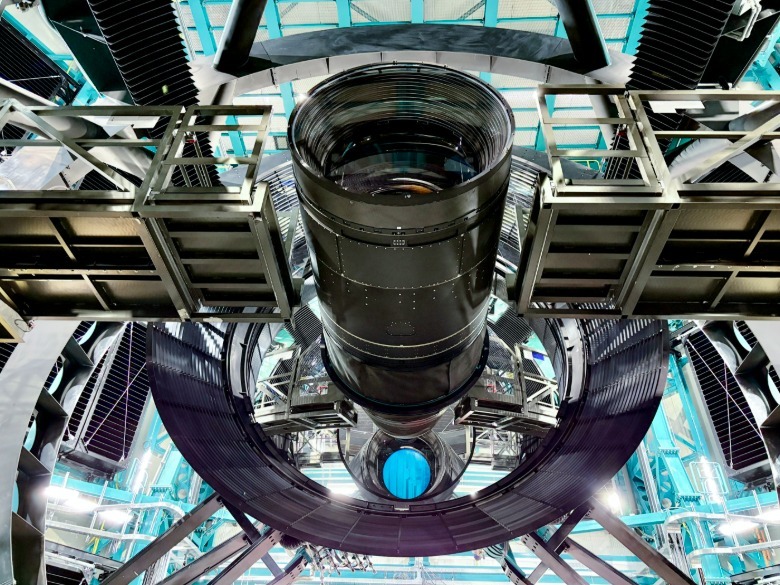
At the heart of the observatory is the world’s largest digital camera. Boasting a staggering 3,200 megapixels, the instrument is designed to capture the southern sky with unparalleled depth and clarity. Beginning its operation on June 30, the observatory is programmed to capture a new high-definition image roughly every 40 seconds.
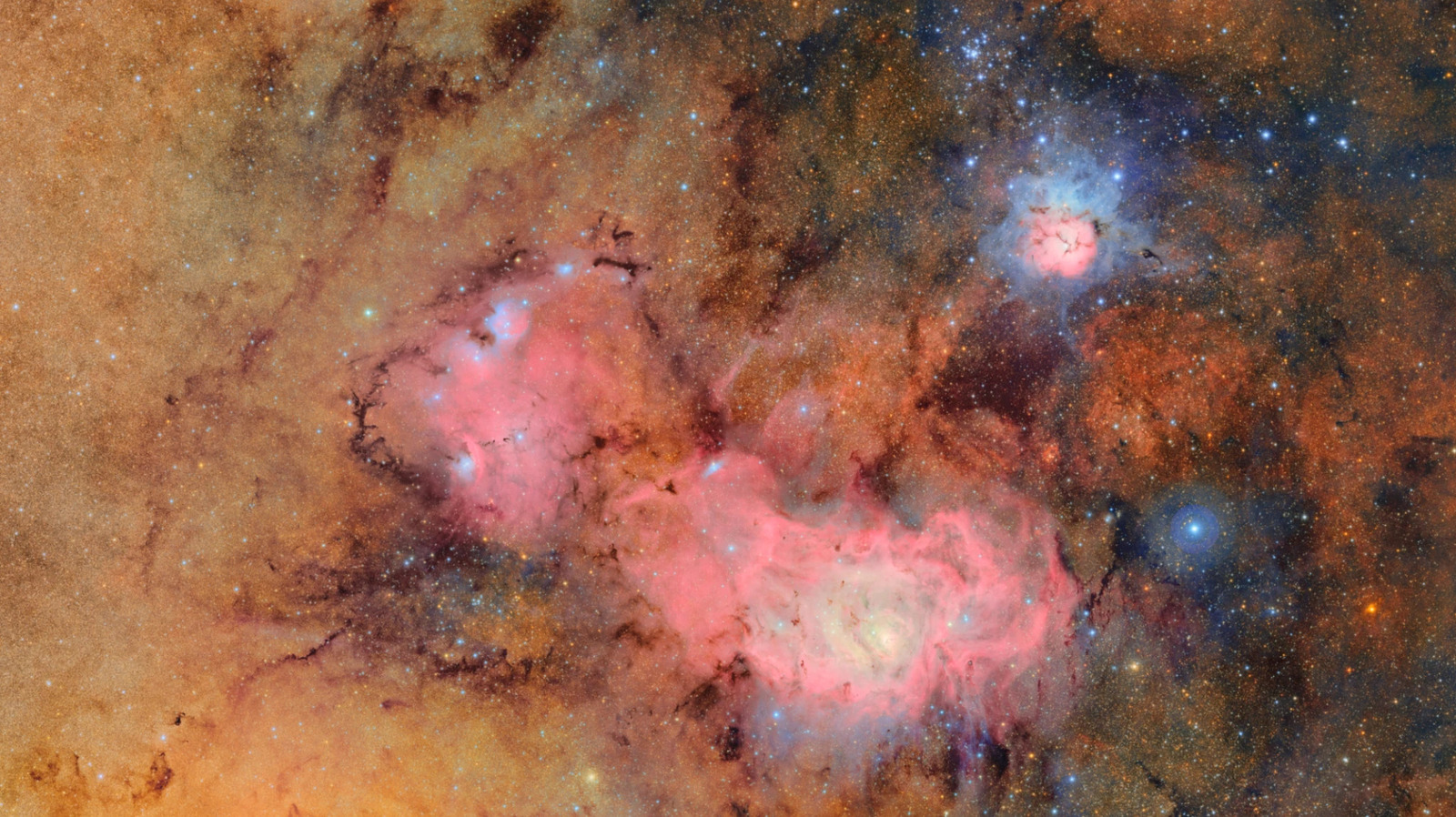
The primary mission of the LSST is to create a "cosmic movie"—a continuous, time-lapse record of the entire southern sky. By revisiting every point in its field of view approximately 800 times over the next ten years, the observatory will generate roughly ten terabytes of data daily. This high-cadence monitoring allows scientists to detect transient events, such as supernova explosions, the movement of near-Earth asteroids, and the subtle flickers of variable stars.
The Quest for Dark Energy and Dark Matter
The scientific implications of this survey are profound. By mapping billions of galaxies, the Rubin Observatory aims to provide the most precise measurements to date of the expansion rate of the universe. Scientists hope to leverage this data to better characterize the nature of dark energy—the mysterious force driving the accelerated expansion of the cosmos—and dark matter, which constitutes the invisible scaffolding of galaxies.
"Today, we begin filming the greatest cosmic movie ever made," remarked Brian Stone of the National Science Foundation during the commencement ceremony. His sentiment was echoed by Darío Gil, Under Secretary for Science at the US Department of Energy, who noted that the mission is about more than just cataloging stars; it is about grasping the fundamental laws that govern existence itself.
II. Cyborg Cockroaches: The Future of Search and Rescue
In a development that blurs the lines between biology and robotics, researchers from Nanyang Technological University (NTU) Singapore and Waseda University have unveiled a "diving suit" for cyborg cockroaches. While the concept may be unsettling to the casual observer, the engineering behind it is highly sophisticated and designed for life-saving applications.
Bio-Hybrid Engineering
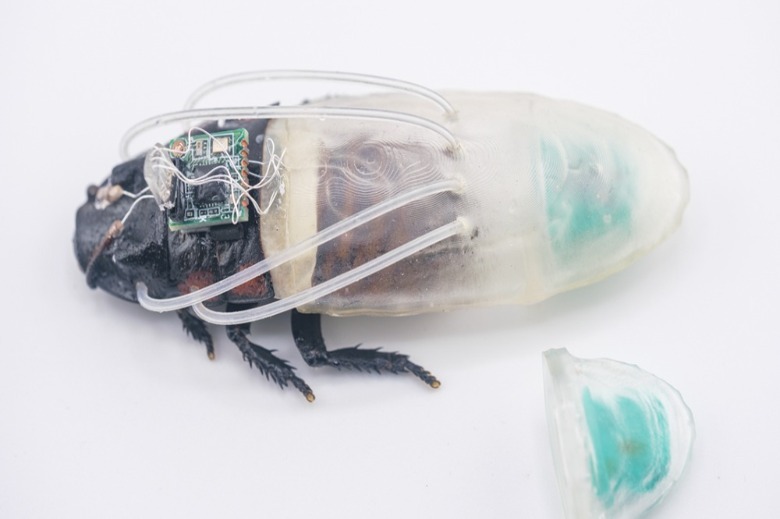
The "cyborg" component consists of Madagascar hissing cockroaches fitted with electronic controllers that stimulate the insect’s nervous system to direct movement. However, these insects were previously limited by their inability to traverse aquatic environments—a major drawback for search and rescue operations in disaster zones where flooding is common.
The newly developed suit is a triumph of miniaturization. It includes:
- An Oxygen-Generation System: A tiny tank that provides the necessary gas exchange.
- Silicone Supply Tubes: These tubes connect directly to the insect’s spiracles—the tiny holes through which they breathe—ensuring the roach does not drown while submerged.
- A Flexible Shell: Designed to be lightweight and hydrodynamic, allowing the roach to swim for up to three hours in controlled tests.
Practical Application and Ethical Considerations
The researchers emphasize that the suit is non-intrusive and can be removed without causing long-term harm to the insect. The motivation for this research stems from the unique agility of cockroaches; they can squeeze into crevices and navigate rubble that would be inaccessible to traditional wheeled or legged robots.
Evidence of the utility of this technology was seen earlier this year in Myanmar, where cyborg roaches were deployed to assist in the aftermath of a catastrophic earthquake. As urban search and rescue (USAR) teams look for ways to reach victims trapped deep within collapsed structures, these bio-hybrid agents provide a potential "force multiplier" for emergency responders.
III. NASA’s Lunar Infrastructure: The 2028 Moon Base Logistics
NASA’s strategy for lunar exploration has undergone a significant pivot. Moving away from the sole focus on the Lunar Gateway—an orbiting space station—the agency is now prioritizing the construction of a permanent Moon Base. This $20 billion initiative is intended to serve as a sustainable hub for long-term lunar operations and a testbed for eventual crewed missions to Mars.
The $600 Million Investment
To facilitate the delivery of vital scientific equipment, NASA has awarded contracts totaling nearly $600 million to three private aerospace partners: Astrobotic, Firefly Aerospace, and Intuitive Machines. These companies are tasked with the heavy lifting of transporting payloads to the lunar surface by late 2028.
The distribution of the missions is as follows:
- Astrobotic: Awarded two separate lunar delivery missions.
- Firefly Aerospace: Awarded one mission.
- Intuitive Machines: Awarded one mission.
Redundancy as a Scientific Strategy
The payloads themselves have been standardized across all three companies, a deliberate decision by NASA. Each lander will carry a trio of critical instruments:
- SCALPSS (Stereo Camera for Lunar Plume Surface Studies): Designed to capture the interaction between rocket plumes and the lunar regolith during landing.
- LRA (Laser Retroreflector Array): A precision tool for tracking the exact location of spacecraft and surface assets.
- LETS (Linear Energy Transfer Spectrometer): A radiation-monitoring device essential for ensuring the safety of future human inhabitants.
By flying the same instruments on multiple landers, NASA is effectively creating a "lunar weather network." Joel Kearns, deputy associate administrator for exploration at NASA, explained that this approach mirrors how Earth-based meteorological stations provide a global dataset. "These three payloads are flight-proven, and their data is critical to supporting safe human exploration of the lunar surface," Kearns stated.
IV. Implications for the Future of Science
The convergence of these three developments—the Rubin Observatory’s deep-space vigilance, the integration of bio-hybrid robotics in disaster relief, and the solidification of a lunar supply chain—highlights a broader trend in 21st-century science: the transition from "exploratory" science to "infrastructure" science.
Chronology of Progress
- June 30: The Vera C. Rubin Observatory officially begins its 10-year survey of the southern sky.
- Early 2025: Successful deployment of bio-hybrid roaches in real-world disaster zones (Myanmar).
- Late 2025/2026: Scheduled initial CLPS deliveries to the lunar surface.
- Late 2028: Planned surge of four critical delivery missions to build the backbone of the Moon Base.
A Unified Vision
The implications of these projects are profound. The Rubin Observatory will force us to rethink our theories of gravity and the life cycle of stars; the cyborg cockroaches challenge our definitions of autonomous robotic systems and their role in human safety; and the lunar delivery contracts represent the first steps toward a multi-planetary economy.
As we move forward, the common thread is clear: we are no longer merely observing our environment—whether it be the furthest reaches of the galaxy or the most dangerous corners of a disaster zone—we are actively constructing the tools to interact with, manage, and understand these environments in real-time. Whether by looking through a 3,200-megapixel lens or deploying a miniature diving-suit-clad insect, the scale of human discovery has never been more expansive.