The $3,000 Storage Dilemma: SanDisk’s New SSD Highlights a Global Tech Hardware Crisis
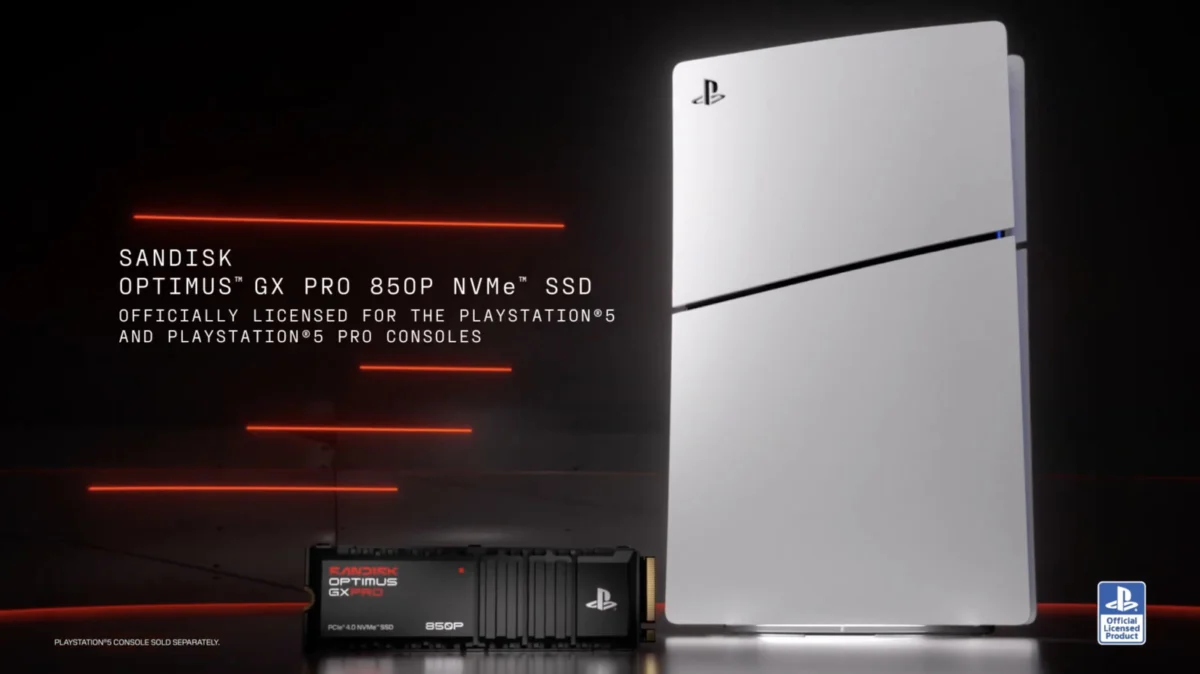
In an era where digital libraries for modern consoles are ballooning to massive proportions, storage capacity has become the primary bottleneck for the average gamer. However, SanDisk’s latest offering for the PlayStation 5 and PlayStation 5 Pro has sent shockwaves through the industry—not for its performance, but for its staggering price tag. The newly released Optimus GX Pro 850P NVMe SSD has debuted at a price point that dwarfs the console it is designed to serve, signaling a potentially dark turn in the affordability of high-performance consumer hardware.
The Main Facts: An "Eye-Watering" Market Entry
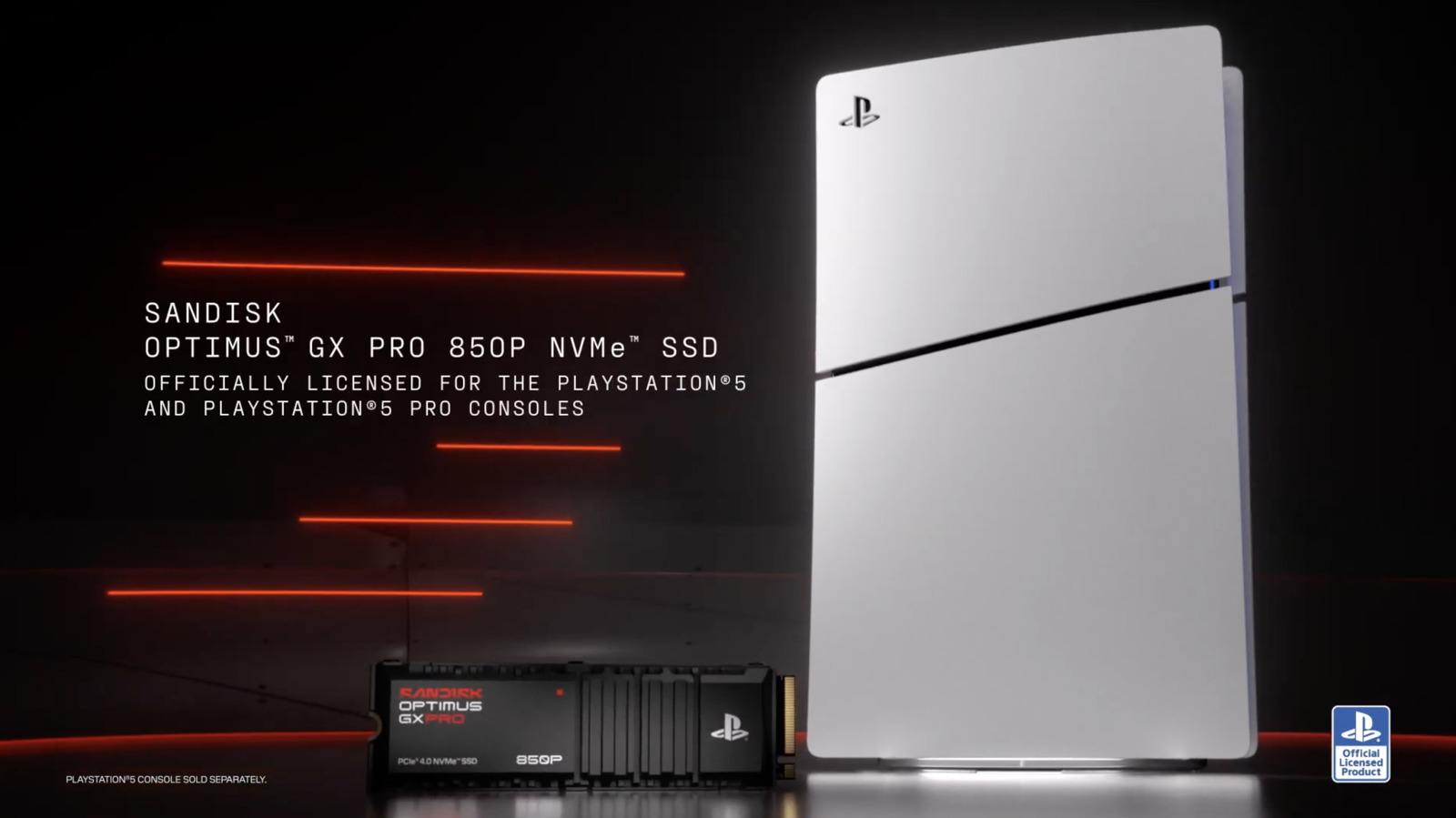
The Optimus GX Pro 850P, a rebranded evolution of Western Digital’s renowned WD_Black product line, has officially entered the market with a tiered storage lineup. Available in 1TB, 2TB, 4TB, and 8TB configurations, the drives are explicitly marketed as “officially licensed” for Sony’s PS5 and PS5 Pro ecosystems.
The controversy centers squarely on the flagship 8TB model. SanDisk has listed this drive at a "discounted" price of $2,960, down from an original MSRP of $3,700. To contextualize this figure: a standard PlayStation 5 Pro, which includes a 2TB SSD, retails for $700. The SanDisk upgrade costs more than four times the price of the actual console. Even the entry-level 2TB model, currently retailing for $760, sits at a price point higher than a base-model PlayStation 5 with a disc drive.
These drives utilize PCIe 4.0 architecture and offer read/write speeds of 7,300/6,300MB/s, complete with a pre-installed heatsink designed to fit within the PS5’s restrictive M.2 slot. While these specifications are high-performance, they are virtually identical to the WD_Black SN850X, a drive that was widely available for significantly lower prices just one year ago.
A Chronological Descent: From Utility to Luxury
To understand how we arrived at a $3,000 storage drive, one must look at the recent volatility in the semiconductor and memory markets.
- 2024 (The Baseline): Consumers enjoyed a "golden age" of SSD pricing. Increased NAND flash supply and competitive manufacturing led to 8TB NVMe drives, like the WD_Black SN850X, being available for as little as $600.
- Early 2025 (The Shift): As AI-driven demand began to monopolize server-grade memory, consumer-grade flash availability tightened. Global logistics issues and raw material scarcity began to push prices upward.
- Mid-2025 (The Consolidation): Microsoft and Sony began adjusting console pricing strategies. Microsoft initiated two separate price hikes on Xbox hardware, while Sony followed suit, increasing the cost of the PS5 and PS5 Pro.
- Late 2025 (The Hardware Hike): Nintendo announced a $50 increase for the Switch 2, and Valve shocked the handheld market by raising the price of the 1TB OLED Steam Deck by $300.
- June 2026 (The Current State): The release of the SanDisk Optimus GX Pro 850P marks a psychological threshold. With an 84% markup compared to the street prices of its predecessor, the drive represents the culmination of a two-year trend toward hyper-inflated hardware costs.
Supporting Data: The "RAMpocalypse" and NAND Scarcity
The pricing of the Optimus GX Pro 850P is not merely a corporate decision; it is a symptom of the broader "RAMpocalypse." The global technology industry is currently grappling with a severe supply-chain bottleneck driven by two primary factors:
1. The AI Infrastructure Boom
The explosive growth of AI-driven computing requires massive amounts of high-bandwidth memory (HBM) and high-capacity storage for data centers. Large-scale cloud providers are currently outbidding consumer electronics manufacturers for the same silicon wafers and NAND flash modules. This shift has turned consumer storage into a secondary priority for manufacturers.
2. Component Scarcity
The economic landscape is currently defined by volatile logistics and the rising costs of raw materials. Because SSDs rely on complex NAND flash stacking, the yield rates during production have become a critical factor. When manufacturers like SanDisk face higher costs to source components, they pass those costs directly to the consumer, often ignoring the "market value" established in previous years.
Official Responses and Industry Sentiment
While SanDisk has maintained that its pricing reflects the current market realities of component procurement, the gaming community and technical analysts have been less than forgiving.
Industry analysts at Digital Foundry have pointed out that the pricing model for the 850P is essentially disconnected from historical performance-to-price ratios. By rebranding the legacy SN850X architecture into the "Optimus" line, SanDisk is attempting to position the product as a "premium-tier" solution for the PS5 Pro, hoping that the prestige of the console will justify the inflated cost.
Sony, for its part, has remained silent on the aftermarket pricing of storage. However, their move to increase the base price of the PS5 Pro suggests that they are acutely aware of the upward trajectory of manufacturing costs. They are betting that the "Pro" consumer base has a higher threshold for spending, a theory that the success of expensive hardware will ultimately put to the test.
The Implications for the Future of Gaming
The implications of the $3,000 SSD go beyond the immediate financial burden on enthusiasts. We are witnessing a fundamental shift in how hardware is marketed and sold.
The Death of the "Upgradable Console" Myth
One of the primary selling points of the PlayStation 5 was its M.2 expansion slot—a feature that was touted as a consumer-friendly way to avoid proprietary, overpriced storage. If the market for high-capacity SSDs continues to trend toward the thousands of dollars, the "upgradable" nature of the console becomes a hollow promise. Gamers will be forced to choose between managing small, rotating libraries or paying a premium that exceeds the value of the hardware itself.
The Widening Digital Divide
As hardware prices continue to climb, we are seeing a digital divide emerge. High-fidelity gaming is becoming an increasingly expensive luxury. If consoles and their necessary accessories—like high-capacity storage—become prohibitively expensive, the average user may be pushed toward lower-tier, cloud-based, or streaming-focused solutions, potentially altering the long-term trajectory of the gaming industry.
A Call for Market Stabilization
The SanDisk Optimus GX Pro 850P serves as a cautionary tale. While the company is technically within its rights to charge market-clearing prices, the optics of a $3,000 drive for a $700 console are damaging. For the gaming ecosystem to remain sustainable, hardware manufacturers must find a way to decouple consumer-grade storage from the hyper-inflated demands of the AI server market.
Until such a decoupling occurs, the PS5 Pro user who wants to "future-proof" their machine with 8TB of storage will have to decide whether their digital library is truly worth more than a high-end gaming PC. For now, the answer for most will be a resounding "no," leaving the Optimus GX Pro 850P as an expensive monument to a market in turmoil.