Empowering the Edge: Introducing Wake Vision, a Paradigm Shift for TinyML Computer Vision
In the rapidly evolving landscape of artificial intelligence, a quiet revolution is taking place at the extreme edge of computing. TinyML—the science of deploying machine learning models on microcontrollers and low-power hardware—is transforming how we interact with the physical world. Yet, for all its potential in smart homes, industrial monitoring, and healthcare, the field has hit a bottleneck: a dearth of high-quality, large-scale training data.
Today, a team of researchers from Harvard University, led by Colby Banbury, Emil Njor, Andrea Mattia Garavagno, and Vijay Janapa Reddi, is poised to shatter that ceiling. They have officially introduced Wake Vision, a monumental dataset designed to redefine the benchmarks for person detection in resource-constrained environments. With approximately 6 million images, Wake Vision is not merely an incremental update; it is a transformative resource that is nearly 100 times larger than the current industry standard, the Visual Wake Words (VWW) dataset.
The State of TinyML: A Crisis of Quality and Scale
To understand the significance of Wake Vision, one must first appreciate the unique challenges of TinyML. Unlike cloud-based AI, which can leverage massive GPU clusters and models with billions of parameters, TinyML models must operate on hardware with severe constraints—often limited to mere kilobytes of memory and milliwatts of power.
For years, the "Visual Wake Words" (VWW) dataset has been the bedrock upon which the industry built its person-detection capabilities. While revolutionary at its inception, the VWW dataset is now showing its age. As developers push for higher accuracy in increasingly diverse environments, the limitations of smaller, less representative datasets have become apparent. Production-grade models require more than just raw image volume; they require nuanced, high-quality labeling that reflects the complexity of the real world.

The research team from Harvard identified that for under-parameterized models—the very models that run on microcontrollers—data quality is not just a preference; it is a critical requirement. When a model is limited in its capacity to "memorize" information, the accuracy of its labels becomes paramount. This insight serves as the cornerstone of the Wake Vision project.
Chronology of Development: From Concept to Open-Source Milestone
The journey to Wake Vision began with a fundamental question: How can we provide enough data for deep learning while maintaining the rigorous precision required for tiny, efficient hardware?
The Inception Phase
The research team recognized early on that the existing datasets were stalling innovation. They initiated an extensive data collection and curation process, focusing on diversity, context, and edge-case scenarios. The goal was to build a dataset that could train models capable of distinguishing a person from a background in varying lighting, angles, and distances.
The Filtering and Refinement Process
Following the initial collection, the team implemented a multi-stage filtering process. By applying advanced automated cleaning and manual verification, they ensured that the labels within the 6-million-image pool were of the highest caliber. This was not just about quantity; it was about curating a "quality set" that could serve as a benchmark for high-performance training, contrasting it with a larger, more varied set designed for robustness.

Public Release and Ecosystem Integration
The final phase of the development cycle involved creating an ecosystem around the data. By partnering with major dataset platforms and establishing a dedicated leaderboard, the Harvard team ensured that Wake Vision would be instantly accessible to the global research community. The release of the dataset, alongside a suite of open-source benchmarks, marks a new chapter for the TinyML community, moving from ad-hoc experimentation to standardized, reproducible research.
Supporting Data: Why "Quality Over Quantity" Wins at the Edge
The most compelling argument for the Wake Vision approach lies in the empirical evidence provided by the researchers. Traditional deep learning wisdom suggests that with enough data, a model will eventually learn. However, in the domain of TinyML, the rules change.
The Under-Parameterization Paradox
The research team produced a series of line graphs illustrating the performance of models ranging from 78,000 parameters to 11 million parameters. The data reveals a clear trend: for smaller models, high-quality, error-free labels yield significantly better performance than massive, noisy datasets.
For a developer working with a 300K-parameter model, the difference between a "noisy" dataset and a "quality-filtered" one can represent a double-digit improvement in inference accuracy. By providing both a "quality" training set and a "large" training set, Wake Vision empowers developers to adopt a two-stage pipeline: pre-training on the large, broad dataset to learn general features, followed by fine-tuning on the quality-focused set to sharpen detection precision.

Fine-Grained Benchmarking
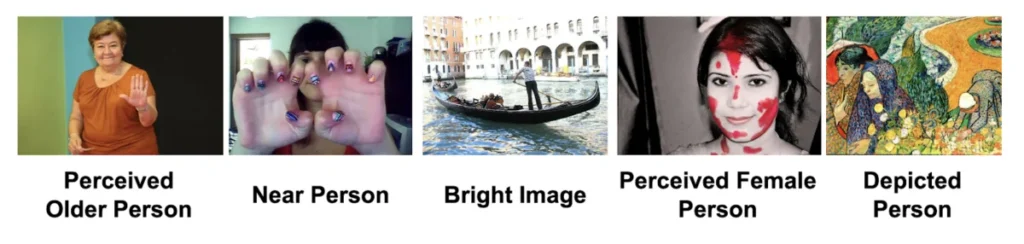
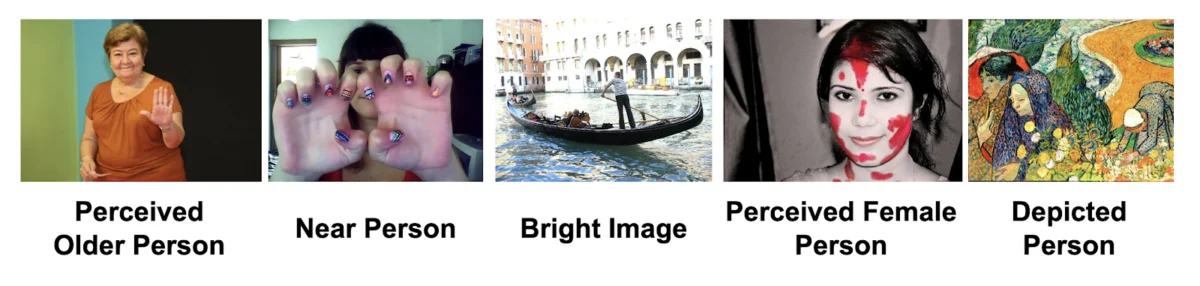
Wake Vision introduces a robust suite of evaluation metrics that go beyond simple accuracy. These benchmarks test models across specific, challenging categories, including:
- Perceived Age: Can the model detect both children and the elderly with equal reliability?
- Proximity: Does the model maintain accuracy for both near and distant subjects?
- Lighting Variability: How does the model perform in bright versus low-light conditions?
- Pose and Occlusion: Can the model identify a person even when they are partially obscured?
This granular approach allows engineers to identify exactly where their models fail, preventing the "black box" frustration that often plagues machine learning deployment.
Official Perspectives and Expert Implications
The release of Wake Vision has been met with enthusiasm across the TinyML community. Experts note that this is the first time a dataset has been specifically engineered to address the trade-off between model size and data fidelity on such a massive scale.
"The constraints of the edge are not just a hardware problem; they are a data problem," says a lead representative of the research group. "By providing this resource, we are enabling developers to build smarter, more reliable, and more privacy-conscious devices that can finally perform complex vision tasks without needing a cloud connection."

The implications for the broader technology industry are profound:
- Privacy-by-Design: Because Wake Vision allows for highly accurate person detection on local devices, it reduces the need to stream video data to the cloud, significantly enhancing user privacy.
- Accelerated Industrial IoT: In manufacturing, the ability to monitor workers’ safety or presence using low-cost sensors will become more viable, as models trained on Wake Vision will demonstrate higher robustness in factory environments.
- Standardization: The new leaderboard provides a "Gold Standard" for researchers. Instead of comparing models on proprietary data, the community can now converge on a unified benchmark, fostering a more collaborative and competitive research environment.
Looking Ahead: The Future of TinyML
The Wake Vision dataset is not a static project; it is designed to be an evolving resource. With its permissive CC-BY 4.0 license, the researchers have ensured that the barrier to entry for startups, students, and independent developers is virtually non-existent.
The integration of the dataset into popular platforms, combined with the ease of access provided via standard machine learning libraries, means that the next generation of "wake-on-vision" devices—smart security cameras, elderly care monitoring systems, and autonomous energy-saving systems—will be built on a much stronger foundation.
How to Get Involved
The research team has made the dataset, the training code, and the evaluation benchmarks fully available at WakeVision.ai. They are actively encouraging the community to:

- Download and Explore: Leverage the 6-million-image library to test the limits of your current models.
- Submit to the Leaderboard: Demonstrate how your custom architecture stacks up against current state-of-the-art results.
- Refine and Contribute: Use the provided fine-grained benchmarks to debug and improve your models’ performance in specific, real-world scenarios.
As we look toward a future where billions of devices are connected to the physical world, the ability for those devices to "see" and "understand" their environment is vital. With Wake Vision, the Harvard research team has provided the essential missing piece of that puzzle. By bridging the gap between high-quality data and ultra-low-power execution, they are not just improving TinyML—they are ensuring that the next wave of intelligence will be more efficient, more accurate, and more capable than ever before.