Bridging the Gap: Mastering Physics with KDE Step’s Open-Source Simulations
Open-source software has long served as the bedrock of modern scientific discovery. From the high-performance computing clusters powering the search for dark matter at CERN to the complex particle accelerators that unravel the fabric of the universe, open-source frameworks provide the essential infrastructure that keeps the global scientific community moving forward.
Yet, the value of this software extends far beyond massive research facilities. At the educational level, tools like KDE Step offer a powerful, accessible, and intuitive platform for students and educators to visualize abstract concepts—ranging from simple harmonic motion to complex electrostatic fields—that often remain trapped in the rigid confines of textbooks.
The Role of Simulation in Physics Education
For many students, the leap from conceptual physics to real-world application is the most significant hurdle in their academic journey. While traditional equations provide the "what," they often fail to convey the "how." Developing a robust intuition for physical phenomena is essential to bridge the knowledge gap.
KDE Step fills this void by providing a digital laboratory. By allowing users to manipulate fundamental constants, adjust gravitational acceleration, and visualize forces in real-time, it transforms static mathematical models into dynamic, observable realities. Whether you are a high school student grappling with Newton’s laws or an undergraduate exploring thermodynamics, Step offers a sandbox for experimentation that is as powerful as it is educational.

Interface and User Experience: A Familiar Environment
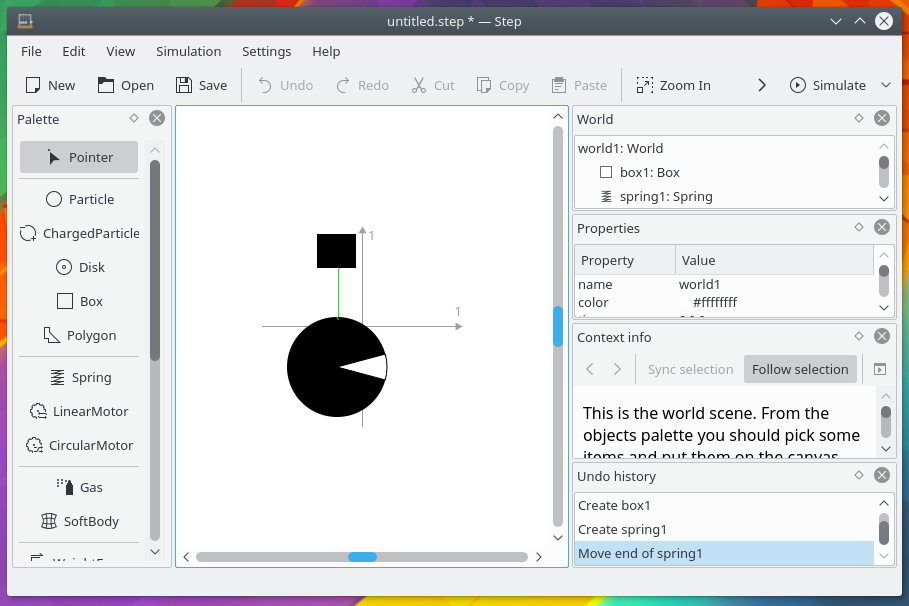
Built on the robust KDE design framework, Step presents an interface that is both efficient and familiar to Linux users. The workspace is logically divided to facilitate a streamlined workflow:
- The Left Panel: Serves as the object library, housing all physical entities such as particles, springs, fields, and geometric constraints.
- The Right Panel: Functions as the command center for object properties. Here, users can modify mass, velocity, charge, and inertial attributes with surgical precision.
- The History Panel: Tracks every modification, allowing users to trace their steps and undo complex configurations.
- The Simulation Toolbar: Located at the top, this provides essential controls, including playback, reset, and the all-important "Start" button to initiate the physics engine.
Core Simulations: From Harmonic Motion to Quantum-Like Intuition
Simple Harmonic Motion (SHM)
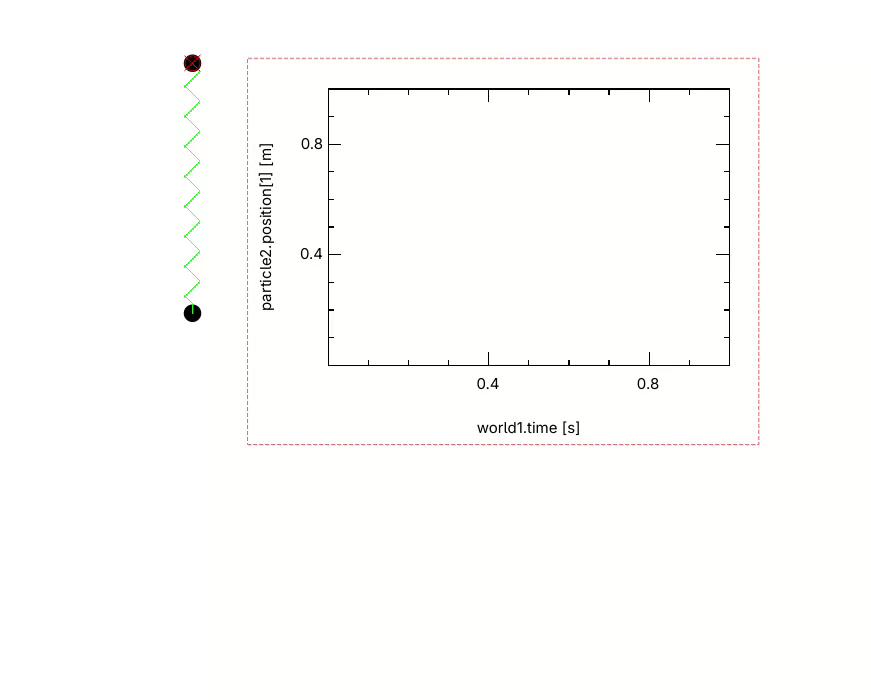
The theoretical physicist Sidney Coleman once remarked, "The career of a young theoretical physicist consists of treating the harmonic oscillator in ever-increasing levels of abstraction." To honor this, Step offers a highly intuitive environment for SHM. By utilizing particles, springs, and anchors, users can construct a system that oscillates with perfect periodicity. The ability to plot properties via the built-in graph utility—mapping kinetic energy against displacement, for instance—provides a visual representation of energy conservation that is rarely captured in static diagrams.
Soft Body Dynamics
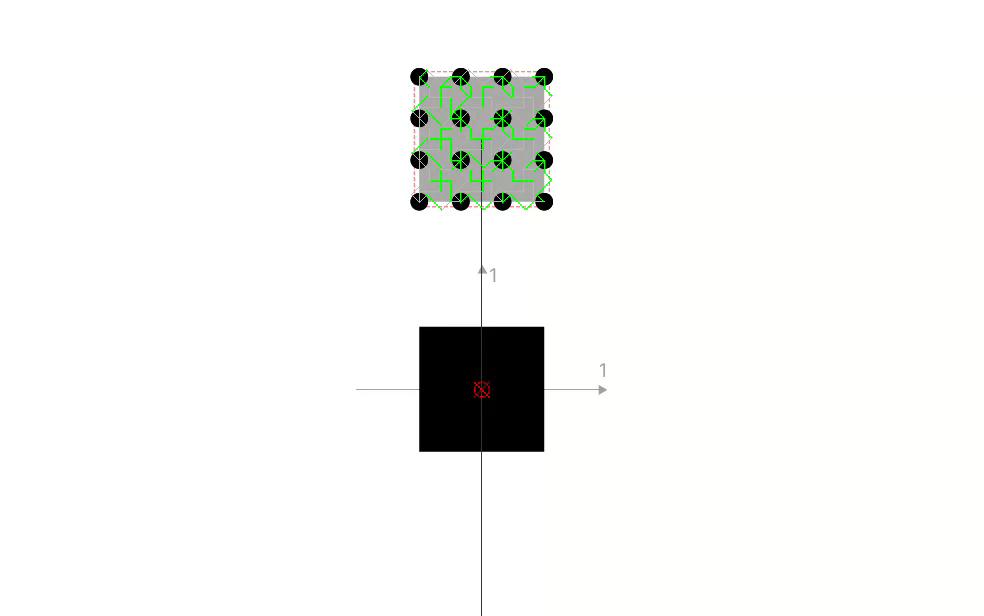
Often misunderstood as rigid, many objects in the physical world exhibit deformation. Step introduces "Soft Body" physics, simulating objects as networks of particles connected by spring-like constraints. This allows for the study of stress, strain, and deformation under various forces, moving beyond the "point-mass" approximations common in entry-level physics.
Gravitational Orbits
Step allows users to simulate the universal law of gravitation within a two-dimensional plane. By adjusting the gravitational constant, users can observe the dance between celestial bodies. One of the most revealing exercises involves the use of a "controller" to adjust the central mass in real-time. Observing the orbital path decay or expand as the gravitational pull shifts provides an immediate, visceral understanding of Keplerian dynamics that cannot be replicated on a chalkboard.
The Compound Pendulum
Moving beyond the simple pendulum, Step’s polygon tool enables the creation of complex, non-uniform shapes. When pinned to an anchor, these shapes act as compound pendulums. This visualization is critical for understanding center of mass and moment of inertia—concepts that frequently baffle students when they are restricted to mathematical derivations alone.
Linear-Angular Parallels: Simplifying Rotational Motion
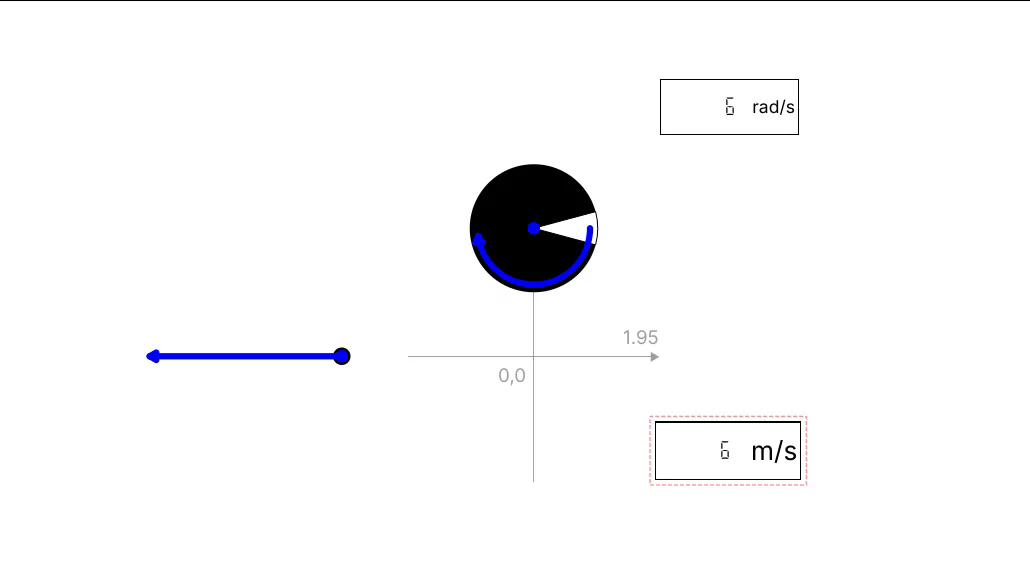
One of the most persistent difficulties in classical mechanics is the transition from linear to rotational motion. Students often struggle to reconcile linear velocity ($v$) with angular velocity ($omega$). Step solves this by allowing for side-by-side simulations of a particle and a disk. By using linear and circular motors, users can observe how linear force equates to torque and how mass corresponds to the moment of inertia. This pedagogical "side-by-side" approach clarifies the translation of motion equations, showing that rotation is merely a different facet of the same physical laws.
Stability and Equilibrium: Electrostatic Landscapes
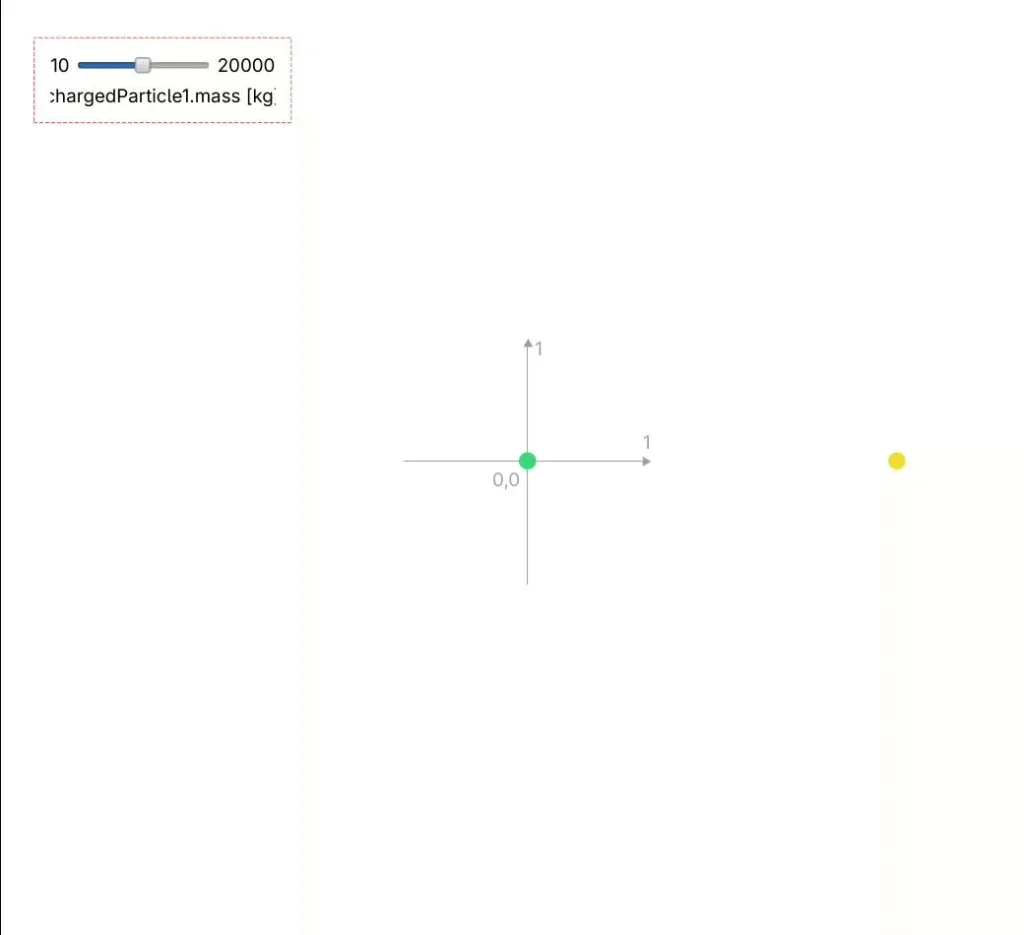
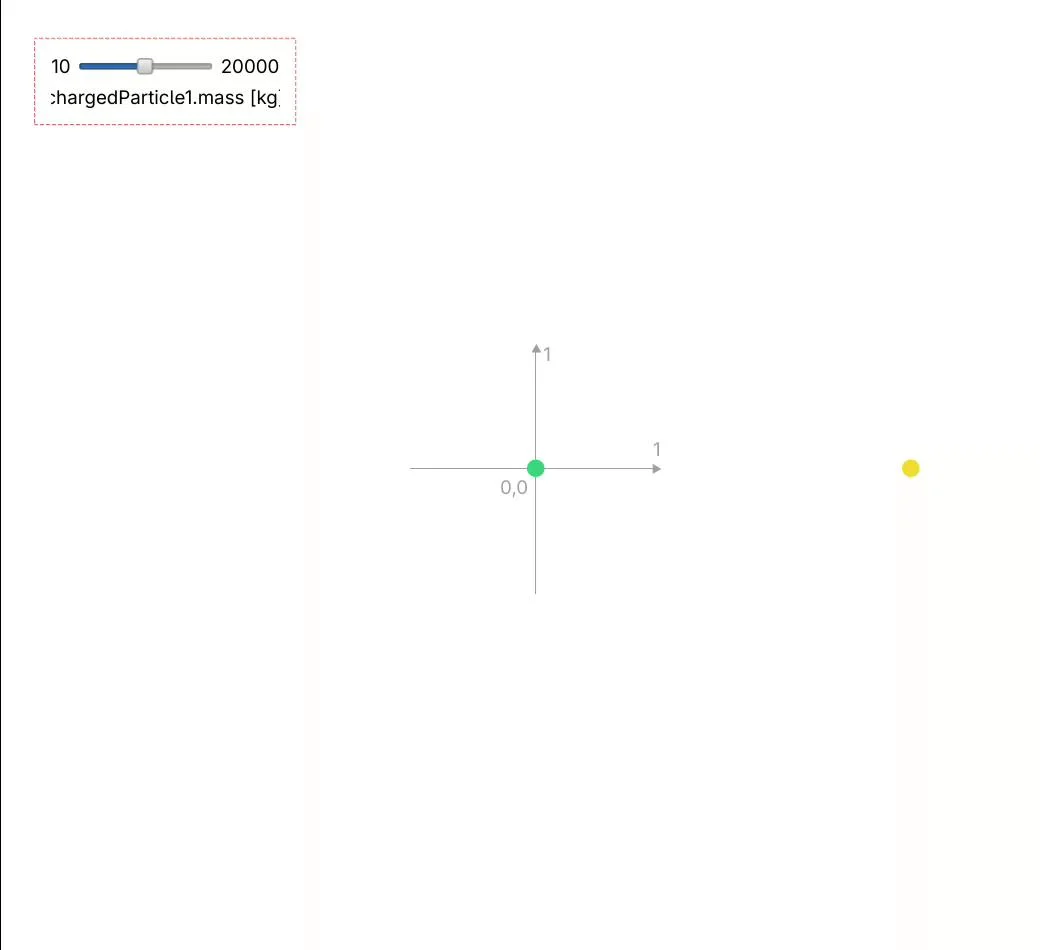
Electrostatic simulations in Step highlight the difference between stable and unstable equilibrium. By placing a charge between two fixed points of opposite or similar polarity, students can observe the "potential well" in action.
- Stable Equilibrium: A positive charge placed between two positive charges will return to the center if displaced.
- Unstable Equilibrium: A negative charge placed in the same configuration will accelerate away from the center upon the slightest perturbation.
The inclusion of the Coulomb field allows these simulations to adhere to real-world physics, reinforcing the relationship between potential energy and stability.
Constraints and Gas Theory
Step’s constraint system, particularly the use of massless "sticks," introduces students to the concept of mechanical linkages. While these tools are powerful, they require careful configuration; as with many physics engines, non-elastic constraints can occasionally behave like high-stiffness springs if the simulation parameters are not tuned correctly.
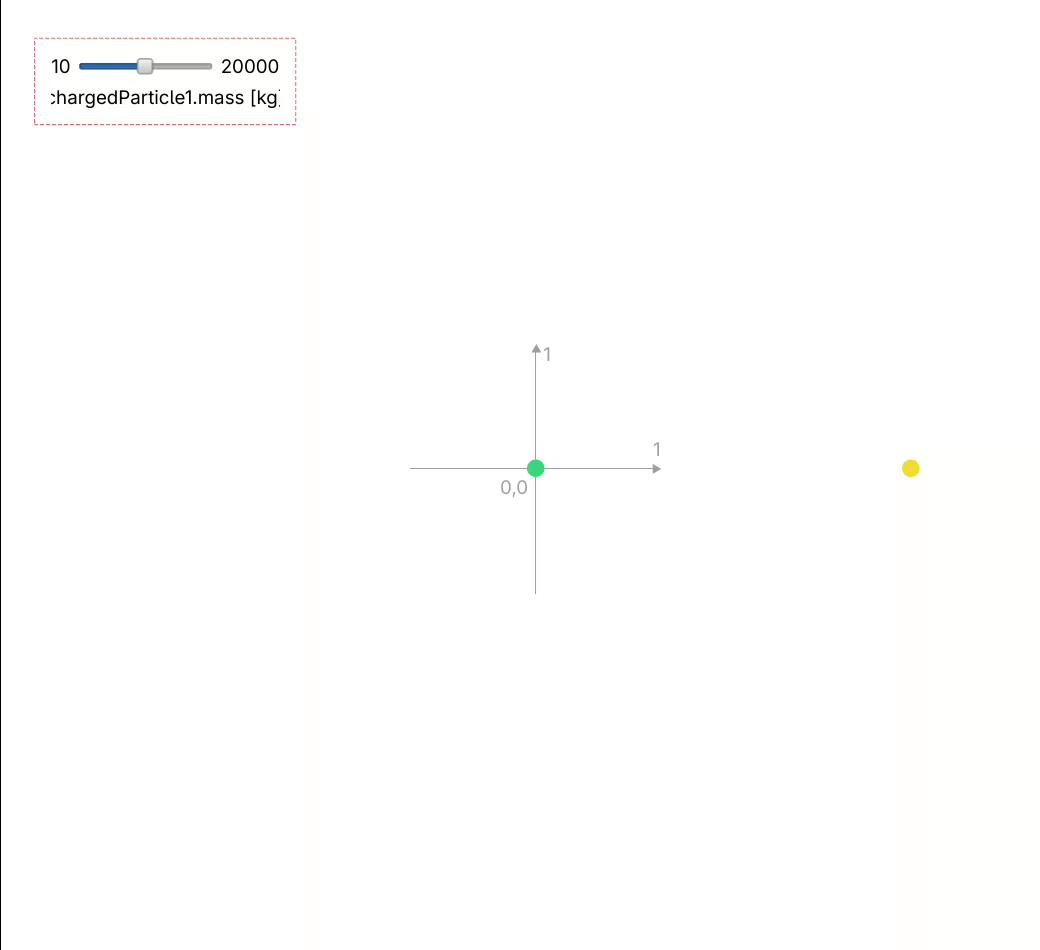
Additionally, the "Perfect Gas" module provides a glimpse into the kinetic theory of gases. By allowing users to configure temperature, particle count, and mean velocity, the software demonstrates how macroscopic properties like pressure emerge from microscopic interactions.
Implications and Limitations: A Reality Check
While KDE Step is a formidable educational asset, it is not without its limitations. It is, ultimately, an approximation.
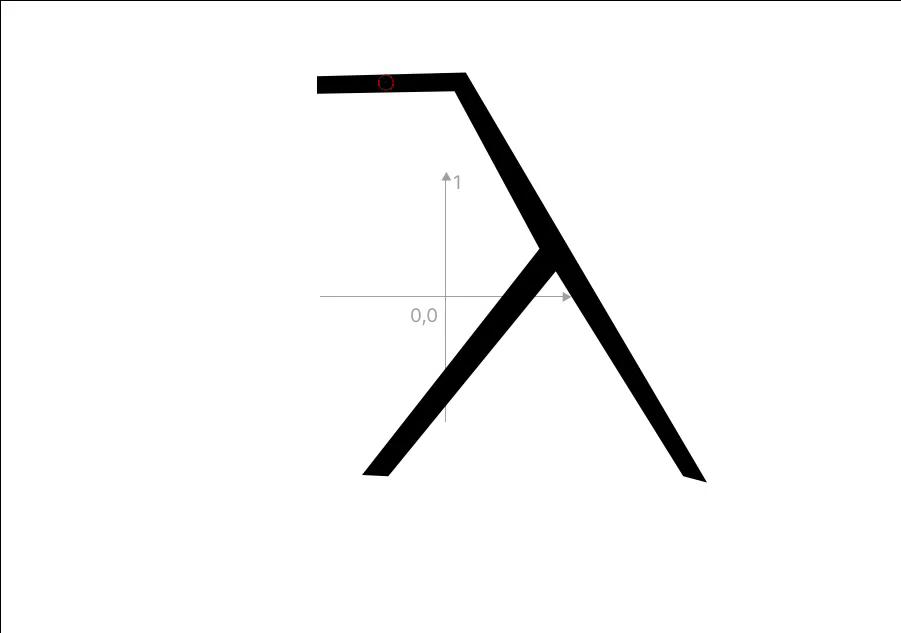
- Edge Cases: Setting the mass of an object to zero or near-zero in a high-force simulation often causes the engine to crash or the object to vanish, as the underlying math fails to handle singularities.
- Interaction Boundaries: Some modules, such as the gas simulation, are "closed" environments. They do not currently interact with external rigid bodies (like boxes or walls), which can be a point of confusion for users expecting a fully unified physical environment.
Despite these hurdles, the utility of Step lies in its ability to let students "break" the rules of physics. In the real world, you cannot turn off friction or alter the gravitational constant of the moon to see what happens. In Step, you can. This capacity for "what-if" experimentation is precisely what turns a passive learner into an active physicist.
Conclusion: The Future of Physics in the Classroom
KDE Step serves as a bridge between the abstract equations of textbooks and the tangible reality of the natural world. It encourages curiosity, allows for the testing of hypotheses, and provides a safe, virtual environment to explore the extremes of physical laws.
For educators looking to supplement their curriculum, or students seeking to move beyond rote memorization, Step is an invaluable tool. It reminds us that while the laws of physics are rigid, our methods of understanding them should be as flexible and expansive as possible. As the open-source movement continues to champion accessibility in education, tools like Step ensure that the next generation of scientists has the power to visualize the invisible, test the impossible, and master the fundamental forces of our universe.