Decades Apart: The Bernoulli Box Finds New Life Loading Games on a Nintendo Wii U
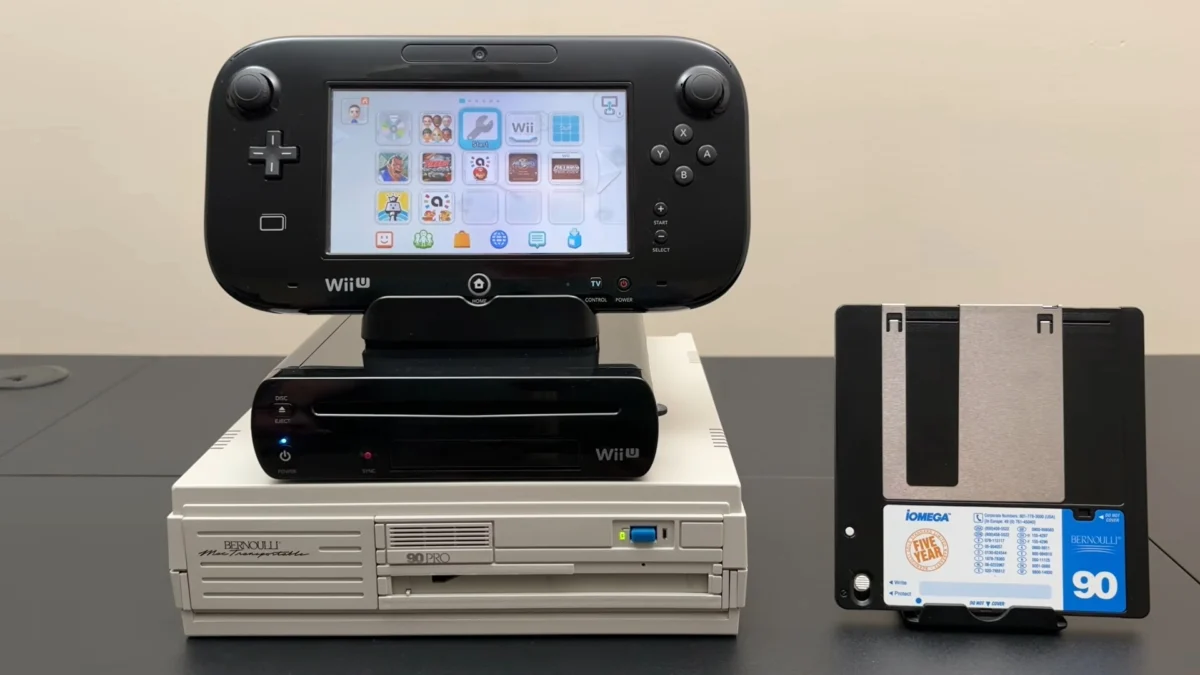
In an extraordinary feat of retro-futuristic engineering and sheer curiosity, a relic from the 1980s — the iconic Iomega Bernoulli Box — has been successfully pressed into service loading games onto a Nintendo Wii U, a console launched over three decades later. This unlikely pairing, documented by the YouTube channel "[Will It Work?]", not only bridges a vast technological chasm but also offers a fascinating glimpse into the enduring principles of data storage and the surprising interoperability of disparate hardware.
The experiment resurrects a storage device once revered for its innovative design and significant capacity, challenging it with a modern console’s demands. The success of this endeavor underscores the ingenuity of the modding community and highlights how standardized protocols, even from bygone eras, can still find relevance in unexpected contexts.
Main Facts: A Convergence of Eras
The core of this compelling narrative lies in the audacious attempt to connect a vintage Bernoulli Box, a revolutionary removable storage system from the 1980s, to a Nintendo Wii U, a console from the early 2010s. The objective was straightforward: could a device originally designed for early personal computers, predating USB by decades, function as external storage for a contemporary gaming machine? The answer, to the amazement of many, is a resounding yes.
The Bernoulli Box, specifically a 5 ¼-inch model from 1987, relies on the Bernoulli effect to stabilize its floppy-like media, allowing a read head to operate mere microns from the spinning platter at 1500 RPM. This innovative design offered superior reliability and capacity compared to standard floppy disks of its time. Crucially, it communicated via SCSI (Small Computer System Interface), the high-speed data bus of the 1980s, often referred to as "the USB of its day."
The Nintendo Wii U, on the other hand, is a modern console that readily accepts USB mass storage devices. The challenge thus became a matter of translation: converting the SCSI signals of the Bernoulli Box into a format the Wii U could understand. This was achieved not through complex software hacks, but through a series of physical adapters: a passive SCSI 1 to SCSI 2 adapter, followed by a readily available SCSI-to-USB cable.
Once connected, the Wii U recognized the Bernoulli drive. While the 90 MB disk’s usable capacity was reduced to 68 MB after the console’s proprietary formatting and system file allocation, the drive successfully loaded games. This unexpected functionality stands as a testament to the robust, albeit often overlooked, design philosophies of both the vintage hardware and the modern console. The experiment is less about practical application in the 21st century and more about celebrating technological heritage and the spirit of exploration.
Chronology: From Concept to Console
The journey of connecting a 1980s Bernoulli Box to a 2010s Wii U is a fascinating chronology of discovery, problem-solving, and a healthy dose of technological nostalgia.
The Genesis of an Idea: Bridging Decades
The inspiration for such an experiment likely stemmed from a deep-seated curiosity within the "[Will It Work?]" team, known for their unconventional hardware challenges. The Bernoulli Box, with its unique pneumatic design and historical significance, presented an ideal candidate for pushing the boundaries of hardware compatibility. The Wii U, renowned for its relatively open approach to external USB storage, offered a welcoming environment for such an endeavor, sidestepping the need for extensive low-level console modifications. The very premise — can a piece of technology from the dawn of the personal computer era communicate with a modern gaming console — is inherently compelling. It taps into a shared human desire to understand how things work and how far existing technologies can be stretched beyond their original intentions.
The Hardware Hunt: Resurrecting a Classic
Locating a functional Bernoulli Box in the 21st century is no small feat. These devices, while popular in their time, are now rare collectibles, often found in various states of disrepair. The team’s acquisition of a 5 ¼-inch model from 1987 speaks to their dedication. This particular unit, a testament to Iomega’s early innovation, would have been a prized possession for users of early Macintosh computers or IBM PCs requiring substantial, reliable, and removable storage. The challenge extended beyond just the drive; sourcing compatible Bernoulli disks, which were proprietary and equally scarce, was also crucial. The very act of unearthing and preparing such vintage hardware is a significant part of the project’s allure.
Bridging the Decades: The SCSI-to-USB Translation
The most critical technical hurdle lay in translating the Bernoulli Box’s native SCSI interface to the Wii U’s USB protocol. SCSI, or Small Computer System Interface, was a sophisticated parallel interface standard, prevalent in professional and high-performance computing environments during the 1980s and 90s. It allowed for daisy-chaining multiple peripherals and offered faster transfer rates than contemporary serial or parallel ports. The Bernoulli Box, being a premium storage solution, naturally utilized SCSI.
The solution was surprisingly elegant and devoid of complex software programming. It involved a multi-step physical adaptation:
- SCSI 1 to SCSI 2 Adapter: Many early Bernoulli Boxes used the older SCSI 1 standard. To interface with more modern SCSI-to-USB converters, an adapter to the SCSI 2 standard (which often featured different connector types like the 50-pin high-density connector) was necessary. This passive adapter simply reconfigured the pin layout.
- SCSI-to-USB Cable: With the Bernoulli Box now presenting a SCSI 2 interface, a readily available commercial SCSI-to-USB converter cable was employed. These converters act as bridges, translating SCSI commands and data into the USB Mass Storage Class protocol, which is universally understood by modern operating systems and, crucially, by the Nintendo Wii U.
This daisy-chaining of adapters, while not a "hack" in the traditional sense of modifying firmware or writing custom drivers, is an ingenious application of off-the-shelf components to achieve cross-generational compatibility. It demonstrates the power of standardized interfaces, even when separated by decades of technological evolution.
The Moment of Truth: Powering On
With the hardware assembled, the moment of truth arrived. Connecting the elaborate tower of adapters and the Bernoulli Box to the Wii U, the team powered on the system. The distinctive whirring sound of the Bernoulli drive, a nostalgic symphony for anyone who experienced computing in the late 20th century, filled the air. The Wii U, designed to be user-friendly, recognized the connected "USB mass storage device." This initial recognition was a significant victory, confirming that the SCSI-to-USB translation was successful at a fundamental level.
Testing and Observation: Performance and Practicality
The final stage involved formatting the Bernoulli disk for the Wii U and attempting to load games. The console, following its internal protocols, allocated a portion of the 90 MB raw capacity for its own system files and save data padding, reducing the usable space to approximately 68 MB. While this is a stark contrast to modern game sizes, which can easily exceed tens or even hundreds of gigabytes, it was sufficient to store smaller Wii U titles or portions of larger ones.
Performance observations revealed that the Bernoulli Box, despite its vintage, did not dramatically exacerbate the Wii U’s already known tendencies for slower load times compared to other contemporary consoles. The actual data transfer rates, while certainly not on par with modern SSDs or even high-speed USB flash drives, were sufficient for gameplay. The experiment, while not aiming for practicality, proved the concept: a 1980s storage device could indeed serve a 2010s console. The primary takeaway wasn’t speed or efficiency, but the sheer fact that it worked at all, evoking a sense of wonder and technological accomplishment.
Supporting Data: The Underpinnings of Interoperability
The success of the Bernoulli Box-Wii U experiment is built upon several foundational technological principles and historical contexts.
Technical Deep Dive: The Bernoulli Principle in Action
The Iomega Bernoulli Box was a marvel of its time, solving the challenge of high-capacity removable storage with an elegant application of physics. Unlike traditional hard drives where platters are rigid and heads fly on an air cushion, or floppy disks where heads directly contact the media, the Bernoulli disk used a semi-rigid platter. The key innovation was the Bernoulli effect itself, where the rapid spinning of the disk (at 1500 RPM) created a localized reduction in air pressure between the disk and a fixed plate. This differential pressure pulled the flexible disk towards the head, stabilizing it at a precisely controlled distance of just a micron or so.
This design offered several advantages:
- Reliability: The non-contact nature of the head-disk interface (even with the flexible disk) made it inherently more resistant to head crashes than traditional hard drives.
- Durability: The flexible media and the aerodynamic stabilization meant the drives were more tolerant of shocks and vibrations.
- Immunity to "Click of Death": This reliability famously contrasted with Iomega’s later, more infamous Zip drives, which suffered from the "click of death" — a fatal head crash issue. The Bernoulli design, by its very nature, circumvented such problems, making the claim of immunity well-founded.
- Removable Media: Offering capacities far exceeding standard floppies (e.g., 90 MB, 150 MB, up to 230 MB), the removable cartridges provided unparalleled flexibility for data backup, archiving, and transport in an era before widespread high-speed networking.
SCSI: The Backbone of Early High-Performance Computing
SCSI (Small Computer System Interface) was the dominant high-performance peripheral bus in professional and high-end consumer computing from the 1980s through the mid-1990s. It was a parallel interface, allowing up to 8 or 16 devices to be daisy-chained on a single bus, each with its own ID. This made it incredibly versatile for connecting hard drives, CD-ROM drives, tape backups, scanners, and, of course, removable media like the Bernoulli Box.
Key aspects of SCSI relevant to this experiment include:
- Standardization: Despite various connector types and speed iterations (SCSI-1, SCSI-2, Ultra SCSI, etc.), the underlying command set and protocol remained largely consistent, facilitating interoperability.
- Device Independence: SCSI was designed to be largely device-agnostic, meaning a host adapter could communicate with various types of peripherals using a standardized set of commands. This characteristic is precisely what allowed a SCSI-to-USB converter to effectively translate the Bernoulli Box’s operations into a format understandable by a USB host.
- Legacy: While largely superseded by USB and SATA in the consumer market due to cost and complexity, SCSI’s robustness and flexibility left an indelible mark on computing history. Its principles continue to influence modern storage protocols.
Wii U External Storage Protocol: A Gateway to Retro-Compatibility
The Nintendo Wii U, while not a powerhouse in terms of raw computing might, offered remarkable flexibility in its external storage implementation. Unlike some consoles that lock users into proprietary external drives or highly restrictive formatting, the Wii U was designed to recognize and utilize standard USB mass storage devices. This typically meant support for FAT32 or exFAT file systems, which the console would then reformat into its own proprietary structure for game installations.
This "plug-and-play" approach to USB storage was crucial for the Bernoulli experiment. The Wii U’s firmware, by adhering to the USB Mass Storage Class specification, essentially saw the SCSI-to-USB adapter and the connected Bernoulli Box as just another external hard drive or flash drive. This eliminated the need for complex, console-specific software modifications or "homebrew" solutions, simplifying the task significantly.
Capacity Conundrum: The Realities of Vintage Storage
The observation that a 90 MB Bernoulli disk was reduced to 68 MB of usable space on the Wii U highlights the practical limitations of integrating vintage hardware. This reduction is attributable to several factors:
- File System Overhead: Any file system (even the Wii U’s proprietary one) requires a portion of the disk for its own administrative structures, such as allocation tables, directories, and metadata.
- Firmware Padding: As noted in the original article, the Wii U’s firmware often allocates additional space for save files, system updates, and other internal processes, further reducing the user-accessible capacity.
- Modern Game Size: In an era where a single game can easily occupy 20-50 GB, a mere 68 MB is a minuscule amount. This makes the Bernoulli Box impractical for modern gaming, but it doesn’t diminish the technical achievement of getting it to work. It serves as a stark reminder of how rapidly storage demands have escalated over the decades.
Perceived Performance: A Subjective Benchmark
While precise performance metrics were not provided, the observation that the Bernoulli drive "doesn’t seem to slow down the Wii U nearly as much as we’d expect" is telling. The Wii U was not renowned for its lightning-fast load times, even with modern USB 3.0 external drives. Its internal architecture and software optimizations often presented bottlenecks that overshadowed the raw speed of the storage medium. This relative "slowness" of the console itself inadvertently made the vintage Bernoulli drive seem less out of place. The experience, while retro, likely didn’t feel drastically different from loading a large game from a standard external HDD on the Wii U.
Official Responses: The Echoes of Innovation
Given the nature of a YouTube-based hardware hack, there are no "official responses" from Nintendo or Iomega directly addressing this specific experiment. However, we can infer broader industry perspectives and celebrate the underlying philosophies that made such a feat possible.
Industry Perspectives on Retro Tech and Preservation
The tech industry, while relentlessly focused on the future, also holds a deep respect for its past. Hardware hacks like this Bernoulli-Wii U connection resonate with a significant community of retrocomputing enthusiasts, hardware historians, and preservationists. Their "official response" would likely be one of admiration for the ingenuity and the dedication to keeping vintage technology alive and relevant. It serves as a practical demonstration of how far hardware design has come and how certain fundamental principles remain robust. Companies like Iomega, no longer producing such devices, would likely view it as a nostalgic nod to their innovative past.
Nintendo’s Design Philosophy and Unintended Interoperability
Nintendo’s decision to support standard USB Mass Storage Class devices on the Wii U, while perhaps not anticipating a 1980s SCSI drive being connected, exemplifies a user-friendly design philosophy. By adhering to widely adopted industry standards, Nintendo inadvertently enabled a vast array of peripherals to connect to its console without requiring proprietary drivers or complex workarounds. This stands in contrast to some other console manufacturers who often implement stricter controls over external hardware. This openness, whether intentional for such extreme cases or not, is what made the Bernoulli Box experiment feasible without delving into highly complex console firmware modifications. It speaks to a level of design pragmatism that ultimately benefits the end-user and the broader modding community.
Iomega’s Legacy: Beyond the Click of Death
Iomega, the company behind the Bernoulli Box and later the ubiquitous Zip drive, had a significant, albeit sometimes tumultuous, impact on removable data storage. The Bernoulli Box was a testament to their early engineering prowess, offering a robust and reliable solution. While the Zip drive later gained notoriety for the "click of death" issue, the Bernoulli design’s immunity to such failures underscores its superior mechanical integrity. This experiment serves as a positive highlight for Iomega’s legacy, reminding us of their pioneering efforts in an era when portable, high-capacity storage was a critical unmet need. It’s a gentle rebuttal to the later infamy, showcasing their earlier, more robust innovations.
Implications: Beyond the Whirring Disk
The successful integration of a Bernoulli Box with a Wii U carries implications that extend beyond the immediate spectacle of mismatched hardware.
The Power of Nostalgia and Retrocomputing
At its heart, this experiment is a powerful exercise in nostalgia. For those who grew up with Macintosh 512s or early PCs, the sight and sound of a Bernoulli Box whirring to life evoke a profound sense of connection to a bygone era of computing. It’s a reminder of a time when hardware had distinctive personalities, and storage solutions were often as much about mechanical engineering as they were about digital bits. This project taps into the growing retrocomputing movement, which seeks to preserve, restore, and creatively re-engage with vintage technology. It’s not just about functionality; it’s about the experience, the history, and the sheer joy of seeing old tech perform new tricks.
Educational Value: A Practical Lesson in Computing History
This endeavor offers invaluable educational insights into the evolution of computer hardware. It provides a tangible demonstration of:
- The Bernoulli Principle: A real-world application of fluid dynamics in data storage.
- Interface Evolution: The transition from parallel buses like SCSI to serial standards like USB, and how adapters facilitate this historical bridge.
- File System Fundamentals: The necessity of formatting, the overhead of system files, and the stark contrast in storage capacities across generations.
- Hardware Interoperability: The underlying principles that allow different generations and types of devices to communicate, provided they adhere to certain protocol standards.
It’s a practical, engaging lesson that brings abstract concepts of computer science to life.
Limits of Interoperability and the "Why Not?" Mentality
While the experiment succeeded, it also subtly highlights the limits of interoperability. The reliance on multiple physical adapters and the significant reduction in usable capacity underscore that seamless integration across vast technological divides often comes with trade-offs. However, these limitations do not detract from the experiment’s value; instead, they define its boundaries and amplify the achievement.
More profoundly, this project embodies the "why not?" mentality that drives innovation and discovery. It’s the spirit of pushing boundaries, questioning assumptions, and creatively repurposing technology that leads to breakthroughs, however small. It’s a testament to human ingenuity and the playful exploration of what’s possible when one refuses to accept conventional wisdom.
The Future of Retro-Gaming and Modding
This Bernoulli-Wii U hack sets a precedent for what might be possible in the realm of retro-gaming and hardware modding. It encourages enthusiasts to look beyond obvious solutions and explore unconventional pairings. Could other vintage storage devices be adapted for modern consoles? The possibilities are limited only by imagination and the availability of suitable bridging technologies. It fuels a community that thrives on tinkering, customization, and extending the lifespan of beloved hardware.
A "Tower of Power" for the Digital Age
The original Bernoulli Box, often envisioned as a "tower of power" alongside early Macs, now ironically assumes that role for a Wii U. This poetic juxtaposition underscores the incredible transformation of technology over the decades. What was once cutting-edge, high-capacity storage is now a quaint, yet functional, accessory for a console. It’s a powerful visual metaphor for the relentless march of technological progress.
The Famicom Disk System Parallel: Nintendo’s Own Disk Drive Legacy
Finally, the experiment resonates with Nintendo’s own history of embracing disk-based storage. The article aptly points out the Famicom Disk System (FDS), released in Japan for the NES (Famicom). The FDS utilized proprietary floppy disks, offering larger capacities and lower production costs than ROM cartridges. It was a bold move by Nintendo to integrate disk technology directly into its console ecosystem. The FDS’s legacy even extends to advanced hacks, such as running a full UNIX operating system on an NES, as highlighted by Hackaday. This historical context reveals that Nintendo, far from being averse to disk drives, has its own rich history of experimenting with such media, making the Bernoulli-Wii U connection a fascinating, if unintentional, continuation of that innovative spirit.
In conclusion, the Bernoulli Box-Wii U experiment is far more than a mere technical curiosity. It is a celebration of technological evolution, a testament to the enduring principles of hardware design, and a vibrant demonstration of the passion and ingenuity that characterize the retrocomputing and modding communities. It reminds us that sometimes, the most astonishing feats of engineering are those that bring together the most unlikely of partners, bridging decades with a simple cable and a healthy dose of imagination.