Beyond the Red Planet: NASA’s Ernest Prototype Redefines Extraterrestrial Mobility
For decades, the image of a NASA Mars rover has remained largely consistent: a slow, methodical, six-wheeled vehicle crawling across the Martian dust at a glacial pace. While missions like Curiosity and Perseverance have revolutionized our understanding of the solar system, they are inherently limited by their hardware. To unlock the next frontier of lunar and Martian exploration, NASA is moving away from the "slow and steady" paradigm, unveiling a new prototype that promises to turn the future of space exploration into a high-speed, agile pursuit: the Exploration Rover for Navigating Extreme Sloped Terrain—better known as Ernest.
The Main Facts: A Leap in Robotic Agility
NASA’s Jet Propulsion Laboratory (JPL) has recently pulled back the curtain on the Ernest prototype, a testbed vehicle designed to overcome the physical bottlenecks that have hampered previous rovers. While current rovers are masterpieces of scientific engineering, their speed is underwhelming. Perseverance, despite its sophisticated suite of sensors and drills, clocks in at a top speed of roughly 0.1 miles per hour on flat terrain. This restriction often forces mission controllers to spend precious time navigating around small obstacles or avoiding steep slopes that could damage the delicate wheels of the vehicle.
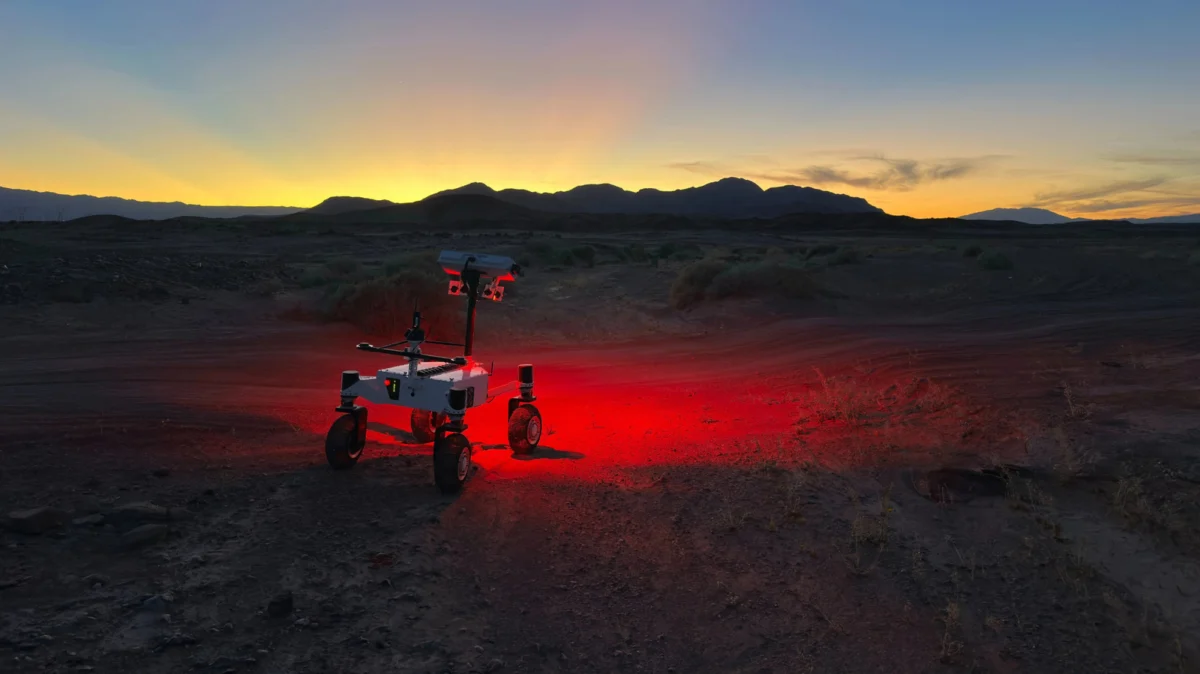
Ernest changes the narrative. During recent testing in the unforgiving environment of the Colorado Desert, the four-wheeled prototype demonstrated a top speed of 0.6 mph—six times faster than its predecessors. While that may sound modest by terrestrial standards, for a remote-controlled robot on another planet, it represents a monumental shift in operational capability. By increasing speed and introducing "active suspension," Ernest is designed to traverse terrain that would previously be considered a "no-go zone."
Chronology of Innovation: From Sojourner to Ernest
To understand why Ernest is a breakthrough, one must look at the history of planetary rovers.
The Legacy of the Rocker-Bogie System
Since the late 1990s, NASA has relied on the "rocker-bogie" suspension system. First introduced with the Sojourner rover, this passive mechanical design allowed rovers to traverse uneven terrain without tipping over. By using a series of linkages and pivots, the weight of the rover is distributed evenly across all six wheels, ensuring that the vehicle maintains traction even when individual wheels are climbing over rocks.
While effective, the rocker-bogie system is inherently passive. It cannot "choose" to lift a wheel to climb over a ledge; it must roll over it.
The 2022 Genesis of Ernest
In 2022, engineers at JPL began the Ernest project with a clear directive: rethink the suspension. The team recognized that as mission requirements become more complex—demanding that rovers travel further distances to reach craters or mountainous regions—the current hardware would reach a point of diminishing returns.
Over the last two years, the team has iterated through nearly a dozen active suspension configurations. The current prototype, while only four feet long (roughly half the size of a final mission-ready iteration), has already logged over 37 hours of operational testing across 16 miles of rugged desert terrain. This rigorous testing phase serves to bridge the gap between computer simulations and the unpredictable nature of planetary surfaces.
Supporting Data: Why "Active Suspension" Matters
The technical core of the Ernest rover is its departure from the passive rocker-bogie system in favor of an active suspension system.
Gait and Mobility
Ernest utilizes four steerable wheels, each capable of independent movement. The front of the rover features two powered joints that articulate a gimbal, allowing the vehicle to adjust its chassis position relative to the ground. This gives the rover the ability to utilize different "gaits."
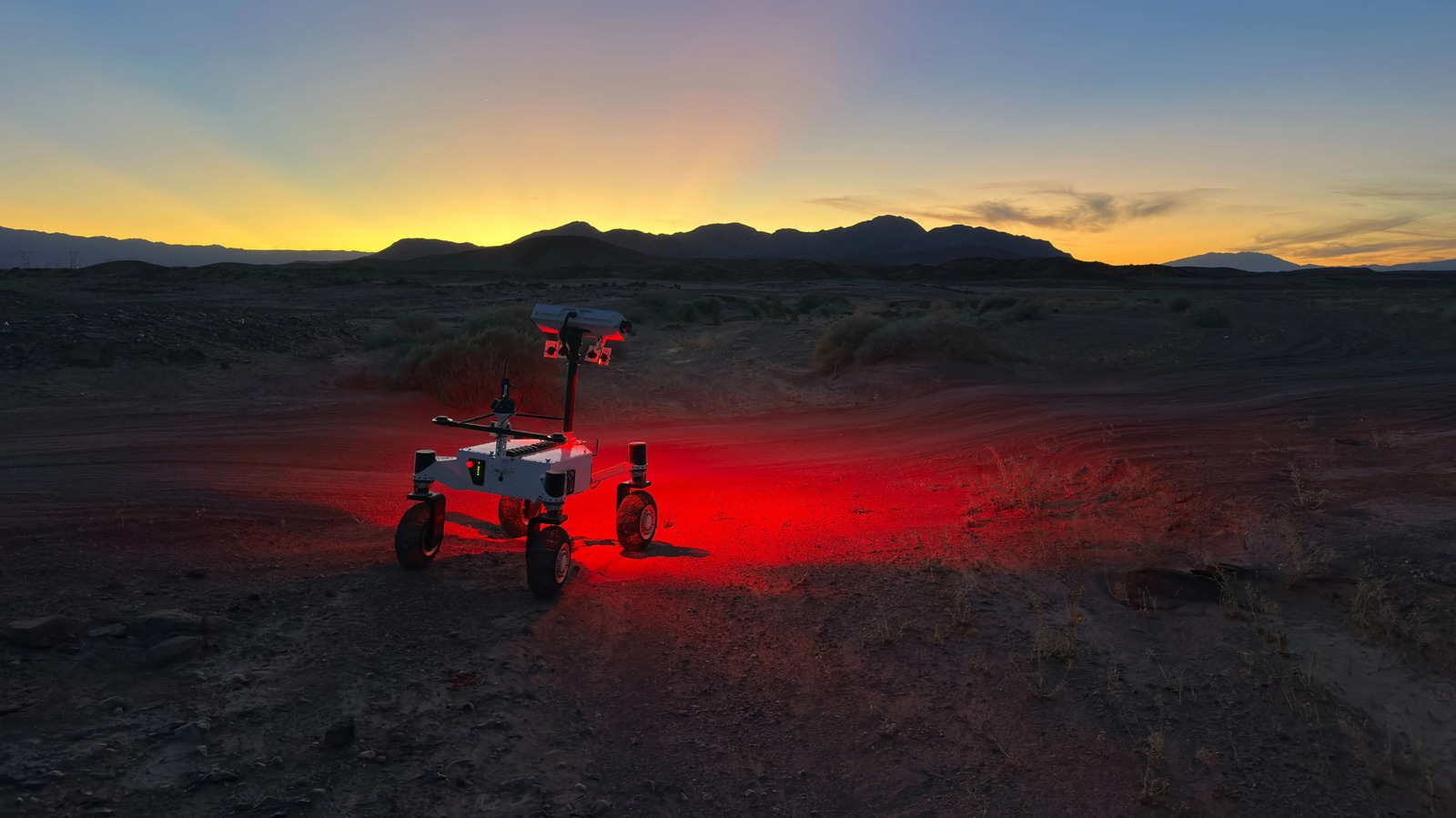
- Squirming: A technique for gaining traction in loose sand or loose regolith.
- Wheel-Walking: A method of lifting individual wheels to step over jagged rocks, minimizing the risk of wheel puncture—a persistent headache for the Curiosity mission.
- Obstacle-Climbing: By shifting its center of gravity and lifting wheels, the rover can navigate inclines that would stop a traditional rover in its tracks.
Energy and Efficiency
One of the most critical aspects of the Ernest program is its hybrid design. It can switch between active and passive suspension modes. When the terrain is flat and energy is at a premium, the rover can lock its joints and operate in a low-power, passive state. When the path becomes treacherous, it activates the motors to negotiate the obstacle. This flexibility ensures that the rover can maximize its mission duration while maintaining the agility required for extreme environments.
Official Perspectives: The Vision for Lunar and Martian Missions
The team behind Ernest is optimistic about the implications for future exploration. James Keane, a JPL planetary scientist working on lunar missions, notes that the vehicle is designed for the "road trip" era of space exploration.
"You could do a science road trip across the Moon—or Mars—with this vehicle," Keane stated during a recent press briefing. The goal is to move away from the current model of "micro-exploration," where a rover spends years covering a few miles, to a model of "macro-exploration," where a rover could feasibly visit multiple distinct geological sites in a single mission.
NASA’s engineers emphasize that Ernest is not just about raw speed; it is about autonomy. The latest iteration of the prototype features enhanced independent decision-making. By reducing the reliance on human controllers back on Earth—who currently must wait for long latency periods to send commands—Ernest can identify obstacles and select the best gait to overcome them in real-time.
Implications: The Future of Deep Space Exploration
The success of the Ernest prototype has profound implications for NASA’s upcoming missions, particularly the Artemis program aimed at the lunar south pole.
The Lunar Challenge
The Moon, while lacking an atmosphere, presents its own challenges. The lunar south pole is characterized by deep craters, sharp, jagged rocks, and extremely fine, abrasive dust. A rover with active suspension could descend into these craters, explore the permanently shadowed regions, and climb back out with a level of confidence that previous rovers could not possess.
Reducing "Human-in-the-Loop" Fatigue
One of the hidden costs of space exploration is the human labor required to drive rovers. Every move Perseverance makes is meticulously planned by a team of engineers at JPL to avoid hazards. By embedding intelligence into the rover’s hardware and software, NASA aims to shift the role of Earth-based scientists from "drivers" to "mission directors." The rover would be told where to go, and it would be responsible for determining how to get there.
Scientific Payoff
Ultimately, the Ernest rover is a vehicle for scientific discovery. By increasing the range of a rover from a few miles to several dozen miles per mission, the potential for discovering biosignatures or water-ice deposits grows exponentially. It turns a localized search into a regional survey.
Conclusion: A New Era of Mobility
As NASA continues to refine the Ernest prototype, the lessons learned from its desert trials will be integrated into the next generation of planetary landers. While the six-wheeled, slow-moving rover will always have a place in history as the tool that opened our eyes to the mysteries of the Red Planet, the future belongs to more dynamic machines.
With its ability to "walk" over obstacles, maintain higher speeds, and make autonomous decisions in the field, Ernest represents a fundamental evolution in robotics. As we look toward the 2030s and the prospect of sustained human presence on the Moon and, eventually, the first human footprints on Mars, technology like Ernest will be the unsung hero, mapping the way and proving that in the harsh environment of space, agility is just as important as endurance.