A New Frontier in HIV Prevention: Scientists Achieve Breakthrough in Priming Broadly Neutralizing Antibodies
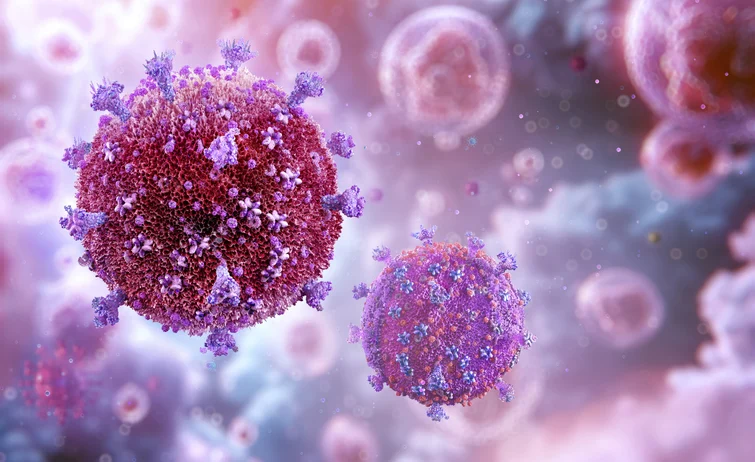
For over four decades, the Human Immunodeficiency Virus (HIV) has remained one of the most formidable adversaries in the history of medicine. Its unique biological architecture—defined by a rapid mutation rate, a protective "glycan shield," and extreme antigenic diversity—has effectively neutralized traditional vaccine strategies that work so well for viruses like polio or measles. While conventional vaccines rely on the immune system to recognize a static target, HIV is a shape-shifter, constantly evolving to evade the very antibodies designed to neutralize it.
However, a landmark study published in Nature by a collaborative team from the La Jolla Institute for Immunology (LJI) and Scripps Research has signaled a potential turning point. By utilizing a "germline-targeting" approach, researchers have successfully elicited broadly neutralizing antibodies (bnAbs) in nonhuman primates, providing the first concrete proof of principle for a strategy that could finally lead to a viable HIV vaccine for humans.
The Challenge: Why HIV Defies Conventional Vaccines
To understand the magnitude of this discovery, one must first understand why HIV has been so difficult to vaccinate against. Most vaccines teach the immune system to recognize a specific protein on the surface of a pathogen. Once the immune system learns this "lock," it produces antibodies that act as "keys."
HIV, however, is a moving target. Its surface is covered in a dense forest of sugar molecules (glycans) that obscure its vulnerable sites from the immune system. Furthermore, the virus mutates so rapidly that an antibody effective against one strain of HIV may be useless against another just weeks later.
Yet, nature offers a clue: in a tiny percentage of people living with HIV, the immune system eventually produces "broadly neutralizing antibodies" (bnAbs). These rare, highly specialized proteins have evolved the ability to bypass the glycan shield and bind to the few, immutable, conserved regions of the virus that cannot mutate without killing the virus itself. For years, scientists have viewed these bnAbs as the "Holy Grail" of HIV research. The problem has always been that the B cells capable of producing these antibodies are extremely rare and require a very specific, lengthy, and complex evolutionary pathway to mature—a pathway that standard vaccination methods have been unable to replicate.
Germline Targeting: A Radical New Design Philosophy
The study, titled "Vaccination elicits HIV broadly neutralizing antibodies in primates," introduces a fundamental shift in vaccine design. Instead of simply presenting the virus to the immune system and hoping for the best, the researchers utilized a strategy known as "germline targeting."
This approach acknowledges that the precursors to these powerful bnAbs exist in the body, but they are "naive"—they are dormant and waiting for the right signal. Germline targeting works by designing specialized protein immunogens that act as a "wake-up call" for these specific, rare B cells.
As the authors of the study note, the strategy is "conceptually radical." It aims to prime the rare bnAb-precursor B cells that possess pre-determined human genetic and structural features. Once these cells are activated, the vaccine protocol then employs a series of "booster" shots designed to guide the B cells through a rigorous, step-by-step process of affinity maturation.
"This series of vaccinations will guide, or ‘walk,’ a B cell from its naive state to its broadly neutralizing state," explains Dr. Patrick Madden, co-first author and LJI instructor.
Chronology of the Research: From Concept to Primate Success
The path to this breakthrough was not linear; it was the result of years of iterative design and rigorous testing.
- Initial Discovery Phase: Years of structural biology research at Scripps and LJI allowed scientists to map the precise epitopes—or docking sites—where bnAbs attach to the HIV envelope.
- Design Phase: The team engineered synthetic proteins (immunogens) that precisely mimicked these epitopes. The goal was to create an immunogen that would bind exclusively to the rare, naive B cells capable of evolving into bnAbs, ignoring the billions of other, less useful B cells.
- The Prime-Boost Protocol: The researchers administered a "priming" dose to Rhesus macaques, followed by a series of precisely timed, heterologous booster shots. Each booster was designed to build upon the previous one, forcing the B cells to refine their binding affinity.
- The Validation Phase: Following the vaccination regimen, the researchers analyzed the serum and the B cell populations of the macaques. The results showed that bnAb-class memory B cells had emerged in at least half of the study subjects, and 44% of the animals displayed detectable serum bnAb activity.
Supporting Data: Translating Success into Protection
The metrics of success in this study are compelling. In the strongest responder among the primates, the titers (the concentration of antibodies in the blood) reached levels that researchers believe would be sufficient to confer protection against a diverse array of HIV isolates.

Importantly, the researchers observed that these antibodies were not just "binding" to the virus—they were actively neutralizing it in laboratory tests. By demonstrating that they could reproducibly elicit prespecified classes of bnAbs to prespecified epitopes under endogenous conditions, the team has effectively moved the HIV vaccine project from the realm of "theoretical impossibility" to "engineering challenge."
Official Responses and Scientific Context
The implications of this study are being felt throughout the global HIV research community. Dr. Shane Crotty, an LJI professor and Chief Scientific Officer, remains optimistic about the transition to human trials.
"This approach may perform even better in humans," Dr. Crotty noted. He pointed out that immunogenetic factors in humans, which are better understood than those in primates, may provide an even more fertile ground for these vaccine sequences to take hold.
The scientific community has lauded the study for its precision. By moving away from "guess-and-check" vaccine design and toward a guided, evolutionary approach, the LJI and Scripps teams have provided a blueprint for how to handle other highly mutable pathogens, such as influenza or even certain types of cancer, where similar evasion tactics are employed.
Implications for the Future of HIV Prevention
While this study is a landmark achievement, it is not the end of the road. The researchers are clear that the next phase involves significant optimization.
1. Refinement of Booster Sequences
The current "walk" used to mature the B cells is complex. Scientists are now looking for ways to streamline this process, potentially reducing the number of boosters required while maintaining the same level of efficacy.
2. Improving Response Rates
While 44% of animals developed bnAb activity, the goal is 100%. The team is investigating whether individual genetic variations in the primates’ immune systems affected the response, which could help tailor future vaccines to be more "universal."
3. Human Clinical Trials
The most significant implication is the ongoing translation into human studies. The priming immunogen used in the primate study has already been vetted in the HVTN 144 trial and is currently being put to the test in the Phase I IAVI G004 trial. These trials are designed to evaluate the safety and immunogenicity of the "priming" component in humans.
4. Beyond HIV
The success of germline targeting has broader implications for vaccine science. If researchers can successfully "train" the human immune system to target conserved regions of a pathogen that it would otherwise ignore, this could open the door to vaccines for diseases that have historically been considered "unvaccinable."
Conclusion: A New Era
For decades, the story of HIV vaccine research has been defined by frustration and dead ends. However, the work published in Nature suggests that we are entering a new era—one defined by molecular precision and the ability to steer the immune system toward a desired outcome.
By "walking" B cells from a naive state to a broadly neutralizing one, the researchers have done more than just create an effective vaccine in primates; they have provided a foundational platform for the future of global health. While the journey toward a widely available HIV vaccine remains complex, the proof of principle is now firmly established. We are no longer asking if we can guide the immune system to produce these elusive antibodies; we are now asking how quickly we can scale, refine, and deliver that protection to the people who need it most.