Strategic Expansion: Vertex Pharmaceuticals to Acquire Crinetics for $10 Billion in Major Rare Disease Push
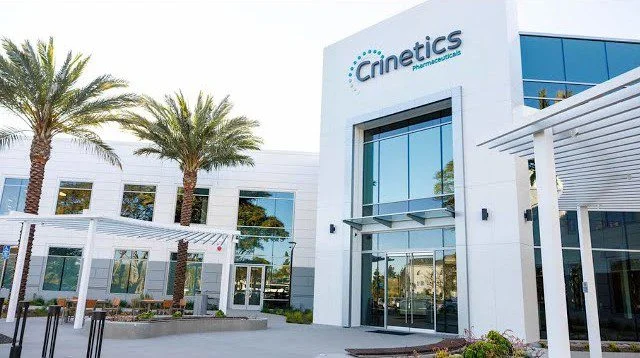
In a transformative move that signals a significant shift in its long-term growth strategy, Vertex Pharmaceuticals has announced a definitive agreement to acquire San Diego-based Crinetics Pharmaceuticals for $10 billion in an all-cash transaction. The deal, which represents a massive premium for shareholders of the endocrine-focused biotech, provides Vertex with a robust, high-potential pipeline that extends well beyond its traditional stronghold in cystic fibrosis (CF).
The acquisition—valued at $8.8 billion net of cash—marks one of the most significant consolidations in the rare disease space in recent years. By integrating Crinetics’ portfolio, Vertex aims to establish a fifth major commercial "vertical" in endocrinology, diversifying its revenue streams and leveraging its world-class expertise in rare disease commercialization.
The Deal at a Glance: Strategic Rationale and Financials
Under the terms of the agreement, Vertex will acquire all outstanding common shares of Crinetics for $85 per share in cash. The acquisition is backed by $4.5 billion in committed bridge financing provided by Bank of America and Morgan Stanley Senior Funding, supplemented by Vertex’s substantial cash reserves. As of the end of the first quarter of 2026, Vertex reported a formidable balance sheet with $13 billion in cash and marketable securities.
For Vertex, the attraction lies in the dual-layered value of the Crinetics pipeline: an immediately revenue-generating, FDA-approved asset and a late-stage pipeline with blockbuster potential. The combined assets are projected by management to generate over $5 billion in annual peak revenue, significantly bolstering Vertex’s long-term financial trajectory.
Chronology: From Foundation to Acquisition
The trajectory of Crinetics Pharmaceuticals is a classic success story of sustained, focused research. Founded nearly 18 years ago by R. Scott Struthers, PhD, the company was built on the premise of targeting endocrine diseases with precise, oral small-molecule therapies.
- September 2025: A watershed moment occurred when the FDA approved Palsonify (paltusotine) as the first and only once-daily oral therapy for adults suffering from acromegaly, a debilitating condition affecting approximately 20,000 Americans.
- April 2026: The European Commission granted marketing authorization for Palsonify, marking the company’s expansion into the European market.
- Early 2026: Crinetics reported strong initial uptake in the U.S., with 232 patients enrolling in the first quarter and 263 unique healthcare providers prescribing the drug within the first six months of launch.
- July 2026: Vertex Pharmaceuticals, seeking to diversify its near-total reliance on its CF franchise, approached Crinetics. While Crinetics was not actively seeking a suitor, the Board of Directors concluded that the valuation and the operational synergy provided by Vertex represented the best path forward for the company’s mission and its shareholders.
Supporting Data: The Pipeline and Market Potential
The value proposition of this merger is anchored by three primary pillars: Palsonify and the late-stage candidate atumelnant.
Palsonify (paltusotine): The Foundation
Palsonify has already proven its commercial viability. In its first full quarter of reporting, the drug generated $10.3 million in net product revenue. Most significantly, 70% of patients on the therapy by the end of Q1 2026 were utilizing reimbursed treatment, indicating rapid and successful adoption by insurance payers. Vertex expects to leverage its extensive, global commercial infrastructure to scale this launch far beyond what Crinetics could have achieved as an independent entity.
Atumelnant: The Future Engine
While Palsonify provides immediate momentum, atumelnant is the asset that justifies the multi-billion dollar premium. Currently in Phase III development for congenital adrenal hyperplasia (CAH), a rare genetic disease affecting 17,000 addressable patients in the U.S., the drug acts as an oral ACTH antagonist.
Clinical data to date has been compelling. In earlier Phase II studies, patients achieved near-normalization of excess androgen levels while on physiological replacement doses of glucocorticoids—an outcome that addresses a massive unmet need, as patients currently must balance disease management with the severe side effects of high-dose steroids.
Vertex is currently tracking two major trials for atumelnant:
- NCT07144163: A Phase III study in adults with 21-hydroxylase deficiency (21-OHD), with a primary completion date expected in May 2027.
- NCT07159841: A Phase II/III study in pediatric patients (ages 1 to <18), with completion expected by March 2030.
Beyond CAH, atumelnant is also being evaluated for ACTH-dependent Cushing’s syndrome, providing an additional layer of potential revenue that analysts estimate could range between $1 billion and $2 billion annually.
Official Responses and Corporate Sentiment
The leadership of both organizations has expressed strong conviction in the deal.
"Crinetics is an excellent strategic fit for Vertex," said Reshma Kewalramani, MD, CEO and President of Vertex. "We believe Vertex can build on the strong momentum of the Palsonify launch by applying our experience in commercializing medicines for rare genetic diseases. We are also excited by the significant potential of atumelnant to transform the treatment landscape for CAH, setting a new standard of care."
R. Scott Struthers, PhD, co-founder and CEO of Crinetics, echoed these sentiments, framing the acquisition as the natural next step for the company’s scientific legacy. "Vertex’s global infrastructure and commercial footprint will serve to amplify the reach of our science and allow us to maximize the impact of Palsonify, atumelnant, and our pipeline," Struthers stated.

The market’s reaction was immediate and decisive. Upon the announcement, Crinetics’ share price surged 99%, closing at $83.54 in morning trading, reflecting the high premium offered by the $85-per-share cash offer. Vertex shares saw a modest dip of 2%, a common occurrence in large-scale acquisitions as investors account for the integration costs and the debt-financed nature of the transaction.
Implications: Diversification and Long-Term Strategy
The acquisition has profound implications for the pharmaceutical landscape. For years, Vertex has been synonymous with cystic fibrosis, with its CF treatments accounting for 98% of its $2.987 billion total revenue in the first quarter of 2026 alone. While that franchise is highly profitable, the move into endocrinology via Crinetics effectively de-risks the company’s long-term portfolio.
The "Fifth Vertical"
Industry analysts, including those at Scotiabank, have highlighted that the addition of an endocrinology vertical provides a necessary cushion for Vertex. By shifting from a mono-specialty giant to a diversified rare-disease leader, Vertex is positioning itself to capitalize on its existing patient-support networks and regulatory expertise.
Analyst Outlook
Equity analysts have largely reacted positively to the news. Jefferies analyst Dennis Ding characterized the move as a "solid outcome" for Crinetics investors, noting that the deal provides immediate value for a company whose major pipeline milestones were still several years away. Ding estimates that at peak, atumelnant could command $2–3 billion in revenue for CAH, and another $1–2 billion for Cushing’s, with Palsonify adding a steady $1 billion.
Integration and Outlook
The deal is expected to close in the third quarter of 2026, pending standard regulatory approvals and a vote by Crinetics shareholders. Once finalized, Vertex plans to integrate the San Diego team into its global research network. While the transaction is expected to be additive to non-GAAP operating income by 2029, the near-term focus will be on the operational integration of the Palsonify sales force and the acceleration of the atumelnant Phase III trials.
As the industry watches, this acquisition stands as a testament to the high valuation currently placed on companies with clear, validated, and proprietary science in the rare disease sector. For Vertex, the $10 billion bet is a declaration that the future of the company lies in the expansion of its clinical reach and the pursuit of transformative therapies for patients who have, until now, had very few options.