Driving Innovation: Google Unveils Major Overhaul for the Android Automotive Ecosystem at I/O 2026
By: The Tech Editorial Desk
The landscape of in-car infotainment is undergoing a seismic shift. As vehicles evolve from simple modes of transportation into sophisticated, software-defined mobile living spaces, Google is doubling down on its commitment to bridge the gap between the smartphone experience and the automotive dashboard. At this year’s Google I/O, the Android for Cars team—led by Jan Kleinert, Noam Gefen, and Thomas Weathers—announced a suite of groundbreaking updates designed to harmonize the experience across Android Auto and cars with Google built-in.
These updates represent more than just incremental improvements; they are a strategic pivot toward greater developer flexibility, higher-fidelity media consumption, and a unified design language that promises to make the "connected car" more intuitive than ever before.
Main Facts: The New Frontier of Android for Cars
The core of the announcement centers on the maturation of the Car App Library. Google is aggressively pushing for a "build once, run everywhere" paradigm, allowing developers to create sophisticated media, navigation, and entertainment experiences that scale effortlessly across diverse screen sizes and vehicle architectures.

Key highlights from the announcement include:
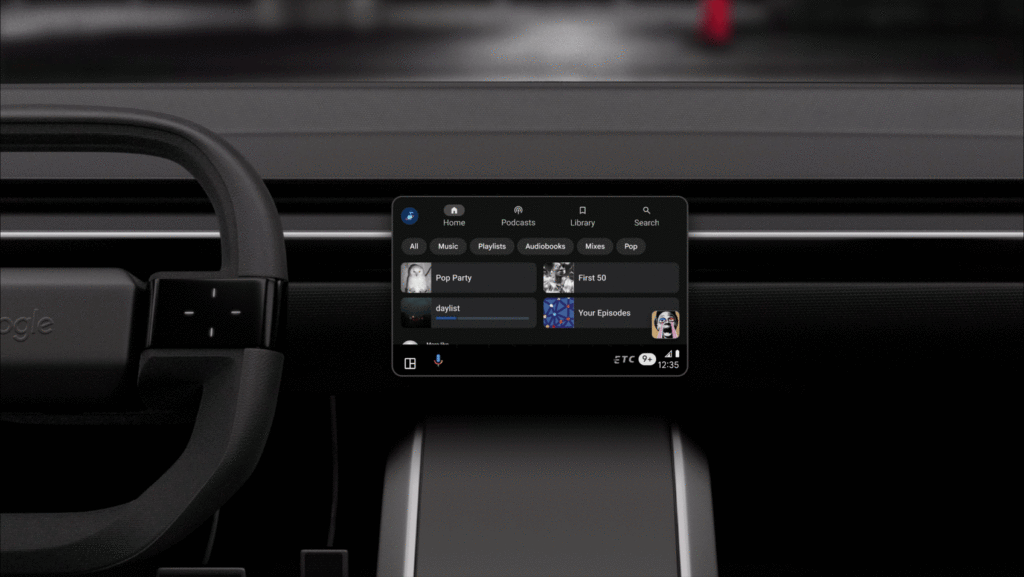
- Expansion of Media Templating: Developers can now build distraction-optimized, custom media browsing experiences specifically for Android Automotive OS (AAOS), using the same logic and assets previously reserved for Android Auto.
- Enhanced Visual Components: The introduction of Car App Library 1.9.0-alpha01 brings advanced UI elements—such as spotlight sections, refined grid item variations, and expanded headers—allowing for a more "expressive" and premium aesthetic.
- Video in Android Auto: For the first time, Android Auto will support parked video playback at 60fps, effectively bringing the "Google built-in" media experience to the wider Android Auto user base.
- Widget Integration: Android Auto is adopting the Material 3 Expressive design system, enabling mobile developers to port their existing widgets directly to the car’s dashboard for "glanceable" information.
Chronology: The Evolution of the In-Car Ecosystem
The journey to this point has been a steady march toward platform parity.
- Phase 1: The Foundation. Initially, Android Auto acted primarily as a projection system—a "second screen" for the phone. This limited the potential for deeply integrated automotive features.
- Phase 2: The Integration. The launch of "Android Automotive OS" (Google built-in) changed the game by moving the operating system directly into the vehicle’s head unit, allowing for deeper access to vehicle telemetry and climate controls.
- Phase 3: The Convergence (Current Era). The latest updates mark the final stage of this evolution. By upgrading the Car App Library to version 1.9.0, Google is essentially collapsing the wall between the two platforms. Developers no longer need to maintain separate codebases for the projection-based Android Auto and the native Android Automotive OS. The new emulator support (API level 35-ext15) serves as the bridge, ensuring developers can validate their designs in a simulated, realistic environment before deploying to millions of vehicles.
Supporting Data: Why This Matters to the Industry
The shift in the automotive industry toward subscription-based software services and digital content consumption cannot be overstated. According to recent market analysis, the "Connected Car" market is expected to grow at a CAGR of over 15% through 2030. Google’s move to support 60fps HD video in Android Auto is a direct response to consumer demand for high-quality entertainment while waiting at charging stations or in parking lots.
Furthermore, the integration of Material 3 widgets is a strategic play to maintain user engagement. With the average daily commute often exceeding 30 minutes, the ability to provide "glanceable" content—such as stock tickers, home automation status, or weather updates—through widgets creates a "sticky" ecosystem that keeps users within the Google/Android orbit even when they aren’t actively interacting with a specific app.

Early adopters of these new media templates, including industry heavyweights like Spotify, YouTube Music, Amazon Music, and PocketFM, have already begun testing these features. Their participation in the early-access beta program confirms that these tools are not just theoretical—they are production-ready solutions for a massive, global audience.
Official Perspectives: The Vision from Mountain View
In their official communications, the Google team emphasized the importance of developer feedback. "We’re thrilled to see developers continuing to bring their apps and experiences to Android for Cars," the team noted in their joint statement. "Our goal is to reduce the friction of development. By providing new templates and components, we are empowering creators to build rich, differentiated experiences without having to worry about the underlying hardware fragmentation of the automotive industry."
The focus on "distraction-optimized" design remains the North Star of the project. While features like video playback are being introduced, they are strictly gated to "parked" scenarios. This adherence to safety-first design principles is what differentiates Android for Cars from a standard tablet experience, ensuring that while the car is a hub of entertainment, it remains, first and foremost, a safe environment for transportation.
Implications: What This Means for Developers and Drivers
For Developers: The End of Fragmentation
The most immediate implication for developers is the drastic reduction in engineering overhead. Historically, building for the car was a costly endeavor requiring specialized UI/UX design to comply with strict safety guidelines. By expanding the library to include components like the CondensedItem and adaptive mini-players, Google is providing a "design system" that handles the complexity of the UI, allowing developers to focus on content discovery and brand identity.

For Drivers: A Seamless Experience
For the average driver, this means a more cohesive digital life. The transition from your phone to your car is becoming invisible. Imagine starting a podcast on your phone in the kitchen, getting into your car, and having the widget on your dashboard show exactly where you left off, with the same UI and playback controls you used on your mobile device. This level of consistency is the hallmark of a mature operating system, and it is precisely what Android for Cars is achieving.
For the Auto Industry: The Software-Defined Vehicle
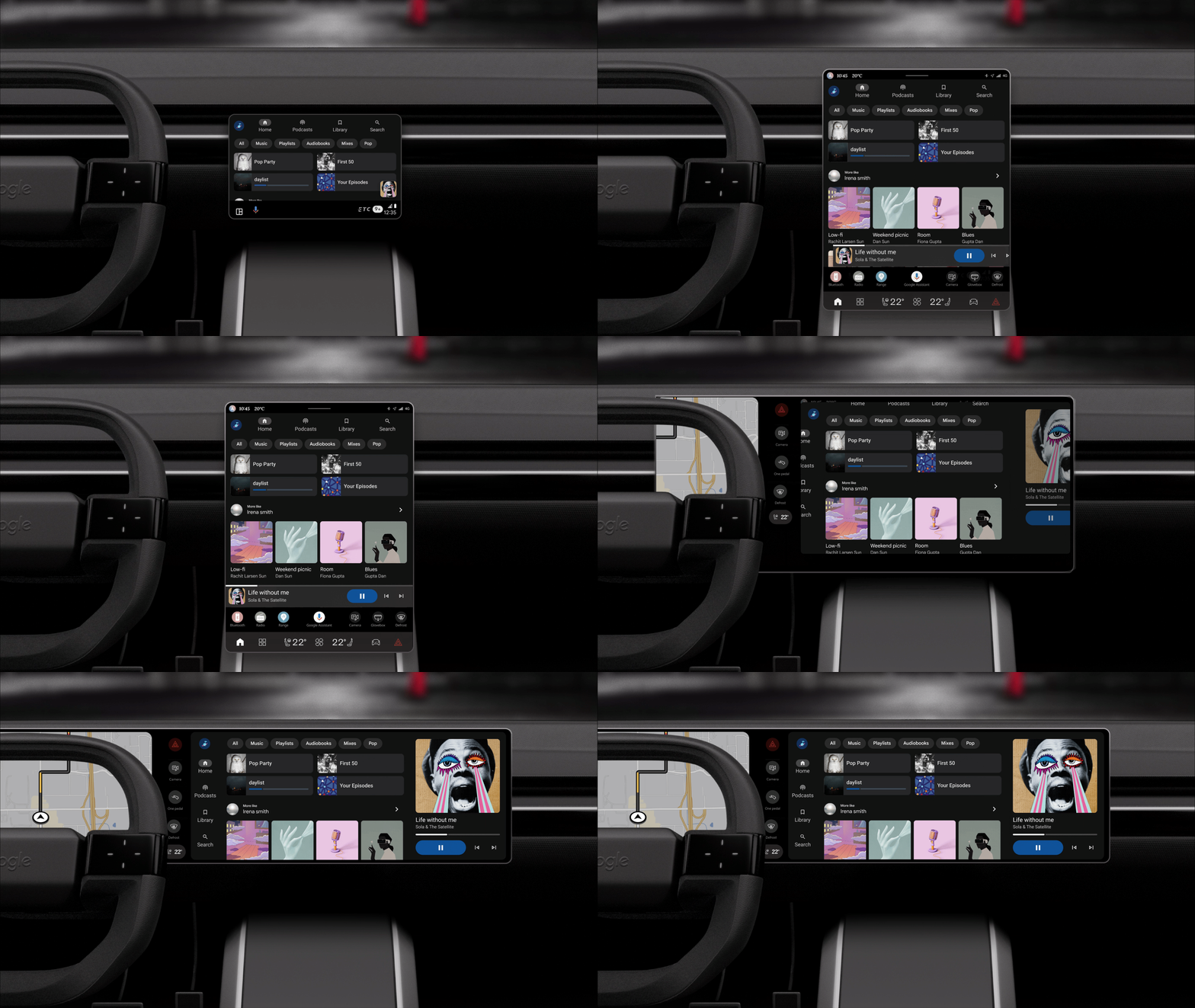
As car manufacturers continue to iterate on larger, high-resolution portrait and landscape screens, the modularity of the new Android templates becomes vital. A dashboard that was designed for a 10-inch screen can now intelligently reconfigure its content for a 15-inch ultrawide display without requiring a rewrite of the application logic. This modularity is a win for OEMs (Original Equipment Manufacturers), who can promise their customers a future-proof infotainment system that receives regular, feature-rich updates over the air.
The Road Ahead: Future Horizons
As we look toward the remainder of 2026, the roadmap for Android for Cars is clear. The focus will likely shift toward deeper vehicle integration—such as leveraging vehicle-to-everything (V2X) communication for real-time safety alerts and more advanced AI-driven personalization.
Google’s decision to open an early-access beta program for media developers indicates that they are moving away from a "walled garden" approach to one that encourages rapid iteration. By allowing developers to test their apps in the real-world emulator environment and gather feedback from a controlled user base, Google is ensuring that when these features go fully public, the experience is polished and reliable.

The "Connected Car" is no longer a futuristic concept—it is a platform. With the latest updates from Google I/O, the Android for Cars team has laid the groundwork for a new era of automotive software. Whether you are a developer looking to reach millions of drivers or a user looking for a more seamless, enjoyable commute, the future of the car is looking more digital, more intuitive, and more integrated than ever before.
For developers eager to start building, the latest documentation and SDK tools are available at goo.gle/cars-whats-new.