The Evolution of Precision: How Next-Generation Cell Sorting is Redefining Translational Research and Manufacturing
In the high-stakes landscape of modern biological research, the ability to isolate a single, rare cell from a complex, heterogeneous mixture is not merely a technical convenience—it is a fundamental requirement. Whether identifying a elusive circulating tumor cell (CTC) in a patient’s blood or purifying a genetically engineered T cell for immunotherapy, the precision with which we can characterize and isolate cell populations dictates the success of clinical breakthroughs.
As the field of cell biology shifts from observational studies toward therapeutic intervention, fluorescence-activated cell sorting (FACS) has emerged as the gold standard. By leveraging the physical and chemical signatures of individual cells, FACS provides a robust, multi-parameter approach to cell isolation. However, as the demands of translational research and clinical manufacturing reach new heights, the technology is undergoing a radical transformation. Moving beyond traditional core facility workflows, the next generation of cell sorters is prioritizing high-throughput efficiency, biosafety, extreme cell viability, and unprecedented analytical depth.
The Foundations: A Brief Chronology of Flow Cytometry
The trajectory of cell sorting is a story of increasing resolution. While the fundamental principles of flow cytometry—measuring physical and chemical properties of cells in single-file suspension—date back to the mid-1960s, the terminology and application have evolved significantly.
In the late 1970s, the field moved away from the early moniker of "pulse cytophotometry" toward "flow cytometry," a shift that reflected the growing convergence of fluorescence-based detection and physical cell manipulation. What began as a tool for basic counting has become a sophisticated platform for complex cellular interrogation. For decades, researchers have relied on fluorescently-labeled antibodies to identify markers on the surface of T cells, B cells, and stem cells. Yet, as the complexity of these studies increased, so too did the limitations of early instrumentation. Researchers often found themselves tethered to cumbersome, non-sterile, and high-pressure systems that sacrificed cellular integrity for the sake of speed. Today, we are witnessing a transition from these legacy "workhorses" to smart, compact, and automated platforms designed for the modern laboratory.
The Shift Toward Benchtop Accessibility and Ease of Use
Historically, FACS systems were synonymous with "core facilities"—massive, centralized rooms operated by highly trained specialists. However, the democratization of cell biology is driving a shift toward benchtop instruments that offer high-level performance without the steep learning curve.
Brendan Yee, director of cellular analysis at Bio-Techne, notes that the barriers to entry for traditional sorting have long hindered progress in single-cell applications. "Traditional FACS sorters are expensive, difficult to use, and can take a significant amount of time to set up," Yee explains. "Manual alternatives, like limiting dilution, rely on Poisson distribution, which is mathematically inefficient—often leaving 60% of wells empty and only 30% containing a single cell."
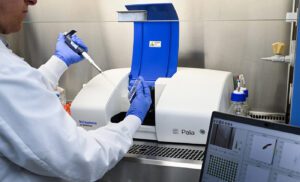
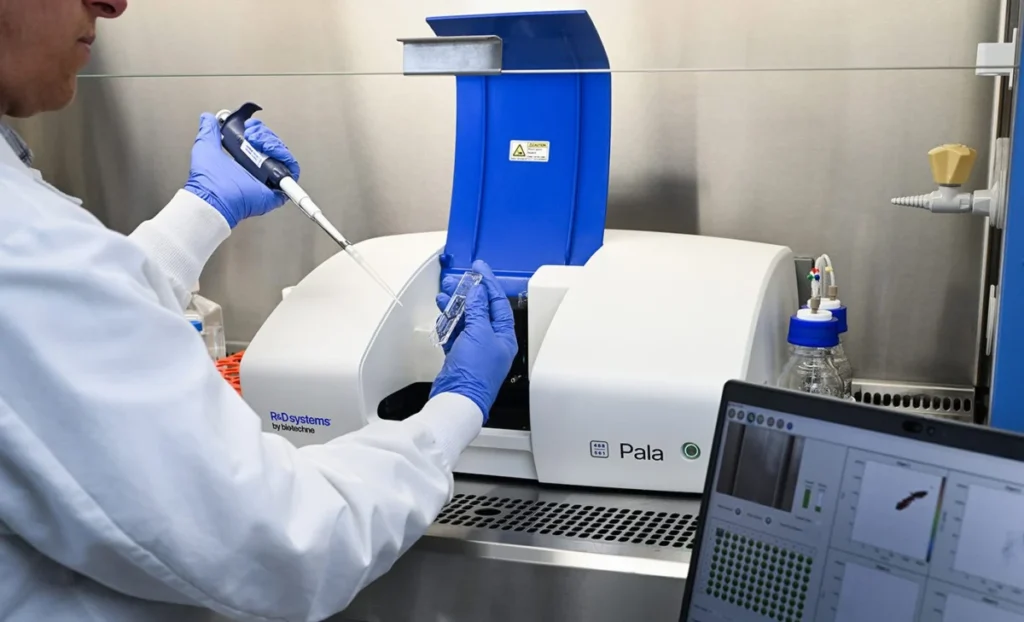
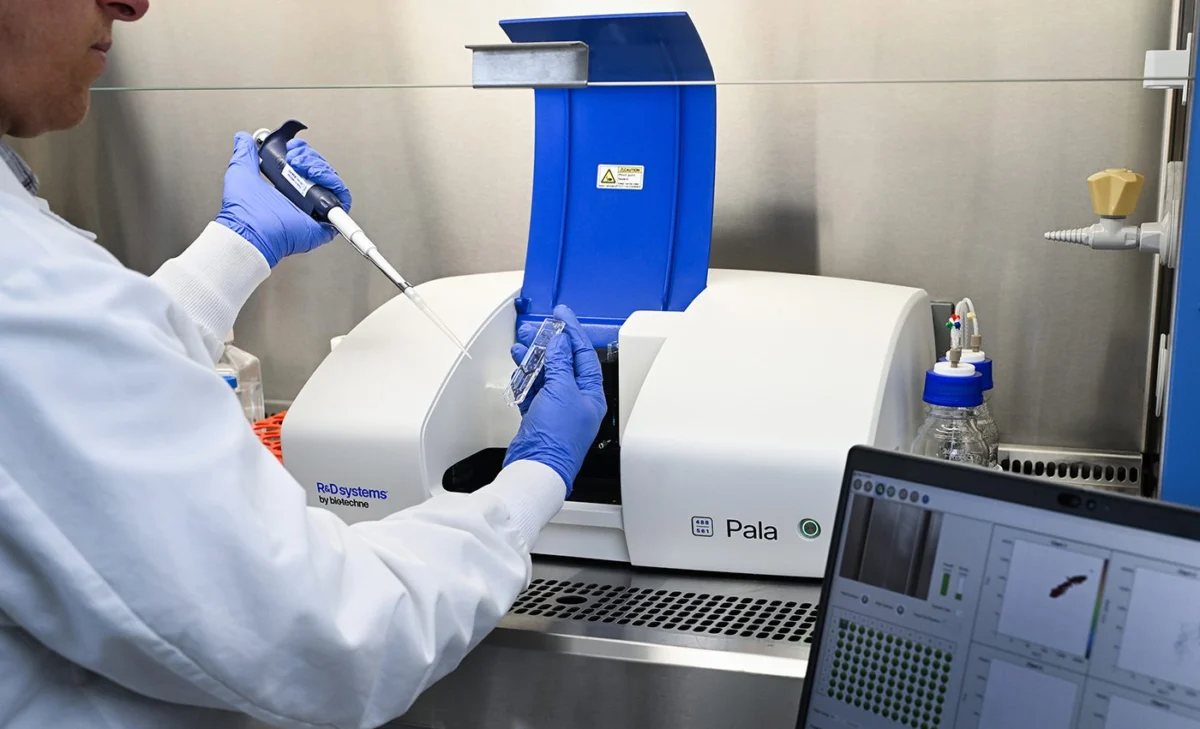
To bridge this gap, Bio-Techne developed the Pala™ platform. By integrating microfluidic technology with a simplified software interface, the system allows researchers to initialize, define sorting parameters, and begin dispensing in mere minutes. Beyond speed, the system addresses the critical issue of cell stress. While traditional cytometers often use pressures up to 35 PSI—a force that can be lethal to sensitive induced pluripotent stem cells (iPSCs)—the Pala operates at less than 2 PSI, significantly enhancing the viability of delicate cell populations.
High-Sensitivity and Automation: The Beckman Coulter Approach
As labs look to integrate cell sorting directly into their automated pipelines, the demand for "plug-and-play" reliability has never been higher. James McCracken, PhD, a portfolio product manager at Beckman Coulter Life Sciences, emphasizes that the CytoFLEX SRT is engineered specifically to meet this need.
"The CytoFLEX SRT is designed to bring advanced cell sorting into a more routine, accessible, and automation-ready workflow," McCracken states. By building upon the architecture of their well-known analyzers, the SRT provides high-resolution fluorescence and scatter sensitivity in a package that fits comfortably on a laboratory bench.
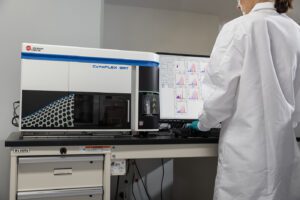
The integration of automated programming is a standout feature. "A key advantage is that automation programming is built into the instrument," says McCracken. "This helps laboratories connect sorted cells directly to downstream applications—such as liquid handling, genomics, transcriptomics, or functional testing—with significantly less upfront complexity." With up to 15 fluorescence parameters and four-way sorting capabilities, the system provides a balance between high-end research capability and the ease of use required for multidisciplinary teams.
Addressing Biosafety in High-Complexity Research
As researchers move into translational medicine, the nature of the samples is changing. Working with unfixed or human-derived clinical samples introduces significant biohazard risks, including the generation of infectious aerosols. This has elevated the role of integrated biosafety in instrument design.
Eric Diebold, PhD, vice president and general manager of instruments and informatics at Waters Biosciences, explains that biosafety is no longer an "add-on" but a design imperative. "With its fully integrated Class II biosafety cabinet and aerosol management design, the BD FACSAria™ Fusion enables high-speed, high-purity sorting of unfixed or higher-risk samples while meeting stringent operator protection requirements," Diebold says.

Beyond safety, Waters Biosciences is pushing the boundaries of analytical depth with the BD FACSDiscover™ S8. This system introduces spectral flow cytometry, which captures the entire emission spectrum of fluorochromes rather than narrow wavelength bands. "The S8 sorter integrates spectral flow cytometry with real-time imaging," Diebold adds. "This allows researchers to visually confirm cell populations and resolve ambiguous subsets, providing a level of spatial and morphological context that was previously impossible to achieve during a high-speed sort."
Clinical Manufacturing: The GMP Imperative
When the goal is the production of a therapeutic, such as a CAR-T cell infusion, "high quality" is not an optional goal—it is a regulatory mandate. Sudheer Gambheer, PhD, global product manager at Miltenyi Biotec, underscores the challenges of applying traditional FACS in a Good Manufacturing Practice (GMP) environment.
"Clinical cell manufacturing demands the highest standards of safety, precision, and reliability," Gambheer notes. "Many of the traditional droplet-based FACS limitations, such as potential contamination or cell damage, become amplified under GMP constraints."

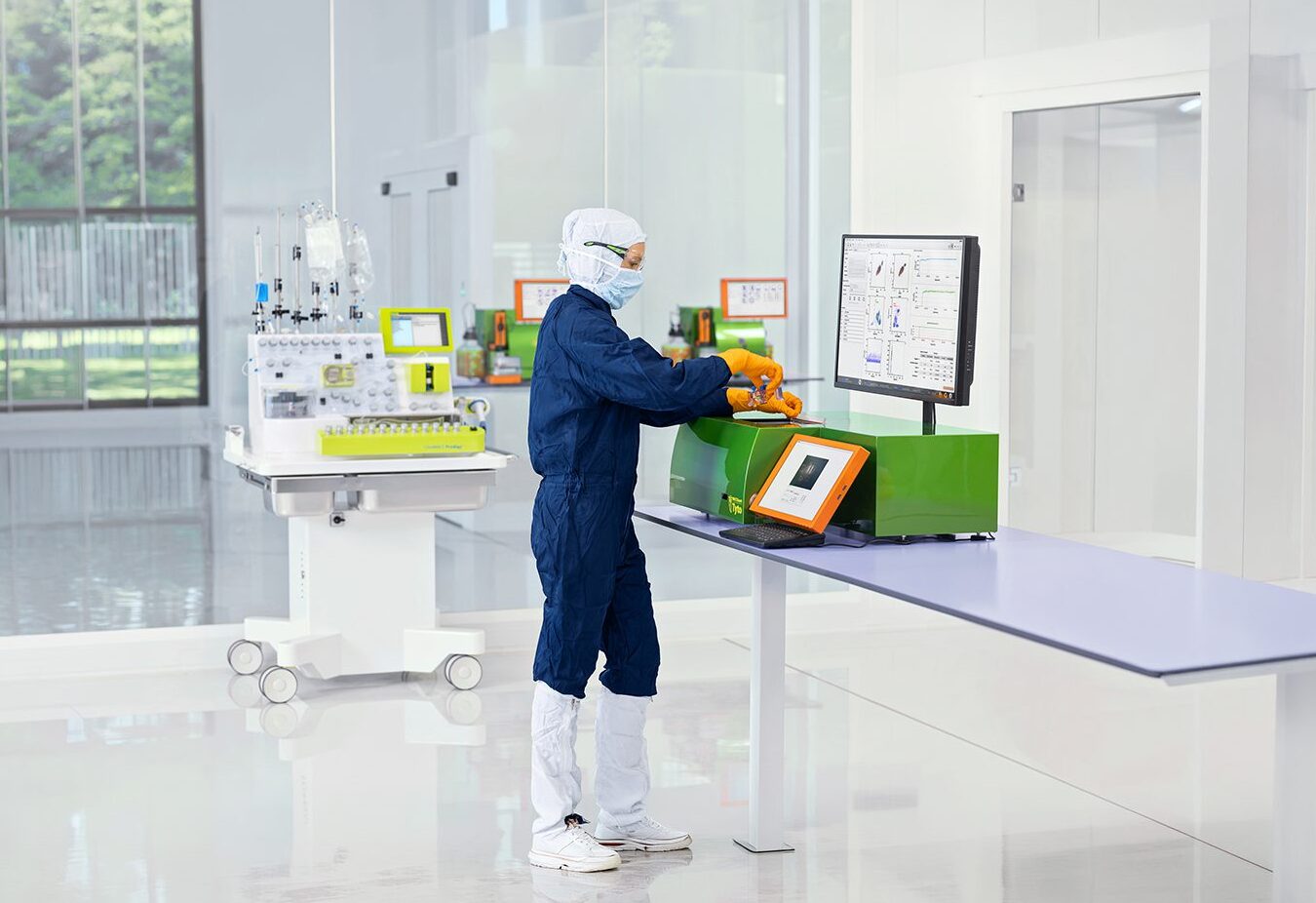
To solve this, Miltenyi Biotec introduced the MACSQuant® Tyto® family of sorters. Unlike traditional sorters that use high-pressure streams, the Tyto utilizes a closed-cartridge system where cells never touch the instrument itself. Using an ultra-fast mechanical valve capable of 30,000 actuations per second, the system sorts cells under low pressure, ensuring maximum viability. Furthermore, the company provides an end-to-end documentation trail, including 21 CFR Part 11-compliant software, to ensure that the entire sorting process is transparent and audit-ready for regulatory submissions.
The Future of Cell Sorting: Towards Reproducible Precision
The evolution of cell sorting is clearly trending toward a future defined by four key pillars: automation, integration, safety, and sensitivity.
- Automation: As seen with the CytoFLEX SRT and Pala platforms, instruments are increasingly handling their own quality control and setup, reducing the potential for human error.
- Integration: Modern sorters are no longer isolated boxes; they are becoming nodes in a larger "connected lab" ecosystem, feeding directly into sequencers, mass spectrometers, and cell culture platforms.
- Biosafety: The rise of human-derived translational research has forced a paradigm shift where Class II cabinet integration is becoming a standard feature rather than a luxury.
- Sensitivity: With spectral flow and real-time imaging (as exemplified by the BD FACSDiscover S8), the definition of a "sort" has expanded from fluorescence markers to morphological and spatial insights.
As we look toward the next decade of biotechnology, the challenge for manufacturers will be to maintain this high-level performance while making the technology increasingly accessible. For the scientist, the shift means less time spent "managing the instrument" and more time spent deriving insights from the complex biological samples that drive medical progress.
Ultimately, the goal remains unchanged: to find the "needle in the haystack"—that one rare cell that holds the key to a cure—and to do so with the gentleness, purity, and regulatory certainty required to translate that discovery from the laboratory bench to the patient bedside.